**Orchid Scientific Name Finder: Free Photo ID Tips**
> Find an orchid scientific name fast: photo ID tips, key genus examples and habitat clues to confirm Phalaenopsis, Cattleya and others.
Source: https://orvik.app/plants/orchid-scientific-name/ · updated: 2026-06-21
- [Home](https://orvik.app/)
- [Plants](https://orvik.app/plants/)
Decoding Orchid Names: A Field Guide
Plants
# Decoding Orchid Names: A Field Guide
Compiled by
- [Merey Tleugazin](https://orvik.app/about/)
January 4, 2026
## Table of Contents
1. What people mean by “orchid scientific name”
2. How botanical (scientific) names work
3. Common orchid genera and their scientific names
4. Practical identification tips: visual cues to confirm scientific names
5. Habitat, geographic distribution and seasonality
6. Comparisons: how to tell similar orchids (and non-orchids) apart
7. Safety, toxicity and responsible handling
8. Using Orvik and other tools to confirm names
9. Conclusion
When someone types "orchid scientific name" into a search box they usually want one of three things: the correct Latin name for an orchid they found, an explanation of how scientific names are formed, or help distinguishing lookalike plants. This guide does all three with field-tested identification cues, clear lists of common genera and species, habitat and seasonality notes, safety warnings, and practical comparison tips. If you use a visual ID tool like Orvik you can speed identification and confirm names with photographs and range data.
## What people mean by “orchid scientific name”
The phrase "orchid scientific name" refers to the standardized Latin binomial assigned to a plant in the Orchidaceae family. Those names follow rules set by the International Code of Nomenclature. Searchers expect:
- Precise genus and species names (for example *Phalaenopsis amabilis*),
- Common synonyms and cultivar names used in horticulture, and
- Practical identification help so they can match a plant to its name.
Below you’ll find both the naming basics and an applied field guide to the most commonly encountered orchids.
## How botanical (scientific) names work
Scientific names are universal labels that avoid the ambiguity of common names. They are typically Latin or latinized words composed of two parts: the genus and the species epithet.
- **Genus** (capitalized and often treated as a noun): a group of related species, for example *Phalaenopsis*.
- **Species** (lowercase): the specific epithet that identifies the species within the genus, for example *amabilis*.
- **Authority**: the abbreviated name following the binomial that credits the scientist(s) who described it, e.g. *Phalaenopsis amabilis* (L.) Blume.
Additional ranks and terms you may see:
For more on this topic, see our guide on
- [Field Guide to Flower Names](https://orvik.app/plants/flowers-and-names/).
1. **Subspecies** and **varieties** indicate recognized intraspecific differences.
2. **Hybrid notation** uses the multiplication sign (×) for interspecific or intergeneric hybrids (e.g., *Cattleya × elegans*).
3. **Synonyms** are older or alternate scientific names; taxonomists may revise names as they learn more.
## Common orchid genera and their scientific names
There are more than 25,000 accepted orchid species, but a handful of genera account for most horticultural and wild encounters. Below are concise profiles with representative species and identification tips.
### Phalaenopsis (Moth orchids)
- **Scientific name**: genus *Phalaenopsis*; common species include *Phalaenopsis amabilis*, *Phalaenopsis equestris*, and *Phalaenopsis taenialis*.
- **Identification**: broad, fleshy, strap-like leaves (5–30 cm long), arching inflorescences with 3–20 flat, bilateral flowers that resemble moths; flowers 2–8 cm across in many colors and spotted patterns.
- **Habitat & range**: tropical Asia—India, Southeast Asia, the Philippines, Northern Australia; mostly epiphytic in lowland rainforests.
### Cattleya (Corsage orchids)
- **Scientific name**: genus *Cattleya*; well-known species include *Cattleya labiata* and *Cattleya mossiae*.
- **Identification**: large, showy flowers (5–15+ cm across) with a pronounced lip (labellum); pseudobulbs 2–10 cm long, thick leaves on top of each pseudobulb.
- **Habitat & range**: primarily Central and South America; many are epiphytic in seasonal forests.
### Dendrobium
- **Scientific name**: genus *Dendrobium*; species include *Dendrobium nobile*, *Dendrobium officinale*, and many horticultural hybrids.
- **Identification**: cane-like stems (pseudobulbs) that may be 10–100 cm tall; flowers often clustered on the upper portions of canes; great variability—some have waxy single blooms, others many small flowers.
- **Habitat & range**: widespread across Asia, Australia, and the Pacific; epiphytic and lithophytic species occur from sea level to 3,000 m.
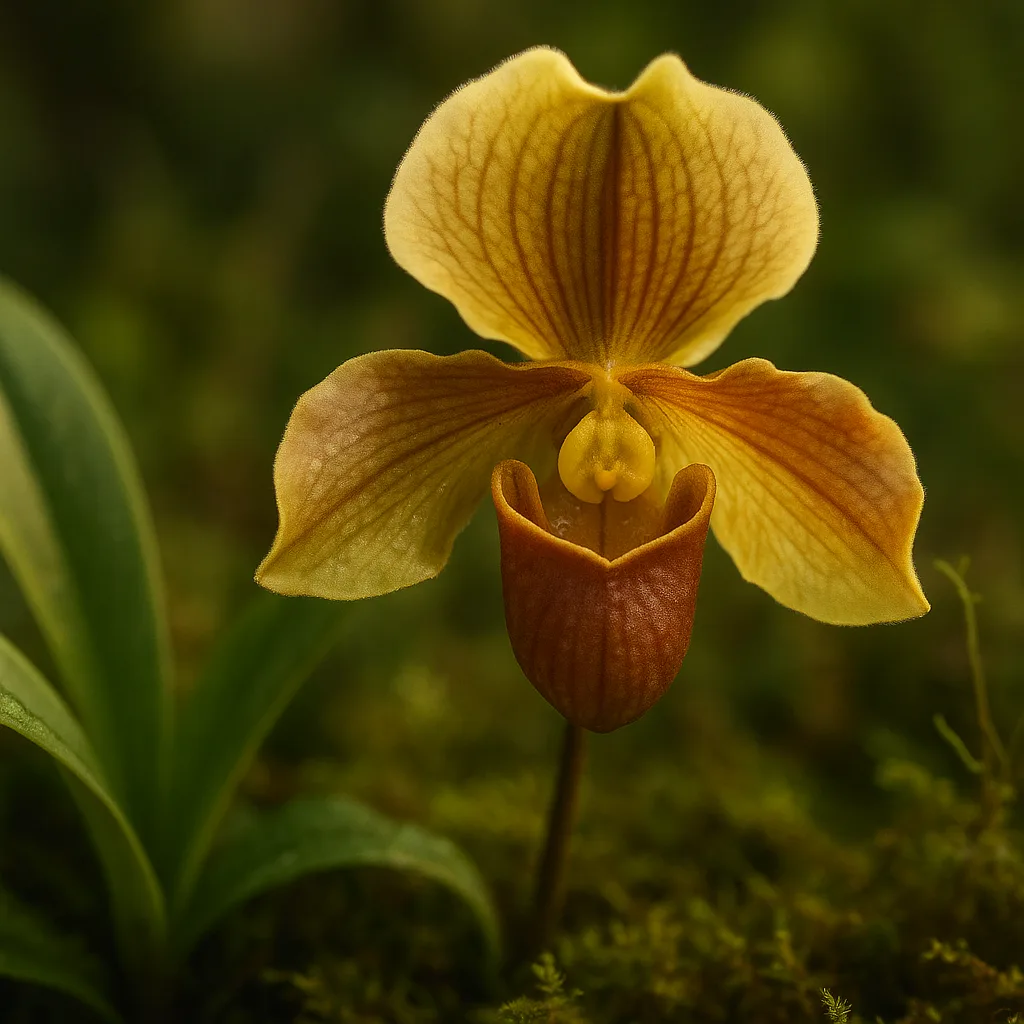
### Paphiopedilum (Lady’s slipper orchids)
- **Scientific name**: genus *Paphiopedilum*; notable species include *Paphiopedilum rothschildianum*.
- **Identification**: pouch-shaped lip (slipper), mottled or plain leaves in many species, single or few flowers per inflorescence; flower size 4–15 cm.
- **Habitat & range**: Southeast Asia; many terrestrial or lithophytic in shady forest floors.
### Oncidium (Dancing-lady orchids)
- **Scientific name**: genus *Oncidium*; species such as *Oncidium altissimum*.
- **Identification**: sprays of small to medium, often yellow-brown flowers with frilled lips; pseudobulbs and thin leaves.
- **Habitat & range**: Neotropics from Mexico to South America; mostly epiphytic in forest canopies.
### Vanilla
- **Scientific name**: genus *Vanilla*; the familiar flavor source is *Vanilla planifolia*.
- **Identification**: long, vine-like stems; fleshy flat leaves; unassuming creamy flowers that are pollinated by specific bees or hand-pollinated in cultivation; fruit are elongated pods (10–25 cm).
- **Habitat & range**: tropical Americas, now cultivated in Madagascar and other islands.
### Cymbidium
- **Scientific name**: genus *Cymbidium*; includes *Cymbidium ensifolium*, *Cymbidium sinense*.
- **Identification**: grass-like leaves, tall flowering spikes with many medium-sized waxy flowers (3–6 cm), hardy species that tolerate cooler temperatures.
- **Habitat & range**: Asia and Australia; several terrestrial and epiphytic species found in montane forests.
## Practical identification tips: visual cues to confirm scientific names
Knowing a genus’s key visual traits makes matching a plant to its scientific name far quicker. These cues are actionable in the field or when using photos to upload into Orvik.
- **Leaves**: Are they succulent and broad (*Phalaenopsis*), grass-like (*Cymbidium*), mottled (*Paphiopedilum*), or reduced to sheaths around pseudobulbs (*Cattleya*)?
- **Stems/pseudobulbs**: Presence of pseudobulbs (swollen stems) suggests genera like *Cattleya*, *Cymbidium*, *Oncidium*; long cane-like stems suggest *Dendrobium*.
- **Flower structure**: Note the lip shape—pouch-shaped (slipper) = *Paphiopedilum*; prominent frilled lip = *Cattleya*; flat moth-like petals = *Phalaenopsis*.
- **Inflorescence form**: Single spikes with few large flowers vs branching sprays of many small flowers differentiates several genera.
- **Color & pattern**: Stripes and spots are common in *Phalaenopsis* and some *Oncidium*; intense solid colors & ruffled lips often indicate *Cattleya*.
- **Texture**: Waxy flowers (thick petals/sepal) vs papery (thin) helps narrow possibilities.
Field measurements that help:
You may also find our article on
- [Roses: Scientific Names and Field ID Guide](https://orvik.app/plants/botanical-name-for-rose/) helpful.
1. Leaf length in cm (measure longest leaf).
2. Flower diameter in mm or cm.
3. Inflorescence length from base to tip.
## Habitat, geographic distribution and seasonality
Scientific names are often linked to geography and ecology. Knowing where and when you found a plant narrows the list of candidate species dramatically.
- **Tropical lowland epiphytes** (e.g., many *Phalaenopsis* and *Oncidium*) grow on tree trunks at 0–600 m elevation, flowering in warm, humid seasons after rainy spells.
- **Montane orchids** (e.g., some *Cymbidium* and *Dendrobium*) are found from 600–3,000 m, often tolerating cooler night temperatures and flowering in spring or autumn.
- **Terrestrial slippers** (many *Paphiopedilum*) occur on forest floors in shady, moist leaf litter zones and may flower in autumn to spring depending on species.
- **Vine orchids** like *Vanilla planifolia* are tropical lianas that flower seasonally; pods (vanilla beans) develop if pollinated.
Seasonality notes:
1. **Phalaenopsis** often bloom once or twice yearly and retain flowers for 6–12 weeks.
2. **Cattleya** bloom in spring or autumn depending on species; blooms typically last 1–3 weeks.
3. **Dendrobium** flowering times vary widely; some species have winter blooms, others in summer.
## Comparisons: how to tell similar orchids (and non-orchids) apart
Below are direct comparisons people commonly search for or confuse in photos.
You might also be interested in
- [Field Guide to Visual ID with Orvik](https://orvik.app/nature/photo-recognition-app/).
### Phalaenopsis vs Cattleya vs Dendrobium
- **Leaves**: *Phalaenopsis*—broad, leathery, basal; *Cattleya*—thicker leaves atop pseudobulbs; *Dendrobium*—canes with leaves along stems.
- **Flower size & display**: *Cattleya* largest (5–15+ cm), *Phalaenopsis* medium (2–8 cm) with flat display, *Dendrobium* variable—either many small or few medium-sized blooms.
- **Growth habit**: *Phalaenopsis* monopodial (single stem), *Dendrobium* sympodial or pseudobulbed canes, *Cattleya* sympodial with pseudobulbs.
### Orchid vs Gladiolus (addressing "gladiolus botanical name")
- **Gladiolus botanical name**: Genus *Gladiolus* (family Iridaceae); common horticultural group is *Gladiolus × hortulanus* (a complex hybrid group).
- **How they differ visually**: Gladiolus have sword-like leaves and upright spikes of funnel-shaped flowers stacked along a stem; individual flowers are 4–8 cm long.
- Orchids show a wide range of floral morphologies but frequently have a distinct labellum (lip) and bilateral symmetry; leaves and growth habit differ (many orchids are epiphytic).
- Gladiolus grow from corms in soil and are terrestrial; orchids are often epiphytic or terrestrial depending on genus.
- **Why names matter**: If you found a spike of funnel flowers in a garden bed, searching "gladiolus botanical name" is appropriate; for a plant on a tree with a pouch-like lip, search for an orchid genus like *Paphiopedilum* or *Cattleya*.
## Safety, toxicity and responsible handling
Plants sometimes cause allergic reactions or are toxic when ingested. Here are concise precautions and species-specific notes.
Related reading:
- [Identifying Acacia: Names, Species, and Field Tips](https://orvik.app/plants/acacia-scientific-name/).
- **Most common orchids are non-toxic**: Popular genera such as *Phalaenopsis*, *Cattleya*, *Dendrobium*, and *Oncidium* are generally non-toxic to humans and pets according to the ASPCA and other sources. However, individual sensitivities vary.
- **Gladiolus (Iridaceae)**—the corms and sap can cause skin irritation and gastrointestinal upset if ingested; wear gloves when handling raw corms or cut stems.
- **Contact dermatitis**: Some people develop dermatitis from the sap of various plants; always wash hands after handling unfamiliar orchids or mounting media.
- **Edible orchids**: *Vanilla planifolia* produces edible pods used as a spice; do not assume any orchid is edible beyond species known to be safe.
- **Poison control**: If ingestion or a severe reaction occurs, contact local poison control or veterinary services immediately and provide the plant’s scientific name if known.
## Using Orvik and other tools to confirm names
Field identification is faster and more reliable when complemented by technology. Orvik is an AI-powered visual identification app that helps match photos to botanical names and offers distribution data—useful when you have only a phone and a flower. Here’s how to integrate apps like Orvik into your workflow.
- **Take multiple photos**: capture leaves, full plant, close-up of flower (front and back), and habitat (tree trunk, ground, rock). Upload to Orvik for higher-confidence ID.
- **Record context**: note elevation, GPS or nearest town, date and time—Orvik and similar apps use range and phenology to narrow candidates.
- **Cross-check**: after an initial ID by Orvik, confirm by checking key diagnostic traits (lip shape, pseudobulbs, leaf arrangement) against authoritative sources or floras.
- **Beware of hybrids and cultivars**: Many horticultural orchids are hybrids with non-standard appearances. Orvik can often flag horticultural hybrids but consult nursery records for exact cultivar names.
Using Orvik in the field reduces time wasted on guesses and helps you collect the measurements (leaf length, flower diameter) that taxonomists rely on.
## Conclusion
Searching for an "orchid scientific name" usually means you want a precise Latin binomial, an explanation of how those names are built, and help identifying a plant by sight. This guide gives the taxonomic basics, curated lists of common genera and representative species, field-tested visual cues and measurements, habitat and seasonal context, safety notes, and practical comparisons (including the gladiolus botanical name). Combine visual observation with a tool like Orvik for the fastest, most accurate identification—then confirm with floras or specialist literature for scientific or conservation work.
## Work through it yourself
The keys below are free, need no account, and render every entry in the page
source — so they work with scripting switched off, and the whole list is
readable rather than hidden behind a filter.
- [What wildflower is this?](https://orvik.app/tools/wildflower-identifier/) — Petal count, arrangement and habitat narrow 30 wildflowers.
- [Which mineral is this?](https://orvik.app/tools/mineral-identifier/) — Streak, lustre, hardness and cleavage — the real determinative key, for 36 minerals.
- [What cloud is that?](https://orvik.app/tools/cloud-identifier/) — Height, shape and cover name 29 cloud types — and what each one forecasts.
- [Seek or Google Lens: identification against visual search](https://orvik.app/compare/seek-vs-google/) — prices and in-app purchase lists pulled from the App Store, not typed.
- [Google Lens alternatives for identifying nature](https://orvik.app/alternatives/google/) — prices and in-app purchase lists pulled from the App Store, not typed.
## Frequently Asked Questions
What is the scientific name of the moth orchid?
The moth orchid belongs to the genus Phalaenopsis; a widely cited species is Phalaenopsis amabilis. Many cultivated moth orchids are hybrids within Phalaenopsis.
What is the scientific name for cattleya orchids?
Cattleya orchids belong to the genus Cattleya. A classic species is Cattleya labiata, but many species and hybrids exist within the genus.
How can I tell a Dendrobium from a Phalaenopsis?
Dendrobium typically has cane-like stems with leaves along the canes and variable flower clusters; Phalaenopsis is monopodial with a central stem and broad, basal leaves and arching spikes of flat, moth-like flowers.
Are orchids toxic to pets?
Most commonly cultivated orchids—such as Phalaenopsis, Cattleya, Dendrobium—are considered non-toxic to cats and dogs. However, individual sensitivities occur and other plants (e.g., gladiolus corms) can be irritating or toxic.
What is the gladiolus botanical name and how is it different from orchids?
Gladiolus is in the genus Gladiolus (family Iridaceae). The garden hybrids are often referred to as Gladiolus × hortulanus. Gladiolus are terrestrial corm plants with sword-like leaves and spike inflorescences, unlike many epiphytic orchids with specialized lips (labella) and varied growth habits.
Can Orvik identify orchid species from photos?
Yes—Orvik is an AI-powered visual identification app that analyzes photos, compares morphological features and range data, and provides candidate scientific names. For best results, submit multiple photos showing leaves, flowers (front and back), and habitat.
Why do orchid scientific names change?
Taxonomy is revised as botanists use new evidence (morphology, DNA sequencing, biogeography). A species may be moved to a different genus or renamed, producing synonyms. Always check recent floras or databases (e.g., Kew’s Plants of the World Online) for current names.
How should I photograph an orchid to get an accurate ID?
Take clear, well-lit photos of the whole plant, individual flowers from multiple angles (front, side, back), leaves, stem/pseudobulbs, and the plant’s mounting or substrate. Include a ruler or coin for scale and note location and elevation.
Orvik App
#### Identify anything with your camera
Point the camera, get a name and the look-alikes ranked underneath. Free to download.
- [Download Free](https://orvik.app/app/)
Free, in your browser
- [What wildflower is this? 0 , no account, works with scripting off](https://orvik.app/tools/wildflower-identifier/)
- [Which mineral is this? 0 , no account, works with scripting off](https://orvik.app/tools/mineral-identifier/)
- [What cloud is that? 0 , no account, works with scripting off](https://orvik.app/tools/cloud-identifier/)
- [All Plants articles](https://orvik.app/plants/)
## Related Articles
More from Plants
- [All articles](https://orvik.app/plants/)
- [### Eucalyptus: The Scientific Identity Find the botanical name of eucalyptus for 8 common species, with clear photo ID tips, bark & leaf keys, habitat notes and quick identification checklist. January 2026](https://orvik.app/plants/botanical-name-of-eucalyptus/)
- [### How Flowers Get Their Scientific Names Learn how flowers scientific name works—binomial rules, examples (sunflower, zinnia), ID tips, habitat, comparisons, and how Orvik helps confirm names in the field. January 2026](https://orvik.app/plants/flowers-scientific-name/)
- [### Identify Plants Fast: Expert Guide to Free Apps Find the best free app that identifies plants, get step-by-step photo tips, habitat clues, and safety checks to make accurate IDs with Orvik and others. March 2026](https://orvik.app/plants/free-app-that-identifies-plants/)
- [### Identifying Acacia: Names, Species, and Field Tips Find the acacia scientific name for 8 common species, with clear ID photos, key field cues, habitat ranges and safety/toxicity notes to ID accurately. February 2026](https://orvik.app/plants/acacia-scientific-name/)
- [### Names of Moringa: Local, Common & Botanical Terms Find the moringa common name and scientific name (Moringa oleifera). Learn local names—malunggay, drumstick tree—ID tips, habitat, uses, and safety. January 2026](https://orvik.app/plants/moringa-common-name/)
- [### Chrysanthemum Botany: Names, ID & Seasonality Discover the botanical name of chrysanthemum, key species (Chrysanthemum × morifolium), practical ID tips, distribution, and safety. Use Orvik to confirm IDs. March 2026](https://orvik.app/plants/botanical-name-of-chrysanthemum/)
- [### Understanding Hibiscus: Names, ID & Key Species Discover the botanical name for hibiscus, with photos of 5 key species, quick visual ID tips, habitat and safety notes to identify plants confidently. January 2026](https://orvik.app/plants/botanical-name-for-hibiscus/)
- [### Bark Clues: Identify Pine Trees in the Field Step-by-step pine tree identification by bark with 30+ photos, key bark traits to spot, and a simple field workflow to confirm species fast. February 2026](https://orvik.app/plants/pine-tree-identification-by-bark/)
- [### Knowing the Magnolia: Scientific Name & ID Learn the magnolia scientific name, key species (Latin names), visual ID tips, lookalikes, habitat, and safety—practical field guidance with Orvik-ready tips. February 2026](https://orvik.app/plants/magnolia-scientific-name/)
## Explore Other Topics
Identify more with Orvik — from plants to rocks, insects to birds
- [### Insects 34 articles](https://orvik.app/insects/)
- [### Animals 18 articles](https://orvik.app/animals/)
- [### Birds 11 articles](https://orvik.app/birds/)
- [### Rocks & Minerals 20 articles](https://orvik.app/rocks/)
- [### Collectibles 7 articles](https://orvik.app/collectibles/)
- [### Food 11 articles](https://orvik.app/food/)
- [### Nature 4 articles](https://orvik.app/nature/)
- [### Sports Cards 15 articles](https://orvik.app/sports-cards/)
---
HTML version: https://orvik.app/plants/orchid-scientific-name/
Structured data for this site: https://orvik.app/api/v1/openapi.json · https://orvik.app/llms.txt
Free to quote and reuse with a link back to the source URL above (CC BY 4.0).