
Why people search to identify snakes by picture
When someone types "identify snake by picture" into a search engine they usually want three things: a rapid answer (is it dangerous?), a reliable species name (so they can research further), and practical next steps (how to stay safe or remove the animal). Photo-based identification meets all three needs if the image is clear and the identifier—human or AI—uses the right visual cues.
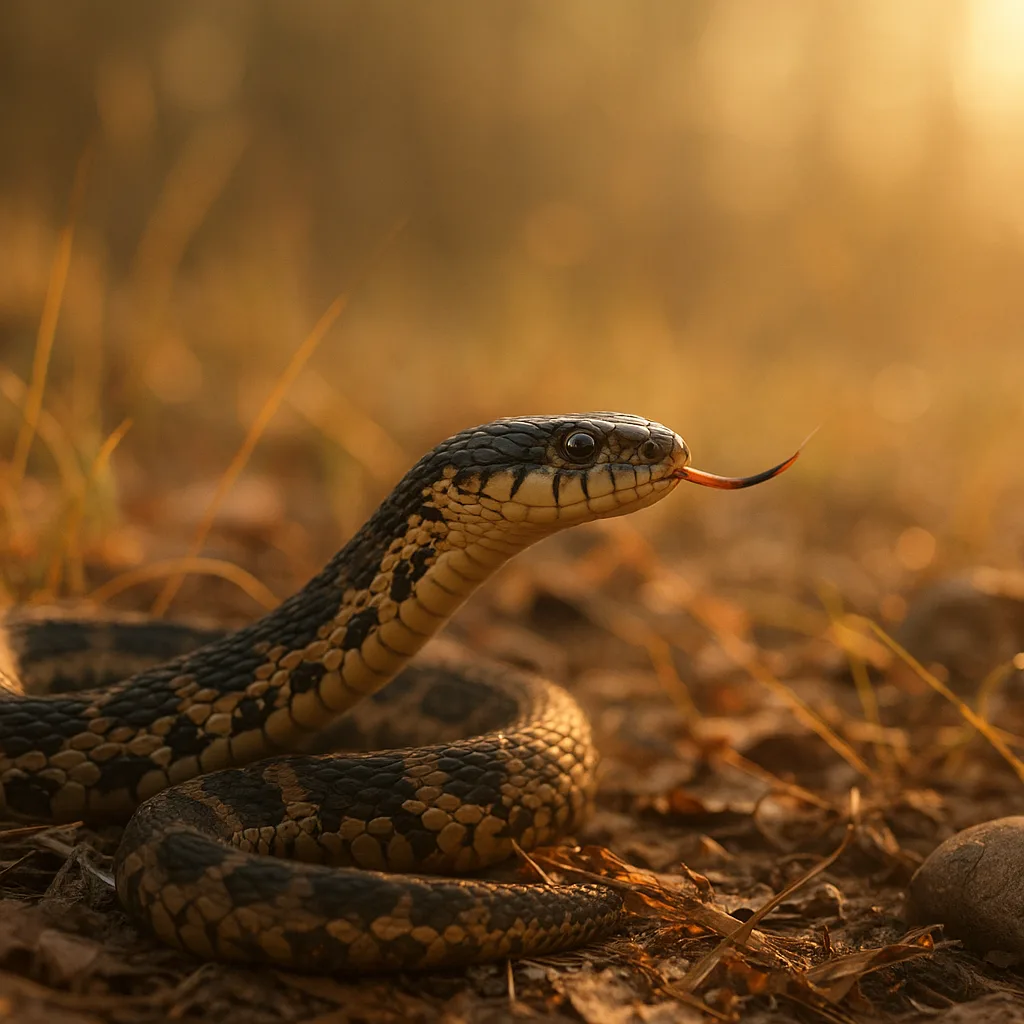
- Immediate safety assessment — venomous vs non-venomous.
- Species-level information — Latin names, size, behavior.
- Conservation or nuisance guidance — whether to relocate or call experts.
Understanding what searchers want shapes how you should take pictures and what details you must look for when you analyze them.
How to photograph snakes for accurate identification
Good photos make identification far easier. When approaching a snake, safety comes first: stay at least 2–3 meters away from an unknown snake and use a zoom lens or smartphone zoom. If the animal is in a public area, consider stepping back rather than trying to move it.
- Multiple angles: aim for dorsal (top), lateral (side) and head-on shots. At least three distinct views dramatically increase ID accuracy.
- Close-ups of key features: head shape, eye/pupil, dorsal scales, ventral scales (belly), and tail tip. If you can’t safely get close, a good zoomed lateral photo of the head and body often suffices.
- Include scale: place a coin, ruler, or a known-length object nearby (but not touching the snake) to give size context. Note approximate length in your notes.
- Lighting: diffuse daylight is best. Avoid strong backlight that hides pattern contrast. Use flash only if it doesn’t startle the snake.
- Habitat context: photograph the ground substrate, vegetation, water nearby, or structure (rock, log) so habitat clues aid identification.
- Metadata: keep geotags on if you’re comfortable sharing location; if not, write place, date and time. Geographic range is crucial to narrowing possibilities.
Key visual cues for snake identification
Visual identification blends pattern recognition with morphological details. Below are the most reliable features to examine, with practical tips and measurements where applicable.
Color and pattern
Color alone can be misleading because many species vary with age, locality and season. Patterns—bands, blotches, stripes, crossbars, dorsal keels—are more reliable.
- Bands vs blotches: regular, evenly spaced rings often indicate coral or kingsnakes; irregular blotches suggest rat snakes (Pantherophis spp.) or many colubrids.
- Number and width: note whether bands encircle the body fully and if bands on the head meet, which matters for coral snake ID (see comparisons).
- Contrast: high-contrast black-and-red or black-and-white patterns are diagnostic for several genera.
Scales: rows, texture, and keeling
Scale characters are fundamental to taxonomy. Bird’s-eye photography of midbody helps count dorsal scale rows: many snakes have 15, 17 or 19 rows at midbody.
For more on this topic, see our guide on Identify Snakes Fast: Field-Proven Tips.
- Dorsal scale rows: common counts are 15, 17, 19, 21 — measuring at the snake’s midbody distinguishes species groups.
- Keels vs smooth scales: keeled scales have a raised ridge down the center (e.g., most rattlesnakes Crotalus and many colubrids), while smooth scales are glossy (e.g., many racers and kingsnakes).
- Ventral scale counts: herpetologists use ventral scale counts to confirm species, but these usually require handling and aren’t practical for casual observers.
Head shape, eyes, and pupils
Head morphology can separate families. Pit vipers (Agkistrodon, Crotalus, Bothrops) have triangular, broad heads and heat-sensing pits between eye and nostril.
- Pupil shape: vertical/elliptical pupils often indicate vipers (pit vipers), while round pupils are common in most colubrids and elapids. Note multiple exceptions — pupil shape can change in low light.
- Head scalation: large symmetrical head shields are common in colubrids; irregular small scales on the head are seen in vipers.
- Neck contrast: a distinct narrowing behind the head suggests venomous vipers in many regions.
Size, proportions, and tail
Overall length, body thickness and tail shape help. For instance, rattlesnakes are stout with short tails, whereas racers (Coluber) are long and slender.
- Length ranges: garter snakes (Thamnophis sirtalis) typically 45–137 cm (18–54 in); milk snakes (Lampropeltis triangulum) 60–120 cm (24–48 in); rattlesnakes (Crotalus spp.) often 60–150 cm (24–59 in), depending on species.
- Tail tips: rattles, spiny tips, or a slender taper can be diagnostic.
- Body depth: a thick, heavy body implies a viper or heavy-bodied colubrid; a flattened body or laterally compressed tail suggests aquatic snakes.
Habitat, geographic distribution, and seasonal behavior
Where and when you see a snake is often as diagnostic as how it looks. Many species are habitat specialists with narrow ranges; others are generalists. Combine photo cues with range information to narrow IDs.
You may also find our article on Identify Your Dog from a Photo: Expert Guide helpful.
- Habitat types: forest floor, grassland, rocky outcrop, wetland, agricultural field, urban gardens — match your photo’s background to typical habitats for candidate species.
- Geographic range: check state or provincial range maps. A snake pictured in northern Alaska is not likely to be a Florida coral snake (Micrurus fulvius).
- Seasonal activity: many temperate snakes are most active in spring and fall. Hibernation (brumation) occurs in winter; breeding seasons may alter behavior and visibility.
Example: the eastern garter snake (Thamnophis sirtalis) is common in meadows and near water across much of North America and is most visible April–October, often basking in the morning sun.
Venomous vs non-venomous — safety, toxicity and first steps
Photo ID is often about safety. If you need to know whether a photographed snake is venomous, use morphological clues but prioritize caution. Misidentification can be dangerous.
- Immediate actions: keep at least 2–3 meters away, secure pets and children, and do not attempt to capture or kill the snake.
- Local venomous families: in North America, remember pit vipers (rattlesnakes Crotalus, copperheads Agkistrodon, water moccasins Agkistrodon piscivorus) and coral snakes (Micrurus). Other continents have elapids (Naja, Bungarus), vipers (Vipera), and others.
- Toxicity cues and limitations: triangular head and vertical pupils often indicate vipers, but non-venomous species mimic these traits. Pupil shape may not be visible in photos, and lighting affects appearance.
If bitten: seek emergency medical care immediately. Do not apply tourniquets, cut the wound, or attempt to suck venom. Note the snake’s appearance (a clear photo is ideal) and bring that information to medical staff to inform antivenom decisions.
Common lookalikes: how to tell them apart
Many misidentifications arise from lookalike species. Below are practical comparisons with the most useful visual distinctions.
You might also be interested in Identify Caterpillars by Photo: Expert Field Guide.
Coral snake (Micrurus) vs milk/king snakes (Lampropeltis)
- Coral snake: usually red, black and yellow bands. Remember the rhyme (U.S.): "Red touch yellow, kill a fellow; red touch black, friend of Jack" — but this is regionally limited and not universally reliable.
- Milk/king snakes: similar banding but red touches black; head pattern and scale texture differ. Coral snakes have smooth scales and a blunt head, while many milk snakes have a pointed head and keeled scales.
- Geography: coral snakes (Micrurus fulvius) are found in the southeastern U.S.; if you’re outside that range, a milk snake is more likely.
Rattlesnake (Crotalus, Sistrurus) vs water moccasin/cottonmouth (Agkistrodon piscivorus)
- Rattlesnake: characteristic rattle at tail tip, triangular head, heat pits, and pronounced keeled scales. Rattle length and segments vary; new snakes have small button-like rattle tips.
- Cottonmouth: heavy-bodied viper with a distinct white mouth lining visible when threatened, usually found near water. Some individuals lack strong dorsal pattern as adults.
- Habitat: water moccasins are almost always near water; rattlesnakes use drier uplands as well as rocky ledges.
Garter snake (Thamnophis) vs ribbon or water snakes
- Garter snakes: longitudinal stripes (one dorsal and two lateral) that run uninterrupted along the length. Slender, typically 45–137 cm long.
- Ribbon/water snakes: may have blotches or stripes; water snakes (Nerodia) often have heavily keeled scales and a stockier build.
- Behavior: Nerodia species are more likely to flatten and display an aggressive gape; garters often release a musky scent and flee.
Kingsnake (Lampropeltis) vs venomous banded snakes
- Kingsnakes: often black with white bands or saddle-shaped crossbands, smooth scales, and glossy appearance.
- Distinguish: kingsnakes swallow other snakes and have round pupils; many banded venomous species have different head scalation and keeling.
Step-by-step workflow to identify a snake from a photo (including Orvik)
This checklist is a practical workflow you can follow every time you want to identify a snake from a picture. It blends field techniques, photo analysis, and digital tools like Orvik.
Related reading: Photo ID: Mastering Animal Identification in the Field.
- Safety first: do not approach. If the snake is in a public area, cordon off the spot and keep people/pets away.
- Photograph correctly: get at least one lateral shot, one dorsal shot, and a close-up of the head. Capture habitat and include a size reference if possible.
- Note metadata: record date, time, location (GPS if possible), temperature and habitat notes (wetland, field, rock pile).
- Initial triage: separate photos into risky (possible venomous) vs non-risky. If venomous-looking, keep distance and call professionals.
- Visual checklist: check patterns (bands/stripes/blotches), scale texture (keeled or smooth), dorsal scale rows (estimate 15/17/19), head shape, pupil type if visible, body proportion, and tail tip.
- Compare with range maps: use local field guides or online databases to eliminate species not present in your county/region.
- Use AI-assisted ID tools: upload clear photos to an identification app such as Orvik. Orvik’s AI can provide probable species suggestions based on millions of labeled images and range data. Treat AI results as a strong lead, not definitive proof; follow up with expert confirmation for critical cases.
- Confirm with experts: if the snake is potentially dangerous or of conservation concern, forward the images and metadata to a local herpetologist, wildlife agency, or university extension service for verification.
Orvik can be particularly useful for rapid, preliminary identification; it integrates visual recognition with geographic filters to reduce false positives. Use Orvik alongside human expertise — AI speeds the process but experts confirm edge cases.
Conclusion
Identifying a snake by picture is a skill that combines careful photography, visual literacy (pattern, scales, head shape), and context (location and habitat). For most users the priority is safety: if there is any doubt about venom or risk, keep distance and consult professionals. Tools like Orvik accelerate identification and provide probabilistic species suggestions, but they work best when fed clear photos and paired with local knowledge.
With good photos, a systematic checklist, and an understanding of local snake fauna, you can rapidly determine whether a photographed snake is harmless, of conservation interest, or a safety concern.
Frequently Asked Questions
- Q: Can I identify any snake species from a single photo?
A: Often you can reach genus-level or probable species from a single high-quality photo, but multiple views (head, side, belly) improve accuracy substantially. - Q: Is it safe to get close to take photos?
A: No. Always maintain a safe distance (2–3 m) and use zoom. Never handle an unknown snake. - Q: How accurate are AI apps like Orvik for snake ID?
A: AI can be very accurate—often 80–95% for common species with good photos and location data—but misidentifications occur, so confirm with experts for venomous or conservation cases. - Q: What features most reliably separate venomous from non-venomous snakes?
A: There is no single universal feature. In many regions, triangular head shape, pit organs and vertical pupils indicate vipers, but mimicry and exceptions mean you should not rely on any single trait. - Q: Should I remove or kill a snake found near my home?
A: No. Most snakes are beneficial predators. If a removal is necessary, contact local wildlife control or a licensed handler who can relocate the animal safely. - Q: How do I share photos safely with experts?
A: Include date, approximate location (or GPS), habitat notes and multiple images. If privacy is a concern, omit precise GPS but give a general area (town, county). - Q: What if I get bitten?
A: Seek emergency medical care immediately. Try to photograph the snake from a safe distance if you can, but do not delay medical treatment to take pictures.
Frequently Asked Questions
- Can I identify any snake species from a single photo?
- Often you can reach genus-level or a probable species from a single high-quality photo, but multiple views (head, side, belly) improve accuracy significantly.
- Is it safe to get close to take photos of a snake?
- No. Maintain at least 2–3 meters distance and use optical zoom. Never attempt to handle or provoke an unknown snake.
- How accurate are AI apps like Orvik for snake identification?
- AI tools like Orvik can be very accurate for common species with clear photos and correct location data, but they can misidentify rare or juvenile snakes; expert confirmation is advised for critical cases.
- What visual features most reliably indicate a venomous snake?
- There is no single reliable feature worldwide. In many regions, triangular heads, heat pits and vertical pupils suggest vipers, but mimicry and exceptions exist—treat unknown snakes as potentially dangerous.
- Should I remove or kill a snake found near my home?
- No. Most snakes are beneficial. Contact licensed wildlife control or a herpetologist for safe relocation if necessary.
- What information should I include when sending photos to experts?
- Provide multiple photos (lateral, dorsal, head), date and time, approximate location (town/county or GPS), habitat notes, and any observed behavior.
- What should I do if bitten by a snake?
- Seek emergency medical care immediately. Do not cut or suck the wound, and try to photograph the snake from a safe distance to help medical personnel identify it.