
When someone types what breed is my puppy into a search box they are looking for more than a name. They want to know size at maturity, energy level, grooming needs, health risks, and whether their new companion is a good fit for their home. This field guide explains how to identify a puppy by sight and behavior, how to confirm identity with DNA and veterinary checks, and how AI tools such as Orvik can speed the process with photo-based analysis.
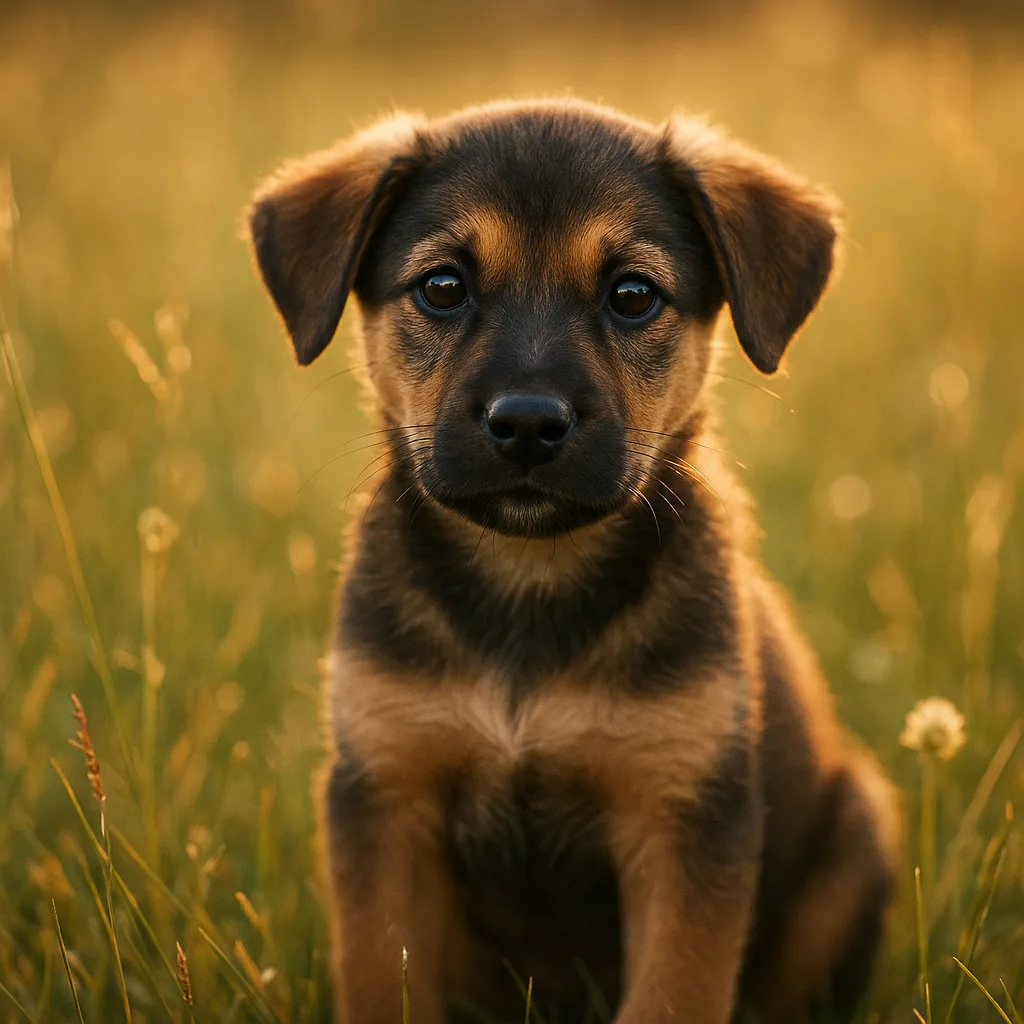
Why people search for a puppy breed identifier
Puppies change rapidly during the first year, so owners often ask how to tell what breed my puppy is. Common motives include planning nutrition and exercise, anticipating adult size, understanding temperament, and preparing for breed-specific care such as grooming or heat sensitivity. A good identifier answers these practical questions and reduces guesswork.
Key things people really want to know
- Estimated adult height and weight in centimeters and kilograms
- Typical coat type and grooming frequency
- Energy level and exercise needs measured in minutes per day
- Health risks that require monitoring or veterinary testing
- Whether the puppy is a pure breed, a mix, or uncertain without DNA
How a puppy breed identifier works
Modern identifiers combine visual analysis, owner-provided information, and optionally genetic testing to produce an identification with confidence metrics. AI tools analyze thousands of images to learn visual patterns. Human experts (veterinarians and breed specialists) check for anatomical cues. Orvik is an example of an AI-powered visual identification app that compares photos to curated breed databases and returns probable matches with confidence scores.
Steps in visual identification
- Collect a set of clear photos showing the puppy from multiple angles: front, profile, top-down, and full-body standing.
- Note age in weeks, approximate weight, and any notable behaviors (hunting drive, tendency to bay, herding nips).
- Use an AI tool such as Orvik to get immediate visual matches, then confirm with a vet or genetic test if needed.
Visual clues: what to look for and why they matter
Visual identification relies on consistent physical markers. Below are the primary features and practical measurements to note. Scientific name for domestic dog is Canis lupus familiaris; breed differences are largely morphological and genetic adaptations to historical roles.
For more on this topic, see our guide on Feeding a Cane Corso Puppy: Practical Diet Plan.
Primary visual traits
- Head shape - Dolichocephalic (long muzzle) versus brachycephalic (short, wide muzzle). Measure muzzle length relative to skull width; short muzzles under 4 cm in young puppies indicate brachycephalic ancestry.
- Ears - Erect, semi-erect, pendulous, or button. Ear set can indicate groups (herding breeds often have semi-erect ears; scent hounds often drop).
- Coat type - Single versus double coat; short smooth, long silky, wiry, curly. Double coats (dense undercoat with longer guard hairs) are common in northern breeds such as Siberian Husky and Alaskan Malamute.
- Tail carriage - Curled, sickle, saber, or low-set. Huskies and spitz-type breeds often have curled or sickle tails.
- Paw size and proportion - Large, broad paws often project a larger adult size; pug-like compact paws suggest small breed.
- Coat patterns and colors - Tuxedo, saddle, brindle, merle, sable, and mask. Merle, for example, is a specific pigment pattern linked to identifiable genes.
- Gait and posture - The way a puppy moves can hint at structure and function: sprinters show powerful hindquarters (greyhound lineage), while endurance dogs have steady, long-strided gaits.
Practical visual measurement tips
- Measure height at the withers in centimeters when the puppy stands square. Compare to breed group growth curves.
- Use a soft tape to measure chest circumference just behind the front legs; this helps estimate adult weight.
- Photograph the puppy next to a standard object (door, chair, or ruler) for scale when using visual AI tools.
Age, growth, and what changes to expect
Puppies can look deceptively like one breed early on. Coat texture matures, color can shift, and ear carriage may change as cartilage stiffens. Knowing these timelines helps interpret early visual IDs.
Growth timelines and weight rules of thumb
- Average puppy milestones: eyes open by 10-14 days, walking by 3 weeks, solid food accepted by 4 weeks, weaning complete by 8 weeks.
- Adult weight approximations: small breeds reach adult weight by 9-12 months, medium breeds by 12-15 months, large breeds by 18 months, giant breeds by 24 months.
- Rule of thumb estimates: 50% of adult weight at 4 months for many breeds; 75% at 9 months for medium breeds. These are approximations and vary by breed.
Why coat and color change matters
- Puppy coats are often softer and shorter; adult double coats develop dense undercoats at 4-8 months in northern breeds.
- Color fading or darkening occurs in many breeds; sable markings may spread, and masks can persist or fade.
- Breeds with rapid seasonal shedding (double-coated) will look dramatically different between spring and late summer.
DNA testing, veterinary exams, and accuracy
If you need certainty beyond visual probability, DNA testing and veterinary examination are the most reliable methods. Each has pros and cons in cost, turnaround time, and level of detail.
You may also find our article on Identify Your Dog: Expert Visual Guide helpful.
Options and what to expect
- At-home DNA kits: typically 60 to 200 dollars. Lab returns a percentage breakdown of breeds and may list confidence levels. Best for identifying breed roots but can miss rare or non-registered mixes.
- Veterinary exam: a vet can identify conformation traits and suggest likely breed groups and breed-specific health screenings. Cost varies by clinic and may be combined with routine exams.
- Academic or breed specialist review: for complex cases, photos and measurements reviewed by breed club specialists provide expert opinion but are not genetic proof.
Accuracy and interpretation
- Visual AI tools such as Orvik often produce correct breed group matches; single-breed identification for mixes may be less certain.
- DNA tests vary in database size; larger databases increase the chance of identifying minority ancestry with better accuracy.
- Results should be used together: visual ID gives immediate practical guidance while DNA confirms ancestry and improves long-term health planning.
Common breed comparisons: how to tell them apart
Some breeds are frequently confused as puppies. Below are side-by-side comparison tips and measurable differences to resolve common confusions.
Labrador Retriever vs Golden Retriever
- Labrador: broad head, otter tail, short dense double coat. Adult weight 25 to 36 kg, height 55 to 62 cm.
- Golden: longer, wavier coat with feathering on legs and tail, more tapered muzzle. Adult weight 25 to 34 kg, height 51 to 61 cm.
- Visual cues: look for feathering and coat length; labs have shorter coats and thicker, water-resistant fur.
Siberian Husky vs Alaskan Malamute
- Husky: typically 51 to 60 cm height, 16 to 27 kg weight, lighter frame and more pricked, triangular ears. Eyes often blue or heterochromatic. Tail carried in sickle over the back.
- Malamute: heavier, 56 to 71 cm, 34 to 45 kg, broader muzzle and larger bone structure. Tail plumed and carried over the back but heavier set.
- Coat and gait: malamutes have denser undercoats and slower, power-driven strides; huskies are built for speed and endurance.
Beagle vs Coonhound
- Beagle: compact, 33 to 41 cm, 9 to 14 kg, shorter legs and square build, tri-color common, barking/ baying voice moderate.
- Coonhound: taller, longer legs, heavier bone, often single-color with ticking, voice is louder and deeper when baying.
- Snout and ears: both have long ears, but coonhounds' ears are longer proportionally and set lower.
Care, safety, and breed-specific considerations
Once you have a likely breed or group, adapt care accordingly. Different breeds have distinct exercise, grooming, and health risk profiles. Below are practical safety and toxicity notes relevant to all puppies and especially breed-prone issues.
You might also be interested in Inside the Acai Berry: Nature’s Amazonian Purple Fruit.
Related reading: Choosing the Right Collar and Gear for a Labrador Puppy.
Exercise and enrichment guidelines
- High-energy breeds (border collie, Australian shepherd) need 60 to 120 minutes of vigorous activity daily plus mental stimulation.
- Medium-energy breeds (labs, golden retrievers) do well on 30 to 60 minutes of mixed exercise daily.
- Brachycephalic breeds (bulldogs, pugs) should avoid intense exercise and heat; keep sessions short and shaded, especially above 24 degrees Celsius.
Grooming and seasonal care
- Double-coated breeds blow coat seasonally, requiring daily brushing during shedding peaks in spring and fall.
- Long-haired breeds need weekly to biweekly brushing and periodic trimming around pads and eyes.
- Winter: some small or short-coated breeds need insulated coats below 7 degrees Celsius; monitor paws for ice-melt chemical exposure.
Toxicity and safety warnings
- Foods to avoid: chocolate, xylitol (sweeteners), grapes and raisins, onions, garlic, macadamia nuts. Even small amounts can cause severe symptoms.
- Plants and chemicals: sago palm, certain lilies (toxic to other species), and rodenticides are dangerous. Store all household toxins out of reach.
- Heat and cold: brachycephalic breeds risk heatstroke at lower ambient temperatures. Arctic breeds risk hypothermia if wet and exposed for long periods.
How to use Orvik and next steps after identification
Orvik and similar AI apps are most useful for quick, photo-based first-pass identification. They return likely matches and confidence levels, and can prioritize breeds for further investigation or DNA testing.
Step-by-step checklist
- Take multiple clear photos: side profile, front, top-down, and close-ups of the face and paws.
- Note the puppy s age, weight, and observed behaviors such as vocalization style and play patterns.
- Upload photos to Orvik for a rapid visual ID. Review the highest confidence matches and compare described traits to your puppy.
- If needed, order a DNA test for confirmation and discuss breed-specific health screens with your veterinarian.
- Adapt diet, exercise, grooming, and socialization to the expected adult size and breed traits.
Conclusion
Answering how do i find out what breed my puppy is requires combining visual observation, growth tracking, expert advice, and sometimes DNA. Use practical visual cues such as head shape, ear set, coat type, tail carriage, and paw proportion to narrow options quickly. Tools like Orvik speed that process by comparing photos to curated breed libraries. For definitive ancestry and health planning, follow up with DNA testing and veterinary evaluation. The right identification helps you prepare for a long, healthy life together.
Frequently Asked Questions
- How do I find out what breed my puppy is with photos
- Use multiple clear photos showing profile, front, top-down, and close-ups of head and paws. Upload to an AI visual ID tool such as Orvik for probable matches, then confirm with a vet or DNA test if needed.
- What physical traits best reveal breed
- Key traits include head and muzzle shape, ear set, coat type (single vs double), tail carriage, paw size, and coat patterns such as brindle or merle.
- When will my puppy s adult size be predictable
- Many breeds show reliable size predictions by 4 months (about 50 percent of adult weight). Small breeds mature earlier (by 9-12 months) and giant breeds by 18-24 months.
- Are DNA tests accurate for mixed-breed puppies
- DNA tests are generally accurate for identifying breed ancestry but vary by database size. They often identify major contributors reliably but may miss rare or poorly represented breeds.
- What are common poisonous foods to avoid for puppies
- Avoid chocolate, xylitol, grapes and raisins, onions, garlic, and macadamia nuts. If ingestion occurs, contact your veterinarian or emergency clinic immediately.
- Can Orvik tell me exactly what breed my puppy is
- Orvik provides AI-powered visual matches and confidence scores. It often identifies breed groups and common purebreds accurately, but DNA or vet confirmation may be needed for definitive ancestry.
- Should I change care based on suspected breed
- Yes. Adjust exercise, diet, and grooming according to the expected adult size and coat type. For example, high-energy herding breeds need more mental stimulation and exercise than companion lap breeds.