
If you’ve ever seen a snake on a trail, lawn or beachfront and wondered “What is that?” a reliable snake identification app can end the uncertainty fast. This definitive guide explains how modern AI-powered tools (including Orvik), field identification tips, safety protocols and comparisons among the best apps will help you identify snakes with confidence while keeping you and the animal safe.
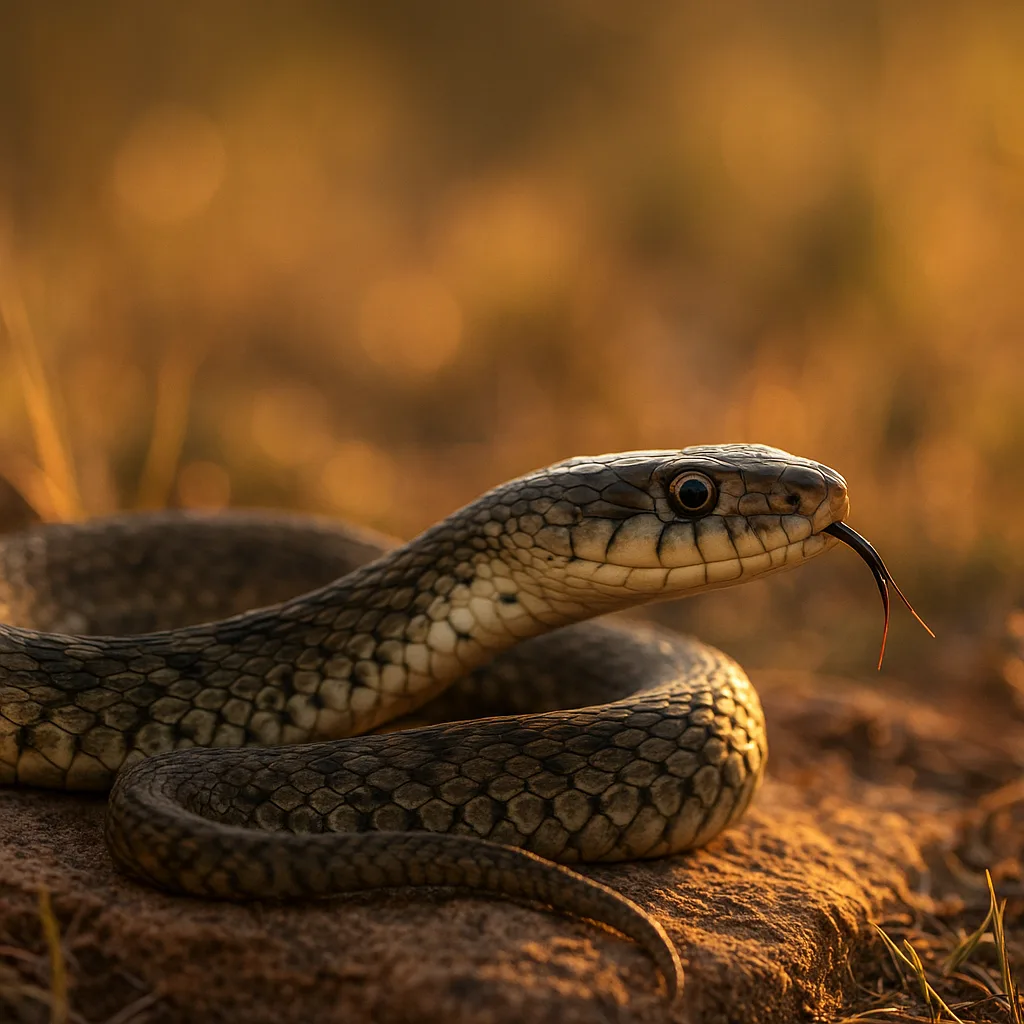
Why use a snake identification app?
People search for a snake identifier app or snake id app for three main reasons: safety, curiosity and conservation. Whether you’re a hiker, gardener, parent or herpetologist, an app that identifies snakes can provide rapid, evidence-based suggestions when a live animal is nearby.
- Immediate identification: AI and image-recognition models return likely species within seconds.
- Contextual help: distribution maps, seasonality, and natural history reduce guesswork.
- Documentation: photos, GPS coordinates and timestamps support scientific records and citizen science projects.
When someone searches for an app that identifies snakes, they usually want accuracy, speed, and a way to know whether the snake is venomous — not just a name. A good app provides probability scores, similar species, and field notes so you can decide how to react.
How snake ID apps work: AI, community and field data
Modern apps to identify snakes combine computer vision, curated field guides, and human verification. Understanding the pipeline helps you evaluate which app to trust.
- Computer vision: Convolutional neural networks trained on thousands of labeled photos learn patterns like scale texture, head shape, and color bands.
- Metadata: GPS, time of year, and user-provided habitat notes help narrow candidate species by range and seasonality.
- Community verification: Platforms such as iNaturalist leverage expert or community validation to confirm IDs, improving long-term accuracy.
- Curated content: Field guides, range maps, and species accounts provide the natural-history context users need.
AI confidence and limitations
- AI returns probability scores (e.g., 87% Crotalus horridus). Treat anything under ~80% as provisional.
- Poor lighting, juvenile patterns, coiled posture and partial photos lower accuracy.
- Apps like Orvik combine AI output with range filtering and explainable features to increase trustworthiness in results.
Practical field identification tips (what to look for)
Knowing which visual cues carry the most diagnostic weight lets you take better photos and interpret app results. These are practical, field-proven cues used by herpetologists and effective ID apps alike.
For more on this topic, see our guide on Photo Guide: Recognize Snakes in the Wild.
- Size and proportions: Record total length and body thickness. Example: Eastern copperhead (Agkistrodon contortrix) adults typically 50–95 cm (20–37 in); gopher snakes (Pituophis catenifer) often exceed 120 cm (47 in).
- Head shape: Triangular, broad heads often indicate vipers (pit vipers), while slender, narrow heads are more typical of colubrids and elapids—though evasive posture can alter shape.
- Eye pupils: Vertical, catlike pupils usually appear in many vipers; round pupils are common in colubrids. Pupil shape varies with light and isn’t foolproof.
- Scales: Keeled scales (ridge down the center) give a rough texture; smooth scales look glossy. For instance, Nerodia (water snakes) have strongly keeled scales.
- Color and pattern: Bands, blotches, rings and dorsal lines are species-specific. Note pattern size relative to body width: broad, saddle-shaped blotches vs narrow bands.
- Tail and rattle: Rattles (Crotalus, Sistrurus) are diagnostic for rattlesnakes. Juveniles may lack a pronounced rattle though they have a button—listen, don’t prod.
- Loreal pits: Pit vipers (e.g., rattlesnakes, copperheads, cottonmouths) have heat-sensing pits between eye and nostril; these appear as shallow depressions on the face.
- Belly pattern: Ventrals can be solid, checked, or striped. For example, Garter snakes (Thamnophis) usually have longitudinal stripes on the dorsum and belly.
How to photograph for best app results
- Take multiple photos: dorsal (top), lateral (side), head close-up, and belly if safe to do so.
- Include a scale reference (e.g., a 30 cm ruler or a coin placed at a safe distance) to help estimate size.
- Avoid flash glare that washes out pattern contrast; use diffuse light when possible.
- Maintain a safe distance: smartphone zoom is better than approach—use optical zoom or a telephoto attachment.
Key features to look for in a snake ID app
Searches for “best app to identify snakes” often reflect a need to compare features. Below are the attributes that matter most for accuracy and field usability.
- Accuracy and provenance: Does the app show confidence scores and link identifications to specimen data or vetted records?
- Offline capability: Can the app ID species without cell service? Essential for remote hikes.
- Range maps & seasonality: Integrated maps filter improbable species for a location and time of year.
- Human expert review: A system for expert verification (or community validation) improves long-term reliability.
- Conservation & reporting: Ability to contribute sightings to projects (e.g., HerpMapper) or download data for research.
- Privacy and data ownership: Clear policies on how photos and location data are used and shared.
- Cost & accessibility: Free vs paid tiers, and whether a robust free plan is available (people commonly search for a free snake id app).
Why offline and range filtering matter
- AI models can propose species not found in your state or country—range filtering avoids false positives.
- Offline models let you get an ID on a desert trail without service; ensure the app downloads regional datasets to your phone.
Orvik and how it compares to other tools
Orvik is an AI-powered visual identification app built specifically to identify snakes and other wildlife. It combines real-time image recognition, probability scores, and curated species content to guide users from initial detection to confident identification. Here's how Orvik stacks up against other popular options.
- Orvik: Focused on reptile identification with an AI model trained on thousands of labelled snake photos. Offers quick probability scores, field notes, and range context. Good balance of speed and targeted herpetological data.
- iNaturalist: Community-driven with strong expert verification and a massive database. Excellent for long-term records but sometimes slower to give a final ID.
- Seek (by iNaturalist): Great for beginners and offline use, but less detailed for species-level snake IDs compared to specialist tools.
- HerpMapper: Excellent for herpetologists and conservationists who want to report verified sightings; less user-friendly for instant photo ID.
Orvik vs iNaturalist: Which when?
- Use Orvik for fast, AI-based field IDs and explanations—especially when you need a quick safety assessment (venomous vs non-venomous suggestions).
- Use iNaturalist when you want community confirmation, academic-backed records, or to contribute to biodiversity datasets.
- Best workflow: use Orvik for the first-pass ID, then upload to iNaturalist or HerpMapper for expert verification and archival record.
Common lookalikes: X vs Y — how to tell them apart
Many misidentifications are caused by lookalikes. Below are field-tested comparisons with clear visual cues and measurements to help you distinguish commonly confused species.
You may also find our article on Identify a Dog Breed Fast and Accurately helpful.
- Rattlesnake (Crotalus spp.) vs Gopher/Bullsnake (Pituophis spp.)
- Rattlesnakes have a rattle or button on the tail, triangular head, pit between eye and nostril, and heavily keeled scales. Adults vary by species: Crotalus adamanteus (Eastern diamondback) 120–240 cm (4–8 ft), Crotalus horridus (timber) 90–150 cm (3–5 ft).
- Gopher snakes lack a rattle, have rounder heads, smooth or weakly keeled scales, and often mimic rattlesnake coloration with blotches. They are usually longer (often 120–240 cm) and may flatten their heads when threatened.
- Cottonmouth / Water moccasin (Agkistrodon piscivorus) vs Northern Water Snake (Nerodia sipedon)
- Cottonmouth adults are stout (60–120 cm), have a triangular head and vertical pupils; they display a white interior mouth when threatened. They are semi-aquatic in the southeastern U.S.
- Nerodia species have round pupils, a slimmer head blending with the neck, and strongly keeled scales with dorsal banding. Juveniles of either can be confusing; look for the white mouth display and head morphology.
- Copperhead (Agkistrodon contortrix) vs Corn Snake (Pantherophis guttatus)
- Copperheads: 50–95 cm, hourglass-shaped dorsal crossbands (narrow at midline, wider at the sides), triangular head, and pit viper heat-sensing pits.
- Corn snakes: generally longer (up to 150 cm), with rounder heads, blotches that are more rectangular on the dorsum, and smooth scales. Color ranges widely in captive-bred morphs.
When using an app like Orvik, the AI often lists similar species and visual differences—use those suggestions plus the field cues above to verify.
Safety, toxicity and ethical handling
Your primary responsibility in the field is safety for yourself and the animal. Apps can inform but not replace cautious behavior.
Looking beyond this category? Check out What Chalk Is: Origins, Composition, and ID Tips.
- Distance: Maintain at least 2–3 meters (6–10 feet) from a snake. For larger vipers, keep extra distance.
- Do not handle wild snakes: Only trained, properly equipped professionals should handle venomous or unknown snakes.
- If bitten: Keep the victim calm, immobilize the bitten limb, remove tight clothing/jewelry near the bite, and seek immediate medical attention. Do not cut, suck, or apply a tourniquet.
- Local emergency numbers: Know the emergency phone number in your area and the location of the nearest hospital that stocks antivenom for regional species (e.g., polyvalent antivenom in the U.S. for pit viper bites).
- Ethical reporting: When contributing sightings, obscure exact GPS coordinates of sensitive or endangered taxa if the platform allows. Many apps provide options to privatize location data.
Which snakes are medically important?
- North America: pit vipers (Crotalus spp., Sistrurus spp., Agkistrodon spp.) are the primary medically significant snakes; coral snakes (Micrurus spp.) are rare but venomous.
- Australia: many species (e.g., Pseudonaja textilis, Oxyuranus scutellatus) are highly venomous—always use extreme caution and local expertise.
- Asia/Africa/South America: local venomous species vary widely. Use regional range maps in apps to understand which species present true medical risks.
Choosing the right app for you: free vs paid and best-in-class
Which app is best depends on your needs. Hikers may prefer offline capabilities; citizen scientists want community verification; families may prioritize a simple free app. Here’s a short decision guide.
Related reading: Identify Your Cat: A Field Guide.
- If you want fast, targeted snake IDs in the field: choose a specialist app like Orvik for AI-first identification and concise species notes.
- If you want community validation and data archiving: use iNaturalist; combine with Orvik for an initial ID.
- If you need offline use on long trips: pick apps that explicitly offer downloadable regional datasets (check free tier limitations).
- If budget is an issue: many apps offer robust free tiers; search for a free snake id app that still provides probability scores and offline maps.
Many users adopt a hybrid approach: a fast app (Orvik) in the field, then upload to community platforms for verification and long-term records.
Conclusion
When someone types “snake identification app” into Google they want reliable, quick answers and guidance on how to act. The best workflow is to take clear, multiple-angle photos and use an AI-powered tool like Orvik for an initial, probability-ranked ID—then, if needed, seek community or expert verification. Remember to prioritize safety: stay back, never handle unknown snakes, and treat app identifications as an aid, not a substitute for professional judgment when human safety or medical treatment is involved.
Armed with good photos, a quality app, and the field cues in this guide, you’ll be better prepared to identify snakes accurately and ethically wherever you encounter them.
Frequently Asked Questions
- What is the best snake identification app?
- The best app depends on your needs: Orvik is strong for fast AI-driven snake IDs, while iNaturalist excels at community verification and long-term records. Combine both for the best workflow.
- Are snake ID apps free?
- Many apps offer free tiers (e.g., iNaturalist, Seek). Specialist apps may offer a free option with paid upgrades for offline maps or advanced features; check each app’s price structure.
- Can apps tell if a snake is venomous?
- Apps can indicate whether an identified species is venomous, but identification uncertainty exists. Always maintain a safe distance and consult local experts for medical risks.
- How can I improve photo IDs?
- Take multiple photos (head, side, dorsal, tail), include a scale reference, use diffuse natural light, and keep a safe distance while using zoom for close shots.
- Is it safe to handle snakes found in my yard?
- No. Do not handle unknown snakes. Contact local wildlife control or a trained herpetologist if removal is necessary. Handling increases risk for both you and the animal.
- How accurate is Orvik?
- Orvik uses AI trained on thousands of labeled photos and provides probability scores and range context. Accuracy is high for well-photographed, adult specimens; juvenile stages and poor images lower confidence.
- Can apps work offline?
- Some apps provide offline models and downloadable regional datasets. Verify offline features before remote trips and download necessary data while you still have service.