
Why people ask “what breed is my dog”
When someone types "what breed is my dog" into a search bar they usually want more than a name: they want behavior predictions, health expectations, proper training methods, and an explanation for appearance or size. Owners of shelter dogs, mixed-breed pups, or rescued adults often lack pedigree paperwork. Others notice changes — a sudden size spike or new coat pattern — and wonder if a different breed is hiding in the family tree.
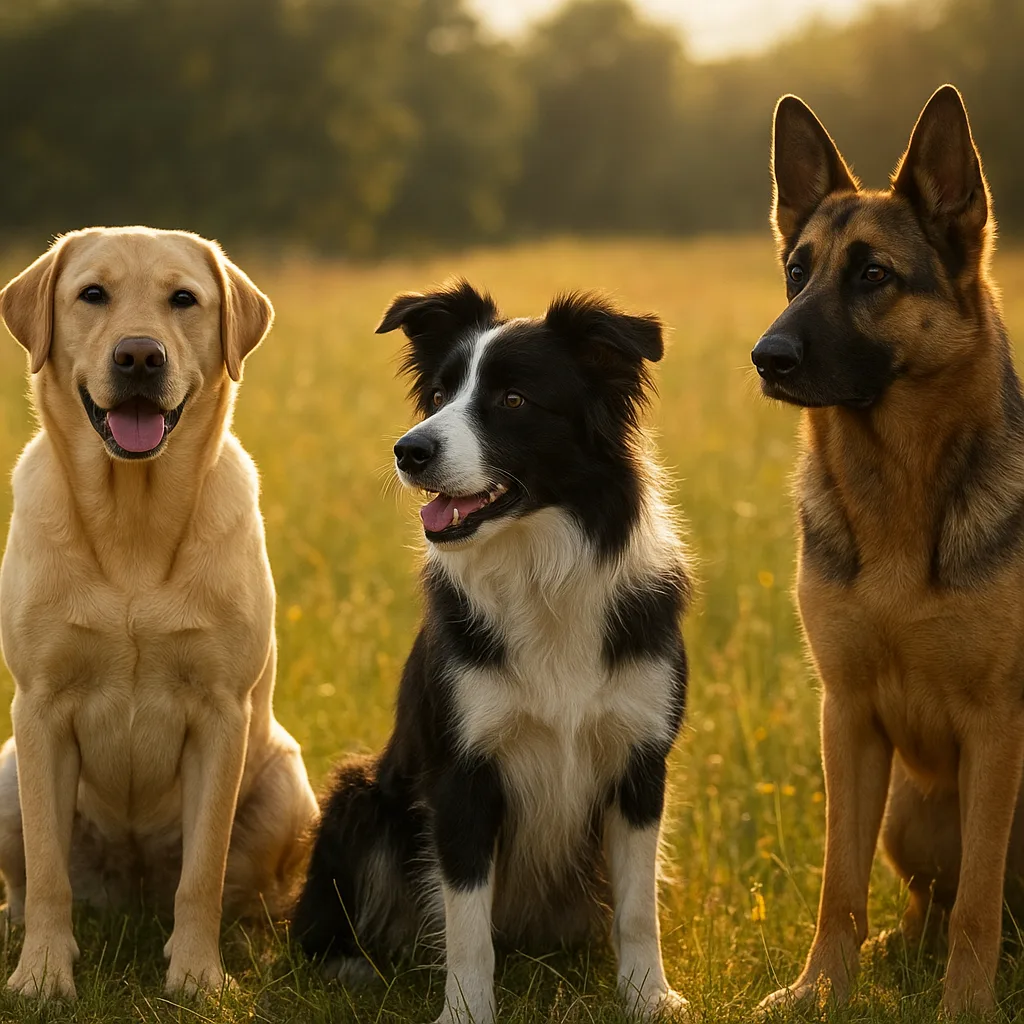
- Practical reasons: training, exercise needs, and diet tailored to breed traits.
- Health reasons: predispositions to hip dysplasia, brachycephalic airway syndrome, or copper toxicosis.
- Curiosity: understanding ancestry, working background, and typical temperament.
Answering "how to find out what breed your dog is" requires a mix of visual observation, measurement, behavioral history, and sometimes genetic testing. Below you'll find expert techniques, measurements, comparisons, and tools — including how AI tools like Orvik can help.
Visual identification basics: what to look for
Visual identification starts with clear, objective traits. Think of these as the data points that experienced breeders, veterinarians, and apps use to match your dog to known breed standards.
Key features to examine
- Size and proportions: Adult height at the withers (shoulder) in centimetres and inches. Example ranges: toy & small breeds <30 cm (<12 in), medium 30–60 cm (12–24 in), large >60 cm (>24 in).
- Weight: Compare against breed standards — e.g., Labrador male 29–36 kg (65–80 lb), female 25–32 kg (55–70 lb).
- Head and muzzle: Dolichocephalic (long muzzle, e.g., Greyhound), mesocephalic (balanced, e.g., Border Collie), brachycephalic (short muzzle, e.g., French Bulldog).
- Ears: Erect/pricked (German Shepherd), drop/button (Beagle), rose (Bulldog), semi-pricked (Collie).
- Coat type and texture: Double coat with dense undercoat (Siberian Husky), single smooth coat (Dalmatian), wiry (Airedale Terrier), long silky (Yorkshire Terrier).
- Color and patterns: Solid, brindle, merle, sable, black-and-tan, tuxedo markings. Merle and certain color genes are strongly associated with specific breeds.
- Tail shape: Plumed/feathered (Afghan Hound), curled over the back (Shiba Inu), straight and long (Labrador), docked (some working breeds).
- Gait and movement: Sighthounds are springy and low to the ground, herding dogs show quick directional changes, scent hounds have a steady trailing gait.
Practical visual cues (quick checklist)
- Take a full-body photo from the side and front, and a close-up of the head.
- Note the eye color and shape (amber eyes are common in some huskies and hound breeds).
- Look for breed-specific traits such as webbed feet (Newfoundland), backward-facing dewclaws (Great Pyrenees), or erect double coat (Samoyed).
How to measure and document your dog
Accurate measurements make identification much easier. Many breed standards are defined in centimetres or inches; pairing photos with measurements improves both human and AI identification.
- Height at withers: Measure from the ground to the highest point of the shoulders using a flat ruler or measuring tape. Record in cm and inches.
- Weight: Use a reliable scale; puppies scale up quickly so note the age (weeks or months).
- Skull and muzzle: Use a soft measuring tape to record head length (occiput to tip of nose) and skull width; many breed comparisons rely on muzzle length ratios.
- Neck, chest, and limb measurements: Neck circumference, chest girth (behind the front legs), and limb length can indicate breed function (e.g., built for speed vs. power).
- Documentation: Keep multiple well-lit photos (side, front, top, face close-up) and a short video showing gait and behavior for apps like Orvik and for any vet consultation.
Tip: Measure standing on a flat, hard surface. Puppies under 12 months can change rapidly — note age to prevent misidentification.
For more on this topic, see our guide on Identify Your Puppy: Practical Visual Guide.
Breed groups, habitat adaptation, and seasonal behavior
Understanding breed groups (herding, working, toy, hound, terrier, sighthound, spitz, and companion) helps predict behavior and environmental adaptations.
- Spitz-type (e.g., Siberian Husky, Alaskan Malamute): Double coats, dense underfur, adapted to cold climates; heavy seasonal shedding (blowing coat) in spring.
- Herding breeds (e.g., Border Collie, Australian Shepherd): High energy, keen eye contact, often medium-sized with agile build; thrive in open areas with tasks.
- Hounds (scent and sight): Scent hounds (Beagle, Basset) have long ears and tracking behaviors; sighthounds (Greyhound, Whippet) are lean and built for sprinting.
- Working breeds (e.g., Mastiff, Doberman): Large body mass, guarding instincts, many with high heat sensitivity if brachycephalic.
- Toy and companion breeds: Small size, less exercise need but variable behavior; often bred for proximity to humans.
Geographic distribution and habitat notes
- Some breeds originated for local climates: Basenji (central Africa) tolerates heat and has short coat; Tibetan Mastiff evolved for high-altitude, cold environments.
- Human relocation and crossbreeding have spread breeds globally; modern distribution is not always indicative of origin.
- Seasonal behavior: double-coated breeds shed heavily in spring and fall — note coat thickness and shedding patterns for identification.
Dog DNA testing for breed identification: pros and cons
Genetic tests have revolutionized breed identification, especially for mixed-breed dogs. They analyze single nucleotide polymorphisms (SNPs) and compare them to reference databases. However, results have limits.
- Popular providers: Embark, Wisdom Panel, DNA My Dog. Price range: approximately $70–$200 depending on depth (health screens + ancestry).
- Accuracy: High for identifying major breed contributors within 3–4 generations; accuracy drops for rare breeds or if the breed is underrepresented in reference databases.
- What DNA reveals: Breed composition (percentages), carrier status for certain inherited conditions, and sometimes maternal/paternal haplotypes.
- Limitations: Mixed-breed dogs with many small contributions may get broad labels ("mixed"). Some tests can’t distinguish closely related breeds (e.g., American Staffordshire vs. American Pit Bull Terrier) with 100% certainty.
Practical guidance when considering a test
- Choose a company with a large, transparent reference database and peer-reviewed methodology.
- Use DNA results together with visual cues and behavioral history — not as the sole evidence.
- Expect a confidence interval: many reports give percent certainty for each breed call.
Genetics answers ancestry questions, but DNA can't always predict behavior precisely. Environment, training, and early socialization shape temperament significantly.
You may also find our article on Identify Your Dog from a Photo: Expert Guide helpful.
Using photos and AI: How Orvik helps identify breeds
AI visual-identification tools like Orvik speed up the process by comparing your dog's images to large breed image databases and feature sets. Orvik uses machine vision to evaluate coat, proportions, ear set, tail carriage, and gait from photos or short videos.
- Best photos to take: clear side profile, head-on face shot, rear view, and a short walking video. Natural daylight and contrasting background improve detection.
- Multiple angles: Because mixed-breed dogs can show traits from several breeds, upload multiple images across seasons (winter coat vs. summer) to Orvik for more accurate matches.
- Combine with metadata: Include age, approximate weight, and any known history (found in X neighborhood, rescued from shelter) to refine results.
Step-by-step using an AI app
- Take three to five high-resolution photos: side, front, face close-up, and rear.
- Record a 10–15 second walk-on-leash video showing gait.
- Upload to Orvik, enter measurements and age, and review suggested breed matches and confidence scores.
- Validate the suggestions by comparing the app results with visual cues listed earlier and, if needed, order a DNA test for confirmation.
Orvik is particularly useful for shelter workers and new owners who need a quick, research-backed starting point. Use AI results as guidance — not a final diagnosis — and consult vets for health-related breed concerns.
Key breed comparisons: how to tell lookalikes apart
Here are common confusions and practical tips to separate similar breeds. Each comparison includes measurable traits and visual cues.
Looking beyond this category? Check out Mastering Visual ID: Your Photo Identifier Guide.
Labrador Retriever vs Flat-Coated Retriever
- Coat: Labrador has a short, dense, water-resistant coat; Flat-Coated has a longer, feathered coat especially on tail and legs.
- Head: Labs have broader skulls and more blocky muzzles; Flat-Coats are leaner with a wedge-shaped head.
- Typical height: Both 55–62 cm (21.5–24.5 in) for males, but coat texture is the clearest indicator.
Siberian Husky vs Alaskan Malamute
- Size: Malamutes are larger and heavier — males often 38–43 kg (85–95 lb); Huskies 16–27 kg (35–60 lb).
- Face markings and eyes: Huskies often have striking blue eyes and mask patterns; Malamutes usually brown eyes and a broader head.
- Tail carriage: Husky’s tail often sickle-curved when alert; Malamute’s tail is plumed and carried over the back.
American Pit Bull Terrier vs American Staffordshire Terrier
- Legal labels vary, and both breeds share ancestry; visual ID is challenging.
- Look for subtle differences in head shape (Staffords often blockier) and stature. DNA testing provides clearer separation when necessary.
Beagle vs Foxhound
- Size: Beagles are smaller (33–41 cm / 13–16 in), Foxhounds are larger (approx 53–64 cm / 21–25 in).
- Ears and gait: Both have long ears, but Foxhounds have a longer stride and a coarser coat.
When in doubt, combine proportion measurements, coat texture, and gait videos. Orvik can provide initial comparisons against thousands of breed images and flag likely lookalikes for closer inspection.
Related reading: Dolphin Diets: What They Eat and Why.
Safety, health concerns, and when to consult a professional
Identifying breed isn't just academic — it can be important for health planning. Certain breed traits carry medical considerations and safety cautions.
- Brachycephalic breeds (French Bulldog, Pug): prone to heatstroke and brachycephalic obstructive airway syndrome; avoid heavy exercise in hot weather.
- Large and giant breeds (Great Dane, Mastiff): predisposed to gastric dilatation-volvulus (bloat) and hip dysplasia; feed multiple small meals and monitor posture.
- Herding and high-energy breeds (Border Collie, Australian Shepherd): require mental stimulation and can develop destructive behaviors when bored.
- Toxic foods and plants: Chocolate, xylitol (artificial sweetener), grapes/raisins, onion/garlic, and some lilies/azaleas are toxic. Keep household chemicals and certain houseplants (e.g., sago palm) out of reach.
- Parasites and seasons: Tick-borne diseases (Lyme, anaplasmosis) peak in warm months; check long-coated dogs thoroughly after hikes.
When to consult experts
- Go to your veterinarian for medical worries linked to breed predispositions (breathing issues, orthopedic problems, skin allergies).
- For definitive ancestry, consult a canine geneticist or order a comprehensive DNA test with health markers.
- If breed determines legal or housing restrictions (breed-specific legislation), seek legal guidance and documentary proof (DNA + vet/legal letters may help).
For ambiguous or medically relevant identifications, pair AI results from Orvik with genetic testing and veterinary advice rather than relying on visual ID alone.
FAQs and brief conclusion
- What is the easiest way to find out what breed my dog is? Combine clear photos, measurements, behavioral notes, an AI visual tool like Orvik, and if needed a DNA test for confirmation.
- How accurate are visual ID apps? Very helpful as a first pass; accuracy improves with multiple angles, age data, and good lighting. For mixed dogs or rare breeds, pair with DNA testing.
- How much does DNA testing cost? Typical range is $70–$200 depending on provider and whether health screens are included.
- Can a puppy’s breed change as it grows? The appearance will mature (coat, size, ear carriage), but the underlying breeds remain; wait until after 6–9 months for more reliable visual ID.
- Are there dangerous breed traits? Some traits increase risks (brachycephaly and heat sensitivity, large breeds and joint issues); knowing likely breeds helps you manage these risks.
Conclusion: When you ask "what breed is my dog" you’re seeking practical guidance as much as a label. Use structured visual observation, accurate measurements, behavioral context, and modern tools — including Orvik’s AI-powered image analysis — to build a reliable picture. If answers will affect health care, housing, or training programs, confirm visual findings with a reputable DNA test and a veterinarian's assessment. With the right evidence, you’ll not only know the breed but also how best to care for and understand your dog.
Frequently Asked Questions
- What is the fastest way to identify my dog's breed?
- Take multiple clear photos (side, front, head close-up), record height and weight, use an AI visual app like Orvik for initial matches, and confirm with a DNA test if needed.
- How accurate is dog DNA testing for breed identification?
- Most commercial tests are accurate for major breed contributors within 3–4 generations, but precision decreases for rare breeds or very mixed ancestry. Expect 70–95% accuracy depending on reference databases.
- Can appearance alone reliably identify mixed-breed dogs?
- Appearance gives clues but can mislead, especially in mixes. Use visual cues with behavior notes and consider DNA testing for a definitive breakdown.
- Do apps like Orvik replace DNA tests?
- No. Apps provide fast, evidence-based visual matches and are excellent first steps, but DNA testing is needed for definitive genetic ancestry and certain health markers.
- When should I see a vet about breed-related health risks?
- Consult a vet if your dog shows breathing difficulty (especially brachycephalic breeds), lameness, signs of bloat, unexplained weight change, or any inherited-condition symptoms.
- How do I tell apart similar breeds like Husky vs Malamute?
- Compare size and weight (Malamutes are larger), eye color (Huskies often have blue eyes), head shape (Malamutes broader), and tail carriage (Malamute more plumed).
- Are there legal reasons to determine my dog's breed?
- Yes. Some municipalities enforce breed-specific legislation or housing rules. If so, confirm identity with a DNA test and consult local regulations.