
Introduction: Understanding Dolphin Diets
Dolphins are charismatic, highly intelligent marine mammals in the family Delphinidae. When people ask "what do dolphins eat," they are usually trying to understand what species dolphins prey on, how that changes with habitat and season, and whether dolphins compete with humans for fish. As a field naturalist and marine ecologist, this article synthesizes decades of observational studies and stomach‑content analyses to explain dolphin diets in detail: prey types, hunting strategies, geographic variation, identification cues, and safety considerations. If you use a fish identifier app or a broader marine visual tool like Orvik, you’ll find this guide helps you translate what you see into accurate diet information.
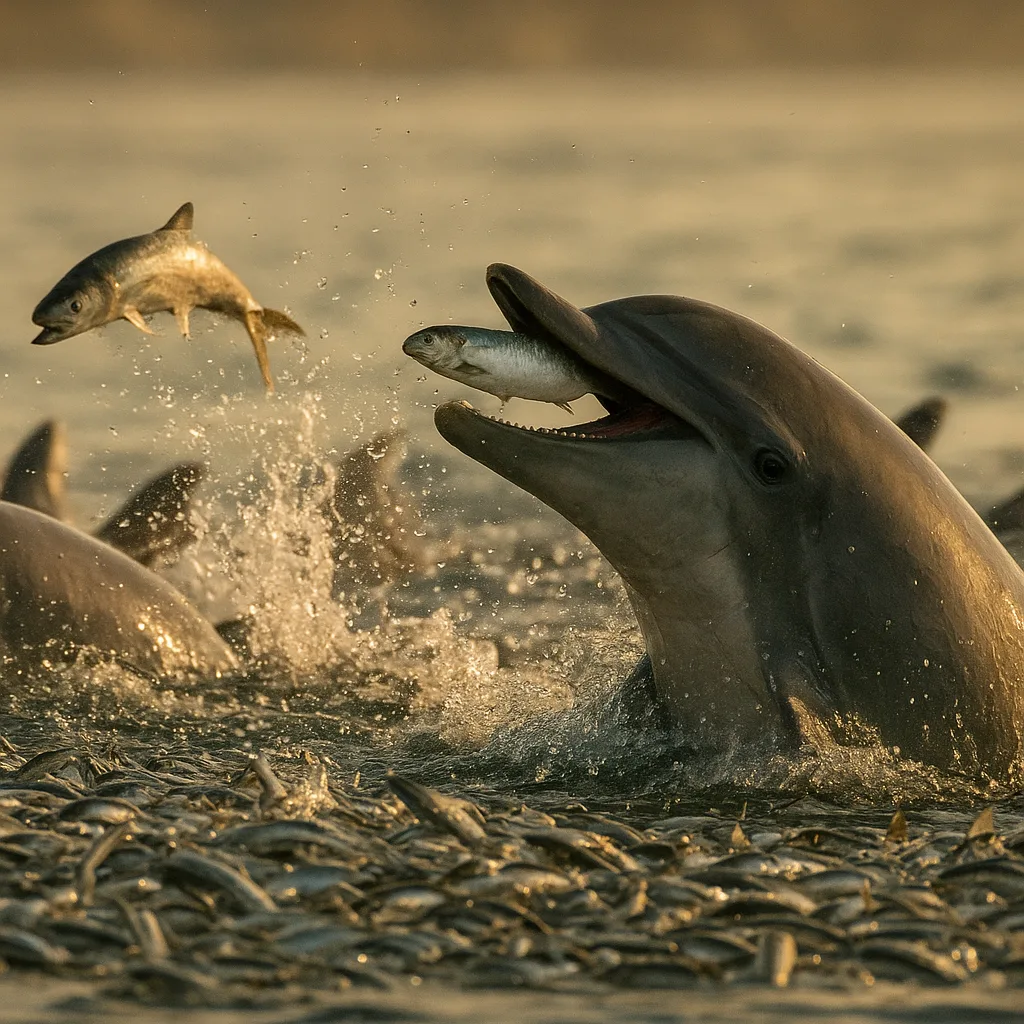
What Dolphins Eat: The Big Picture
Dolphins are generally opportunistic carnivores with diets that vary by species, population, and local prey availability. Most coastal species—like the common bottlenose dolphin (Tursiops truncatus)—feed primarily on mid‑sized fish and cephalopods, while some oceanic species focus more on squid or large pelagic fish.
- Primary prey categories: bony fish (teleosts), cephalopods (squid, cuttlefish), and crustaceans (shrimp, crabs).
- Typical prey size: individual items usually range from 3 cm anchovies to 50+ cm mackerel or squid mantle lengths; dolphins commonly swallow fish whole.
- Feeding frequency: many dolphins eat 4–5% of their body weight per day; a 200 kg adult bottlenose may consume ~8–10 kg daily.
Common prey species by frequency
- Small schooling fish: anchovies (Engraulis spp.), sardines (Sardinops spp.), herrings (Clupea spp.).
- Mid‑size coastal fish: mackerel (Scomber spp.), mullet (Mugil cephalus), hake (Merluccius spp.).
- Cephalopods: market squid (Doryteuthis opalescens), Loligo spp., cuttlefish (Sepia spp.).
- Crustaceans: shrimp (Caridea), small crabs (Brachyura juveniles).
Prey Types: Fish, Squid, Crustaceans and More
Breaking down the major prey groups offers insight into how to recognize what dolphins are eating when you observe feeding behavior from shore, boat, or with a fish identification app like Orvik.
Fish (Teleosts)
- Appearance cues: silver/iridescent scales, fusiform body for schooling species, forked caudal fin. Sizes range from 3–60 cm depending on species.
- Common targets: anchovies (3–15 cm), sardines (10–30 cm), mackerel (20–50 cm), mullet (20–60 cm).
- Identification tips: look for schooling behavior (tight, shimmering baitballs), dorsal fin shapes, and tail fork to distinguish mackerel vs herring/sardine.
Cephalopods (squid, cuttlefish)
- Appearance cues: soft, elongated mantle, paired fins on mantle, visible tentacles when thrown from mouth; colors vary from whitish to reddish-brown when stressed.
- Size: mantle lengths typically 5–50 cm for common squid taken by dolphins.
- Feeding notes: squid are common prey for offshore and nocturnally feeding dolphins; identification apps can help by matching mantle shape and fin outline.
Crustaceans
- Appearance cues: segmented bodies, jointed limbs, presence of carapace in crabs; colors range from translucent (shrimp) to reddish/brown (crabs).
- Role in diet: more important for inshore, estuarine dolphins, juveniles and during seasonal fish shortages.
Other items: jellyfish, cephalopod larvae, small benthic fishes
- Jellyfish: dolphins generally avoid gelatinous zooplankton as staple food. For context, what do jellyfish eat? Jellyfish feed on zooplankton and small fish larvae using tentacles with nematocysts.
- Occasional prey: small benthic fishes, squid larvae, and rarely carrion.
Feeding Strategies and Behavior
Dolphins use a range of hunting techniques adapted to prey behavior and habitat. Understanding the strategy provides clues about the likely prey species.
For more on this topic, see our guide on Identify Your Cat: A Field Guide.
Common feeding techniques
- Herding and bait‑balling: Dolphins drive schools of small fish (e.g., anchovies) into tight balls and take turns feeding—typical of pelagic feeding.
- Cooperative netting: Inshore groups create walls of bubbles or mud to concentrate fish (mud‑ring feeding documented in bottlenose dolphins in Florida Bay).
- Strand feeding: Pushing prey onto shore to catch fleeing fish—documented in Tursiops populations in Brazil and Massachusetts.
- Deep hunting: Some oceanic species use sustained dives and echolocation clicks to find deep‑water squid or fish at 200–600 m depth.
Echolocation and prey capture
- Echolocation clicks: broadband clicks between ~40–150 kHz (species dependent) allow dolphins to detect schooling density, fish size and separation from the seabed.
- Visual cues: in clear shallow water, dolphins often use vision to target silver‑sided schools; color and movement are strong visual signals.
How Diet Varies by Species, Region and Season
Diet composition depends strongly on which dolphin species you're observing and where. Below are specific patterns supported by regional studies.
Coastal vs Oceanic species
- Coastal species (bottlenose dolphins): often eat benthic and nearshore fishes, squid and crustaceans; diet may shift seasonally toward crabs in estuaries.
- Oceanic species (spinner dolphins, pilot whales): more squid and mesopelagic fish; pilot whales (Globicephala spp.) can specialize on larger cephalopods.
Seasonal shifts
- Migratory prey: dolphins follow seasonal runs of anchovies, sardines and mackerel; local abundance can change a population’s diet over weeks.
- Reproductive cycles: lactating females increase food intake and may prefer energy‑rich schooling fish to maximize calories.
Geographic examples
- Eastern Pacific: bottlenose and common dolphins feed heavily on sardines and anchovies off California and Peru.
- North Atlantic: herring, mackerel and cod are common prey for coastal populations around the UK and Scandinavia.
- Tropical waters: small reef fishes, mullet and cephalopods dominate diets of inshore dolphins in tropical lagoons.
Dolphins vs Sharks vs Fish: How Diets Compare
When people search "what do sharks eat" or "what shark eat" they are comparing broad predator roles in the ocean. Dolphins, sharks and fish occupy overlapping but distinct niches.
You may also find our article on Wildlife Track Identification Guide helpful.
Predator comparisons
- Dolphins: social hunters using echolocation and complex coordinated tactics; prey focuses on schooling fish and squid, generally small to medium size (3–60 cm).
- Sharks: vary widely—filter feeders like whale sharks (Rhincodon typus) eat plankton, while apex predators like great whites (Carcharodon carcharias) take marine mammals, large fish and carrion.
- Fish (predatory teleosts): many species (tuna, mackerel) are active, fast swimmers targeting schooling fish; others are ambush predators using camouflage.
How to tell a dolphin hunt from a shark or large predatory fish
- Dolphin hunt signature: coordinated surface activity, repeated breaching, and tight bait balls with many individuals taking turns feeding.
- Shark presence: erratic circling, fewer synchronized surface behaviors, sometimes visible dorsal fin cutting the surface alone or in small groups.
- Large predatory fish: rapid chases with directional bursts, but without the social coordination seen in dolphins.
Identification Tips: Recognizing Prey and Interpreting Behavior
In the field, quick visual identification helps you infer what dolphins are eating. Use Orvik or any good fish identification app to confirm prey species from photos or descriptions.
Visual cues for common prey
- Anchovies: tiny (3–15 cm), slender, deeply forked tail, strong silver lateral stripe—found in large schools near the surface.
- Sardines/herring: 10–30 cm, laterally compressed, single dorsal fin midway, often form dense baitballs.
- Mackerel: elongated, distinct vertical stripes on back, deeply forked tail, 20–50 cm length.
- Squid: soft mantle, triangular fins along the sides of the mantle, presence of tentacles when airborne from prey tosses.
- Shrimp/crab: small juveniles visible as flashes near bottom or when dolphins are feeding in shallow muddy water.
Behavioral indicators
- Surface breaching combined with splashing and fish tossing: likely schooling fish or squid being driven up.
- Slower circling near shallow flats and mud rings: indicates mud‑ring or corralling for small fish/crustaceans.
- Nighttime feeding in coastal waters: increased squid consumption; look for moonlight‑reflecting surfaces and sporadic surface bites.
Safety, Toxicity and Human Interactions
Understanding diet also involves safety—both for humans and for dolphins.
You might also be interested in Ladybug Diets: A Field Guide to What They Eat.
Related reading: Identify Your Dog: Expert Visual Guide.
Toxic prey and risks
- Pufferfish (Tetraodontidae): contain tetrodotoxin; while rare in dolphin diets, pufferfish are toxic to many predators and can be lethal if consumed in quantity.
- Harmful algal bloom (HAB) risk: when dolphins eat fish that have accumulated saxitoxins or domoic acid, dolphins can become ill or die (documented mass‑mortality events linked to HAB toxins).
- Jellyfish: although jellyfish feed on zooplankton and small fish, their stings can injure small marine mammals; dolphins typically avoid jellyfish as a primary food.
Human safety and conservation guidance
- Never feed wild dolphins; provisioning changes natural behavior and diet, increasing disease and boat strike risk.
- Avoid contact with stranded or sick dolphins—contact local marine mammal rescue networks instead.
- Report unusual die‑offs or toxicosis symptoms (disorientation, seizures) to authorities—these can indicate HABs or pollution affecting the food web.
Using Identification Tools: Orvik, Fish Identifier App Tips
Digital tools make field identification faster and more accurate. Orvik is an AI‑powered visual identification app that can help you match photos of prey species or behaviors to likely species—useful when you observe feeding from a distance.
How to use apps effectively
- Take clear photos of the prey or of the feeding event—focus on body shape, fin placement, and any distinctive marks.
- Use Orvik or a fish identifier app to upload the image; cross‑check suggested IDs against local species lists and your observation of habitat (reef, open ocean, estuary).
- Note the behavior and environment: schooling near surface suggests anchovies/sardines, while surface tosses with visible tentacles suggest squid.
Field checklist for accurate ID
- Lighting: shoot with the sun over your shoulder to reduce glare.
- Scale: include a known object (boat rail, hand) to estimate size when possible.
- Sequence: capture multiple frames showing approach, capture, and any prey in the mouth or thrown into air.
Conclusion
So, what do dolphins eat? The short answer: mainly fish and squid, supplemented by crustaceans and occasional other items depending on species, region and season. Dolphins are adaptive predators that use vision, echolocation and complex social tactics to capture prey ranging from 3 cm anchovies to 50+ cm mackerel and squid. When you encounter feeding dolphins, observations of behavior, prey appearance, and habitat give strong clues to their diet. For on‑the‑spot identification, tools like Orvik and other fish identification apps are invaluable—pair app results with the visual tips in this guide, and you’ll be able to translate a distant feeding event into a precise list of prey species. Remember to prioritize safety for both people and animals: don’t feed or touch wild dolphins, and report signs of illness or mass mortality promptly.
Frequently Asked Questions
- Do all dolphins eat fish?
- Most dolphins primarily eat fish and squid, but diets vary by species and habitat. Some oceanic species rely more on squid, while inshore groups may include crustaceans.
- Can dolphins eat jellyfish?
- Dolphins rarely eat jellyfish as a staple. Jellyfish feed on zooplankton and small fish, and their stings make them an unlikely main prey item for dolphins.
- How can I tell if dolphins are hunting fish or squid?
- Schooling fish often produce tight baitballs and synchronized surface activity; squid captures may be indicated by airborne tentacles or single animals tossing soft-bodied prey.
- Are dolphins in competition with fishermen?
- Dolphins and fisheries can compete when both target the same schooling fish (e.g., sardines). However, dolphins’ diverse diets and foraging flexibility often reduce direct competition.
- Is it safe to feed dolphins?
- No. Feeding wild dolphins disrupts natural behaviors, increases disease risk, and can lead to injury. It is illegal in many jurisdictions.
- What do sharks eat compared to dolphins?
- Shark diets vary widely: filter feeders like whale sharks eat plankton, while species like great whites eat large fish and marine mammals. Dolphins tend to focus on smaller schooling fish and squid.
- How can Orvik or a fish identifier app help me identify dolphin prey?
- Orvik and similar fish identification apps use image recognition to match photos of prey to species. Use clear photos, note size and habitat, and cross‑check app results with behavioral cues.