
Understanding Labrador Puppy Growth and Neck Sizes
Labrador Retrievers (Canis lupus familiaris, Labrador type) are a medium-to-large breed with rapid early growth. When someone searches "what size collar for a lab puppy," they usually want to know three things: the correct neck circumference now, what collar width is safe and comfortable, and how to choose a collar that will last through growth spurts without harming the puppy.
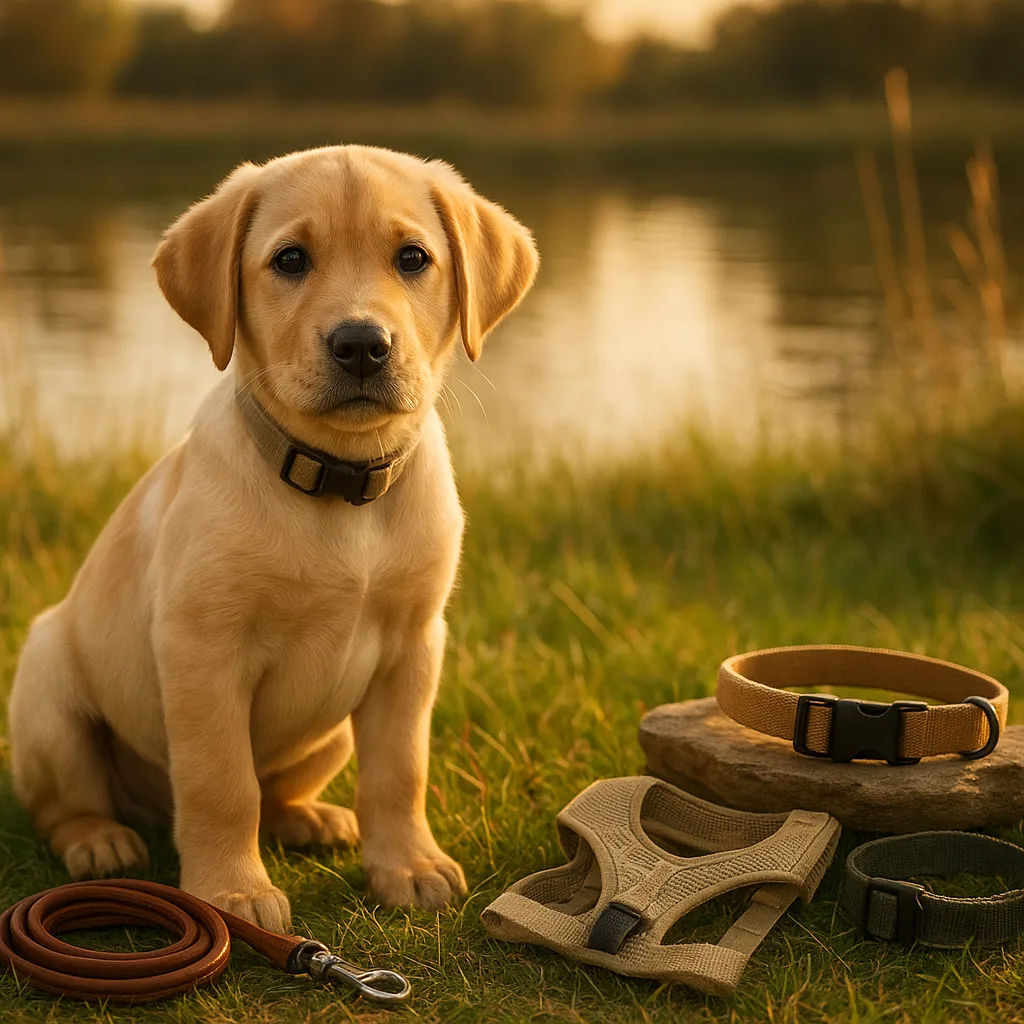
Typical growth and neck measurements
- Newborn to 4 weeks: neck 6–8 in (15–20 cm) — collars generally not needed until 8 weeks.
- 8 weeks (typical rehoming age): neck 9–12 in (23–30 cm).
- 3 months: neck 11–14 in (28–36 cm).
- 6 months: neck 13–17 in (33–43 cm).
- Adult (12–18 months): neck 16–22 in (41–56 cm) depending on sex and body condition.
These are averages; individual puppies vary with genetics and nutrition. Male Labs usually end up slightly larger. Keep in mind collar fit should be measured at the base of the neck where a collar will sit—generally just behind the ears and in front of the shoulders.
Visual cues of proper neck fit
- Skin and fur lay smoothly under the collar without bunching.
- No redness or chafing along the hairline or under the jaw.
- Puppy can pant and breathe normally; collar is not pressed into the trachea.
- Two-finger rule: you can slip two adult fingers (about 1–2 in / 2.5–5 cm depending on finger size) between collar and neck comfortably.
How to Measure Your Puppy: Step-by-Step
Measuring correctly prevents skin damage and escapes. Use a soft cloth tape measure or a piece of string and a ruler.
- Have the puppy stand or sit comfortably. Keep them calm—measurements are easier after a short play and a potty break.
- Place the tape measure at the base of the neck, just behind the ears where the collar will sit.
- Wrap the tape snugly but not tight—you should be able to slip two fingers under the tape.
- Record the measurement in inches and centimeters. If using a string, mark and measure it against a ruler.
- Buy an adjustable collar that lists its adjustable range (for example, 10–14 in / 25–35 cm). Choose a collar where your puppy’s measurement falls roughly in the middle of the range.
Practical measurement tips
- Measure weekly for the first 4 months, then monthly until growth slows.
- If between sizes, choose the larger size; you can pad a larger collar temporarily with a soft cloth under it but avoid bulky material that causes rubbing.
- Mark the measurement with a washable marker on the collar or with a tag so you remember the fit when ordering replacements.
Collar Types and Size Recommendations
Not all collars are equal. Choosing the right style and width impacts control, comfort, and safety.
For more on this topic, see our guide on Identify Your Puppy: Practical Visual Guide.
Common collar types
- Flat buckle collar: Standard everyday collar with a quick-release buckle. Good for ID tags and light walking.
- Martingale collar: Limited-slip collar offering more control without choking—useful for training escape-prone dogs.
- Body harness: Distributes force across chest and back; recommended for puppies that pull or have neck sensitivity.
- Head halter: Provides control for strong pullers but requires training to use correctly.
- Training collars (choke or prong): Not recommended for puppies—can injure the trachea or cause fear-based behaviors.
Recommended widths and materials
- Small puppies (8–12 weeks): 3/8–1/2 in (10–12 mm) webbing or soft leather—lightweight to avoid strain.
- Growing puppies (3–6 months): 1/2–3/4 in (12–19 mm) depending on neck size and strength.
- Adolescent to adult Labs: 3/4–1 in (19–25 mm) is typical for comfort and durability; heavier webbing or padded leather helps with broader necks.
- Choose materials that are easy to clean: nylon, biothane, or padded leather are durable and safe. Avoid collars with cheap metal parts that can corrode.
Adjustment and safety features
- Quick-release buckles reduce risk when the collar catches on something.
- Reflective strips improve nighttime visibility.
- Breakaway collars are designed for cats; for dogs choose a collar with secure but safe release mechanisms depending on activity.
Crate Sizes and Other Gear (Answering Related Queries)
People searching for collar size often also wonder about crates and other basic supplies. A crate should allow the puppy to stand, turn, and lie down comfortably. Buying a crate sized for the adult dog and using a divider saves money and keeps the pup from soiling the sleeping section.
Recommended crate sizes
- Labrador Retriever: 36–42 in (91–107 cm) crate for adults; use a divider for puppy stage (start with small area and expand as they grow).
- Golden Retriever: 36 in (91 cm) crate typically fits most adults.
- French Bulldog: 24 in (61 cm) crate commonly fits adults; measure your adult dog’s length and height to confirm.
- Cavapoo (toy/small designer hybrid): 18–24 in (46–61 cm) crate for puppies and adults depending on final size.
Other essential gear for a puppy
- Adjustable collar and ID tag.
- Harness for walks (front-clip for training, back-clip for casual walks).
- Appropriate crate with divider, comfortable bedding, and chew-proof water bowl.
- High-quality puppy food, slow feeder if needed, and measuring scoop.
- Grooming brush, nail trimmers, and toothbrush/toothpaste for dogs.
For a Cavapoo puppy specifically: soft, lightweight collar (3/8–1/2 in) plus a small harness; socialize early; plan for regular grooming due to curly coat.
Breed Comparisons: Labs vs Golden Retrievers vs French Bulldogs vs Cavapoos
Comparisons help owners choose the right collar, crate, and training tools.
You may also find our article on Feeding a Cane Corso Puppy: Practical Diet Plan helpful.
Size and build
- Labrador Retriever: Muscular, deep chest, adult weight 55–80 lb (25–36 kg). Neck length robust—collars 16–22 in (41–56 cm).
- Golden Retriever: Similar to Labs; a 36 in crate and 16–22 in collar range is common.
- French Bulldog: Compact, short neck, adult weight 16–28 lb (7–13 kg); collars often 11–15 in (28–38 cm), crate 24 in.
- Cavapoo: Varies with Poodle parent; adult weight 12–25 lb (5–11 kg); collars 10–16 in depending on size.
Collar vs harness for different breeds
- Labs and Goldens: harness recommended for puppies that pull; flat collar for ID and short walks.
- French Bulldogs: short nose and respiratory sensitivity—use front-clip harnesses to avoid tracheal pressure.
- Cavapoos: harnesses for small dogs to protect delicate throats; light-weight collars for ID.
Skin Care and Wrinkle Management (Answering "what can i put on my bulldogs wrinkles")
Brachycephalic breeds like English and French Bulldogs have facial folds that trap moisture and debris. These areas are prone to dermatitis, yeast (Malassezia), and bacterial infections if not kept clean.
Safe cleaning routine
- Clean folds daily or every other day when the puppy is young or in humid climates.
- Use a soft, lint-free cloth or cotton ball dampened with warm water or a vet-recommended mild cleanser (chlorhexidine 0.05% solution is commonly prescribed).
- Gently lift the folds, wipe inside, then thoroughly dry with a clean cotton pad. Moisture is the main problem—always ensure complete drying.
- For a protective layer, vets sometimes recommend a thin application of non-irritating barrier ointments (zinc oxide-based creams formulated for dogs) or prescribed topical creams for recurrent infection.
What NOT to put on wrinkles
- Do not use essential oils (tea tree, eucalyptus)—they can be toxic to dogs and irritate skin.
- Avoid human antibiotic creams without veterinary advice; they can disrupt normal skin flora and mask infections.
- Don’t use hydrogen peroxide routinely—it delays healing and irritates tissue.
Warning: If you see strong odor, persistent redness, pus, or the dog is scratching/painful, seek veterinary attention. Chronic fold infections often need topical or oral medications to clear.
Training Tips: What to Teach a German Shepherd (and Useful Tasks)
Questions like "what can i teach my german shepherd" or "what can i train my german shepherd to do" reflect owners who want practical tasks. German Shepherds (Canis lupus familiaris, German Shepherd type) are highly trainable, intelligent, and versatile.
Looking beyond this category? Check out Spotting Bed Bugs: A Clear Visual Guide.
Foundational skills
- Basic obedience: sit, down, stay, come, loose-leash walking.
- Impulse control: leave it, wait for food, place training (go to mat).
- Socialization: introduce to varied people, places, sounds, and other dogs in a controlled way.
Advanced tasks and roles
- Tracking and scent work: excellent for mental stimulation and practical uses.
- Agility and protection sports: channel high energy into structured outlets.
- Service tasks: guiding, mobility assistance, or psychiatric service tasks with proper professional training.
Training tools and safety
- Use reward-based, positive reinforcement as foundation; GSDs respond well to clear expectations and consistency.
- For leash control, a well-fitted harness is kinder on the trachea than a prong or choke collarette—particularly for young dogs.
- Keep training sessions short and frequent (5–15 minutes several times a day) during puppyhood.
Safety, Materials, Toxicity, Seasonal Behavior, and Identification Tools
Choosing collar materials and gear requires attention to safety and to seasonal behaviors like shedding and heat sensitivity.
Related reading: Dolphin Diets: What They Eat and Why.
Material safety and toxicity
- Choose collars with nickel-free or stainless hardware if your puppy shows signs of metal sensitivity (redness, hair loss under collar).
- Avoid collars with toxic dyes or chemical finishes—ask for product safety data when in doubt.
- Keep grooming products, essential oils, and household cleaners safely stored—many are harmful to dogs on ingestion or skin contact.
Seasonal behavior and maintenance
- Labs undergo heavy seasonal shedding; collars and harnesses trap loose hair—clean and inspect gear frequently.
- In summer, check underside of collar daily for sweat, dirt, and hot spots; in winter, ensure salts and de-icers are rinsed off fur to prevent irritation.
Using visual identification tools like Orvik
- Orvik can help identify skin rashes, tick species, or unfamiliar lumps by analyzing photos—useful when you need to triage between home care and veterinary attention.
- Upload clear close-ups of irritated skin, ticks, or collar-related redness to a visual ID app like Orvik for quick guidance on whether the issue appears urgent, then follow up with a vet when recommended.
Safety warning: Visual ID tools are helpful but do not replace professional veterinary diagnosis—if your puppy is in pain, has a fever, or shows systemic signs (vomiting, lethargy), contact a vet immediately.
Comparisons: Collar vs Harness, Wire vs Plastic Crate
Side-by-side comparisons make it easier to pick equipment based on your puppy’s behavior and breed needs.
Collar vs harness
- Collar: good for ID and calm dogs. Risk: pressure on trachea if puppy pulls hard or if choke devices used.
- Harness: distributes pressure across chest, reduces tracheal injury risk, and gives better control for pulling puppies. Choose padded designs for comfort.
Wire crate vs plastic crate
- Wire crate: better ventilation and visibility; lighter; often collapsible. Add a crate cover for den-like environment at night.
- Plastic crate: more enclosed, can feel safer for anxious dogs and better for travel (airline-approved models). Ensure good ventilation.
Conclusion
Answering "what size collar for a lab puppy" requires accurate measurement, an understanding of growth, and thoughtful selection of collar type and width. Aim for a collar that fits snugly yet allows two fingers between the collar and neck, and choose materials that are durable and safe. For crates, buy for the adult size and use a divider for puppies. For breed-specific concerns—wrinkle care in Bulldogs or training tasks for German Shepherds—follow breed-appropriate routines, safe cleaning products, and reward-based training. Visual tools like Orvik can help you identify skin issues, ticks, or other visual concerns quickly, but always seek veterinary care for infections or systemic illness. With regular measurement, weekly checks during early growth, and sensible gear choices, your Labrador puppy will have a safe, comfortable start to life.
Frequently Asked Questions