
Caring for a Cane Corso puppy means balancing rapid skeletal and muscular growth with joint health and long-term wellbeing. The Cane Corso (Canis lupus familiaris, Italian mastiff type) grows faster and larger than many breeds, so the wrong diet or feeding rhythm can lead to growth disorders, obesity or orthopedic problems. This guide gives precise, evidence-based recommendations: calories, protein and calcium targets, sample meal calculations, safety warnings, and practical steps to handle vomiting, diarrhea, paw-licking, cuts and parvo. Use tools like Orvik to visually identify breed traits or skin/coat issues when you suspect a problem.
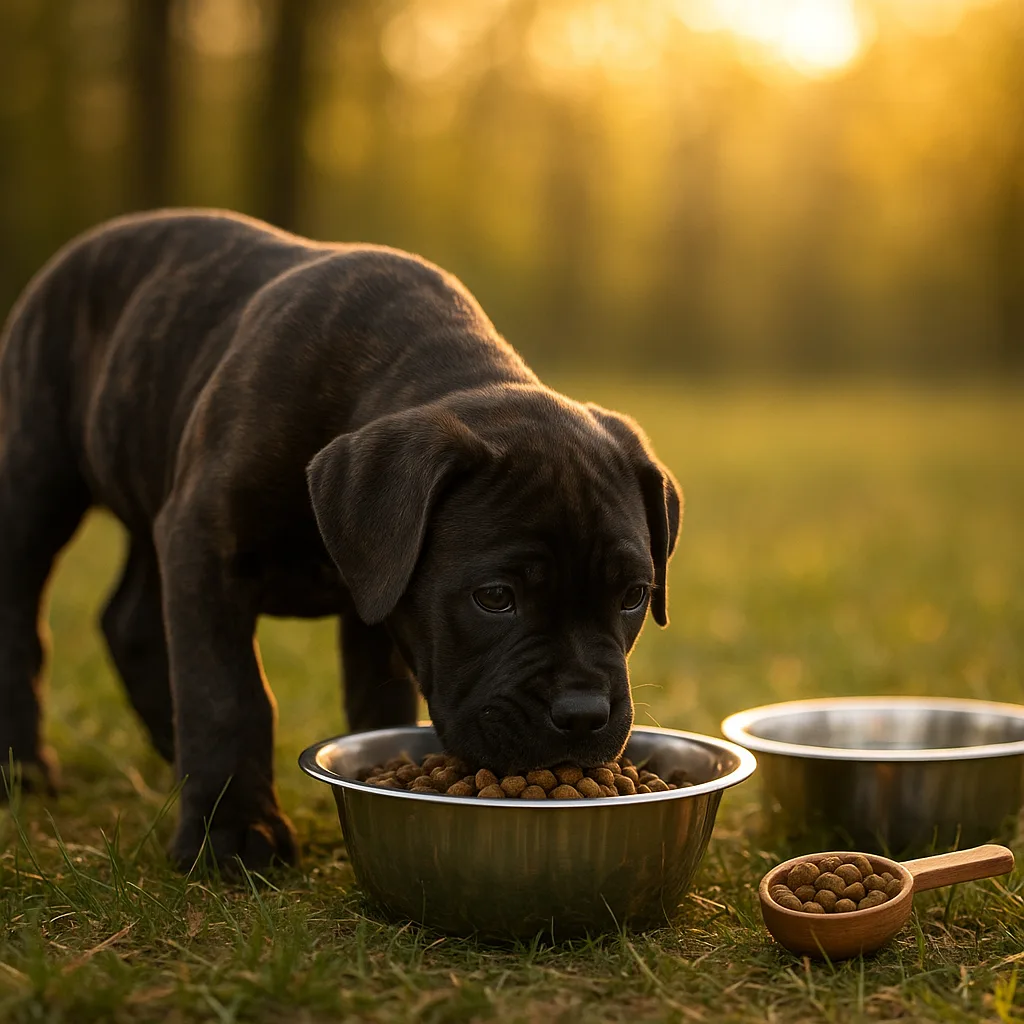
1. Cane Corso overview: size, growth stages and identification
Understanding a breed’s growth pattern is the first step to feeding it properly. Cane Corsos are large Molosser-type dogs originating from Italy. Key facts:
- Scientific name: Canis lupus familiaris
- Adult weight: Males typically 45–50 kg (99–110 lb); females 40–45 kg (88–99 lb).
- Adult height: 62–68 cm (24–27 in) at the shoulder for males; females slightly shorter.
- Coat colors: black, gray/blue (dilute black), fawn, brindle; some have small white chest or toe markings.
- Puppy appearance: large head, broad muzzle, compact muscular body, thick neck and a short, dense double coat that is smooth to the touch.
Visual identification tips (for owners and using apps like Orvik)
- Head shape: broad skull, pronounced stop, square muzzle—look for a heavy, rectangular head even in young pups.
- Coat texture and patterns: smooth, short coat with solid or brindled patterns; brindle appears as dark striping over fawn or gray base.
- Ear and tail variations: natural ears are triangular and droop; cropped ears and docked tails are common but not universal; check legal status in your region.
- Size cues: at 8 weeks many pups weigh in the double-digit kilos (often 8–12 kg) — substantial paw size and thick limbs are clues to large-breed growth.
Orvik can help you identify breed-specific coat patterns and suspicious skin lesions or ear infections through images, assisting your feeding and health decisions.
2. Nutritional needs: macronutrients, minerals and calories
Large-breed puppies have different requirements than small-breed dogs. The two priorities are supplying adequate protein and controlled energy to support lean tissue growth without accelerating bone growth too rapidly.
Key nutrient targets
- Protein: 22–30% on a dry matter basis. AAFCO minimum for growth is 22% but targeting 25% (or slightly higher) supports muscle development.
- Fat: 8–15% for energy and essential fatty acids; allow ~10–12% in many large-breed puppy formulas.
- Calcium & phosphorus: Keep Ca:P ratio ~1.2–1.4:1. Avoid excess calcium (>1.6% on DMB) which can cause developmental orthopedic disease in large breeds.
- DHA/EPA and omega-6: Important for brain and vision — many puppy diets include fish oil or algal DHA; look for DHA in the ingredient list.
- Calories: Individual calories depend on age, weight and activity; use the Resting Energy Requirement (RER) formula and growth multipliers (below).
Calculating energy needs (practical formula)
- Calculate RER: RER = 70 × (body weight in kg)^0.75.
- Apply growth multiplier (varies by age):
- 8–12 weeks: multiplier ≈ 2.5–3.0
- 3–6 months: multiplier ≈ 2.0–2.5
- 6–12 months: multiplier ≈ 1.6–2.0 (declining as growth slows)
- Example: 12 kg pup — RER ≈ 70 × (12^0.75) ≈ 452 kcal; at 2.5× multiplier → ~1,130 kcal/day.
Different kibbles have different energy densities. If the kibble is 400 kcal/cup, a 12 kg puppy requiring 1,130 kcal/day would need ~2.8 cups/day, divided into frequent meals.
For more on this topic, see our guide on Identify Your Puppy: Practical Visual Guide.
3. Feeding schedule and sample meal plans
Feeding frequency is as important as total calories. Frequent small meals support digestive stability and steady glucose levels.
Recommended schedule
- 8–12 weeks: 4 meals per day (every 4–6 hours).
- 3–6 months: 3 meals per day.
- 6–12 months: 2–3 meals per day; transition to 2 meals when adult weight nears 80–90%.
Sample meal plan (kibble-based, adult target 45 kg)
- Estimate adult weight and calculate current energy need using RER and multipliers.
- Pick a high-quality large-breed puppy formula (labelled for large-breed growth) that lists protein ~25% and controlled calcium.
- Divide total daily calories into the appropriate number of meals (4→3→2 as puppy ages).
Example: 10-week-old pup, current weight 10 kg, energy need ~1,000–1,400 kcal/day depending on activity. With a 375 kcal/cup kibble, feed ~2.7–3.7 cups/day split into 4 portions. Adjust to maintain steady weight gain (see weighing below).
- Always weigh your puppy weekly during rapid growth.
- Adjust portions by ±10% based on weight trajectory and body condition score (BCS).
4. Choosing the right food: kibble, wet, raw or home-cooked
Not every “puppy” bag is suitable for a Cane Corso. Look for formulas made specifically for large-breed puppies. Here are the pros and cons of common options:
Kibble (commercial dry food)
- Pros: nutritionally balanced for growth, convenient, helps dental abrasion.
- Cons: ingredient quality varies; must pick large-breed puppy formula to control calcium and calories.
Wet/canned food
- Pros: high palatability, good for picky eaters or short-term appetite loss.
- Cons: more expensive; usually used mixed with kibble rather than as sole diet for large-breed growth due to cost and calorie density differences.
Raw and home-cooked diets
- Pros: owners can tailor ingredients, may appeal to picky eaters.
- Cons: risk of nutritional imbalance, excess calcium, or bacterial contamination if not formulated by a board-certified veterinary nutritionist. Raw bone-fed diets can damage teeth or cause obstructions.
If you choose raw or home-cooked, work with a veterinary nutritionist to ensure the diet meets AAFCO growth standards and has balanced Ca:P (1.2–1.4:1).
You may also find our article on Feeding Guide for Your Bengal Kitten helpful.
5. Foods and substances that are toxic or risky
Many common human foods are dangerous to dogs. For a large-breed puppy, even small amounts can cause severe illness because of metabolic differences and immature organs.
- Do NOT feed: chocolate (theobromine), xylitol (in sugar-free gum and baked goods), grapes and raisins (renal failure risk), onions/garlic (hemolytic anemia), macadamia nuts (weakness), alcohol and caffeine.
- Also avoid: raw salmon or fish with parasites, unbalanced bone-heavy diets, too much liver (vitamin A toxicity), and excessive dairy (lactose intolerance).
- Medications: never give human NSAIDs (ibuprofen, naproxen) or acetaminophen without vet approval.
If ingestion occurs, use Orvik to help photograph and identify the substance and show that to your veterinarian or poison control. Contact your vet or the Pet Poison Helpline immediately with the product name, weight of the puppy and estimated amount ingested.
6. Common health problems related to diet and what to do
Puppies commonly present with vomiting, diarrhea, paw licking, or cuts. Below are causes and practical treatments, with safety steps tailored for Cane Corso puppies.
Looking beyond this category? Check out Practical Guide to PictureThis Plant ID.
What can give a puppy diarrhea?
- Causes: dietary change, intestinal parasites (Giardia, roundworms), bacterial infections (Salmonella), viral infections (parvovirus), food intolerance, antibiotic use, and stress.
- Immediate steps: if the puppy is bright and hydrated, with minimal symptoms, withhold food for 4–6 hours (shorter for very young pups) and offer small amounts of water; then offer a bland diet—boiled chicken (no skin, no bones) and white rice—for 24–48 hours. Reintroduce regular puppy food gradually over 3–5 days.
- When to see a vet: bloody diarrhea, lethargy, fever, persistent vomiting, signs of dehydration, or puppies younger than 6 months — these require urgent veterinary care and fecal testing.
What to do if my puppy has parvo?
- Parvovirus is a life-threatening viral disease that causes severe vomiting and hemorrhagic diarrhea. If you suspect parvo: isolate the puppy from other dogs immediately, limit contact, and seek emergency veterinary care.
- Decontamination: parvovirus is highly contagious and resilient in the environment. Disinfect areas with a 1:30 dilution of household bleach (1 part bleach : 30 parts water) for inanimate surfaces after removing organic matter. Wash hands and clothing thoroughly.
- Treatment: hospital care with IV fluids, antiemetics, antibiotics for secondary infection, and nutritional support as directed by the veterinarian.
What to feed your dog after vomiting
- For puppies, contact your vet first. For stable, slightly upset pups: fast briefly (2–4 hours for older dogs; for puppies much shorter), allow small sips of water, then give frequent tiny meals of a bland diet—boiled skinless chicken mixed with white rice (1:1 ratio by weight) in small portions every 2–4 hours.
- Avoid: medicines or antiemetics without veterinary direction, and do not give anti-diarrheal human products unless prescribed.
What causes a dog to lick their paws?
- Common causes: allergies (atopy, food allergy), interdigital cysts, yeast or bacterial infections, foreign bodies (grass awns), boredom or anxiety (compulsive licking), and pain in the limb.
- Identification tips: yeast infections often produce a rust-colored stain between toes and a yeasty smell; allergic licking is usually seasonal or coincides with foods; foreign bodies cause sudden onset localized licking and limping.
- Treatment: clip hair and clean; use antiseptic wash (chlorhexidine 0.05% solution) for superficial infections. Persistent or deep lesions need veterinary attention. Orvik’s image recognition can help you document changes and track when to see the vet.
What can I put on my dog’s cuts?
- Initial treatment: flush with sterile saline (0.9% NaCl) to remove debris, then cleanse with diluted chlorhexidine (0.05%) or diluted povidone-iodine. Apply a clean, non-adherent dressing and secure lightly—do not bandage too tightly.
- Do NOT repeatedly use hydrogen peroxide on deep wounds (it is cytotoxic with repeated use). Avoid indiscriminate application of topical antibiotics without veterinary instruction due to risk of delayed healing or allergy.
- Seek a vet for deep puncture wounds, wounds near joints, heavy bleeding, large gashes, or if the puppy is lame or the wound looks infected (swelling, heat, pus).
7. Comparisons: Cane Corso vs Rottweiler vs Yorkie (feeding and ID)
Comparisons help clarify breed-specific feeding strategies and identification.
Related reading: Choosing the Right Collar and Gear for a Labrador Puppy.
Cane Corso vs Rottweiler — how to tell them apart
- Body shape: Cane Corsos tend to be longer in the body and slightly less compact than Rottweilers, with a more rectangular head; Rottweilers have a broader, blockier head and a more compact, barrel-chested body.
- Coat and color: Rottweilers are black with rust markings only; Cane Corsos can be black, gray/blue, fawn, or brindle and sometimes have white patches.
- Feeding approach: Both are large breeds and require controlled energy during growth. Rottweilers typically finish growth earlier (often by 12–18 months) while Cane Corsos may continue maturing up to 18–24 months. Adjust calories accordingly.
Cane Corso vs Yorkie — what should Yorkies eat?
- Size differences: Yorkshire Terriers (Yorkies) are small-breed dogs (2–4 kg adult). Their energy needs per kg are higher than large-breed dogs.
- Diet differences: Small-breed puppy formulas are more calorie-dense, with smaller kibble, higher protein (28–32%) and higher fat (12–20%) to meet rapid metabolism. A Yorkie puppy should receive small frequent meals with calorie-dense food.
- Portioning: Avoid giving a large-breed ration to a Yorkie; likewise, do not give a small-breed dense diet to a Cane Corso puppy — it can cause overly rapid weight gain.
8. Practical monitoring, supplements and transitioning foods
Monitoring growth and body condition
- Weigh your puppy weekly for the first 6 months, then biweekly to monthly until growth plate closure.
- Use a body condition score (BCS 1–9): ideal is 4–5/9 — ribs palpable with light fat cover, waist visible from above, abdominal tuck present.
- Adjust calories if the puppy is gaining too quickly (reduce 5–10%) or too slowly (increase 5–10%).
Supplements: when (and when not) to use them
- High-quality large-breed puppy foods are formulated with necessary vitamins and minerals — extra calcium, vitamin D or multivitamins are usually unnecessary and can be harmful.
- Joint supplements (glucosamine, chondroitin) may be used in consultation with your veterinarian for predisposed breeds or dogs with early joint issues. Consider fish oil for DHA/EPA after vet approval.
How to transition foods safely
- Gradual switch over 7–10 days: start with 25% new + 75% old for 2–3 days; then 50:50 for 2–3 days; then 75:25 for 2–3 days; then full new food.
- Watch for loose stool or vomiting; extend transition if gastrointestinal signs appear.
Use an app like Orvik to scan labels and compare ingredient lists visually when choosing or transitioning to a new diet.
9. When to call the vet — red flags and emergencies
- Persistent vomiting or diarrhea (>24 hours in older puppies; any duration in pups under 6 months).
- Bloody stool or vomit, weakness, collapse, signs of dehydration (sunken eyes, tacky gums), or inability to stand.
- Wounds that are deep, near a joint, or contaminated by dirt/rodent bites; puncture wounds; signs of infection around the wound.
- Suspected ingestion of a toxic substance (chocolate, xylitol, grapes) — contact your vet or poison control immediately.
Document symptoms and, if possible, use Orvik to capture clear photos of stool color, skin lesions, or suspicious items the puppy ingested to help your veterinarian assess urgency.
Conclusion
Feeding a Cane Corso puppy well means controlling calorie intake, choosing a large-breed puppy formula with an appropriate protein level and balanced calcium, and feeding multiple small meals as the pup grows. Monitor weight, body condition, and behavior closely. When digestive upsets, paw licking, or wounds occur, take measured first-aid steps and seek veterinary care when warning signs appear. Tools like Orvik can help identify breed features, skin issues and suspected toxins using images—use them to inform conversations with your veterinarian. With the correct diet and monitoring, your Cane Corso puppy can grow into a healthy, strong adult.
Frequently Asked Questions
- How much should a Cane Corso puppy eat per day?
- Amount varies by weight and age. Use RER = 70×kg^0.75 with a growth multiplier (≈2.5–3.0 for 8–12 weeks, declining thereafter). Divide total kcal into 3–4 meals. Choose a large-breed puppy formula and adjust weekly based on weight and body condition.
- Can I feed raw food to my Cane Corso puppy?
- You can, but raw diets carry risks (nutritional imbalance, bacterial contamination, excess calcium). Work with a board-certified veterinary nutritionist to ensure a balanced recipe suitable for large-breed growth.
- What should I do if my puppy eats chocolate or xylitol?
- Contact a veterinarian or pet poison hotline immediately. Provide the product name, amount ingested and puppy weight. Some cases require urgent treatment even if the puppy appears fine.
- How do I treat my puppy's paw licking?
- First inspect for foreign bodies, redness or smell. Clean with diluted chlorhexidine (0.05%). If the area is red, swollen, or the licking persists, consult your vet for testing for allergies, yeast or bacterial infection.
- What can I give my dog after vomiting?
- For puppies, contact your veterinarian. If mild and stable, allow small sips of water, then offer tiny frequent meals of a bland diet (boiled skinless chicken and white rice) and monitor closely. Seek vet care for persistent vomiting or lethargy.
- What to do if my puppy has diarrhea?
- Withhold food briefly (shorter for young pups), ensure hydration, and offer bland food if stable. Test for parasites and infection if diarrhea persists. Puppies younger than 6 months or with bloody stool need urgent veterinary care.
- How do I treat cuts on my dog at home?
- Flush with sterile saline, clean with diluted chlorhexidine or povidone-iodine, apply a clean dressing. Avoid repeated hydrogen peroxide. Seek vet care for deep cuts, heavy bleeding, or wounds near joints.
- Are cane corso and rottweiler diets the same?
- Both are large breeds and need controlled-growth diets, but individual energy needs and maturation rates differ. Tailor calories by estimated adult weight, activity level, and growth progress; consult your vet for precise planning.