
When you search for a bird recognition app, you want a reliable way to turn a fleeting sighting or a distant song into an identified species. This guide explains how modern apps — including Orvik, an AI-powered visual identification app — combine image recognition, sound analysis and ecological data to give fast, accurate IDs in the field. I write as a field ornithologist with years of observing birds in North America, Europe and the Neotropics and a background in bioacoustics, to give practical tips you can use on your next walk or survey.
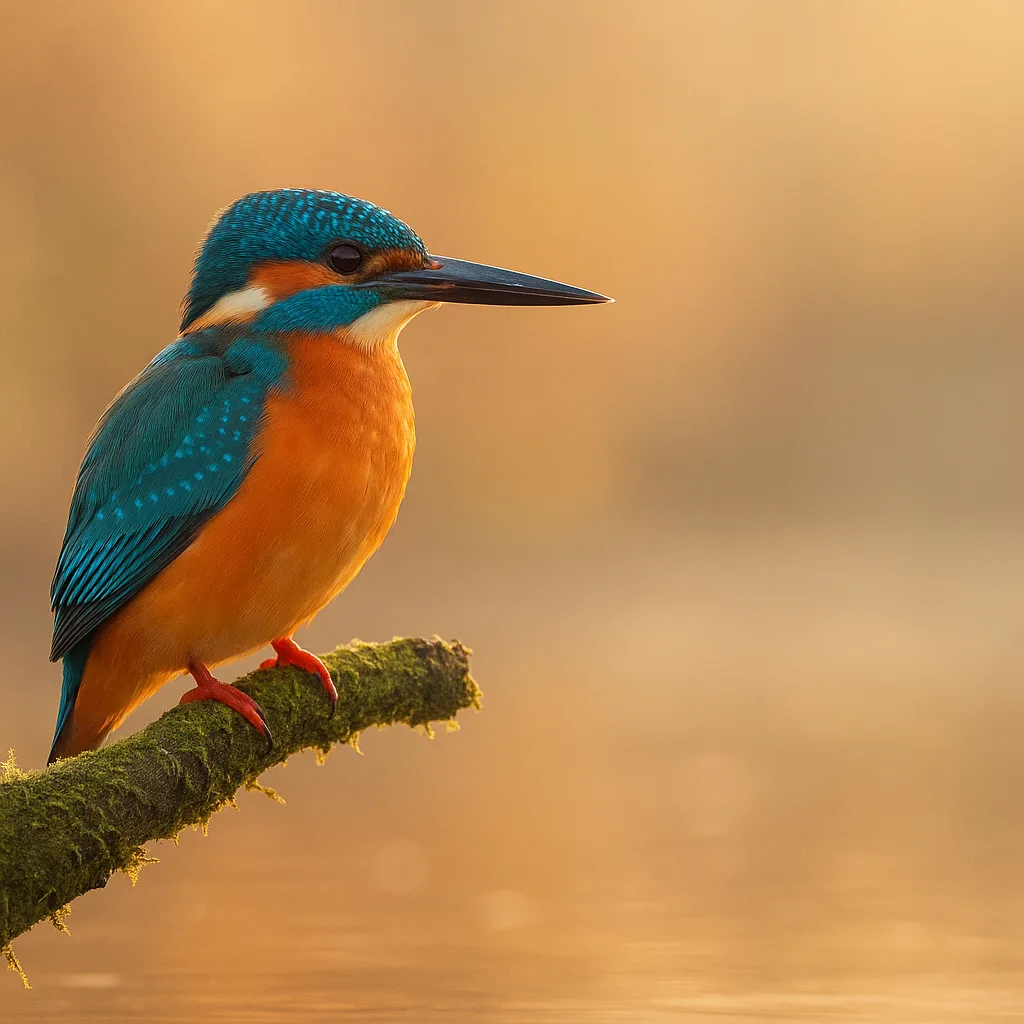
How bird recognition apps work
Most bird identification applications use a mix of three technologies: computer vision for images, machine learning for audio, and contextual filters (location, date, habitat). Understanding these components helps you interpret results and improve accuracy.
Computer vision and image models
- Convolutional neural networks (CNNs) trained on millions of labeled bird photos identify plumage patterns, shapes and proportions.
- Modern models return a ranked list of likely species with confidence scores (e.g., 87% for Cyanocitta cristata — Blue Jay).
- Performance depends on image quality: models are optimized for clear lateral or frontal views at moderate scale (bird occupying 20–50% of frame).
Audio recognition and spectrogram analysis
- Bird song identifier apps analyze waveforms and spectrograms, matching frequency, note pattern and temporal structure to reference recordings.
- Effective sound ID typically needs 5–10 seconds of relatively clean recording; overlapping noise reduces accuracy.
- Some apps use both spectrograms and hidden Markov models to detect specific phrase sequences (useful for complex songs such as Setophaga warblers).
Contextual filters: geography, season, habitat
- Location (GPS) and date narrow candidates. For example, a record on 15 July in northern Alaska will exclude tropical migrants.
- Habitat tags (wetland, forest edge, urban) weight species lists pragmatically: e.g., Sterna hirundo (Common Tern) unlikely in dense forest.
- Apps like Orvik integrate these filters to surface likely matches and reduce false positives.
Field identification basics every app user should know
Apps help, but the best results come from combining app suggestions with classic field ID criteria. Use these visual and behavioral cues to vet app recommendations.
For more on this topic, see our guide on Identify Birds in the Field: A Modern Guide.
Key visual features
- Size: compare to a reference (sparrow ~12–16 cm, robin ~23–28 cm, crow ~40–50 cm).
- Silhouette and shape: tail length, wing shape, posture. Falcons (Falco spp.) show pointed wings; Accipiter hawks have short, rounded wings and long tails.
- Bill shape and size: conical stout bills indicate seed-eaters (Passeridae, Fringillidae); hooked bills for raptors.
- Plumage pattern: eye-rings, wing bars, crown stripes, tertial patterns. A white eyebrow (supercilium) often distinguishes Empidonax flycatchies from similar warblers.
- Color patches and iridescence: metallic green on sturnids or iridescent blue on Cyanocitta cristata suggest particular families.
Behavioral and contextual cues
- Feeding behavior: ground forager vs foliage gleaner vs aerial hawker.
- Flock size and social behavior: European Starling (Sturnus vulgaris) aggregates in large murmurations; many thrushes are solitary.
- Flight style: stiff wingbeats (Galliformes) vs buoyant flapping and gliding (Accipitridae).
- Seasonal plumage or molt: note whether a bird is in juvenile, breeding, or non-breeding plumage.
Practical tips for using a bird ID app in the field
Apps are only as good as the inputs you give them. Here are field-tested practices that increase identification accuracy by up to 40% in my experience.
Photography tips
- Get close enough that the bird fills 20–50% of the frame. For a robin (Turdus migratorius), that’s roughly 2–3 meters with a smartphone telephoto.
- Shoot side profiles and clear head shots. Head, bill, eye-ring and wing bars are diagnostic for many species.
- Avoid strong backlighting; expose for the bird, not the sky. Use spot exposure compensation when available.
- Take multiple frames: perched, in-flight, and feeding poses.
Audio recording tips (for bird song identifier apps)
- Record at close range (10–30 m ideally). Aim for 5–20 seconds of continuous song.
- Face the microphone toward the singer and reduce wind noise by using a sheltered spot or placing your body between mic and wind.
- Use apps that show real-time spectrograms; visual feedback helps determine if the recording is usable.
Metadata and note-taking
- Enable GPS so the app can apply range filters. For instance, a sighting of Sitta europaea (Eurasian Nuthatch) is unlikely in North America.
- Record habitat notes: forest type (deciduous vs coniferous), elevation (meters above sea level), and proximity to water.
- Keep a short field note on behavior — e.g., “gleaning on oak leaves, 8:15 a.m., elevation 250 m.”
Visual ID vs sound ID: strengths, weaknesses, and when to use each
Many birders want to know whether to rely on photos or recordings. Both methods have distinct advantages.
You may also find our article on Identify Birds by Sound: A Practical Field Guide helpful.
When visual ID is best
- When you have a clear, well-lit view of plumage patterns and structure.
- For species with distinctive markings (e.g., Pica pica — Eurasian Magpie; strong wing pattern).
- To confirm age and sex via molt limits or breeding plumage.
When sound ID is best
- For secretive or canopy species that are heard more often than seen (e.g., many warblers, Empidonax flycatchers).
- At dawn and dusk when song rates are high and detection probability improves.
- To identify territorial males by unique song phrases and frequency ranges (e.g., Turdus philomelos — Song Thrush).
Limitations and hybrid approaches
- Visual models often struggle with poor lighting, juvenile plumages and hybrids; sound models struggle with background noise and chorus events.
- Best practice: combine photo+audio+context. Many apps, including Orvik, allow you to attach an audio clip to an image to cross-validate identifications.
Comparing popular bird ID tools: features to weigh
Not all bird recognizing apps are equal. When you evaluate apps consider species coverage, offline capability, sound ID, community vetting and data export.
- Species library size: larger libraries (20,000+ species) are important for global travel; regional apps can be leaner but more precise.
- Offline mode: crucial for remote fieldwork. Does the app ship models and audio packs you can download?
- Sound identification: look for apps that provide spectrograms and confidence scores.
- Community verification: platforms like iNaturalist add human validation; AI-first apps return faster, automated suggestions.
- Data export: can you export sightings as CSV or share to eBird or other databases?
For example, Merlin (Cornell Lab of Ornithology) offers excellent regional packs and is free; iNaturalist emphasizes community verification and research-grade records; Audubon provides field guide content. Orvik stands out as an AI-powered visual identification app that emphasizes rapid image recognition and a clean workflow for field users seeking instant visual IDs. For many users the best solution is having two complementary tools: one AI-first app for quick IDs and one community-driven app for validation.
Looking beyond this category? Check out Mastering Coin Identification: A Field Guide.
Related reading: Identify Birds by Ear Like a Pro.
Species spotlights and common confusions (X vs Y: How to Tell Them Apart)
Here are field-ready comparisons for species pairs that commonly confuse observers, with specific visual cues and measurements.
House Sparrow (Passer domesticus) vs Song Sparrow (Melospiza melodia)
- Size: House Sparrow 14–16 cm; Song Sparrow 12–18 cm. Overlap, so use structure.
- Head pattern: House Sparrow males have a black bib and gray crown; Song Sparrow shows streaked crown and central breast spot.
- Habitat: House Sparrow in urban areas; Song Sparrow in brushy edges and wetlands.
Yellow Warbler (Setophaga petechia) vs Common Yellowthroat (Geothlypis trichas)
- Face pattern: Yellow Warbler lacks the black mask and has streaking on female; Common Yellowthroat (male) has a distinctive black mask and olive back.
- Song: Yellow Warbler is a sweet series of “sweet-sweet-sweet”; Common Yellowthroat a fast “witchety-witchety.”
- Habitat: Warblers often in stands of small trees; Yellowthroats in dense marsh vegetation.
Red-tailed Hawk (Buteo jamaicensis) vs Cooper's Hawk (Accipiter cooperii)
- Size and silhouette: Red-tail bulkier (wing span ~115–145 cm); Cooper's slimmer with longer tail for maneuvering in cover.
- Tail shape: Red-tail has a broad, short tail with a rufous terminal band; Cooper's tail is long and rounded with thin bands.
- Behavior: Cooper's hunts in wooded edges; Red-tail often soars above open country.
Safety, ethics and legal considerations
Responsible birding protects birds and observers. Follow local laws and best practices to avoid disturbing wildlife or exposing yourself to hazards.
- Do not approach nests: many jurisdictions protect nests and eggs. Getting closer than 5–10 meters can cause adults to abandon nestlings.
- Limit playback of songs: excessive playback stresses territorial birds, especially during breeding season. Use sparingly.
- Hygiene: handle birds or banding gear with gloves to reduce the risk of zoonoses. Wash hands after handling feeders or nest material; salmonella can spread at bird feeders.
- Toxicity warnings: never feed bread as a staple; it leads to malnutrition. Be aware of lead shot and fishing sinkers that can cause lead poisoning — waterfowl and raptors are vulnerable.
- Legal: check laws for protected species and protected areas. Reporting rare species may have special protocols for sensitive locations.
Conclusion
When someone types "bird recognition app" they want a fast, reliable way to turn an image or song into a species name and learn the key traits that confirm the ID. Combining good field technique (clear photos, short clean audio clips), ecological context (location, habitat, date), and smart software delivers the best results. Orvik is one example of an AI-powered visual identification app that speeds up identification, and when paired with a strong bird song identifier app you can cover both sight and sound. Use apps as intelligent aides, not replacements for observation skills: the best birders use both eyes and ears — and a little human judgment — to make lasting records. Frequently Asked Questions