
When you hear a liquid warble from a hedgerow or a repeated two-note whistle at dawn, you can do more than wonder — you can identify the species. This guide explains how to identify bird by sound with field-tested methods, acoustic details (frequency, length, repetition), visual cues for confirmation, and the best tools — including Orvik — to speed up learning. Read on for technical tips, regional examples, and safety notes so your next backyard concert becomes a checklist of species.
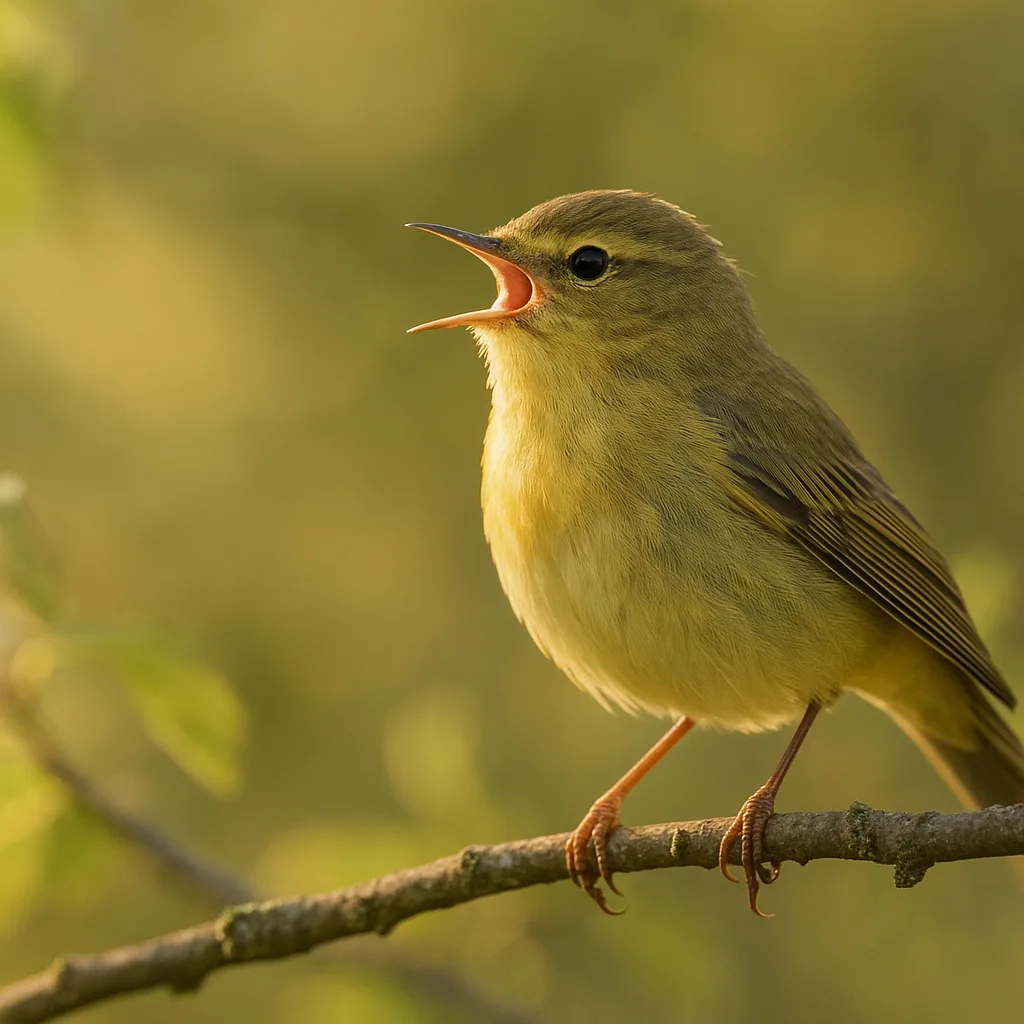
Why sound is essential for bird identification
Birds are often heard long before they are seen. Vocalizations provide information that plumage alone cannot: sex, breeding status, territoriality, and sometimes even individual identity. For many cryptic species — skulking warblers, dense-woodland thrushes, nocturnal owls — sound is the primary diagnostic feature.
Types of vocalizations
- Song: Complex, learned sequences usually associated with mating and territory (e.g., Cardinalis cardinalis, Northern Cardinal).
- Call: Short, simpler sounds used for alarms, contact, or flock coordination (e.g., Poecile atricapillus, Black-capped Chickadee 'chick-a-dee').
- Flight call: Brief notes given in transit, often at night by migrants (e.g., many Vireo and Turdus species).
- Alarm/Agonistic sounds: Harsh scolds, rattles, or buzzes signaling danger (e.g., corvids).
How bird sounds are produced and what to listen for
Bird vocalizations are produced in the syrinx — a specialized vocal organ at the base of the trachea. The structure allows for rapid modulation of pitch and the ability to produce two independent notes simultaneously in some species (duetting songbirds).
Acoustic parameters to use
- Frequency (pitch): Measured in kilohertz (kHz). Most passerine songs fall between 1–8 kHz; owls and larger birds are often below 2 kHz.
- Duration: Length of a phrase or note in seconds. For example, American Robin (Turdus migratorius) phrases are typically 1–2 s long.
- Pattern/phrase: Is it a repeated monosyllable, a descending series, or a complex buzzy trill?
- Tempo and rhythm: Notes per second and spacing between phrases.
- Timbre: Wheezy, flutelike, buzzy, metallic, or nasal.
Step-by-step: How to identify bird by sound in the field
If your goal when you search "identify bird by sound" is to reliably name species in real time, follow this workflow. It balances listening skills with practical recording and visual confirmation.
For more on this topic, see our guide on AI Field Guide: Identify Birds Fast.
- Stop and orient: Face the sound source; note direction and height (ground, understory, canopy).
- Record the vocalization: Use a phone or recorder. Aim for 10–30 seconds of quality audio. Hold the microphone within 1–5 m for best signal-to-noise ratio.
- Describe the sound in words: e.g., "clear flute, 4-note descending phrase, repeated every 6 s" — this helps search and comparison.
- Note the context: Time of day, weather, habitat (wetland, oak woodland, urban park), and behavior (singing from exposed perch vs. hidden in shrub).
- Use audio tools: Run the clip through a spectrogram app or an identification tool like Orvik to get candidate IDs.
- Confirm visually: Look for field marks: size (cm), plumage colors, bill shape, tail length. Record photos if possible to pair with audio for Orvik or other apps.
Checklist to carry in the field
- Smartphone or handheld recorder with extra battery
- Binoculars (8x42 recommended)
- A field notebook and a small ruler (for estimating bird size)
- Reference app (Orvik, Merlin, eBird sound library)
Tools and technology to identify bird calls and songs
Modern tools dramatically shorten the learning curve. They can suggest identifications from short clips, show sonograms, and tie records to distribution data. Orvik combines visual AI identification with audio-assisted workflows to help confirm confusing cases by matching context, plumage images, and sound patterns.
Recommended apps and devices
- Orvik: AI visual ID with growing audio pairing; useful to cross-check an unseen singer when you get a photograph or short clip.
- Merlin Bird ID (Cornell Lab): Offers a sound ID feature with a large labeled dataset; free to use offline for many regions.
- BirdNET: Research-grade neural network that proposes species from short recordings; good for free, high-volume identification.
- Dedicated recorders: Zoom H1n, Tascam DR-05 — provide higher-fidelity recordings than most phones (sensitivity and lower noise floor).
- Spectrogram software: Raven Lite, Audacity with spectrogram settings, or the sonogram viewer in many apps for visual matching.
Tips when using apps
- Record at 44.1–48 kHz sample rate for clear frequency detail.
- Trim recordings to 5–15 s containing the vocalization for faster analysis.
- Compare app suggestions with range maps and seasonal occurrence — a suggestion outside normal distribution is suspect.
- Use Orvik to pair image IDs from photos with audio candidates, reducing false positives.
Common confusions: comparison guides to tell species apart
Many birders search "identify bird by sound" because two species sound similar. Below are common confusions and specific acoustic and visual cues to separate them.
You may also find our article on Identify Birds in the Field: A Modern Guide helpful.
Song Sparrow (Melospiza melodia) vs White-throated Sparrow (Zonotrichia albicollis)
- Sound: Song Sparrow: variable, complex phrases with buzzy trills and sharp notes, typically 2–4 s. White-throated Sparrow: clear, whistled 3-note "Oh-sweet-Canada" or "Old-Sam-Peabody-Peabody" around 1–2 s.
- Visual cues: Song Sparrow: streaked breast with central spot, 14–18 cm length. White-throated: unstreaked grayish breast, white throat patch, yellow lores; 15–17 cm.
- Habitat & season: Song Sparrow ubiquitous in brushy edges year-round; White-throated more associated with woodland edges, especially in spring migration and breeding in boreal-edge zones.
Northern Cardinal (Cardinalis cardinalis) vs House Finch (Haemorhous mexicanus)
- Sound: Cardinal: rich, clear whistles "cheer-cheer-cheer" with variable phrases; House Finch: rapid warbled series, often with harsher chipping mixed in.
- Visual cues: Cardinal male bright red, crest, heavy conical bill, 21–23 cm. House Finch male has streaked flanks, red on head/throat, smaller 12–14 cm.
- Distribution: Cardinal east of Rockies in most of U.S.; House Finch widespread in western U.S. and established in the east since 1940s.
Regional examples and what to listen for
Sound identification depends on geography. Below are quick regional reference lists with key species and signature phrases to learn first.
North America (temperate regions)
- Northern Cardinal: Loud whistles, midday and dawn; easy to see in gardens.
- American Robin: Cheerful strings of melodious phrases (1–2 s), common on lawns.
- Black-capped Chickadee: 'chick-a-dee' call and a clear 'fee-bee' song (two notes); note the variable 'dee' portion signals predator seriousness.
- Common Loon (Gavia immer): Wailing calls at night on lakes — haunting and low frequency.
Europe
- Song Thrush (Turdus philomelos): Repeating musical phrases often repeated two or three times.
- European Robin (Erithacus rubecula): Melodic, high-pitched and thin; sings year-round, even in winter.
- Wren (Troglodytes troglodytes): Very loud, fast, staccato bursts from concealed perches.
Tropics
- Pitohui (various species, New Guinea): Noteworthy because some species carry batrachotoxins in skin/feathers — avoid handling (see safety).
- Manakins (Pipridae): Mechanical-sounding wing-snaps or buzzy trills during leks; identify by location and lekking behavior.
- Trogons and Motmots: Simple two-to-three note calls often used to mark territory in dense forest.
Field recording, sonograms, and advanced identification techniques
To move from casual recognition to reliable identification, learn to read sonograms and use good recording practice. Sonograms convert sound to a visual display of frequency over time, revealing patterns the ear can miss.
You might also be interested in Decode Jewelry Hang Tags Like an Expert.
Recording best practices
- Record in WAV if possible (lossless) at 44.1–48 kHz sample rate and 16–24 bit depth.
- Record close (1–10 m) and keep the microphone steady; a small windscreen reduces noise.
- Record ambient noise for comparison (traffic, water, insects) — helps apps separate birds from background sound.
Interpreting sonograms
- Frequency bands: Horizontal placement shows pitch; look for dominant energy between 2–6 kHz for many songbirds.
- Note shape: Thin vertical bars indicate short notes; sweeping diagonals indicate frequency modulation (rising/falling notes).
- Harmonics: Multiple horizontal lines above a note suggest a harmonic-rich timbre (e.g., thrushes).
Using sonograms alongside Orvik or BirdNET improves accuracy: match both the ear impression and the visual spectrogram to known templates.
Related reading: Identify Birds by Sound: A Practical Field Guide.
Safety, ethics, and uncommon hazards
Respect wildlife and follow legal and ethical guidelines when identifying birds by sound. Sound-based approaches reduce disturbance, but some practices carry risks.
Guidelines and warnings
- Do not repeatedly broadcast playback near nests during breeding season — this can increase predation and stress.
- Avoid handling birds unless trained; banding and handling require permits to prevent harm and disease spread.
- Be cautious near cliffs, wetlands, or roads while focused on listening — situational awareness matters.
- Beware of toxic species in certain regions: some New Guinea pitohuis (e.g., Pitohui dichrous) carry batrachotoxins; do not handle unfamiliar tropical species without gloves and expertise.
Conclusion
To identify bird by sound you need a mix of listening skills, a systematic approach to recording and context, and the right tools. Start by learning a half dozen local signature songs and calls, use apps like BirdNET and Orvik to cross-check visual and audio evidence, and practice with sonograms to deepen your accuracy. Over weeks you will notice patterns: pitch ranges, phrase lengths, and habitat-linked repertoires. With patience and the right workflow, you can turn fleeting notes into confident identifications.
Frequently Asked Questions
- What is the first thing I should listen for when identifying a bird by sound?
- Start with the basic acoustic pattern: pitch (high or low), phrase length (short chirp vs long warble), and repetition rate. These narrow down candidate groups quickly.
- Can I identify birds by sound with just my phone?
- Yes. Modern smartphones record sufficiently well for many species. Record at close range (1–10 m), minimize wind noise, and use apps like BirdNET or Merlin for assistance.
- How do I use Orvik to help confirm a sound identification?
- Use Orvik to pair photos you capture with audio suggestions from other apps. Visual confirmation combined with contextual audio greatly increases ID confidence.
- Are sonograms necessary to identify bird sounds?
- Not necessary for casual birding, but sonograms are invaluable for resolving difficult IDs: they reveal frequency contours, harmonics, and note shapes that the ear may miss.
- What times of year are songs most useful for identification?
- Songs are most frequent and diagnostic during the breeding season (spring and early summer). Calls are useful year-round for many species, including migrants.
- How do I avoid disturbing birds when recording?
- Keep a respectful distance, limit the use of playback, avoid repeated approaches to nests, and stay on established paths to minimize stress and predation risk.