
Why identify owls by sound?
Most owl encounters begin with a sound: a hoot in a woodlot, a screech above a suburban street, or a tiny toot along a quiet trail. When searching for "owl calls identification" people want a reliable way to turn a recording or a memory of a hoot into a species name. Sound is often the first and only clue at night because owls are cryptic, active after dusk, and perched high in dense foliage.
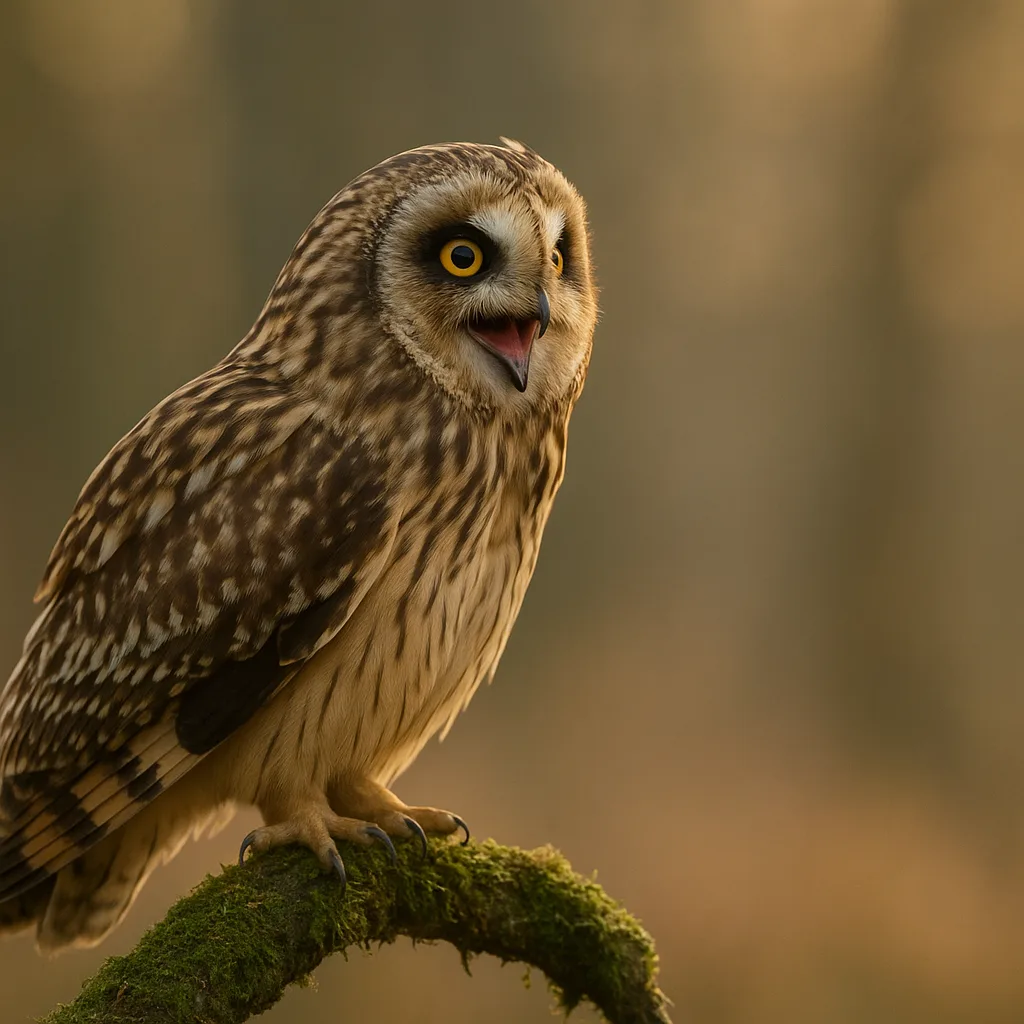
- Sound lets you detect owls you cannot see—useful for nocturnal species and secretive habitats.
- Calls are species-specific: many owls have distinctive phrases (e.g., Barred Owl's "Who cooks for you?").
- Vocal identification supports monitoring: detect presence, estimate territory density, and time breeding season.
How owl vocalizations are produced
Understanding how owls make sound helps with identification. Owls do not have vocal cords like mammals; they use a syrinx (the bird vocal organ) at the base of the trachea. Variations in syrinx morphology, body size, and air pressure create the characteristic tones and timbres.
Key acoustic features to listen for
- Phrase length: single-note vs. multi-note calls (0.1–3 seconds per note, typically)
- Pitch/fundamental frequency: larger species generally produce lower-frequency hoots (approx. 200–900 Hz), while small owls produce higher pitches (1–4 kHz)
- Modulation: rising, falling, tremolo (rapid amplitude modulation), or monotone
- Rhythm and pattern: repeated phrases or irregular sequences (important for distinguishing species)
Spectrogram cues
Use a spectrogram to visualize calls—critically helpful when you can't trust memory. Look for:
For more on this topic, see our guide on Identify Birds by Sound: A Practical Field Guide.
- Bandwidth: narrow-band pure tones versus broad-band screeches
- Harmonics: presence of overtone bands above the fundamental
- Frequency sweep: steady-frequency notes versus rising/falling sweeps
Common owl calls and how to recognize them
The following species are among the most frequently encountered in North America and parts of Europe. Each profile gives the typical call, approximate acoustic measurements, habitat and range, and visual notes to confirm an ID when you do get a look.
Great Horned Owl (Bubo virginianus)
- Call: Deep, resonant series of hoots—usually a 5-note phrase: "hoo-h’HOO-hoo-hoo" (commonly rendered as HOO-HOO-hoo-hoo-hoo).
- Acoustics: fundamental often around 250–600 Hz; individual notes ~0.3–0.6 s; phrases spaced 1–3 s apart.
- Habitat & range: widespread across North America in forests, edges, cities; resident year-round in many areas.
- Visual cues: large (about 46–63 cm length), ear tufts prominent, barred chest, yellow eyes.
Barred Owl (Strix varia)
- Call: Distinctive 8-note sequence often transcribed as "Who cooks for you? Who cooks for you-all?"—a clear, full-toned phrase.
- Acoustics: mid-frequency 350–1,200 Hz with harmonics; notes 0.2–0.6 s; phrase tempo variable.
- Habitat & range: mature deciduous and mixed forests, eastern North America and expanding westward.
- Visual cues: round head without ear tufts, vertical barring on chest and horizontal streaking on belly, dark eyes.
Barn Owl (Tyto alba)
- Call: Long, downward-sweeping, raspy scream—single, drawn-out shriek rather than hoots.
- Acoustics: broadband, strong energy above 2 kHz; call length 0.5–2 s.
- Habitat & range: open country, farmland, barns and church towers worldwide in suitable climates.
- Visual cues: heart-shaped facial disc, pale plumage, wingspan about 80–95 cm, slender body.
Eastern/Western Screech-Owl (Megascops asio / Megascops kennicottii)
- Call: Trilling whinny or descending whistled trills; not a high-pitched scream despite name.
- Acoustics: series of 6–8 notes, frequency 700 Hz–3 kHz; rapid modulation and often with a rolling trill.
- Habitat & range: woodlots, suburbs; Eastern screech-owl in eastern NA, Western screech-owl on west coast.
- Visual cues: small (19–25 cm), ear tufts present, cryptic gray or rufous morphs, streaked underparts.
Northern Saw-whet Owl (Aegolius acadicus)
- Call: Repeated single-note toots—consistent "too-too-too" at steady tempo often 1–2 notes per second.
- Acoustics: high-pitched around 1.5–3 kHz; each note ~0.1–0.2 s; many calls in sequence during night.
- Habitat & range: dense coniferous and mixed forests; northern and montane regions; migratory in some populations.
- Visual cues: very small (18–22 cm), round head without ear tufts, streaked breast with white spots on head.
Short-eared Owl (Asio flammeus)
- Call: Wailing barks and raspy hoots; territorial calls are short low hoots and barks.
- Acoustics: low-to-mid frequencies 300–1,200 Hz; airborne calls often shorter and repeated.
- Habitat & range: open grasslands, marshes; circumpolar distribution and migratory.
- Visual cues: medium-sized (34–43 cm), pale underparts with streaking, rounded facial disc, short ear tufts.
Snowy Owl (Bubo scandiacus)
- Call: Deep, resonant hoots and also harsh clicks or rattles when excited; males hoot more frequently in breeding season.
- Acoustics: fundamental often 200–500 Hz; calls can be short and forceful or longer and melodic.
- Habitat & range: Arctic tundra in summer; migratory irruptions southward in winter.
- Visual cues: large (52–71 cm), white plumage with varying dark barring, yellow eyes.
Field techniques: record, analyze, and verify
Good field technique converts a fleeting hoot into a firm identification. Use these steps.
You may also find our article on AI Field Guide: Identify Birds Fast helpful.
- Record with proper settings: use WAV or FLAC at 44.1–48 kHz, 16–24 bit for analysis.
- Improve signal-to-noise: approach quietly, stop engine noise, face the mic toward the sound source.
- Annotate conditions: time, temperature, location (GPS), moon phase, and behavior (calling, duetting, alarm).
Equipment recommendations
- Smartphone: modern phones with voice memo apps are fine for many calls; use an external microphone for better quality.
- Dedicated recorder: handheld recorders (e.g., Zoom H4n/H6) at 44.1–48 kHz/24-bit provide clean WAV files.
- Microphones: directional shotgun mics or parabolic dishes help isolate distant calls (parabolic gain typically +10–15 dB).
- Accessories: windscreen, tripod, and headphones for real-time monitoring.
Analyzing calls in the field and at home
- Play back at reduced volume first—avoid startling an owl with loud playback.
- Use a spectrogram app (e.g., Raven Lite, Audacity, or apps integrated into Orvik) to view frequency, harmonics and temporal pattern.
- Compare to reference recordings and published sonograms; note unique cues such as the number of notes per phrase and frequency sweeps.
Using apps and tools (including Orvik) for owl calls identification
Apps can accelerate identification by matching your recording to reference libraries and showing spectrograms. Orvik is designed to combine visual and audio analysis for rapid field IDs.
- Automatic matching: apps (including Orvik) use machine learning to rank likely species matches from audio.
- Spectrogram overlays: see visual match with known reference sonograms to confirm subtle differences.
- Photo + audio fusion: Orvik can combine a photo of plumage, location data, and an audio clip to increase confidence in ID.
Best practices when using ID apps
- Always verify app suggestions with your ears and a spectrogram—no app is infallible.
- Upload high-quality files—low bitrate mp3s lose harmonics and can mislead automated classifiers.
- Use location and date to filter improbable species (e.g., Snowy Owl in mid-south summer is highly unlikely).
Species comparisons: how to tell similar owls apart by hoot
Comparisons are where sound ID skills really pay off. Below are common confusions and what to listen for.
You might also be interested in How to Identify Any Rock in the Field.
Related reading: Identify Birds in the Field: A Modern Guide.
Great Horned (Bubo virginianus) vs Barred Owl (Strix varia)
- Great Horned: lower-pitched, spaced series of 2–5 hoots; emphatic and resonant. Harmonics weaker relative to the fundamental.
- Barred: more musical and longer phrases, often with more notes and a questioning cadence ("Who cooks for you").
- Visual help: ear tufts on Great Horned; rounded, tuftless Barred face and dark eyes.
Eastern Screech-Owl vs Northern Saw-whet
- Screech-Owl: rich trills and whinnying notes; variable tempo and often a descending whinny.
- Saw-whet: monotonous, evenly spaced toots—less tonal complexity, higher pitch.
- Size cues: saw-whet is tiny (18–22 cm) compared to screech-owl (19–25 cm) but the vocal difference is often definitive.
Screech-Owl vs Nightjar (whip-poor-will) confusion
- Nightjars (Caprimulgidae) produce repeated insect-like calls (e.g., "whip-poor-will") that can be mistaken for small nocturnal bird calls.
- Nightjar calls are often more percussive and lack the harmonic structure of owl hoots—use a spectrogram to confirm.
Common mistakes, ethics, and safety warnings
Responsible listening protects both you and the birds. Below are pitfalls and legal/ethical cautions.
- Avoid excessive playback: repeated broadcasting to elicit a response can stress owls, disrupt mating and make them vulnerable to predators.
- Do not handle wild owls: they may carry parasites (e.g., ticks), zoonoses, or be protected by wildlife law—contact licensed rehabilitators if you find an injured bird.
- Secondary poisoning risk: owls are sentinel predators for rodenticide exposure. If a dead owl is found, report to wildlife authorities; do not touch with bare hands.
- Respect private property and nesting buffers—many local laws protect nesting raptors and disturbance can have legal consequences.
Safety when recording at night
- Bring a flashlight or headlamp with red filter to preserve night vision.
- Wear bright clothing near roads and follow trail safety—night hazards include uneven terrain, ticks, and nocturnal mammals.
Putting it all together: a 5-step workflow for confident owl calls identification
- Listen: note the pattern, pitch (high/low), note length, and any words or phrases that come to mind.
- Record: capture a clean file at 44.1–48 kHz, label with time and GPS.
- Analyze: view a spectrogram and measure note length, interval, and frequency bands.
- Compare: use reference libraries and apps like Orvik to get candidate IDs; cross-check with field guides and range maps.
- Verify visually if possible: plumage, size, ear tufts, and behavior will seal the ID.
Conclusion
Identifying owls by call is both an art and a science. Focus on phrase structure, pitch, rhythm, and spectrogram features, and back up audio with habitat, season, and visual cues when possible. Use good recording practice and ethical field behavior—apps such as Orvik can speed identification by combining audio analysis with photos and location data, but your ears and a well-interpreted spectrogram remain the final judges. With practice you will move from unsure to confident, turning nighttime mystery into reliable observations that support conservation and deepen your connection to wild places.
Frequently Asked Questions
- How can I identify an owl by hoot alone?
- Note the number of notes, pitch, rhythm, and timbre. Use a spectrogram to view frequency bands and compare to reference calls; habitat and time of year also help narrow possibilities.
- What equipment do I need to record owl calls for identification?
- A recorder capable of WAV/FLAC at 44.1–48 kHz (smartphone + external mic is acceptable); shotgun mic or parabolic dish for distance; headphones and windscreen.
- Can apps reliably identify owl calls?
- Apps (including Orvik) are useful for initial matches but should be confirmed with spectrograms, field notes, and range/season checks. Low-quality recordings reduce accuracy.
- Is it OK to play owl calls to get a response?
- Use sparingly. Playback can stress birds, disrupt breeding, and is illegal near some protected species or during nesting season. Follow local guidelines.
- How do I tell a Barred Owl from a Great Horned Owl by sound?
- Barred Owl has longer, more musical phrases often resembling 'Who cooks for you?'; Great Horned is deeper with fewer, spaced hoots. Spectrogram differences include harmonic content and note spacing.
- What time of year are owls most vocal?
- Many species vocalize most during breeding season in late winter to spring; territorial and courtship calls peak then. Migration can also increase calling in some species.
- I found an injured owl—what should I do?
- Do not handle it unless trained. Contact a licensed wildlife rehabilitator or local wildlife agency. Wear gloves if you must move it and avoid direct contact due to injury and disease risks.