
What people mean by “shazam for bird calls”
When people search for "shazam for bird calls" they want a fast, reliable way to identify birds from audio the way Shazam identifies songs: point, record, and get a species name. But avian vocalizations present different challenges than recorded music—calls are shorter, more variable, and often overlap with wind, insects, or other birds. This guide explains how bird audio identification works, what to expect in accuracy, and how to get useful results in the field using apps and tools like Orvik.
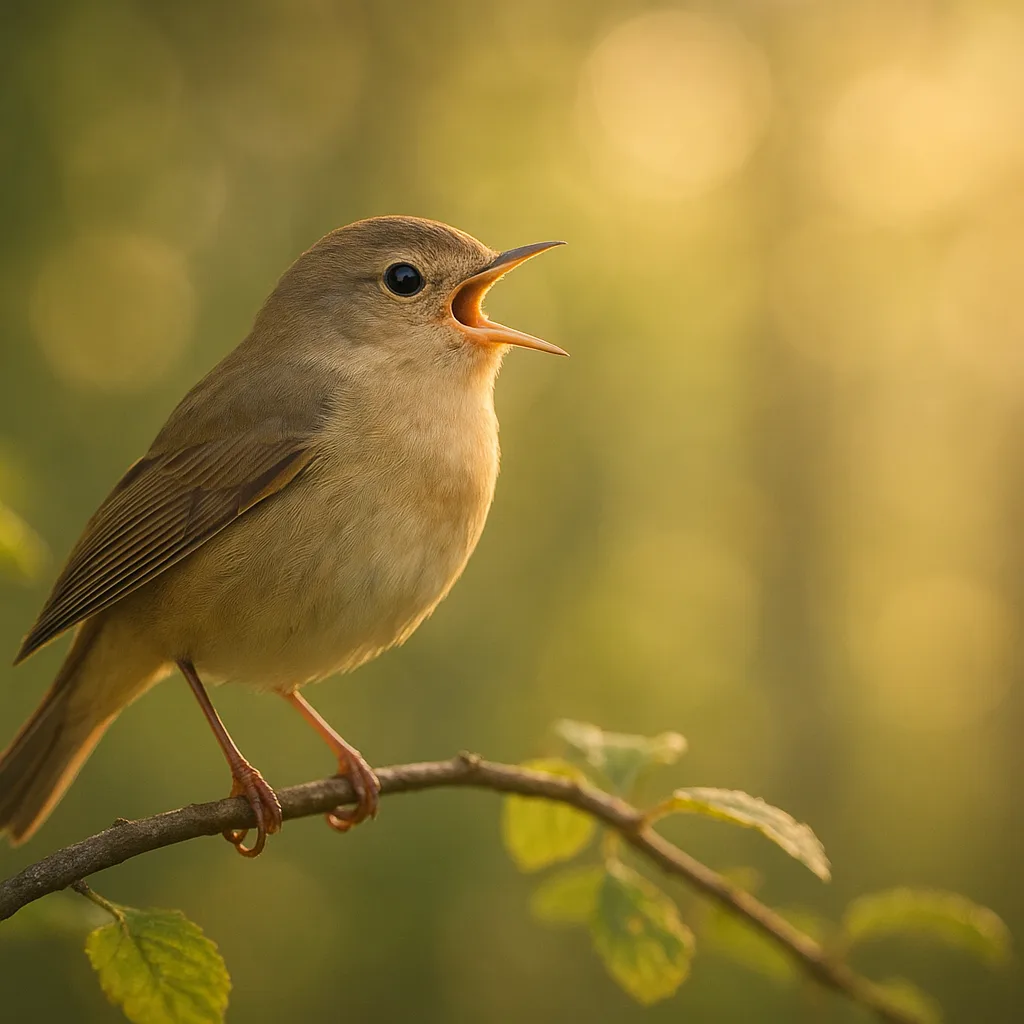
- Intent behind the search: quick, accurate species identification by sound.
- Real needs: clear recordings, reference databases, and tools that handle noise and variability.
- Outcome: actionable steps to capture, analyze, and verify bird sounds.
How bird audio identification works
Audio fingerprinting vs machine learning
There are two main approaches to automatic audio ID:
- Audio fingerprinting—like Shazam—extracts stable spectral peaks and matches them to fingerprints in a database. It excels with consistent, harmonic signals (pop music) but can struggle with rapidly frequency-modulated bird notes.
- Machine learning (ML)—modern bird-ID systems use convolutional neural networks (CNNs) on spectrograms or Mel-frequency cepstral coefficients (MFCCs). These systems learn patterns across thousands of labeled clips, offering greater tolerance to variation and noise.
Spectrograms, frequencies, and temporal patterns
Birdsong is usually analyzed in spectrograms (time vs frequency). Useful signal metrics include:
- Frequency range: many passerines sing between 2 kHz and 8 kHz; some owls and pigeons occupy lower bands (200–1,500 Hz).
- Note duration: insect-like trills can be <0.1 s per note; thrush phrases often last 2–6 s.
- Repetition rate: measured in notes per second or phrase repetition per minute.
Algorithms typically use a sampling rate of 44.1 kHz or 48 kHz and convert waveforms into 256–1024 point FFTs to visualize frequency content with 5–50 ms temporal resolution.
Recording tips that improve ID success
Good audio starts with good technique. Simple changes to how you record increase the chance any app—Shazam-like or ML-based—will return a correct ID.
Equipment and settings
- Use a dedicated recorder or a smartphone at 44.1 kHz, 16-bit if possible. Higher bit depth (24-bit) gives more headroom in loud conditions.
- For distance: a parabolic dish or directional shotgun mic extends useful range to 30–50 m; phones and on-body recorders are best within 1–10 m.
- Wind protection: foam windscreens or dead cats reduce low-frequency rumble which masks calls below ~500 Hz.
Field technique
- Position: stay 1–3 m from the singing bird when possible; quiet approach reduces stress on the bird and noise in the recording.
- Orientation: point the mic toward the bird, not toward the ground or sun; the direct path maximizes signal-to-noise ratio (SNR).
- Record length: capture at least 15–30 seconds to include multiple phrases—many IDs need several syllables to be confident.
- Metadata: note location (latitude/longitude), time, date, habitat, and behavior—these contextual cues often tip a tentative algorithmic ID into a correct one.
Practical identification: examples and visual cues
Even a "shazam for birds" user benefits from visual and ecological cues—many species have signature calls but look-alikes coexist. Below are concrete examples with audio characteristics, visual IDs, habitat, and distribution.
American Robin (Turdus migratorius)
- Audio: clear, melodious phrases; frequency peak 3–5 kHz; phrases 1–2 s long; repeated at ~15–25 phrases/min.
- Visual cues: 25 cm long, orange underparts, gray-brown back, white eye ring.
- Habitat & range: widespread across North America; gardens, lawns, wood edges; often more vocal at dawn (dawn chorus).
Northern Cardinal (Cardinalis cardinalis)
- Audio: clear whistles, often two-note phrases; 2.5–5 kHz; typical phrase ~0.2–0.6 s.
- Visual cues: 21–23 cm; males bright red with crest; females warm brown with red highlights.
- Habitat & range: eastern and central USA; shrubby edges, backyards; year-round resident in much of its range.
Song Sparrow (Melospiza melodia)
- Audio: variable, complex phrases with clear terminal notes; frequency range ~2–6 kHz; phrases 1–3 s; high in spring breeding season.
- Visual cues: 12–15 cm; streaked brown breast with central spot; chunky head, relatively long tail.
- Habitat & range: marsh edges, shrubby fields across North America; often territorial in spring.
Common Nightingale (Luscinia megarhynchos)
- Audio: rich, fluent song with whistles and trills; 2–8 kHz; song sequences last 1–5 s; peak song activity at night in spring (European populations).
- Visual cues: 15–17 cm; plain brown back, reddish tail, whitish underparts.
- Habitat & range: Europe, parts of Asia; dense scrub, riparian thickets; migratory—present in breeding areas April–July.
These examples show why audio-only ID can be powerful yet benefit from visual confirmation: similar-sounding sparrows can be told apart by breast streaking, bill shape, or habitat preference.
For more on this topic, see our guide on AI Field Guide: Identify Birds Fast.
Limitations, accuracy, and how to tell systems apart
Understanding limits prevents false certainty. Below are common failure modes and a practical comparison.
Common limitations
- Background noise: wind, traffic, and insect choruses mask frequencies from 1–6 kHz where many bird notes sit.
- Mimicry and syntactic variation: mockingbirds and lyrebirds imitate other species, confusing automated systems.
- Overlapping calls: multiple singers in a recording make it difficult to isolate a single species.
- Database bias: many ML systems are trained on species-rich, temperate regions; tropical species are often under-represented.
Shazam vs bird audio identifier apps
The core difference lies in assumptions about the signal.
- Shazam-style fingerprinting
- Best for stable harmonic content and studio recordings.
- Fast lookup using hash tables and sparse fingerprint matches.
- Less tolerant of variable pitch modulation and short, ephemeral notes typical of many birds.
- Bird audio ID (ML-based)
- Uses spectrogram patterns and CNNs trained on labeled bird calls—better at handling variation and noise.
- Provides probability scores, sometimes top-5 candidate lists, and often shows spectrogram segments used for the decision.
- May require larger databases and more compute; can run on-device with optimized models or in the cloud for heavier models.
How to interpret confidence scores
- Probabilistic outputs (e.g., 0.92) indicate model confidence, not certainty—use habitat and visual cues as tie breakers.
- Look for apps that show the matched spectrogram excerpt and allow you to play reference examples for side-by-side comparison.
Using apps like Orvik in the field
Orvik combines visual identification with audio support to give a richer ID workflow. Whether you choose Orvik or another specialized bird-audio app, follow these best practices.
Field workflow with Orvik and similar tools
- Record: capture a 15–30 s clip with your phone or recorder.
- Check: review the clip’s spectrogram (many apps display this) and trim to the cleanest phrase.
- Run ID: submit the trimmed clip to the on-device model or cloud—Orvik offers both visual AI and audio hints that cross-reference images and sounds.
- Verify: compare candidate species' reference calls, check range maps, and add a photo if possible to confirm.
Practical app features to prefer
- Offline models for remote areas with no cell service (models compressed to run on mobile CPUs).
- Ability to upload / link your recording to community databases and get expert feedback.
- Privacy controls—local-only storage or explicit opt-in for sharing with cloud servers.
Orvik is particularly helpful because it ties visual AI to audio cues, letting you combine a clipped photo of a bird with a short recording for higher confidence, especially with cryptic species.
Conservation, ethics, and safety
Recording birds in the wild carries responsibilities—both for the birds' welfare and for your personal safety.
Ethical field practices
- Do not repeatedly playback calls near nests—this can increase predation risk and cause parents to abandon nests.
- Avoid flushing roosting birds; approach slowly and keep a respectful distance (10–30 m depending on species).
- Comply with local wildlife laws and never collect eggs or nestlings without permits.
Safety and toxicity warnings
- Do not handle wild birds unless trained—avian influenza (H5Nx) and other zoonotic risks exist; use gloves and report sick birds to local wildlife authorities.
- Watch for environmental hazards: ticks, venomous snakes, aggressive breeding-season adults (e.g., some gulls and plovers will dive-bomb), and dramatic terrain near nests.
- In a few regions, birds contain toxins: for example, certain New Guinean Pitohui species (e.g., Pitohui dichrous) carry batrachotoxins in feathers—do not ingest or rub feathers on skin.
Best practices for improving ID accuracy over time
Automated ID improves when you contribute good-quality data and learn to validate outputs.
You may also find our article on Identify Birds in the Field: A Modern Guide helpful.
Actions you can take
- Record with metadata: GPS, time, habitat notes. High-quality labeled examples help developers and community databases.
- Upload to trusted repositories (e.g., Xeno-canto, Macaulay Library) with permissive licenses when possible to improve reference libraries.
- Learn key spectrogram shapes: ascending whistles, frequency-modulated trills, and broadband alarm calls look distinct and are often diagnostic.
Apps such as Orvik benefit when users add images paired with recordings—visual confirmation resolves many ambiguous audio matches, especially for migrating or range-overlapping species.
FAQ
- Q: Can an app identify any bird from one short chirp?
A: Often no. Single, very short notes lack enough spectral and temporal information. Aim for 15–30 s with multiple phrases to increase accuracy.
- Q: Is Shazam itself good for bird calls?
A: Shazam's fingerprinting is optimized for music and studio recordings. It may occasionally match clear, tonal bird whistles but generally performs worse than ML-based bird-audio systems.
- Q: How accurate are bird audio ID apps?
A: Accuracy varies by region and species. For common temperate species with good reference data, top-1 accuracy can exceed 80–90% under good recording conditions. For rare or tropical species, accuracy may be much lower.
Looking beyond this category? Check out Goji Berries: A Field Guide to the Red Superfruit.
- Q: Do apps work offline?
A: Some do. On-device models are available in apps designed for fieldwork, but they may be compressed versions with slightly lower accuracy than full cloud models.
- Q: How should I record in windy conditions?
A: Use wind protection on the mic, shield the recorder with your body, get closer if safe, and record multiple takes to increase chances of a clean sample.
Related reading: Mastering Owl Calls: A Field Guide to Sound ID.
- Q: Can mimic species fool the apps?
A: Yes. Species that mimic (e.g., mockingbirds, starlings, lyrebirds) can produce phrases matching many species. Visual confirmation is recommended in these cases.
- Q: Should I tag my recordings with GPS and habitat info?
A: Yes. Metadata greatly improves downstream verification and helps refine models for your region.
- Q: Is it legal to record or publish bird sounds?
A: Generally yes, but some protected areas or research projects may restrict audio recording. When in doubt, check local regulations and respect private property.
Conclusion
"Shazam for bird calls" captures a desire for instant, reliable species IDs from audio. While traditional fingerprinting excels with music, modern bird audio identification relies on machine learning, robust reference libraries, and good field recordings. You can dramatically increase accuracy by recording clean clips (15–30 s), noting location and habitat, and pairing audio with photos—workflows that apps like Orvik facilitate. Use automated IDs as a starting point, verify with visual cues and distribution data, and always prioritize the birds' welfare when recording in the field.
Frequently Asked Questions
- Can an app identify any bird from a single short chirp?
- Single short chirps usually lack enough spectral and temporal information for a confident ID. Aim for 15–30 seconds with multiple phrases to improve accuracy.
- Is Shazam suitable for identifying bird calls?
- Shazam's fingerprinting is optimized for recorded music and may occasionally recognize clear whistles, but ML-based bird-audio apps generally perform better for birds.
- How accurate are bird sound identification apps?
- Accuracy depends on species, region, and recording quality. For well-documented temperate species under good conditions, top-1 accuracy can exceed 80–90%; for rare or under-represented species it can be much lower.
- What are the best recording settings for bird calls?
- Use 44.1–48 kHz sampling rate at 16-bit (or 24-bit for high-end recorders), capture 15–30 seconds, use wind protection, and get within 1–10 m when safe.
- Do apps work offline in remote areas?
- Some apps offer on-device models that work offline, though these may be compressed and slightly less accurate than cloud-based models.
- How should I handle records of rare species?
- Keep detailed metadata (GPS, date, time, habitat), upload high-quality audio and photos to trusted repositories, and seek expert verification before publicizing.
- Are there safety or ethical concerns when recording birds?
- Yes. Avoid disturbing nests or using playback near nests, do not handle wild birds, be aware of zoonotic risks, and follow local wildlife laws.