
Why people ask "what bird is this"
What searchers really want
When someone types "what bird is this" into a search engine or an app, they're usually after a practical, immediate answer: the species name, a few field marks to confirm it, and an explanation of where and why that species is present. They may have a single photo, a 10‑second audio recording, or only a fleeting memory of size and color. They want certainty—ideally a Latin name such as Turdus migratorius (American Robin) or Poecile atricapillus (Black‑capped Chickadee)—plus enough context to know whether the ID is trustworthy.
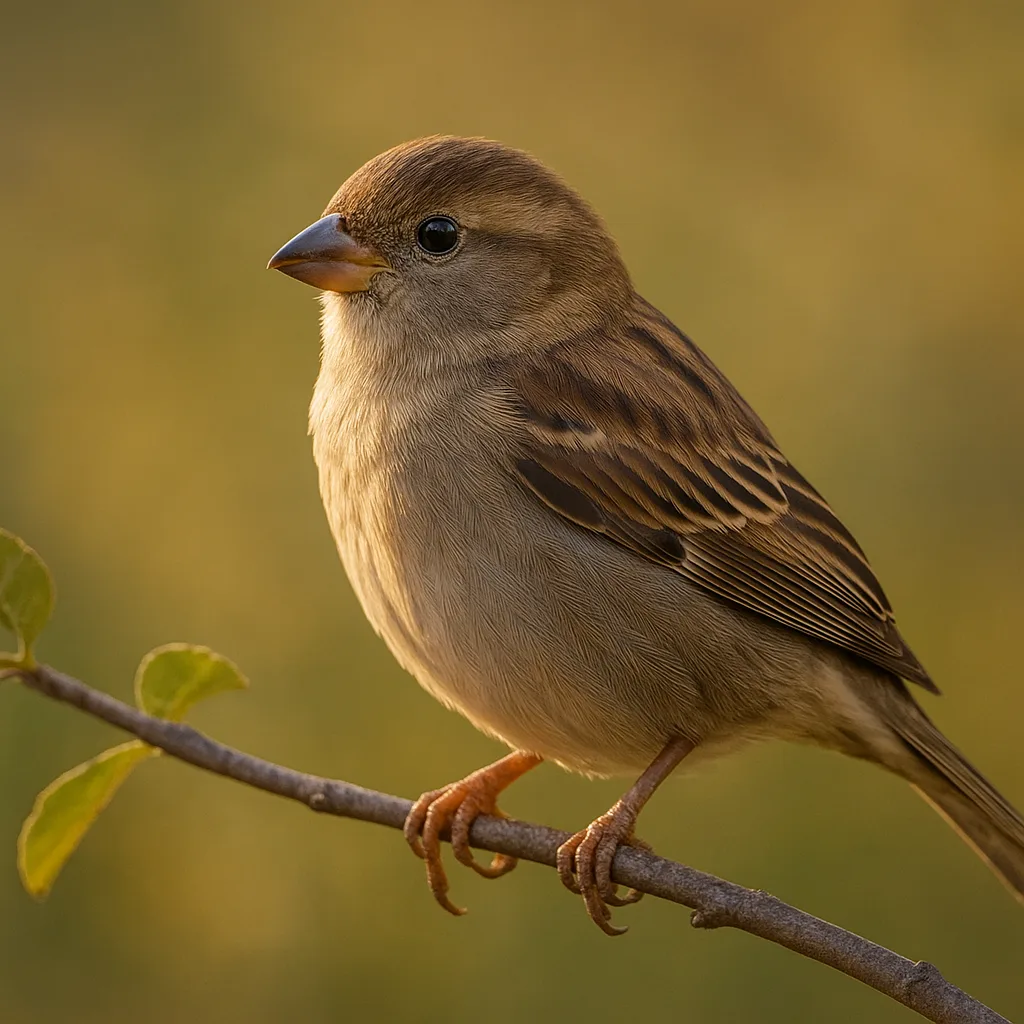
How this guide helps
- Breaks down visual and auditory cues into measurable features
- Explains habitat, range and seasonal behavior that narrow possibilities
- Compares common lookalikes so you can tell similar species apart
- Shows how tools like Orvik speed identification from photos or sound
Quick field ID checklist
Essential measurements and visible traits
Start every identification by collecting a few objective facts. These reduce hundreds of possibilities to a handful.
- Size: Compare to a familiar bird—sparrow (~12–16 cm / 4.5–6 in), robin (~23–28 cm / 9–11 in), crow (~40–50 cm / 16–20 in). Note wingspan if possible.
- Shape: Overall silhouette—long tail vs. short tail, stout vs. slender, neck length, bill shape (conical, hooked, thin, straight).
- Color and pattern: Head pattern, eye ring or stripe, wing bars, breast streaking or spotting, tail pattern.
- Bill details: Length and thickness (e.g., short conical for seed‑eaters; long decurved for nectar feeders).
- Molt/plumage: Juvenile vs. adult differences; breeding vs. nonbreeding/plumage can change dramatically.
- Behavior: Foraging method (gleaning, probing, hawking), flocking, tail flicking, skulking vs. perching.
- Habitat: Woodland, wetland, urban park, farmland—this often rules out unlikely species.
Quick visual cues to note in a photo
- Orientation: is the bird perched, in flight, or on the ground?
- Light & color fidelity: note whether warm light is affecting apparent plumage color
- Background scale: leaves or fence posts help estimate size
Using sound to identify birds
Why sound matters
Many species are easier to identify by voice than by sight. Calls and songs are species‑specific acoustic signatures: the White‑throated Sparrow (Zonotrichia albicollis) often sings a clear two‑phrase song, while the Northern Cardinal (Cardinalis cardinalis) has a rich, whistled series of notes.
For more on this topic, see our guide on How to ID a Bird from a Photo.
Practical steps to identify a bird by sound
- Record: use your phone and get at least 10–20 seconds of clean audio; minimize wind and background noise.
- Note the pattern: is it a repeated phrase, a harsh alarm, a soft contact call, or a complex song?
- Count elements: how many notes in a phrase; tempo (notes per second); pitch range.
- Transcribe roughly: e.g., "cheerily-cheer-up, cheer-up" or "chick-a-dee-dee"—this helps when searching.
- Use a spectrogram or an app like Orvik to compare frequency, cadence and pattern to reference recordings.
Common sonic clues and examples
- Repeated whistles: Many thrushes and pipits. Example: Wood Thrush (Hylocichla mustelina) has flute‑like ethereal notes.
- Churring or buzzy sounds: Nightjars and rails. Example: Common Nighthawk (Chordeiles minor) wingbeat "peent" noises and churring at dusk.
- Alarm calls: Short, sharp notes often given by corvids and chickadees (e.g., Black‑capped Chickadee 'chick‑a‑dee').
Photographic clues: pictures that reveal ID
How to take photos that help ID
- Get multiple angles: side profile, head‑on, wing spread, tail view
- Include scale: branch, coin, or a nearby object to estimate size
- Capture fine detail: focus on bill, eye ring, primary projection (length of primary feathers beyond tertials)
- Shoot RAW if possible; crop conservatively to preserve details
Key visual markers in photos
These are the traits that most reliably separate species.
You may also find our article on Mastering Merlin: Field-Proven Bird ID Techniques
helpful.
- Head pattern: crown stripes, supercilium (eye stripe), malar stripe, nape patch
- Wing pattern: single or double wing bars, white patches (e.g., American Woodcock's wing flash), primary tips
- Tail markings: central tail feathers vs. outer tail contrast, notch or fork
- Underparts: streaking vs. spotting vs. uniform color; presence of scaly feathers
Habitat, range and seasonal behavior
Why natural history narrows IDs
Birds are tied to landscapes. Knowing that a sighting occurred in coastal salt marsh in January instantly reduces candidate species compared to a sighting in boreal forest in June.
How to use range and season
- Check geographic distribution: ranges are often given at the state, province or country level.
- Consider migration timing: many warblers (Parulidae) are present only in spring and fall migration windows.
- Factor in habitat specificity: e.g., American Bittern (Botaurus lentiginosus) is strongly associated with emergent marsh vegetation.
Examples of seasonal changes
- Plumage molt: Male ducks like Northern Pintail (Anas acuta) molt into eclipse plumage after breeding, changing appearance for weeks.
- Range shifts: Some species irrupt in winter (e.g., Pine Siskin, Spinus pinus) following cone crop failures.
- Breeding behaviors: Display plumage or crests (e.g., Hooded Merganser's crest) can be obvious seasonal cues.
Common lookalikes: comparison guides
Song Sparrow (Melospiza melodia) vs. Savannah Sparrow (Passerculus sandwichensis)
- Song Sparrow: streaking centralized into a dark breast spot; overall 13–18 cm (5–7 in); song long, variable with clear buzzy notes.
- Savannah Sparrow: finer streaking without central blotch, often a yellowish supercilium; size 12–15 cm (4.5–6 in); call is a short, high 'tsip'.
Red‑tailed Hawk (Buteo jamaicensis) vs. Rough‑legged Hawk (Buteo lagopus)
- Red‑tailed: typically has a rich red tail in adults; body length 45–65 cm (18–26 in); common in open country and perched roadside posts.
- Rough‑legged: winter visitor in lower latitudes with feathered legs to the toes; narrower tail banding and often hovers while hunting.
Ruby‑throated Hummingbird (Archilochus colubris) vs. Rufous Hummingbird (Selasphorus rufus)
- Ruby‑throated: 7–9 cm (2.7–3.5 in); bright emerald back, males with red gorget; primarily eastern North America.
- Rufous: warmer rufous tones on flanks and tail, often more aggressive at feeders; males show orange gorget; common on western migration but increasingly seen eastward as vagrants.
Safety, ethics, and handling
Do not attempt to handle or feed wild birds unnecessarily
Most field identifications require no contact. Handling birds risks stress to the animal and potential disease transmission to humans.
You might also be interested in Mastering Coin Identification: A Field Guide.
Related reading: AI Field Guide: Identify Birds Fast.
- Avoid touching birds with bare hands; use gloves if you must handle an injured bird.
- Do not offer bread to waterfowl—bread is nutritionally poor and causes disease like Angel Wing in ducklings.
- Keep cats indoors, and supervise pets—free‑roaming cats kill billions of birds annually.
Health and toxicity warnings
- Avian influenza (H5Nx) and Salmonella can be transmitted from birds; wash hands after any contact and report unusual die‑offs to wildlife authorities.
- Never attempt to feed wildlife medication or human food; specialized diets are required for species like hummingbirds (4:1 water to white sugar solution) and should be fresh and unfermented.
- Certain species carry toxins—some seabirds concentrate heavy metals, and monarch butterflies (not birds) are toxic; awareness is key when handling carcasses.
Tools and steps to identify: Using Orvik and other resources
Fast workflow for "what bird is this"
- Capture: take a clear photo (multiple angles) and/or record audio (10–20 sec).
- Run it through an AI ID tool like Orvik to generate candidate species with confidence scores.
- Compare field marks suggested by Orvik against your observations—check bill shape, wing bars, and behavior.
- Verify range and season using a field guide or online resources (e.g., eBird, regional bird atlases).
- Confirm with audio comparison if available; use spectrograms for detailed matches.
Why Orvik helps—and how to use it wisely
- Orvik leverages image and audio recognition to narrow possibilities quickly, often identifying species in seconds from a photo or short recording.
- Use the app’s suggested field marks as a starting point, and cross‑check against habitat and behavior; AI can be wrong with poor lighting or partial views.
- Combine AI suggestions with human judgment—if Orvik suggests two similarly likely species, look for one or two diagnostic traits (e.g., eye ring presence, tail pattern) to decide.
Other recommended tools
- eBird—range, seasonal reports, and checklists by location
- Xeno‑canto and Macaulay Library—extensive sound libraries for comparison
- Field guides: Peterson, Sibley, National Geographic for region‑specific detail
Conclusion
When you ask "what bird is this," the quickest route to a confident answer combines good observation, basic measurements, habitat context, and—when possible—sound. Take clear photos from multiple angles, record clean audio, and use tools like Orvik to get candidate IDs fast. Always verify suggestions with field marks and range data, and practice ethical behavior around wildlife. With these steps you can turn fleeting glimpses or short recordings into accurate, satisfying identifications.
Frequently Asked Questions
- How accurate are AI bird ID tools?
- AI tools like Orvik can be highly accurate—often over 80–90% with clear photos or recordings—but effectiveness drops with poor lighting, obstructed views, juvenile plumage or rare species. Always verify with field marks and range data.
- What bird makes this sound if I only have a short clip?
- A 10–20 second recording of a repeatable phrase is usually enough. Note tempo, number of notes and pitch range; use apps or spectrograms to compare your clip to reference recordings such as those on Xeno‑canto or via Orvik.
- What are the most useful visual cues for ID?
- Size, overall shape, bill type, head pattern (eye stripe, crown), wing bars, tail pattern, and underpart streaking/spotting are the most diagnostic. Combine these with behavior and habitat for best results.
- Can I safely handle a wounded bird?
- Handling birds is risky for both you and the bird. Only trained people should handle wildlife. Contact a licensed wildlife rehabilitator or relevant agency; use gloves if you must provide temporary containment.
- Why does the same species look different in photos?
- Plumage varies by age, sex, season (breeding vs. nonbreeding), and wear. Lighting and camera settings also alter color perception. Focus on pattern and structure rather than shade alone.
- How can Orvik help when I can't ID a bird?
- Orvik uses image and audio recognition to propose candidate species with confidence scores and highlights key field marks. It speeds the initial identification, but you should still confirm with habitat and behavior cues.
- What should I do if I hear a bird but can’t see it?
- Record the song or call, note the habitat and time of day, and try to triangulate the location by moving quietly. Use quiet observation and audio tools like Orvik to match the call to reference examples.