
Whether you hold a green-patinated bronze disk from an archaeological dig, a worn silver piece found in a pocket, or a curious modern token plucked from a sidewalk, the question "what coin is this?" drives collectors, metal-detectorists, archaeologists and casual finders alike. This guide explains how to identify coins accurately — from surface color and weight to legends, mint marks and contextual clues — and how to assess authenticity and value. It also shows how AI tools like Orvik can speed preliminary identification while you build numismatic expertise.
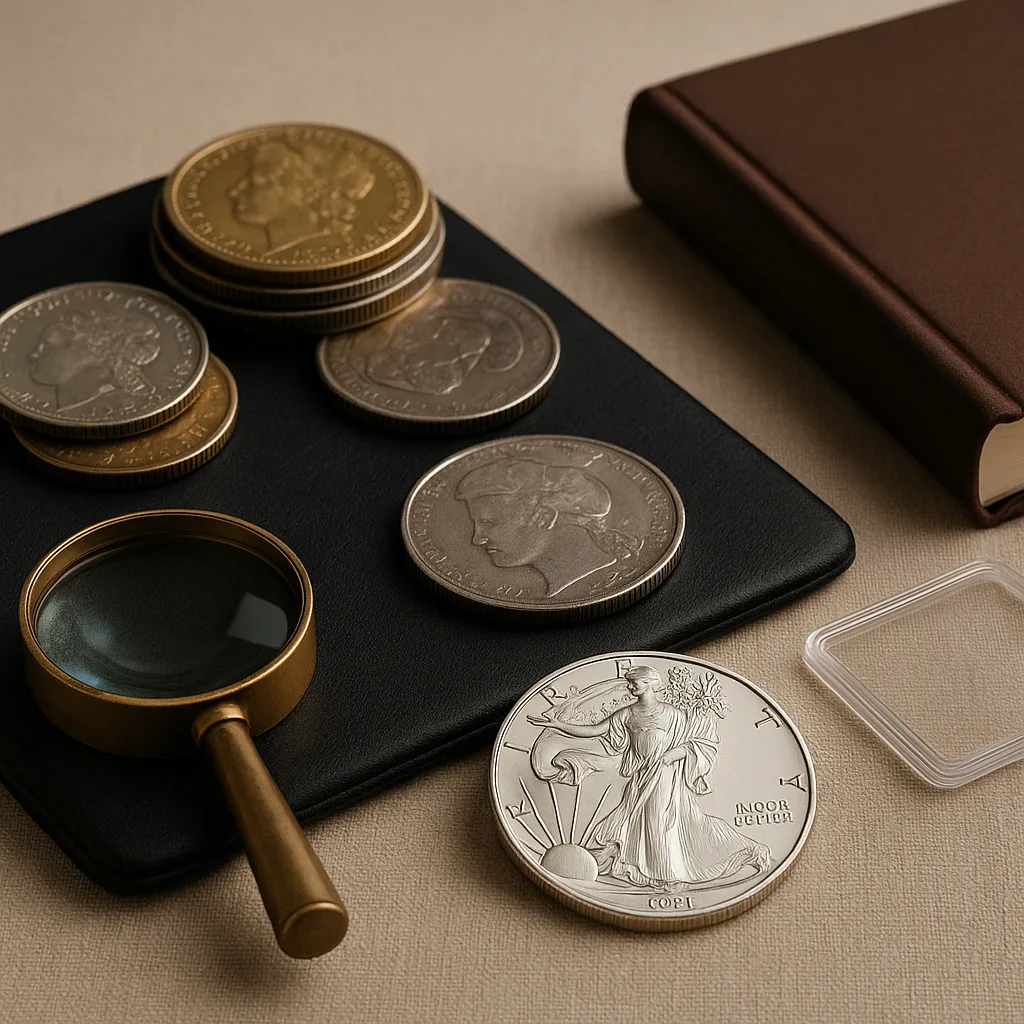
Why Coin Identification Matters
Correct coin identification is more than curiosity. It establishes provenance, legal status, cultural significance and market value. Mistaken IDs can result in lost value, improper conservation, or even legal problems when exporting or selling culturally sensitive material.
- Provenance: accurate dating and origin informs historical and archaeological records.
- Conservation: knowing composition (silver, bronze, electrum, copper-nickel) dictates safe preservation techniques.
- Commercial: authentication and grading directly affect market price, often by orders of magnitude.
- Legal: many countries have regulations (e.g., UK Treasure Act 1996) governing discovered coins and hoards.
Tools and Reference Sources
An expert's toolkit combines simple instruments, printed references, online catalogs and image-ID services. Orvik and other AI-powered apps accelerate initial matching by comparing clear photos to large reference databases.
Essential physical tools
- Precision scale (0.01 g accuracy) — weight is often diagnostic: Roman denarius ~3.0–4.5 g; Athenian tetradrachm ~17.2 g.
- Calipers (0.1 mm resolution) — diameter and thickness measurements: modern quarter 24.26 mm diameter; ancient tetradrachms ~25–27 mm.
- 10–30x loupe or stereo microscope — inspect die markers, edge, reeding and micro-scratches.
- Soft brushes, nitrile gloves — avoid oils from hands and harmful cleaning.
Reference books and online catalogs
- Standard catalogs: Krause-Mishler (Krause catalogs for world coins), Sear for Roman Imperial coins, Numismata lists for Greek types.
- Online databases: CoinArchives, Wildwinds, American Numismatic Society (ANS) collection databases.
- Image-ID apps: Orvik (AI visual ID) for quick comparisons and suggested attributions.
How Orvik fits in
- Orvik's AI analyzes photos to suggest matches by motif, legend and shape, reducing time to a shortlist.
- Use Orvik as a starting point; follow up with weights, dimensions and authoritative catalogs for confirmation.
Step-by-Step Visual Identification Process
Identification starts with careful, systematic observation. Follow a consistent workflow to avoid mistakes and gather the data experts need to confirm an attribution.
For more on this topic, see our guide on Mastering Stamp ID in the Field.
- Photograph and document the specimen.
- Measure weight, diameter and thickness.
- Read legends and mint marks, note iconography.
- Compare to references and, if helpful, use Orvik to generate candidate IDs.
- Assess metal composition and condition to refine attribution.
1. Photographing coins correctly
- Lighting: diffuse daylight or a lightbox to avoid specular glare; aim for neutral color temperature (~5000–6500K).
- Scale: include a ruler or a calibration coin; edges and thickness require side shots or stacked images.
- Angles: shoot both obverse and reverse straight-on, plus a side/edge image for reeding or legends.
2. Visual cues: color, texture, and patina
- Color: yellow-gold tones — likely gold or gilded; white-silver tones — silver or nickel alloy; green or blue patina — copper alloy corrosion (verdigris).
- Texture: granular pitting often indicates long burial and active corrosion (bronze disease); smooth, high-relief fields indicate careful preservation or low circulation.
- Patina: chemical coloration that can be stable (dark brown/black silver sulfide) or unstable (powdery green bronze disease). Never remove stable patina without conservation advice.
3. Measuring: weight and diameter
- Weigh coins to 0.01 g — many types have definitive weight ranges (e.g., Roman antoninianus roughly 3.5–5.0 g depending on period).
- Measure diameter and thickness. Ancient struck coins vary: Greek drachm ~17–20 mm; tetradrachm often 24–30 mm.
4. Reading legends, mint marks and iconography
- Legend (inscription) language and script give era and origin: Latin indicates Roman/much of medieval Europe; Greek indicates Hellenistic mints.
- Mint marks: small letters or symbols often denote city or mint workshop — e.g., 'L' for Lugdunum (modern Lyon) on some Roman provincial coins.
- Iconography: portraits, deities, animals and civic symbols can identify the issuing authority and approximate date.
Ancient and Antique Coin Identification
Identifying ancient coins requires special attention because typologies evolved slowly and weights were standardized imperfectly. Archaeological context and hoard evidence are particularly helpful.
Practical steps for ancient coins
- Note metal: gold, silver, electrum (natural gold-silver alloy), bronze or copper.
- Estimate type by portrait and reverse motif (e.g., emperor on obverse, deity or city emblem on reverse).
- Use weight ranges: Roman denarius ~3.0–4.5 g; Greek drachm ~4.2 g; tetradrachm ~17.2 g.
- Cross-reference Sear, BMC, RIC or local coin corpus for typology and die links.
Ancient coins identification: common examples
- Athenian tetradrachm: helmeted Athena obverse; owl, olive spray and 'ΑΘΕ' reverse; silver ~17.2 g; diameter ~25 mm.
- Roman denarius (Republic to early Empire): magistrate portraits or deities; silver weight declines from ~4.5 g in late Republic to ~3.0 g by 3rd century crisis.
- Byzantine follis/solidus: gold solidus ~4.5–4.6 g (for Constantine era), bronze folles up to 40–30 mm with large flan.
Geographic distribution and hoards
- Findspot matters: Roman denarii are common across Europe, North Africa and the Near East; Greek coins more regionally diagnostic (e.g., Syrian tetradrachms in Eastern Mediterranean).
- Hoard evidence: clusters of types with consistent dating provide terminus post quem (earliest likely date) for archaeological contexts.
Orvik can act as an ancient coin identifier by rapidly comparing imagery to known museum and auction records, narrowing the field before you consult specialist catalogs.
Valuation: "What Is This Coin Worth?"
Value is a function of rarity, condition (grade), demand and metal content. Two coins of the same date can differ drastically in price based on strike quality and preservation.
You may also find our article on Mastering Coin Identification: From Minted Metal to Crypto Names
helpful.
Key factors that determine value
- Rarity: mintage figures or survival rates. A low-mintage 19th-century gold sovereign will command a premium.
- Condition/grade: wear, scratches, corrosion. Professional grading (e.g., NGC, PCGS) quantifies condition on a 70-point scale for modern coins.
- Historical significance: coins associated with important events or rulers often have collector premiums.
- Metal value: bullion floor (spot price) for precious metals — e.g., one troy ounce = 31.1035 g.
Quick valuation workflow
- Identify type and year precisely.
- Determine metal composition; calculate melt value if base metal (or as a floor for precious metal coins).
- Compare to recent auction records and price guides for that exact type and grade.
- If necessary, get a professional appraisal or graded certification for insurance or sale.
For a quick market check use Orvik for identification and then consult auction aggregators (CoinArchives, Heritage Auctions results) for realized prices of the exact type and grade.
Comparisons: How to Tell Them Apart
Comparisons help with common confusions. Here are practical contrasts with visual cues.
Ancient vs Modern
- Edge: modern coins often have reeding or edge lettering; ancient coins almost always have plain or irregular edges from hand-striking.
- Strike uniformity: modern machine-struck coins are highly consistent; ancient strikes show off-center images, double strikes and irregular flans.
- Patina: ancient coins often show burial patina (verdigris, dark silver sulfide) vs. the relatively bright surfaces of modern circulation coins.
Gold vs Gilded/Base Metal
- Color & weight: pure gold color and heavier specific gravity (gold ~19.3 g/cm3) compared to gilding over a lighter core. A small 8 mm gold coin will feel dense relative to a gilded base-metal imitation.
- Scratch test: avoid destructive testing. Use a magnifier to inspect wear revealing a different base metal beneath thin gilding.
Genuine vs Replica/Counterfeit
- Die markers and micro-details: genuine dies show consistent die cracks and tool marks; high-quality fakes often blur or oversharpen details.
- Weight & dimensions: replicas often deviate by >2–5% from standard weights; measure precisely.
- Edge: modern counterfeits may have seams from casting; genuine struck coins rarely do.
When in doubt about authenticity, seek an expert or third-party grading. Orvik can flag likely matches and suggest suspicious anomalies for further review.
Looking beyond this category? Check out Goji Berries: A Field Guide to the Red Superfruit.
Preservation, Handling, Safety and Legal Notes
Proper handling and legal compliance protect both the coin and you. Some conservation actions can irreparably reduce value.
Related reading: Identify Coins Fast: An Expert AI Guide.
- Handling: wear nitrile gloves or hold by the rim to avoid oils, which can catalyze corrosion.
- Cleaning: do not use acid, vinegar, baking soda or wire brushes. These remove patina and damage surfaces; unstable cleaning may produce toxic fumes.
- Bronze disease: copper chlorides appear as powdery green pits; store affected coins in dry silica gel and consult a conservator — continued reaction can destroy a coin.
- Toxic materials: some historic coins or conservation residues may contain lead or mercury. Avoid inhalation of dust; wash hands after handling and use gloves when cleaning.
- Legal: report cultural finds according to local laws (e.g., Treasure Acts). Exporting cultural property is regulated internationally.
Storage and display
- Stable environment: low humidity (below 40% RH for long-term bronze storage) and stable temperature.
- Containers: acid-free holders, inert plastic flips (Mylar) or archival capsules for modern coins.
- Documentation: photograph and log provenance, measurements and any conservation history.
Using AI and Human Expertise Together
AI tools like Orvik rapidly narrow candidate types and highlight visual matches from vast image corpora, but a human expert remains essential for final attribution and valuation.
- Workflow: take good photos, get Orvik suggestions, then confirm with catalogs, weights and expert consultation.
- Advantages: AI speeds up pattern recognition for worn legends and eroded surfaces; it is especially useful as an old coin identifier or ancient coin identifier when you have limited local references.
- Limitations: AI may be misled by heavy corrosion, modern forgeries or partial legends — always verify with physical measurements and trusted references.
Conclusion
Coin identification is a methodical combination of observation, measurement and reference comparison. Whether you ask "what coin is this?" or "what is this coin worth?", the pathway is the same: photograph well, measure precisely, note legends and iconography, consult references and use AI tools like Orvik to accelerate the search. When necessary, involve professional numismatists and conservators for authentication, valuation and safe preservation.
Frequently Asked Questions
- How do I start identifying an unknown coin?
- Photograph both sides and the edge in diffuse light, measure weight and diameter, transcribe legible inscriptions, then compare images and data to catalogs or use an AI tool like Orvik to generate candidate identifications.
- Can AI reliably identify ancient coins?
- AI is useful for narrowing possibilities quickly and finding visual matches in large databases, but final confirmation should use physical measurements, die studies and expert catalogs because AI can be confused by corrosion or modern forgeries.
- What are common visual signs of a counterfeit?
- Look for casting seams, bubbles, inconsistent weight/dimensions (>2–5% variance), overly sharp or blurred details, and edge anomalies. Microscopic die markers and matching to known dies help confirm authenticity.
- Is it safe to clean old coins myself?
- No. Improper cleaning (acids, abrasives) can destroy patina and reduce value. For bronze disease or heavy encrustation, consult a conservator. Simple rinsing with distilled water and gentle brushing while wearing gloves is acceptable for documentation photos.
- How much is my coin worth?
- Value depends on type, rarity, grade and metal content. Identify the exact type and compare with recent auction results for similar grades; professional grading adds market confidence for significant pieces.
- What should I include when documenting a coin find?
- Record clear photos of obverse, reverse and edge, weight, diameter, findspot coordinates or site description, date of discovery, and any contextual notes. This information aids identification and legal reporting.