
When you peer at a small paper or metal tag dangling from a necklace, bracelet, or chest, you are often looking at the single best clue to origin, age, and value. This practical guide explains jewelry hang tag identification for collectors, resellers, and curious owners. You will learn to read materials, printing, strings, codes, and hallmarks; how to compare originals and reproductions; and how to use modern tools — including Orvik — to confirm what your eyes suspect.
1. Why Hang Tags Matter: What Searchers Really Want
What people are trying to discover
- Brand or maker (e.g., Mikimoto) and proof of authenticity.
- Approximate production date and whether an item is vintage or antique.
- Metal or gemstone content indicators and hallmarks.
- Provenance: whether the tag confirms retail origin, limited edition, or bespoke work.
- How to price, conserve, or research further (antique identifier aims).
When someone searches for "jewelry hang tag identification" they usually want to identify brand marks, recognize period-correct materials, or verify authenticity before purchase. In contexts like "identify antiques" or "antique furniture identification," the same principles apply: tags attach provenance and manufacturing clues to objects.
2. Anatomy of a Hang Tag: Materials and Visual Cues
Common tag types and construction
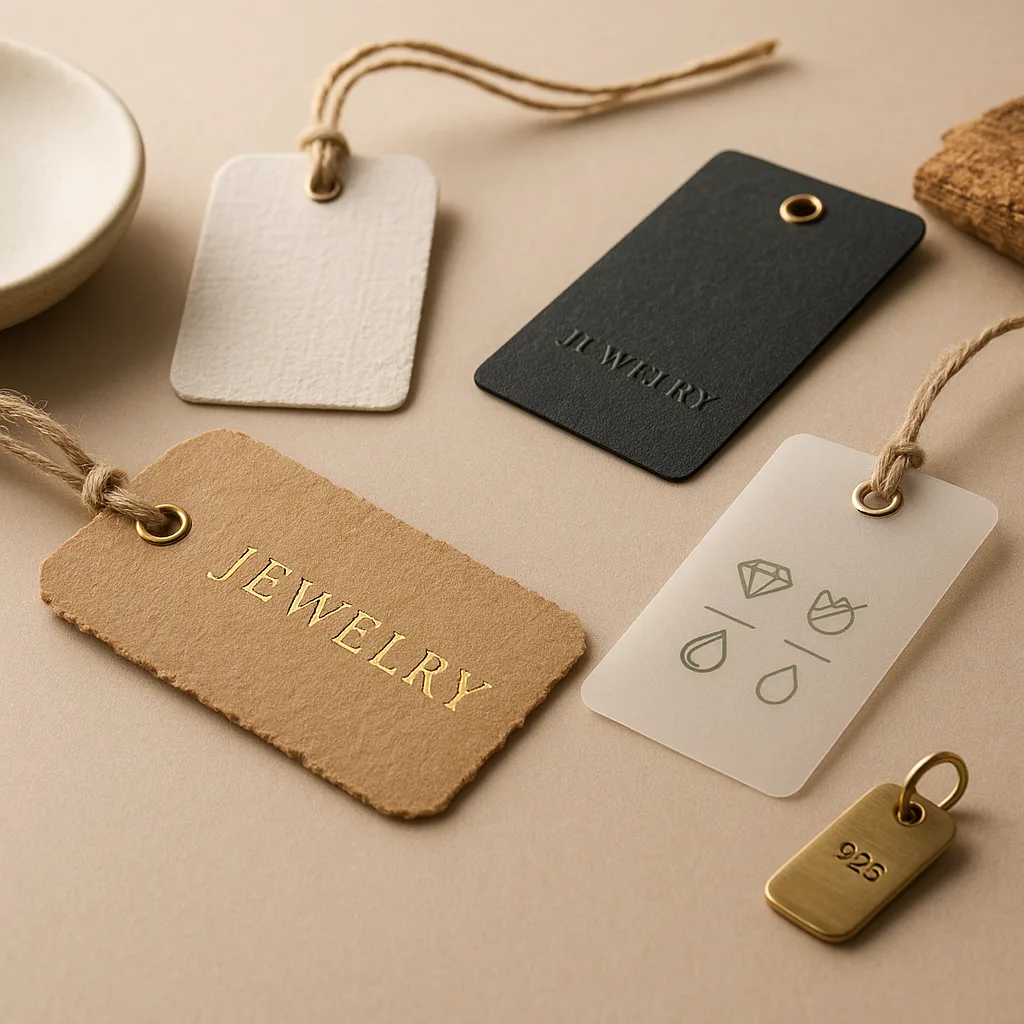
- Paper/cardstock tags: usually 200–400 gsm; look for chain lines, deckled edges, and watermarks.
- Plastic tags: PVC or acetate, often smooth with injection marks at edges.
- Metal tags: brass, aluminum, or plated copper; often stamped, etched, or laser-cut.
- Cloth/fabric tags: woven satin or satin-printed ribbons and labels.
- Certificate tags: laminated cards with printed serial numbers and holograms.
Visual details that signal age and origin
- Color and tone: paper oxidizes and yellowing (lignin content) indicates age; crisp white paper suggests modern manufacture.
- Typography and layout: serif fonts and letterpress impression were common through the 1940s–1960s; offset printing and digital fonts indicate later production.
- Edge finish: hand-cut or deckled edges often indicate older or artisan tags; perfect guillotine edges indicate factory output.
- Eyelets and fasteners: brass eyelets (original) vs modern aluminum or plastic. Eyelet diameter usually 3–5 mm on mid-century tags.
- String and cord: twisted cotton cords 0.5–0.8 mm were common historically; modern monofilament or nylon cords are smoother, often 0.3–1.0 mm diameter.
3. Reading Hallmarks, Stamps and Text: Jewelry Hallmarks Identification
Hallmarks versus hang-tag text
Hang tags and hallmarks serve different but complementary roles. A hang tag is external evidence (retail label, price, serialized certificate). A hallmark is a legal or maker's stamp applied to the metal of the jewelry itself (stamped inside a clasp or on a jump ring).
- Common hallmark numbers: 925 (sterling silver), 750 (18K gold), 585 (14K), 375 (9K), 950 (platinum).
- Country marks: e.g., the UK assay symbols, France's eagle for silver, or Italy's 3-digit maker code.
- Manufacturer names: full name or abbreviated initials (look for consistent fonts and punch marks).
Practical tips to read small marks
- Use a 10x loupe or macro lens; hold the item against a white background for contrast.
- Illuminate from multiple angles to reveal incised vs stamped marks.
- Measure the mark: historic hallmarks are often 1.5–3.0 mm across; modern laser stamps can be sub-millimetre.
For jewelry hang tag identification combined with jewelry hallmarks identification, photograph both tag and hallmark together to create a complete provenance record. Orvik can help match serials and hallmarks to a database faster than manual lookup.
For more on this topic, see our guide on Identify Coins Fast: An Expert AI Guide.
4. Dating Hang Tags: Telling Vintage from Modern
Age indicators to look for
- Paper chemistry: older paper often contains wood pulp and lignin; modern archival paper is acid-free and bleached white.
- Ink type: letterpress and metal-type impressions (deeper indentation) suggest pre-1960. Intaglio, litho, or digital prints indicate later dates.
- Serial formats: early serials were short numeric sequences; modern products often use barcode or alphanumeric SKU of 8–12 characters.
- Barcodes: UPC-A (12 digits) became common in the 1970s–1980s; QR codes are post-2000 additions.
Dating by string, eyelet, and adhesive
- String fibers: cotton, silk, or linen indicate older tags; synthetic fibers like nylon or polyester are modern.
- Eyelets: brass or tin-plated steel were used extensively before the 1990s; plastic eyelets are recent.
- Adhesives: natural glues can yellow and become brittle; modern acrylic adhesives remain clear.
These clues allow you to place a tag within a plausible production window. If the hang tag looks 1940s but the clasp has a modern solder mark or laser hallmark, you have conflicting evidence — often a sign the tag was attached later.
5. Case Studies: Pearls, Mikimoto, and Antique Items
Vintage pearl necklace clasp identification
- Look for the clasp stamp: reputable makers like Mikimoto commonly mark clasps with the company name and metal purity (e.g., "Mikimoto" plus 750 for 18K), though exact practice varies by era.
- Clasp styles: filigree box clasps with tongue-and-groove mechanisms, fishhook clasps, and ball clasps each have era associations — box clasps are frequent in early 20th century pearl strands.
- Pearl drilling and stringing: old knotted silk threads (knot spacing 3–5 mm) vs modern nylon cord indicate re-stringing history.
Mikimoto clasp identification vs generic
- Mikimoto traits: fine engraving of the name, precise finishing, use of high-purity metals; often accompanies certificate cards and original hang tags.
- Generic traits: machine-stamped shallow marks, inconsistent finishes, and lower-purity metal markings (e.g., 'GP' for gold-plated).
- How to tell them apart: compare punch depth under magnification (authentic punches are deeper and crisp), and compare to known Mikimoto examples or Orvik’s image recognition results.
Antique furniture and tags (broader antique identifier use)
- Furniture maker’s labels often include paper type, printer's logo, and catalog numbers — useful for antique furniture identification.
- Look for tack holes, handwritten inventory numbers, and wax seals for provenance dating.
- Common measurements: manufacturer labels are often 40–120 mm wide; tiny inventory tags may be 20–30 mm.
Techniques used for jewelry hang tag identification transfer to furniture: study font, paper, string, and fastening method. When in doubt, use multiple lines of evidence.
You may also find our article on Mastering Coin Identification: A Field Guide helpful.
6. Original vs Reproduction: How to Tell Them Apart
Compare materials, manufacturing marks, and patina
- Patina: metals develop natural oxidation patterns (verdigris on copper alloys) that are hard to replicate authentically.
- Pounce marks and letterpress impressions: originals often show plate wear and ink pooling in the letterforms.
- Holograms and microprinting: modern reproductions may add security features that period tags did not have.
Checklist to separate original tags from reproductions
- Run a loupe inspection for tool marks and depth of impression.
- Compare paper fibers under magnification — machine-made vs handmade fiber patterns.
- Test for UV fluorescence: modern papers often fluoresce under 365 nm light; older papers usually do not or show different spectral signatures.
- Verify serials against known brand records or third-party databases (Orvik and specialist registries can speed this up).
Reproductions can be convincing but rarely replicate all variables. A combination of microscopic inspection, catalog comparison, and digital tools yields the best result.
7. How to Photograph and Use AI Tools Like Orvik
Photography checklist for accurate identification
- Lighting: use diffuse daylight or a 5000K LED to avoid color shifts and hotspots.
- Scale: include a metric ruler or coin (e.g., US quarter 24.26 mm) for size reference.
- Magnification: capture a macro shot (1:1 or higher) of any hallmarks or tiny text.
- Angles: photograph both sides of the tag, the attachment point, and the jewelry hallmark area.
Using Orvik and AI effectively
- Upload high-resolution images to Orvik following the checklist above.
- Tag the images with your observed notes: text on tag, suspected date range, and any numbers.
- Let Orvik analyze patterns, match fonts, and compare hallmarks against a large image database to propose identifications and similar examples.
Orvik excels at matching small visual features — like a particular maker’s typeface or a hallmark punch — and can accelerate what would otherwise be hours of manual searches. Use Orvik as one evidence stream; always corroborate with physical inspection or expert appraisal for high-value items.
You might also be interested in Master Rock ID: Expert Guide to Stones.
8. Preservation, Safety, and Handling
Best practices to conserve tags and jewelry
- Storage: store tags and jewelry in acid-free paper envelopes or archival polyester sleeves if you want to keep original hang tags attached.
- Humidity and temperature: maintain 40–55% relative humidity and 15–20°C to prevent paper warping and metal corrosion.
- Handling: use lint-free cotton gloves to avoid transferring oils; avoid writing on tags with ballpoint ink directly.
Safety and toxicity warnings
- Nickel allergy: many vintage base metal tags or clasps can release nickel — avoid prolonged skin contact if you are sensitive.
- Lead and pigments: older inks and paints may contain lead or heavy-metal pigments; avoid prolonged inhalation of flaking material and wash hands after handling.
- Cleaning: do not use acids, abrasive polishes, or household solvents on hallmarks or paper tags. Seek a conservator for delicate items.
When a tag or hallmark is critical to valuation, do not risk amateur cleaning. Conservators and specialist labs can perform non-destructive tests to determine metal content and paper composition.
Related reading: Finding Hidden Treasure: Identify Valuable Stamps.
Conclusion
Jewelry hang tag identification combines a close visual read of materials, printing, strings, and numbers with knowledge of hallmarks, maker practices, and historic manufacturing methods. Whether your search term is "antique identifier," "vintage pearl necklace clasp identification," or "jewelry hallmarks identification," start with systematic photography, loupe inspection, and comparison with manufacturer examples. Tools like Orvik accelerate the process by matching visual clues against large datasets, but physical inspection and provenance research remain essential for high-value decisions.
Armed with these methods — from paper fiber checks to hallmark measurement and clasp comparison — you can confidently place a tag within its proper context and move toward accurate dating, attribution, and valuation.
Frequently Asked Questions
- How do I tell if a hang tag is original to the jewelry?
- Compare the wear and patina on both the tag and attachment point, inspect fasteners for matching age, and check for serial numbers or maker’s marks that correspond with hallmarks on the piece. Conflicting evidence (modern tag on older hallmark) often indicates the tag was added later.
- What does the number 750 on a clasp mean?
- 750 indicates 18 karat gold (75.0% gold). It is a common purity mark on higher-end European and Japanese jewelry, including many Mikimoto pieces.
- Can I use an app like Orvik to confirm authenticity?
- Yes. Orvik and similar visual-ID tools can rapidly match hallmarks, fonts, and tag designs against large databases to suggest identifications. Use app results alongside physical inspection and, for high-value items, professional appraisal.
- How can I photograph tiny hallmarks for identification?
- Use a macro lens or smartphone macro attachment, diffuse 5000K lighting, and include a scale (ruler or coin). Capture multiple angles and ensure the image is in focus at 1:1 magnification if possible.
- What are common signs of a reproduction hang tag?
- Signs include modern paper whiteness, perfect-cut edges, plastic eyelets, modern fonts or barcodes inconsistent with the item's era, and shallow or laser-printed marks meant to mimic punch-stamped hallmarks.
- How do I identify a vintage pearl clasp?
- Inspect for maker’s stamps on the clasp, note clasp style (box, fishhook, ball), check knotting types and thread material, and compare hallmark depth and metal purity marks against known examples. Many authentic Mikimoto clasps are engraved with the name and use high-purity metals.
- Are old hang tags dangerous to handle?
- They can be. Old inks or pigments may contain lead or other heavy metals; rusted metal fasteners can transfer salts and oils. Wear gloves, avoid inhaling flaking material, and consult a conservator for testing if exposure is a concern.