
Whether you inherited a shoebox of postage, found a rare plate block at a flea market, or just want to confirm the value of a single adhesive, a reliable stamp identification workflow saves time and avoids costly mistakes. This practical, expert guide covers visual cues, technical tests, classic United States issues (including 1-cent Franklin and 2-cent Washington), free and paid digital tools, and how to care for, store, and safely test stamps. It also explains related searches like "stamp identifier free", "colnect stamp identifier", and even how jewelry hallmark identification differs from postage stamps.
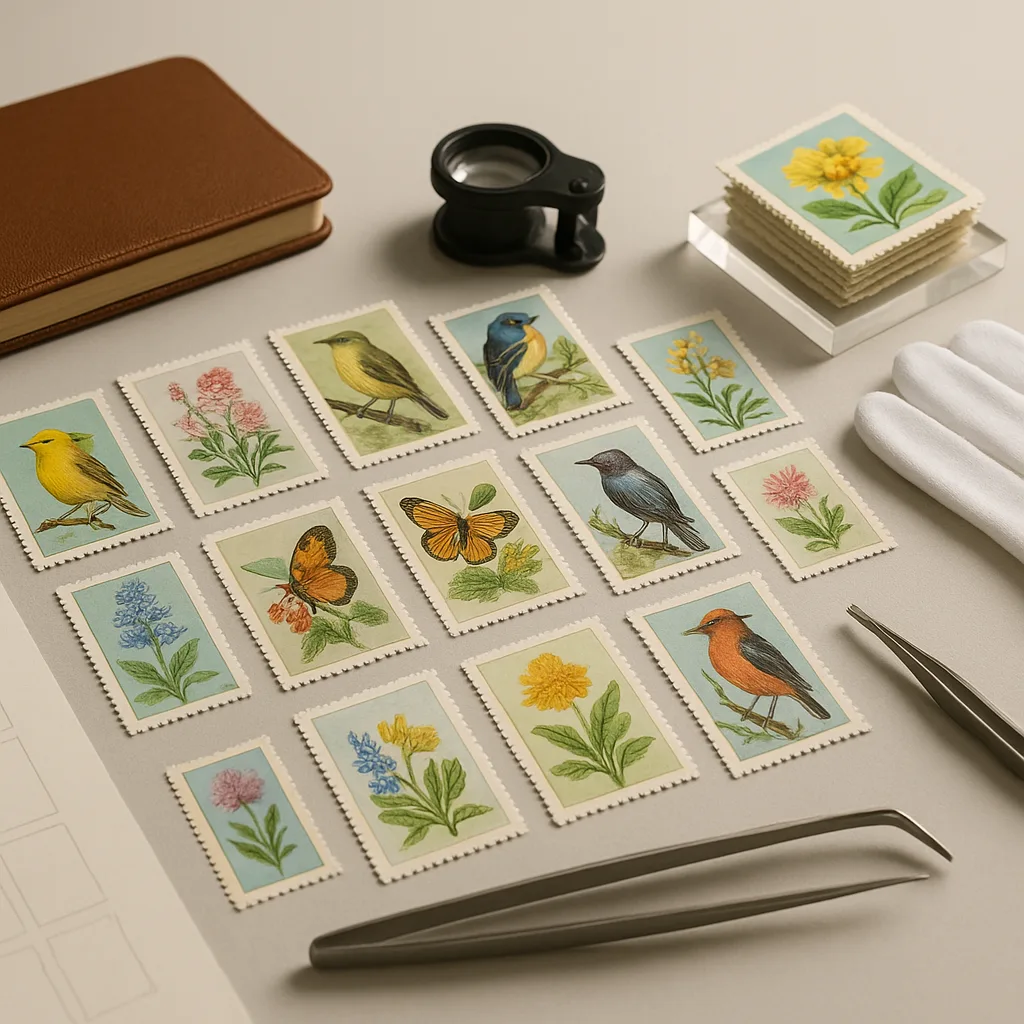
Why a stamp identifier matters
When someone types "stamp identifier" into a search engine they are usually asking one of three things: (1) What is this stamp (country, date, denomination)? (2) Is this stamp common or scarce and what is its catalog number? (3) How can I identify features that change value (watermark, perforation, printing variety)? A methodical approach answers all three.
- Save time: narrow possibilities by country, era, and denomination in minutes.
- Avoid errors: many stamps look similar—details like perforation count or paper type matter.
- Discover value drivers: printing variety, gum, and condition explain much of market price.
Digital tools such as Orvik — an AI-powered visual identification app — can accelerate the first pass, matching images to catalog records and flagging likely issues. Orvik is particularly useful for quick mobile field checks; it complements, rather than replaces, careful manual inspection with a loupe and reference catalogs.
How to visually identify a stamp: the step-by-step checklist
Start with low-tech observation, then move to tools. Follow this checklist to get a robust ID:
- Country/inscription: read the issuing country name or postal agency label.
- Denomination: note currency type and printed value (¢, c, p, etc.).
- Design elements: portrait, coat of arms, ship, flora—these themes narrow date ranges.
- Color: record dominant and secondary colors (use natural daylight to avoid color shift).
- Size: measure width and height in millimeters with a ruler—common modern stamps are about 22 × 25 mm.
- Perforation: measure perforations per 2 cm using a perforation gauge (often 10–14 gauge).
- Paper & gum: note paper thickness, ribbing or laid patterns, and presence/type of gum on the back.
- Watermark: check with watermark fluid or backlighting for embedded paper marks.
Practical visual cues (color, size, shape, texture, pattern)
- Color shifts: faded red often indicates exposure to sunlight; ultramarine blues may signal early 20th-century dyes.
- Shape & perforations: straight-edge or imperforate margins indicate scissors or sheet edge—careful inspection of selvage helps.
- Texture: ribbed or laid paper feels different under the fingernail; modern coated paper is smooth and slightly glossy.
- Print haloes and grill patterns: intaglio engraving shows raised ink ridges visible at 10x magnification.
Identifying classic U.S. issues: 1-cent Franklin and 2-cent Washington
Two of the most-searched American designs are the 1-cent Benjamin Franklin and the 2-cent George Washington. They appear in numerous series from the 19th through the 20th century. Here are practical identifiers that collectors use.
1-cent Franklin: key visual and technical clues
- Portrait: profile or bust of Benjamin Franklin; often left-facing in many definitive issues.
- Typical color: many 1¢ Franklins were printed in green or shades of green during the definitive series of the early-to-mid 20th century; some 19th-century printings were brown or blue.
- Size: common definitives are roughly 18–22 mm wide and 21–26 mm tall; measure to confirm.
- Perforation: standard perforation gauges include 10, 11, and 12; rare printings may have different gauges—record the exact gauge.
- Paper & gum: look for wove versus laid paper; older 19th-century issues may show distinctive grill patterns or gum types.
- Cancellation marks: many common 1¢ Franklins were used domestically for postcards—light cancels are expected on circulated examples.
Quick ID tip: a green 1¢ stamp with a Franklin bust and a perforation gauge of about 11 most likely belongs to a 20th-century definitive series. Use watermark and printing method to pinpoint the year range.
2-cent Washington: how to tell it apart
- Portrait: George Washington appears in profile or three-quarter view depending on series.
- Typical color: the 2¢ Washington was frequently printed in carmine, red-brown, or red during many definitive runs.
- Function: historically used for first-class rates and local postage; higher circulation means many varieties are common.
- Perforation & size: similar size to the 1¢; match perforation gauge, which can be the same or slightly different depending on the issue.
Comparison tip: Color is the fastest field cue—green for many 1¢ Franklins, red/carmine for many 2¢ Washingtons—then confirm with portrait detail (Franklin's distinctive hair and spectacles vs. Washington's powdered-wig profile) and perforation/paper characteristics.
For more on this topic, see our guide on Mastering Coin Identification: A Field Guide.
Digital and printed resources: Orvik, Colnect, catalogs & free stamp identifier options
There are many digital and analog ways to identify stamps. Use a layered approach: quick image-match tools for initial ID, then catalogs and specialist literature to verify.
- Orvik (AI visual ID): fast image-based suggestions and matching catalog references; useful in the field for a first-pass and cross-checks.
- Colnect: comprehensive crowdsourced catalog with user contributions and marketplace links; excellent for hobbyist-level research and variant photos.
- Scott, Stanley Gibbons, Michel, Yvert & Tellier: traditional catalogs with numbering systems and price guidance—essential for valuation and specialist details.
- Free stamp identifier options: smartphone camera apps (some free tiers), Colnect's web search, online forums, and topical Facebook/Discord groups.
- Local club & expertizing services: when in doubt about rarity or authenticity, contact a specialist or philatelic expertizing committee.
Orvik vs Colnect vs traditional catalogs
- Speed: Orvik (AI) > Colnect search > printed catalogs.
- Depth: Printed catalogs (Scott, Michel) > Colnect > Orvik for niche expert detail.
- Photos & community: Colnect excels for user images and marketplace context; Orvik provides on-device image matching and instant suggestions.
- Cost: Colnect offers much free content; Orvik often has a free tier for casual users; printed catalogs require purchase or library access.
Use Orvik for quick field ID and Colnect/Scott for verification and pricing. Combining tools reduces misidentification risk.
Advanced methods: watermark detection, perforation gauges, and laboratory tests
When surface observation isn’t enough, technical tests provide objective evidence.
- Watermark detection: use watermark fluid or transmitted light; watermarks are patterns pressed into the paper during manufacture and are diagnostic of printing batches.
- Perforation gauge: measure the number of perforations in 2 centimeters (or use a standard perforation gauge tool). Common U.S. values range from 10 to 12.5.
- UV fluorescence: ultraviolet lamps reveal paper whitening agents, repairs, and certain phosphor tagging used on modern stamps.
- Microscopy: 10–40x loupe or stereo microscope reveals engraving ridges, paper fibers, and retouches.
- Chemical tests: avoid unless you are an expert—solvents can remove gum and color. Professional labs can perform spectroscopy for ink and paper analysis.
Step-by-step lab-style workflow
- Photograph the stamp in natural daylight and with a neutral background for AI apps like Orvik.
- Measure width/height in mm, and record perforation gauge.
- Check watermark with fluid or backlight and note orientation.
- Use UV light to detect coating, repairs, or phosphor bands.
- If needed, seek expertizing for rare or high-value items before any invasive testing.
Special topics: "identification stamp" and jewelry stamp identifier
Not all "stamp" searches mean postage. Users also search for "identification stamp" (rubber/ink stamps used to mark items) and "jewelry stamp identifier" (hallmarks and maker marks). Here’s how they differ and how to identify each quickly.
- Identification stamps (rubber stamps): usually show text, logos, or date wheels. Identification relies on font, ink type, and maker’s logo; a magnifier often reveals metal or polymer maker marks.
- Jewelry stamp identifier (hallmarks): tiny punched marks on metal indicating metal purity (e.g., "925" for sterling silver), maker’s mark, assay office symbols, and date letters.
- Tools: jeweler’s loupe (10x), hallmark reference books, and online hallmark databases are essential; smartphone macro photography plus Orvik-like image recognition can help with quick matches.
Comparison: postage stamp identification focuses on printed design, paper, and perforation. Jewelry hallmark ID focuses on tiny punched marks, letters, and assay symbols. Both benefit from magnification, good lighting, and reference databases.
Care, storage, and safety: preserving stamps and handling toxic risks
Preservation and safe handling are part of identification—mishandling can destroy diagnostic features and create health risks from chemicals.
You may also find our article on Finding Hidden Treasure: Identify Valuable Stamps helpful.
- Storage: store stamps in acid-free mounts, glassine envelopes, or archival-rated stockbooks. Maintain relative humidity around 45–55% and temperature ~18–22 °C (64–72 °F) to minimize mold and gum creep.
- Handling: use stamp tongs (non-serrated) to avoid oils and abrasion. Avoid touching adhesive or printed surfaces with bare fingers.
- Mold & pests: if you find mold, isolate affected material; consult a conservator—sporadic washing or chemical treatments can cause irreversible damage.
- Chemical safety: watermark fluids, solvents (e.g., to remove hinge remnants), and solvents used in repairs can be toxic. Use them in well-ventilated areas, wear nitrile gloves, and follow manufacturer safety data sheets (SDS).
Note: never attempt aggressive chemical cleaning on potential high-value stamps. Seek professional conservation to avoid devaluation and health hazards.
FAQ
- Q: Is there a free stamp identifier I can use on my phone?
A: Yes. Several apps and web tools have free tiers—Colnect’s web search and some smartphone apps offer free image matching. Orvik provides an AI-powered identification capability with a useful free tier for casual users.
- Q: How do I tell a genuine 1-cent Franklin from a lookalike?
A: Compare portrait details (Franklin’s hair and facial lines), color, perforation gauge, paper type, and watermark. Use a loupe to check for engraving ridges and plate lines; cross-reference with a catalog.
- Q: What are the main visual cues for a 2-cent Washington stamp?
A: Look for Washington’s profile, often in red or carmine for 2¢ definitives. Measure perforation, check paper and gum, and verify any tagging or watermarks with UV/backlight tests.
You might also be interested in Ladybug Diets: A Field Guide to What They Eat.
- Q: How reliable is Colnect for identification?
A: Colnect is a strong community-driven resource with many photos and variant listings. It’s excellent for comparison photos and marketplace context but should be cross-referenced with authoritative catalogs for pricing or very rare varieties.
- Q: Can Orvik replace printed catalogs?
A: Orvik speeds up initial identification and is highly useful in the field. For valuation and authoritative catalog numbers, pair Orvik results with printed catalogs (Scott, Michel) or specialist literature.
Related reading:
Mastering Coin Identification: From Minted Metal to Crypto Names
. - Q: How do I identify a jewelry hallmark?
A: Use a 10x loupe to read tiny stamps such as "925", maker initials, assay office symbols, and date letters. Compare against hallmark databases or reference books specific to country and era.
- Q: Are watermark fluids safe to use at home?
A: Most modern watermark fluids are formulated to be safe for short-term use and are specifically designed for stamps, but always use in a ventilated space, wear gloves, and follow instructions. Avoid repeated soaking or prolonged exposure.
- Q: When should I seek expertizing?
A: If a stamp could be rare, of high value, or a suspected forgery, seek specialist expertizing before any invasive testing or sale. Certificates from reputable expertizing services materially affect market value.
Conclusion
Identifying stamps combines careful visual inspection, simple measurements, and the use of reference tools. For quick field IDs, AI tools like Orvik provide instant visual matching; for verification and valuation, pair them with Colnect and classic catalogs such as Scott or Michel. Measure size and perforations, check for watermarks and paper type, use UV and loupe examinations, and handle stamps with archival care to preserve diagnostic features. With these steps you can move from curiosity—"What is this stamp?"—to confident identification and informed collecting.
Frequently Asked Questions
- Is there a free stamp identifier app I can trust?
- Yes. Several apps and web tools offer free identification features; Orvik provides a reliable AI-powered free tier for quick field matching, while Colnect offers extensive free database searches and user photos.
- How do I identify a 1-cent Franklin stamp?
- Look for Benjamin Franklin's bust, typical green coloration for many 20th-century definitives, measure dimensions in millimeters, check perforation gauge (often 10–12), and verify paper/watermark characteristics.
- What distinguishes a 2-cent Washington stamp?
- Common cues are George Washington's profile, frequent carmine/red color in many series, similar size to other definitives, and perforation/gum varieties; use magnification to examine engraving details.
- How do Orvik and Colnect differ?
- Orvik focuses on fast AI image-based identification for field use; Colnect is a crowdsourced catalog with extensive photos and variant listings. Use Orvik for quick matches and Colnect for deeper photographic comparisons.
- Can jewelry hallmarks be identified like postage stamps?
- No. Jewelry hallmark identification relies on tiny punched marks indicating metal purity, maker, and assay office. Use a jeweler's loupe and hallmark reference guides; this process differs from postage stamp ID which focuses on print, paper, and perforation.
- How do I test for a watermark safely?
- Use a commercial watermark fluid or backlighting in a controlled space. Apply fluid briefly and dry on absorbent paper; always follow product safety guidance and avoid repeated soaking on valuable stamps.
- When should I get a stamp expert to examine my item?
- Seek expertizing for stamps that appear scarce, have unusual features (rare perforation, watermark, printing error), or when the potential market value justifies the cost of certification.