
When someone searches for "stamps worth money" they usually want to know three things: which stamps are truly valuable, how to tell an ordinary stamp from a rare one, and what to do if they think they own a prize. This guide, written by a field expert in philately, explains the visual cues, tools, market signals, and safe-handling practices that separate common run-of-the-mill issues from the handful of stamps that trade for thousands or millions of dollars.
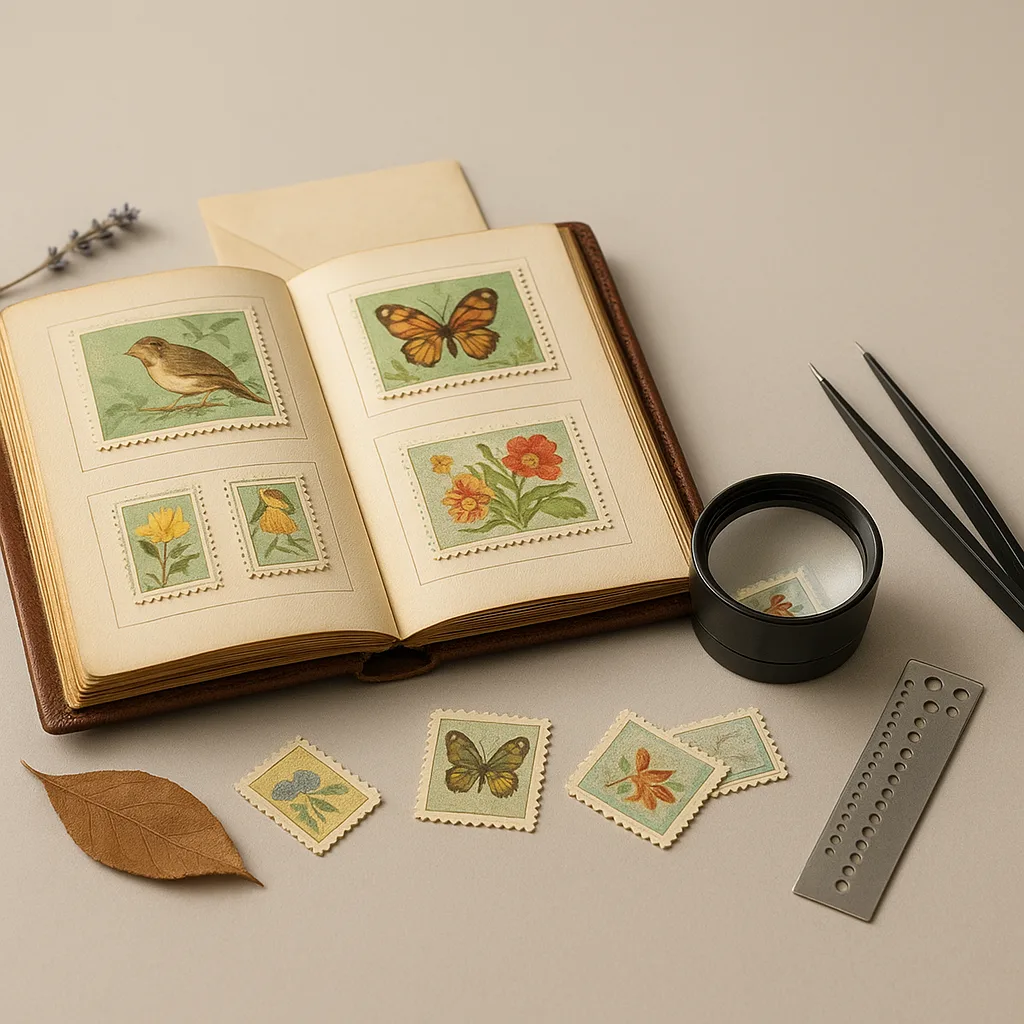
Why Some Stamps Are Worth So Much
Stamp value is driven by a combination of scarcity, historical importance, condition, and demand. A stamp's provenance (documented ownership history), printing error, or unique production attribute can multiply its market price by orders of magnitude.
Key value factors
- Rarity: how many examples survive (often single digits for the rarest issues).
- Condition: centering, gum (unmounted/never hinged vs hinged), perforations, tears, creases—grading is precise to numeric scales.
- Error & Variety: inverted centers, color shifts, missing overprints, wrong paper.
- Historical significance: first issues, stamps from short-lived governments, or those tied to major events.
- Provenance & Certification: expert certificates from recognized labs add credibility and value.
Example: the British Guiana 1c Magenta (1856) is unique—one known specimen—and sold for $9.48 million in 2014. The Inverted Jenny (US 1918 24¢) originated from a single misprinted sheet of 100; even single examples reach into six or seven figures.
Top Most Valuable and Rarest Stamps
Collectors and auction houses frequently publish lists such as the "100 most valuable stamps in the world." Below are the headline grabbers every collector should know, with concrete identifying details.
- British Guiana 1c Magenta (1856) — Unique. Black-on-magenta, 28 × 26 mm rough-cut paper, hand-stamped; one example known.
- Inverted Jenny (US 1918 24¢) — Aeroplane center inverted. Original sheet of 100; singles are ~24 mm × 26 mm, deep blue center inverted image.
- Treskilling Yellow (Sweden 1855) — Should have been green; one known yellow printing. Approx. 26 mm × 20 mm.
- British Penny Black (1840) — First postage stamp; values vary by plate and condition. Typical size 19 × 17 mm.
- Hawaiian Missionaries (1851) — Early Hawaiian issues; scarce used examples command high prices.
- London 1855 Error Issues — Regional rarities and misprints from 19th-century colonial offices.
- U.S. 1869 Pictorial Inverts and Rarities — Color varieties and experimental printings.
- Basel Dove (1845) — One of the earliest multi-colored stamps; rare in fine condition.
For a full top-100 breakdown, specialized catalogues like Scott, Stanley Gibbons, and Michel publish periodic lists; auction houses (Sotheby's, Christie's, Spink) document recent hammer prices and provenance.
For more on this topic, see our guide on Mastering Stamp ID in the Field.
How to Identify Stamps Worth Money
Identification blends close visual inspection with reference checking. Below are practical identification tips, including visual cues you can use right away.
Essential visual cues
- Size & Shape: Most modern stamps are 20–40 mm on a side. Unusual dimensions or imperforate edges indicate older or special issues.
- Color & Shade: Look for deep claret vs rose, ultramarine vs blue — small shade differences can change catalog values by 20–200%.
- Perforations: Count perforations per 2 cm using a perforation gauge (common gauges: 11, 12, 14). Example: a perforation 11 (11 teeth per 2 cm) vs 12 can indicate a different printing.
- Watermarks: Identify watermark type (e.g., crown, multiple stars) using watermark fluid or a detector—some varieties are worth far more.
- Printing method: Intaglio (engraved) produces raised ink lines felt by touch; lithography is flat. Use a 10× loupe to inspect line crispness.
- Gum & Adhesive: Mint never-hinged stamps have full original gum—very valuable; hinged or regummed stamps have reduced value.
Tools and simple tests
- 10×–30× loupe for detail and paper fiber inspection.
- Perforation gauge (plastic) to measure pits per 2 cm.
- Watermark tray and watermark fluid (or watermark detector) to reveal hidden marks.
- Short-wave ultraviolet lamp (365 nm) to detect phosphor tagging and repairs.
- Stamp tongs (stainless steel) and nitrile gloves to avoid oils and tears.
Tip: Apps like Orvik can analyze a photo, suggest likely identifications, and point toward matching catalog entries. Use Orvik in combination with physical tools—photo ID is fast but should be verified with a loupe and watermark check for high-value items.
Stamp Collector Supplies: What Professionals Use
Having the right supplies prevents damage and helps prove authenticity. Below are recommended supplies and approximate prices (USD) to expect.
You may also find our article on Mastering Coin Identification: A Field Guide helpful.
- Stamp tongs: stainless steel, blunted tips, $5–$20.
- 10×–30× loupe: triplet lens, $10–$60 (field collectors use 10×; dealers often use 20×–30×).
- Perforation gauge: plastic or metal, $10–$25.
- Watermark tray & fluid: tray $10–$25; specialist fluids vary—use only philatelic fluids designed to be non-staining.
- UV lamp: 365 nm pen or desk lamp, $25–$150.
- Hingeless mounts & stockbooks: mounts from 1"×1" up to larger sizes; albums/stockbooks $15–$150.
- Catalogues & reference books: Scott Specialized Catalog, Stanley Gibbons, Michel; expect $50–$200 (specialty volumes cost more).
- Archival storage: glassine envelopes, archival boxes, silica gel for humidity control; $0.10–$1 per envelope.
Pro tip: buy quality stockbooks with clear pages (PVC-free). Cheap plastic sleeves can off-gas and harm stamps over years.
Comparison: Mint vs Used, Rare vs Common, Forged vs Genuine
Mint (never hinged) vs Used
- Mint: Original gum intact; never hinged (NH) stamps often fetch 100–300% more than hinged copies of the same issue.
- Used: Postmark often reduces value, but certain cancellations (rare town marks or first-day cancels) can increase desirability.
Rare vs Common
- Common: Mass-printed, millions issued; condition must be near-perfect to command value.
- Rare: Limited print runs (often under tens of thousands), errors, or survival counts in the low hundreds or fewer.
Forged vs Genuine: How to tell
- Forged perforations: edges may show inconsistent spacing under a loupe.
- Regumming: look for gloss differences and gum ridges under raking light; original gum usually ages slightly, regum is too even.
- Color matching: compare to trusted catalog color chips or high-quality scans; blatant shade differences can indicate forgery or later recoloring.
- Expert comparison: for high-value items, seek certificate from an established lab (e.g., PSE, BPA, Royal Philatelic Society London).
Use Orvik to quickly compare your photo against known authentic images—this narrows suspects but should be followed by physical verification for any high-value claim.
Marketplaces, Valuation, and Selling
How stamps are valued
- Catalogue value: Scott or Stanley Gibbons provides baseline prices; real-world hammer prices often exceed catalog numbers for premium items.
- Auction results: track recent sales; hammer prices reflect current collector demand.
- Condition grading: small differences (off-center by 1–2 mm, tiny thins, or missing gum) can change value by factors of 2–5.
Where to sell
- Auction houses (specialist philatelic sales) — best for rare, high-value items.
- Reputable dealers — faster sale but expect dealer margin 10–30%.
- Online marketplaces — eBay, Delcampe for mid-range; ensure good photos and return policies.
- Local philatelic societies and shows — good for networking and private sales.
Document everything: detailed photos (front/back), measurements (mm), perforation gauge reading, watermark identification, and any certificates. Buyers pay a premium for well-documented provenance.
Looking beyond this category? Check out Spotting Bed Bugs: A Clear Visual Guide.
Care, Conservation and Safety
Stamp conservation preserves value. Mishandling and poor storage are common causes of depreciation.
Related reading: Identify Coins Fast: An Expert AI Guide.
Handling and storage best practices
- Always use tongs and nitrile gloves; avoid oil from fingers which stains paper fibers.
- Store in cool, dry conditions—ideal 18–22°C (64–72°F) and 40–55% relative humidity.
- Use archival mounts and acid-free albums; avoid self-adhesive plastic which can off-gas.
- Keep away from direct sunlight to prevent color fading.
Safety and toxicity warnings
- Do not use household solvents like acetone or white spirit on stamps; these can dissolve ink and gum.
- Some old adhesives and inks may contain heavy metals—handle old covers with gloves and avoid breathing dust from mold or paper decomposition.
- When using watermark fluid or specialized chemicals, work in a well-ventilated area and follow the manufacturer's safety instructions.
- Steaming stamps to remove from envelopes is common but use controlled humidification methods or a stamp humidifier—over-steaming can cause starch migration and discoloration.
Authentication and Appraisal: When to Seek Experts
If you suspect you own an item of real value (catalog value in four figures or higher), follow this checklist before selling or insuring:
- Perform basic checks: perforation count, watermark, color, and gum status.
- Photograph front and back at high resolution with a scale (mm ruler) visible.
- Compare against catalog images and recent auction results—tools like Orvik can speed image matching but are not a substitute for expert certificates.
- Obtain a certificate from a recognized authentication service if the item might be worth >$5,000–10,000. Costs vary by service and value of the item.
- If selling at auction, request an estimate and consignment terms in writing; allow time for specialist cataloguing.
Expert labs apply microscopic examination, chemical testing, and provenance research. For unique items, buyers expect paperwork matching the stamp's journey through previous owners and sales.
Conclusion
People searching for "stamps worth money" want practical, reliable answers: which stamps are valuable, how to identify them, and what steps to take if they find one. With the right tools (loupe, perforation gauge, watermark detector, UV lamp), careful handling, and the support of catalogues and experts, you can separate a clutter of common issues from the few true treasures. Use image-ID tools like Orvik to narrow possibilities quickly, then verify with hands-on tests and, for high-value items, expert certification. Collecting is both a science and a history lesson—approach it methodically and the rewards can be significant.
Frequently Asked Questions
- What stamps are most likely to be worth money?
- Stamps that are rare, in excellent condition, historically important, or contain printing errors (inverts, missing colors) are most likely valuable. Provenance and certification greatly increase buyer confidence.
- How can I quickly check if a stamp might be valuable?
- Compare the stamp's design, perforation count, watermark, and color to catalogue entries (Scott, Stanley Gibbons). Use a 10× loupe, perforation gauge, and watermark detector. Apps like Orvik can provide fast image matches.
- Are old stamps always worth money?
- No. Age helps but doesn't guarantee value. Many old stamps were mass-produced; condition, rarity, errors, and demand determine worth more than age alone.
- Should I remove a stamp from an envelope to increase value?
- Not automatically. Removing a stamp can damage it if done incorrectly. For rare stamps, keep the cover if the postmark or cover has historical value. Use controlled humidification and expert help for removal.
- How do I protect a valuable stamp long-term?
- Use tongs and gloves for handling, store in acid-free mounts or glassine envelopes in a cool (18–22°C), stable-humidity (40–55%) environment, and avoid sunlight and PVC plastics.
- Can a photo app really tell me if my stamp is rare?
- Apps like Orvik can match images to known issues and narrow possibilities quickly, but they are a first step. Physical verification (watermarks, perforations, gum) and expert certification are required for high-value confirmation.
- How do I find the current market value of a stamp?
- Check the latest catalogue values, recent auction results from major houses, and dealer price lists. Realized auction prices and certified provenance are the most reliable indicators of current market value.
- What should I do if I think I own a very valuable stamp?
- Photograph the stamp front and back with a ruler for scale, avoid further handling, store it safely, and consult a reputable dealer or authentication service for a professional appraisal and certificate.