
Quick answer: what are elderberries?
Elderberries are the small, dark fruits produced by shrubs and small trees in the genus Sambucus. Most familiar are the blackish-purple clusters of Sambucus nigra (European elder) and Sambucus canadensis (American elder). Elderberries grow in flat-topped clusters, ripen in late summer to early autumn, and have been used for centuries for food, medicine, and dye.
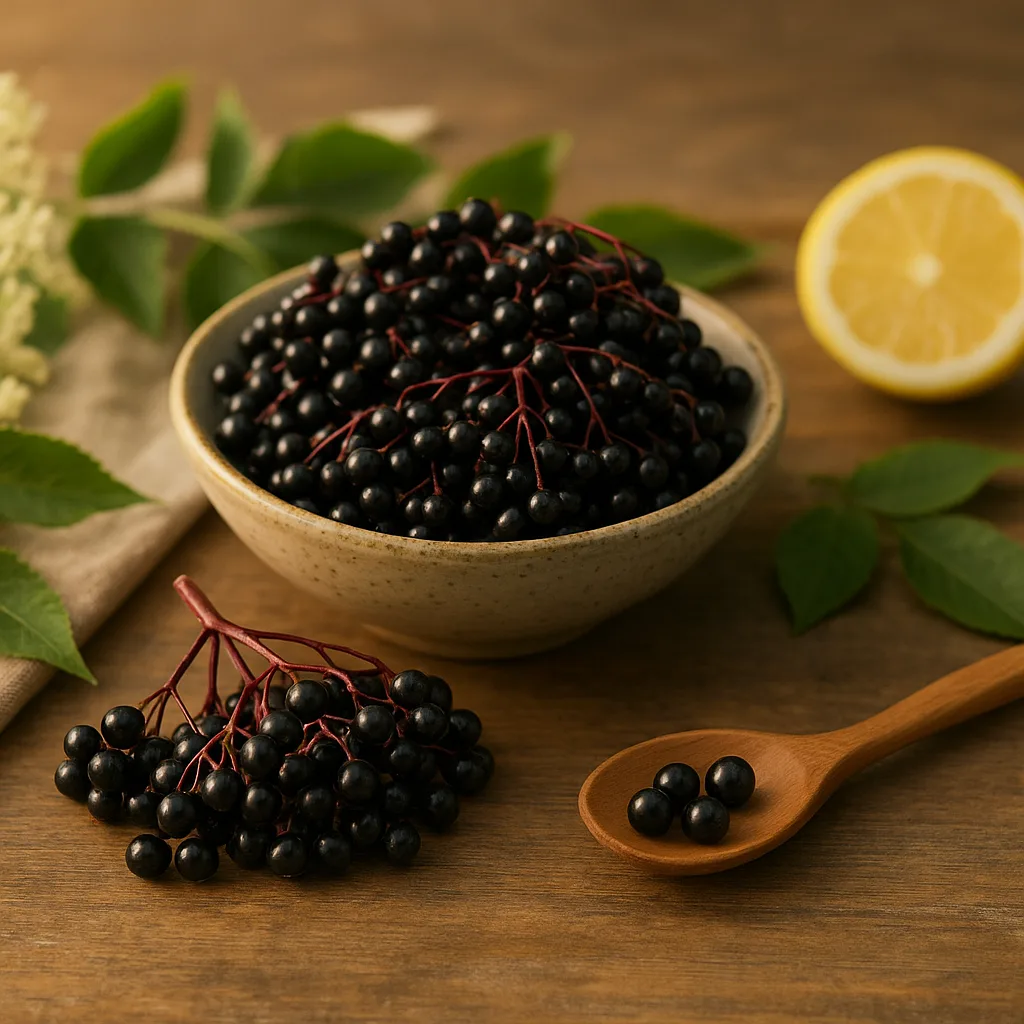
- Common family: Adoxaceae (formerly placed in Caprifoliaceae).
- Typical berry size: about 4–8 mm (0.16–0.32 in) diameter.
- Typical color: dark purple to black when ripe (some species have red or white berries).
Botany and scientific names: elderberry sambucus explained
When people ask "what is elderberry sambucus" they are referring to the genus name. The elderberry Latin name generally used in herbal and botanical contexts is Sambucus. Different species have different specific epithets (scientific names):
- Sambucus nigra — European black elder (also cultivated). Common in Europe and introduced elsewhere.
- Sambucus canadensis — American elder (sometimes called S. nigra ssp. canadensis).
- Sambucus racemosa — red elderberry (red fruits), found in North America and Eurasia.
- Sambucus cerulea (or S. glauca) — blue elderberry of western North America.
Terms like "elderberry scientific name" and "elderberry Latin name" usually point back to Sambucus, with the species name added for regional accuracy.
Identification: how to recognize elderberries in the field
Foragers and naturalists want clear visual cues. Use these tips to identify elderberries reliably—but always cross-check multiple traits before harvesting.
For more on this topic, see our guide on Goji Berries: A Field Guide to the Red Superfruit.
Key visual features
- Berries in clusters (corymbs): flat-topped or slightly domed clusters 5–25 cm (2–10 in) across, often holding dozens to hundreds of tiny berries.
- Berry size & color: ripe black/blue-black berries ~4–8 mm diameter for S. nigra/canadensis; S. racemosa has red berries; S. cerulea often bluish with a waxy bloom.
- Leaves: opposite leaves, pinnate with 5–9 (commonly 7) leaflets; each leaflet 3–12 cm (1.2–4.7 in) long, serrated margin.
- Flowers: small, creamy-white, 5-petaled; formed in broad, flat-topped clusters in spring to early summer.
- Bark & stems: stems are typically hollow or chambered; young twigs often soft and pithy.
Measurements and texture
- Individual berries: 4–8 mm diameter.
- Leaflets: 3–12 cm long, 1–4 cm wide.
- Cluster width: 5–25 cm across, sometimes larger on mature shrubs.
- Texture: berries are juicy, slightly astringent when raw; leaves and uncooked parts can taste bitter or soapy.
Field checklist before you pick
- Confirm opposite leaf arrangement and pinnate leaves (this distinguishes many lookalikes).
- Check for flat-topped inflorescences and clustered berries tightly bunched on red/dark stems.
- Verify berry color matches species (black/blue, red, or white).
- Smell crushed berry or flower—elder has a mild fruity scent; avoid plants that smell unpleasantly bitter or like carrot/parsley family (possible lookalikes).
Habitat, geographic distribution, and seasonal behavior
Elderberries are adaptable. Knowing typical habitats and seasonality helps with identification and planning for harvest.
- Habitat: edges of woodlands, hedgerows, riparian zones, fence lines, disturbed ground, and open fields. They prefer moist, well-drained soils but tolerate a broad range.
- Geographic range:
- S. nigra: native to Europe, western Asia and North Africa; widely cultivated and naturalized elsewhere.
- S. canadensis: eastern North America, from the U.S. into southern Canada.
- S. cerulea and S. racemosa: western and mountainous regions of North America.
- Seasonal timing: flowers in late spring to early summer (May–July in temperate zones), fruit ripens summer to early autumn (July–September depending on latitude and elevation).
What does elderberries do and what does elderberries do for you?
People ask both culinary and health-related questions: "what does elderberries do" and "what does elderberries do for you?" Below is a balanced look at traditional uses and modern evidence.
Culinary uses
- Syrups, jams, jellies, pies, wines, and cordials are common uses for cooked elderberries.
- Dried berries are used in teas, lozenges, and extracts.
- Flowers (elderflowers) are used fresh or dried to make cordials, fritters, and flavorings—elderflower cordial is a classic.
Traditional and medicinal uses
- Traditional systems used elderberry for colds, flu-like symptoms, and as a mild diaphoretic (to induce sweating).
- Modern supplements focus on standardized elderberry extracts (often marketed as anthocyanin-rich) for immune support.
- Clinical studies: several small randomized trials suggest elderberry extract may reduce duration and severity of influenza symptoms by about 2–4 days versus placebo, but quality and size of studies vary and more large-scale trials are needed.
Active constituents and what the science says
- Key compounds: anthocyanins (pigments), flavonoids, phenolic acids, and vitamin C.
- Potential effects: antioxidant activity in vitro; possible modulation of inflammatory markers; some antiviral activity seen in laboratory assays.
- Evidence limitations: variability between products, extraction methods, and dosing make clinical recommendations tentative. Always consult a healthcare professional before using elderberry therapeutically.
Safety, toxicity, and safe processing
One of the most important answers to "what are elderberries" concerns safety. Raw elderberries, plus leaves, stems, and unripe berries, contain cyanogenic glycosides (including sambunigrin) and possibly lectins that can cause gastrointestinal irritation and, rarely, cyanide-like poisoning if consumed in large amounts. Proper handling and cooking render the berries safe for most people.
You may also find our article on Identifying Elderberries in the Wild helpful.
Practical safety rules
- Never eat raw elderberries, leaves, twigs, or roots.
- Always remove stems before cooking—stems and leaves hold the highest concentrations of toxins.
- Cook berries thoroughly: simmering berries for 10–20 minutes in water (or following tested recipes) breaks down harmful compounds.
- Children, pregnant and breastfeeding women, and people with autoimmune conditions should consult a clinician before taking medicinal elderberry products.
Signs of poisoning and first aid
- Symptoms from raw ingestion: nausea, vomiting, diarrhea, abdominal cramps, and in extreme cases, dizziness or difficulty breathing.
- If someone consumes raw elder parts in quantity and develops severe symptoms, seek emergency medical help and bring a sample of the plant if possible.
- Note: properly prepared commercial products (pasteurized syrups, standardized extracts) are generally considered safe within recommended dosages.
What to do with elderberries: recipes, preservation, and practical uses
Foragers who answer the question "what to do with elderberries" find many tasty and useful options. Below are basic, practical recipes and preservation techniques with safety reminders.
Simple elderberry syrup (kitchen-friendly)
- Ingredients: 1 cup fresh ripe elderberries (about 150 g) or 1/2 cup dried; 3 cups water; 1 cup sugar or honey (to taste).
- Method: Remove stems and rinse berries. Simmer berries in water for 20–30 minutes, crushing to release juices. Strain through a fine sieve or cheesecloth, discard pulp. Return liquid to heat, add sweetener, simmer 5 minutes, cool. Store refrigerated up to 2–3 weeks or freeze in small portions.
- Dosing commonly used in studies: adults 1 tablespoon (15 ml) 4 times daily for acute use—however, follow product labels and consult a clinician.
Other uses
- Jams and jellies: mix elderberries with apple or grape to balance pectin and flavor.
- Wine and liqueurs: elderberry wine is rich and dark; fermentation requires proper yeast and sanitation.
- Dried berries and powders: make tea blends or capsule extracts from lab-tested products.
- Elderflowers: harvest when fully open; use for cordials (soak flowers with lemon and sugar), fritters, or tea.
Comparison: elderberry vs similar berries — how to tell them apart
For safety, learn common lookalikes that people confuse with elderberries.
You might also be interested in Field Guide to Visual ID with Orvik.
Elderberry vs pokeweed (Phytolacca americana)
- Pokeweed berries are larger (6–13 mm), hang on racemes (drooping clusters), and the plant has alternate leaves (not opposite). Pokeweed is more toxic and should not be consumed.
Elderberry vs chokecherry/black cherry (Prunus spp.)
- Chokecherries have simple alternate leaves and single cherries on short stalks, not flat-topped clusters. Pit inside cherries is large; elder berries have small, multiple seeds per berry.
Elderberry vs nightshade (Solanum spp.)
- Nightshades (e.g., bittersweet nightshade) have distinct flower shapes (five-lobed star with bright yellow center), alternate leaves, and often different cluster structure. Many nightshades are poisonous.
What is a wolfberry (and how is it different)?
When people ask "what is a wolfberry" they mean Lycium barbarum or Lycium chinense, commonly called goji berries. Wolfberry is not an elderberry: it belongs to the Solanaceae family (nightshade relatives). Key differences:
Related reading: Wild & Garden Berries: How to Identify Them.
- Wolfberries: elongated red/orange berries, 1–2 cm long, borne singly or in short clusters on thorny shrubs; leaves are small and simple, alternate.
- Elderberries: small round berries in large flat clusters; opposite pinnate leaves; different flower structure.
- Culinary note: wolfberries are eaten dried as a sweet-tart snack and used in teas and traditional Chinese medicine; they are not a substitute for elderberry syrup or jam because flavor and chemistry differ.
Using identification tools like Orvik
Digital identification tools can speed up safe foraging. Orvik’s AI-powered visual ID app (Orvik) helps confirm species using photos and context (leaf arrangement, berry clusters, flowering time). Use Orvik alongside field guides and the safety checks above—never rely solely on a single automated ID when harvesting for food.
- Tip: take clear close-ups of the leaves (showing opposite arrangement), the full cluster, and a single berry; upload multiple images to Orvik for best results.
- Cross-check Orvik’s suggestions with your own checklist (opposite leaves, berry color, cluster shape).
Conclusion
Elderberries (genus Sambucus) are versatile, recognizable shrubs with small clustered berries used for food, drinks, and traditional medicine. Proper identification—looking for opposite pinnate leaves, flat-topped berry clusters, and correct berry color—and safe processing (never eat raw berries; cook and remove stems) are essential. Foragers and cooks can transform elderberries into syrups, jams, wines, and teas, while being mindful of safety and evidence-based health claims. Tools like Orvik can assist with field identification, but always double-check before consuming wild plants.
Frequently Asked Questions
- Can you eat elderberries raw?
- No. Raw elderberries (and other raw parts like leaves and stems) contain compounds that can cause nausea, vomiting, and diarrhea. Always remove stems and cook berries thoroughly before eating.
- What is the elderberry scientific name?
- The genus is Sambucus. Common species include Sambucus nigra (European black elder), Sambucus canadensis (American elder), Sambucus racemosa (red elderberry), and Sambucus cerulea (blue elderberry).
- How do I identify elderberries in the wild?
- Look for opposite, pinnate leaves (5–9 leaflets), flat-topped clusters (corymbs) of many small berries ~4–8 mm across, and creamy-white flowers in spring. Confirm with multiple features or an ID tool like Orvik.
- What does elderberry do for you?
- Elderberry contains anthocyanins and other compounds with antioxidant activity. Small clinical trials suggest elderberry extract may shorten flu symptoms by a few days, but evidence is limited and more research is needed.
- What to do with elderberries after harvesting?
- Remove stems, cook berries to make syrup, jam, wine, or sauce. Dried berries are used in teas and supplements. Follow tested recipes and store prepared products refrigerated or frozen for longer shelf life.
- What is a wolfberry and is it the same as elderberry?
- A wolfberry (Lycium barbarum), commonly called goji berry, is not the same as elderberry. Wolfberries are orange-red, elongated, and belong to the Solanaceae family, while elderberries are small, clustered fruits of Sambucus species.
- Are elderberry supplements safe for children or pregnant women?
- Pregnant or breastfeeding women and young children should consult a healthcare provider before using elderberry supplements. Pediatric formulations exist but dosing and safety should be confirmed with a clinician.