
When you see a cluster of bright red-orange, oblong fruits hanging from a thorny shrub beside a dry riverbed or in a garden hedge, you may be looking at goji berries. Popular in traditional Chinese medicine and modern superfood marketing, goji berries are more than a trendy snack: they have a distinct botanical identity, clear habitat preferences, characteristic seasonal behavior, and both culinary and medicinal histories. This field guide explains, in practical detail, what goji berries are, how to identify them, where they grow, their nutritional profile, how to use them safely, and how to tell them apart from lookalikes like golden berries and gooseberries.
Botanical identity and origin
Goji berries are the fruit of shrubs in the genus Lycium, most commonly Lycium barbarum and Lycium chinense. These species belong to the nightshade family, Solanaceae, the same family that includes tomatoes, eggplants and peppers.
- Scientific names: Lycium barbarum (common goji) and Lycium chinense.
- Family: Solanaceae (nightshades).
- Common names: goji berry, wolfberry, Chinese wolfberry.
- Native range: temperate Asia — primarily northwestern China (Ningxia, Gansu), parts of Tibet and the Himalayan foothills.
Goji shrubs have been cultivated in China for at least 2,000 years, primarily for their fruit and medicinal use. In modern agriculture they are grown across Asia and increasingly in Europe, North America and Australia where climates suit their drought tolerance and sunny needs.
Practical identification: how to recognize goji berries
Identification in the field relies on a combination of fruit, leaf, flower, and growth-form characteristics. Use the visual cues below when assessing a plant. If you’re uncertain, photo-identification tools such as Orvik can help confirm the species from images of leaves, fruit clusters, or flowers.
Key visual cues
- Fruit shape and size: oblong to ellipsoid berries, typically 1–2 cm long (about the size of a large grape or small olive).
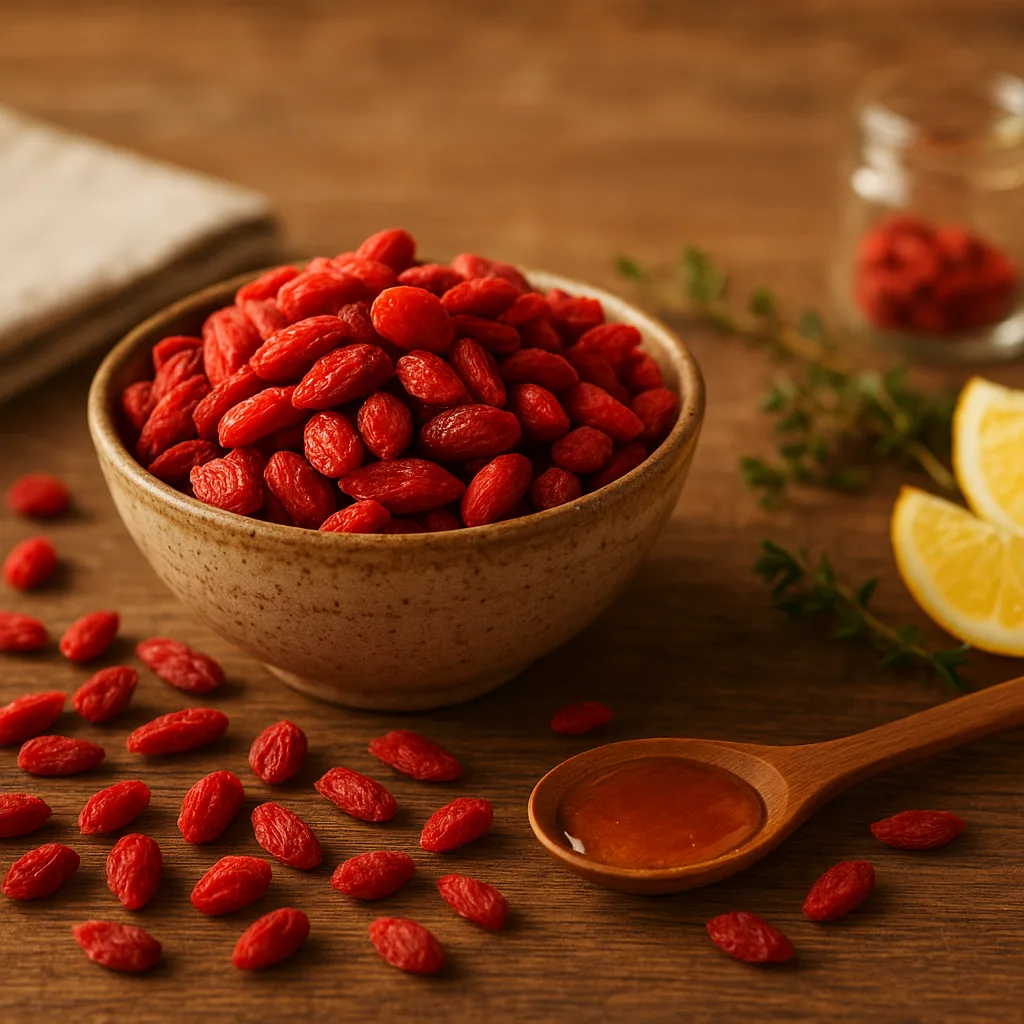
- Color: ripe berries are bright red to orange-red. Fresh fruit is glossy; dried fruit becomes wrinkled and darker red.
- Texture: soft and slightly juicy when fresh; chewy and leathery when dried. Seeds are small, pale, and numerous.
- Cluster arrangement: fruits commonly appear in clusters of 5–20 along twigs rather than singly.
- Leaves: simple, alternate, lanceolate (narrow and pointed), typically 1–6 cm long and 0.5–2 cm wide; smooth margins.
- Flowers: tubular, 1–2 cm long, colors range from white to pale purple; bell-shaped with five fused petals.
- Shrub form: woody, thorny or spiny branches; typically 1–3 meters tall in cultivation (often smaller in the wild).
Measurements to remember
- Berry length: ~1–2 cm.
- Shrub height: ~1–3 m (3–10 ft) in cultivation.
- Leaf length: ~1–6 cm.
- Flower size: ~1–2 cm.
Visual identification works best when you examine multiple features at once. For example, a round yellow-orange berry inside a papery husk is not a goji; that is a golden berry (Physalis). If you have a smartphone, apps such as Orvik can analyze close-up photos of the berry, leaf, or flower and give a rapid ID with confidence scores.
Nutritional profile and evidence-based benefits
Consumers search “what are goji berries good for” because the berries are often marketed for eye health, immune support, and longevity. Here’s a grounded look at what science supports and what remains inconclusive.
For more on this topic, see our guide on Elderberries: A Field Guide to Identification & Use.
Typical nutrient content (approximate)
- Dried goji berries (per 100 g): ~350 kcal, ~11–14 g protein, ~75–80 g carbohydrates (including ~13 g fiber), ~0.5–1.0 g fat.
- Vitamins and carotenoids: significant carotenoids, especially zeaxanthin (protective for the retina); vitamin A activity is high relative to many fruits.
- Minerals and phytonutrients: small amounts of iron, selenium, and polysaccharides; various flavonoids and phenolic acids act as antioxidants.
What are goji berries good for — evidence summary
- Eye health: Zeaxanthin in goji berries accumulates in the retina and may help protect against oxidative stress. Human studies show improved macular pigment optical density with goji consumption in some trials.
- Antioxidant status: goji compounds can raise antioxidant markers in short-term studies, but long-term clinical outcomes (disease prevention) are not established.
- Immune modulation: polysaccharides from goji show immune-stimulating effects in lab studies; clinical evidence is preliminary.
- General nutrition: as a dried fruit, goji berries provide concentrated calories, fiber, and micronutrients that can augment a balanced diet.
Bottom line: goji berries can contribute valuable nutrients and antioxidant compounds, particularly zeaxanthin, but they are not a miracle cure. Recommended serving sizes are modest — typically 10–30 g (about a small handful) of dried berries per day if used as a supplement to the diet.
Culinary uses, preparation, and storage
Goji berries are versatile in the kitchen. They can be eaten fresh (where available), dried, steeped into teas, cooked into porridges, or used as a colorful garnish. Traditionally in Chinese cuisine they are added to soups, congees, and herbal broths.
Common culinary forms
- Fresh berries: seasonal, soft, mildly sweet and slightly tart.
- Dried berries: most common in global markets, chewy and sweet, used much like raisins.
- Juices and powders: concentrated forms used in smoothies or supplements.
- Teas and tinctures: brewed from fresh or dried berries, often combined with other herbs.
Practical tips for use and storage
- Serving size: 10–30 g dried (about 1–3 tablespoons) per day is commonly recommended; adjust for calorie needs.
- Cooking: add dried goji berries at the end of cooking to preserve texture and nutrients; rehydrate for 10–20 minutes in warm water to plump them up.
- Storage: keep dried berries in an airtight container in a cool, dark place for up to 6–12 months; refrigeration extends shelf life.
- Quality: choose organic if possible to reduce pesticide exposure; expect occasional variation in sweetness and color depending on cultivar and processing.
Habitat, geographic distribution, and seasonal behavior
Understanding where goji grows helps with both foraging and cultivation. These shrubs are adaptable but show clear preferences in the wild.
- Native and primary cultivation zones: north-central and northwestern China (Ningxia, Gansu, Hebei), parts of Inner Mongolia, and the Himalayan foothills.
- Introduced regions: cultivated in parts of Europe, the western United States (California, Oregon), Canada, Australia, and New Zealand where climates are suitable.
- Elevation range: commonly cultivated from about 500 to 3,000 meters elevation in China.
- Habitat preferences: sunny exposures, well-drained soils, tolerates drought and saline soils; often found along river terraces, field margins, and irrigated slopes.
Seasonal cycle
- Spring (May–June): new leaves and flowering — tubular flowers appear on current season’s growth.
- Summer (July–August): fruit set and maturation begin.
- Late summer to autumn (August–October): peak fruit ripening and harvest season for fresh berries; dried fruit results from post-harvest drying.
- Winter: shrubs are deciduous or semi-deciduous depending on climate; woody stems persist.
Foragers should only harvest from known, pesticide-free areas and respect private property. If in doubt about wild plants, photograph them and use Orvik for an initial identification before collecting.
Safety, toxicity, and interactions
Goji berries are generally safe for most people when eaten in typical food amounts. However, several safety considerations are worth noting.
You may also find our article on Wild & Garden Berries: How to Identify Them helpful.
- Allergies: as members of Solanaceae, people allergic to tomatoes, peppers, or eggplant may have cross-reactions. Test a small amount first if you have known nightshade sensitivity.
- Drug interactions: case reports and some clinical observations suggest goji may interact with anticoagulant medications such as warfarin, potentially altering INR. If you take blood thinners, consult your clinician before regular consumption.
- Pregnancy and breastfeeding: insufficient safety data for medicinal doses; moderate food amounts are generally regarded as safe but consult a healthcare provider for supplements.
- Sulfites and preservatives: some commercial dried goji are treated with sulfites to preserve color—this can trigger asthma in sensitive individuals.
- Pesticides: non-organic goji can contain residues; wash thoroughly and prefer reputable sources.
When harvesting wild plants, ensure correct identification. Mistaking another berry for goji can carry toxicity risks. Use careful visual ID or Orvik to reduce misidentification risk.
Comparison: Goji vs. Golden Berry vs. Gooseberry — how to tell them apart
Searchers often confuse goji berries with other small, colorful fruits. Below is a side-by-side guide to separate them at a glance and by key traits.
Quick visual comparison
- Goji (Lycium spp.): oblong, red to orange-red, 1–2 cm long; clusters on thorny shrubs; smooth skin; no papery husk.
- Golden berry / Cape gooseberry (Physalis peruviana): round, 1–2 cm diameter, yellow-orange, enclosed in a papery lantern-like husk (calyx); smooth and glossy skin; tastes tart-sweet.
- European gooseberry (Ribes uva-crispa): round to slightly oval, 1–3 cm diameter, often green or red, sometimes with visible ribs and fine hairs; grows singly or in small clusters on woody shrubs not in Solanaceae.
Identification checklist
- Look for a papery husk: present = golden berry, absent = likely goji or gooseberry.
- Check fruit shape: oblong = goji; spherical and ribbed/hairy = gooseberry.
- Inspect plant leaves and flowers: tubular flowers and lanceolate leaves suggest goji; alternate leafting patterns and different flower forms point to Ribes or Physalis.
- Note cluster arrangement: long clusters along stems suggest goji; single fruits in husk suggest Physalis; small clusters or single fruits near nodes suggest gooseberry.
For uncertain cases, photograph multiple plant parts (fruit, leaf, flower, stem) and use Orvik to obtain an AI-assisted identification. Having several images increases confidence in automated ID.
Looking beyond this category? Check out How to Identify Any Rock in the Field.
Growing, harvesting, and sustainable sourcing
For gardeners and small-scale growers, goji is an attractive shrub: drought tolerant, productive, and ornamental. Below are practical tips for cultivation and ethical sourcing.
Related reading: Miracle Berries: Nature’s Sweet Trick.
Basic cultivation guide
- Site: full sun to light shade; tolerates many soils but prefers well-drained loam.
- Soil pH: slightly acidic to neutral (pH 6.0–7.5).
- Water: drought tolerant once established; water regularly for best fruit set during the first two years.
- Propagation: from semi-hardwood cuttings, seed, or nursery transplants. Seed-grown plants may vary in fruit quality.
- Pruning: annual pruning encourages fruiting on new growth; remove dead wood and thin interior branches for airflow.
- Pests and diseases: relatively few serious pests, though aphids, spider mites and fungal leaf spots can occur in humid climates.
Harvesting and post-harvest handling
- Harvest ripe fruit (uniform red on the berry) from late summer to autumn.
- For commercial drying, berries are often halved or placed whole on drying racks; sun-drying and low-temperature dehydrators work well.
- Handle gently: fresh berries are soft and bruise easily; drying concentrates sugars and flavor but can also concentrate contaminants if present.
Buy from growers who practice responsible farming: look for organic certification, third-party testing for contaminants on commercial products, and transparent supply chains. Small-scale producers and farmers’ markets are good places to ask about cultivation practices.
How to identify with Orvik and other field tools
Modern plant ID apps can significantly reduce the chance of misidentification when used correctly. Orvik uses AI to analyze multiple features from photos and suggests identifications with confidence scores.
- Best practice: take 4–6 photos: whole shrub, close-up of leaves, close-up of fruit cluster, close-up of a single berry, and a photo of flowers if present.
- Lighting: bright, diffuse light without heavy shadows is ideal; avoid backlighting to capture true color.
- Scale: include an object of known size (a coin or ruler) in one photo to show scale.
- Cross-check: compare app suggestions with a field guide or herbarium images; look for matching leaf shape, flower morphology, and fruit arrangement.
Orvik is particularly helpful because it integrates regional occurrence data to reduce false positives — for example, filtering out plants that don’t grow naturally in your region. Use Orvik as an assistive tool, not a substitute for careful observation in the field.
Conclusion
So, what are goji berries? They are the bright red-orange berries of Lycium barbarum and Lycium chinense, cultivated for centuries in Asia and now enjoyed worldwide. Distinctive in shape, color, cluster habit and leaf form, goji are identifiable with a few reliable visual cues. Nutritionally, they are a concentrated source of calories, fiber and carotenoids (notably zeaxanthin), and they have modest evidence for benefits such as supporting eye health and antioxidant status. Use them as a flavorful, nutrient-rich dried fruit in small servings, be mindful of drug interactions and allergies, and confirm identity with careful observation or tools like Orvik before harvesting wild plants. With proper identification and moderation, goji berries are a valuable addition to the pantry and the landscape.
Frequently Asked Questions
- What are goji berries good for?
- Goji berries provide concentrated nutrients and antioxidants—particularly zeaxanthin—which may support eye health and antioxidant status. They also add fiber and vitamins to the diet but are not a substitute for medical treatment.
- Are goji berries the same as golden berries?
- No. Golden berries (Physalis peruviana) are round, yellow-orange and enclosed in a papery husk. Goji berries (Lycium spp.) are oblong, red-orange and do not have a husk.
- Can goji berries interact with medications?
- Yes. There are reports that goji can interact with anticoagulants like warfarin, potentially affecting INR. Consult your healthcare provider if you take prescription medications.
- How can I visually identify goji berries?
- Look for oblong red-orange berries 1–2 cm long in clusters on thorny shrubs with lanceolate leaves and tubular flowers. Dried goji are wrinkled and chewy. Apps like Orvik can assist with photo-based ID.
- How much dried goji should I eat daily?
- A common serving is 10–30 g (about 1–3 tablespoons) of dried goji per day. Adjust for calorie needs and any medication concerns.
- Are goji berries safe during pregnancy?
- There is limited data on medicinal doses during pregnancy. Small amounts as food are generally considered safe, but consult your healthcare provider for larger supplemental use.
- Do goji berries grow outside China?
- Yes. While native to temperate Asia, goji are cultivated in Europe, North America, Australia and elsewhere where climate and soil conditions permit.