
Introduction: what are miracle berries and why they matter
Miracle berries, commonly called miracle fruit or by their scientific name Synsepalum dulcificum, are small red drupes famed for temporarily transforming sour and acidic flavors into sweet sensations. Native to West Africa, these berries contain a unique glycoprotein that alters taste perception. People search for "what are miracle berries" because they want to know how they look, how they work, whether they are safe, and how to use them in cooking, medicine, or novelty "flavor‑tripping" sessions.
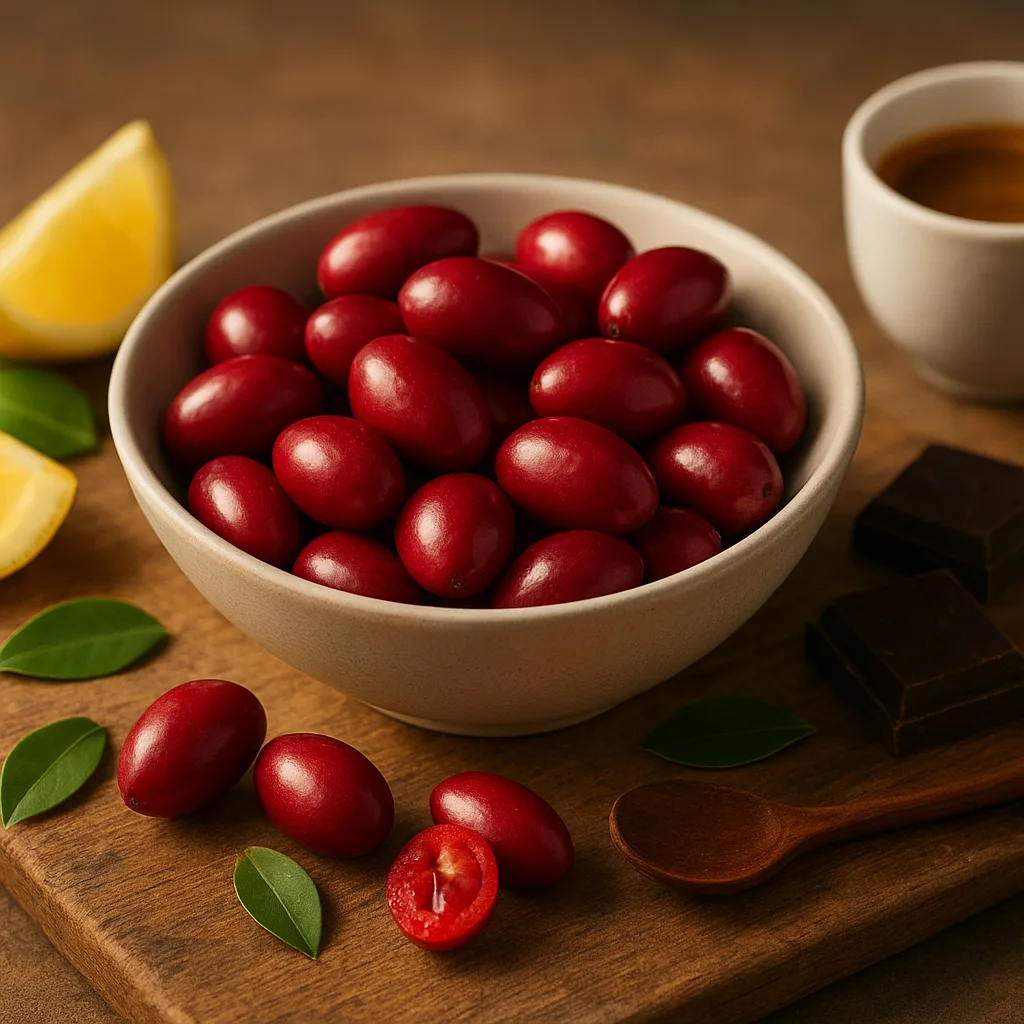
- Common names: miracle berry, miracle fruit, sweet berry
- Scientific name: Synsepalum dulcificum (family Sapotaceae)
- Typical berry size: about 1–2 cm long (10–20 mm)
- Primary active compound: miraculin, a taste-modifying glycoprotein
Biology and chemistry: how miracle berries work
Plant description and lifecycle
Synsepalum dulcificum is an evergreen shrub or small tree reaching 1–5 m tall in the wild and commonly kept at 1–2 m in cultivation. Leaves are alternate, glossy, leathery, and oblong, typically 3–10 cm long and 1–3 cm wide. Flowers are small, tubular, white to cream, about 4–6 mm long, appearing on short axillary clusters. The fruit is a single-seeded red drupe (not an aggregate fruit) with a thin skin and a single ellipsoid seed about 6–12 mm long.
Miraculin: the taste modifier
The active agent in the berry is miraculin, a glycoprotein that binds to sweet taste receptors (T1R2/T1R3) on the tongue. At neutral pH miraculin acts as a neutral binder; when exposed to acids (from sour foods like lemons or vinegar), its shape changes and it activates the sweet receptor, causing a sour flavor to be perceived as sweet. The effect typically begins within 30–60 seconds of eating a berry and can last from 20 minutes up to 2 hours, depending on saliva flow and oral pH.
- Mechanism: pH-dependent agonist of sweet receptors
- Onset: commonly 30–60 seconds
- Duration: typically 20–120 minutes
Identification: visual cues and practical field tips
Foragers and gardeners asking "what are miracle berries" need clear identification markers. Visual cues differentiate Synsepalum dulcificum from other red or orange berries you might find in the field.
For more on this topic, see our guide on Blueberries: Nature’s Tiny Powerhouses.
Visual identification checklist
- Fruit color and size: bright to deep red when ripe, oblong to ellipsoid, about 10–20 mm long and 5–12 mm wide.
- Fruit texture: thin skin, flesh is mildly juicy but not pulpy; single large seed inside.
- Leaves: evergreen, glossy, leathery, oblong to elliptic, 3–10 cm long, with smooth margins.
- Flowers: small, tubular, white/cream in clusters (typically not obvious unless plant is flowering).
- Plant habit: multi-stemmed shrub, often branching from the base, typically 1–3 m in cultivation.
Field tips and common lookalikes
- Seed check: open the ripe fruit—miracle berries have a single, large seed; berries like raspberries and blackberries are aggregate and have many drupelets.
- Compare leaves: contrast the glossy leathery leaves of Synsepalum with the serrated leaves of bramble berries (Rubus spp.).
- Use Orvik or similar plant identification tools: take a clear photo of the leaf and fruit; Orvik’s visual AI can help distinguish Synsepalum from lookalikes like hawthorn (mayhaw) or sea buckthorn (sea berry).
- Do not taste until positively identified: many red berries are edible, but some are toxic—confirm identification first.
Habitat, geographic distribution, and seasonality
Knowing where miracle berries grow and when they fruit answers practical foraging and cultivation questions.
Natural range and introduced areas
- Native range: tropical West Africa — countries such as Ghana, Nigeria, Cameroon.
- Introduced and cultivated: warm, humid tropics and subtropics worldwide — parts of Florida, Hawaii, greenhouse collections in temperate regions, and specialty growers in California and Europe.
- Habitat preference: lowland forest understory, rich well-drained acidic soils, partial shade.
Seasonal behavior
In native habitats, Synsepalum can fruit multiple times a year with a main fruiting season tied to rainy periods. In cultivation, with adequate warmth and humidity, plants may produce small crops annually once mature (often 2–4 years from seed).
- Flowering: typically occurs in flushes; flowers are small and may be inconspicuous.
- Fruit maturation: fruits ripen to red—monitor by color and softness, usually within 6–8 weeks after flowering under optimal conditions.
- Yield: productive plants in ideal conditions can produce dozens to a few hundred fruits per year, depending on size and care.
Practical uses, culinary tips, and safety
People searching "what are miracle berries" often want to know how to use them: flavor‑tripping parties, culinary innovations, or even therapeutic uses to help chemotherapy patients taste food. Here are practical approaches with safety considerations.
You may also find our article on Inside the Acai Berry: Nature’s Amazonian Purple Fruit helpful.
Culinary uses and flavor-tripping
- Flavor-tripping ritual: chew one fresh berry (or a small amount of freeze-dried berry) until the pulp coats the tongue, then taste a variety of sour items—lemon wedges, grapefruit, lime, vinegar, sour yogurt—to experience sweet transformations.
- Measurements: a single berry (approximately 1–2 cm) is typically enough for 1–3 people; for larger groups, use freeze-dried powder at 50–200 mg per serving, depending on potency.
- Pairings: citrus, green apples, plain yogurt, pickles, tequila with lime, and certain cheeses become notably sweeter and more palatable.
Therapeutic and practical considerations
- Medical uses: some clinics have explored miraculin to help chemotherapy patients who experience taste distortions (dysgeusia), but clinical evidence is still limited.
- Diabetes caution: because sour foods taste sweet after miraculin, people with diabetes must monitor carbohydrate intake and blood glucose; miraculin does not change caloric content.
- Regulatory status: concentrated miraculin as an additive may be regulated differently by country. Fresh or freeze-dried whole fruit is generally available in specialty markets; check local guidelines before using extracts.
Safety, toxicity, and allergies
Synsepalum dulcificum is not known to be highly toxic, and allergies are rare, but prudent precautions apply.
- Allergy risk: if you have known allergies to Sapotaceae or related tropical fruits, test a tiny amount first and wait 24 hours for reactions.
- Medication interactions: there are no well-documented direct drug interactions, but altered taste perception could affect dietary medication timing—consult a clinician if in doubt.
- Pregnancy and breastfeeding: limited data exist—consult a healthcare provider before use.
Comparisons: miracle berry vs other berries people ask about
Searchers also ask about marionberries, mayhaw berries, bramble berries, and sea berries. Below are clear contrasts to help identification and use.
Looking beyond this category? Check out Mastering Visual ID: Your Photo Identifier Guide.
Miracle berry vs marionberry
- Miracle berry (Synsepalum dulcificum): a single-seeded red drupe, 10–20 mm long, tastes bland or mild until miraculin is active; found on evergreen shrub of Sapotaceae.
- Marionberry (Rubus 'Marion'): a blackberry hybrid (Rubus ursinus × R. idaeus), aggregate drupelets forming a deep maroon-black compound fruit, 15–25 mm across; tart-sweet, used in jams and pies.
- How to tell: open the fruit—marionberries have many small drupelets and a hollow core; miracle berries have one seed and a solid pit.
Miracle fruit vs mayhaw berries (what are mayhaw berries?)
- Mayhaw (Crataegus aestivalis, C. opaca and related hawthorns): round pomes 8–15 mm, typically bright red to rosy, produced on thorny trees or shrubs in wet bottomlands; used for jellies and syrups.
- Miracle fruit: oblong, single seed, evergreen shrub; not a pome and not borne on thorny hawthorn branches.
- How to tell: look for thorns and clustered mayhaw fruits on short stalks; miracle berries are solitary and on smooth, non‑thorny branches.
Miracle berry vs bramble berry and sea berry
- Bramble berry: informal term for Rubus species (blackberry, raspberry); aggregate fruits made of many drupelets, often with sepal remnants and variable colors from red to black.
- Sea berry (sea buckthorn, Hippophae rhamnoides): bright orange berries, 6–12 mm, borne on thorny woody branches; high in vitamin C and oils.
- How to tell: bramble berries are aggregate and soft; sea berries are orange/golden and occur on thorny, silver-leaved shrubs; miracle berries are red, single-seeded drupes on smooth evergreen shrubs.
Cultivation, propagation, and foraging tips
Whether you want to grow Synsepalum dulcificum in a pot or spot it in the wild, here's actionable guidance.
Related reading: Wild & Garden Berries: How to Identify Them.
Growing conditions and care
- Soil: acidic, well-drained, rich loam with pH 4.5–6.5.
- Light: bright, indirect sun—protected from hot afternoon sun; tolerates partial shade.
- Water: consistent moisture; avoid waterlogging. In cultivation, water 2–3 times per week depending on pot size and climate.
- Temperature: prefers 15–30°C (59–86°F); intolerant of hard freezes—bring indoors below 5°C (41°F) or grow in a greenhouse.
Propagation and maintenance
- Propagation: from seed (germination can be slow—3–8 weeks after stratification) or semi-ripe cuttings treated with rooting hormone. Seedlings may take 2–4 years to fruit.
- Fertilizer: light feeding with acidic formulas (e.g., azalea/camellia feed) in spring and mid-summer.
- Pest/disease: relatively pest-free; watch for scale and fungal issues in poor drainage.
Foraging etiquette and safety
- Permission: only harvest on private land with permission; respect protected areas and local regulations.
- Positive ID: use multiple cues (fruit, leaf, habit) and tools like Orvik to confirm identification before tasting.
- Sustainable harvest: take only a small percentage of fruit from any wild plant to ensure seed dispersal and plant health.
Bonus: what do you soak strawberries in and related berry-cleaning tips
Many readers asking about berries also wonder how to clean strawberries and other soft fruit before eating, especially when doing a flavor-tripping session.
Effective cleaning methods
- Baking soda wash: dissolve 1 teaspoon baking soda in 2 cups (about 470 ml) of water. Soak strawberries 12–15 minutes, gently agitate, then rinse under running water to remove pesticide residues.
- Vinegar wash: dilute 1 part white vinegar to 3 parts water, soak 5–10 minutes, then rinse thoroughly. Vinegar helps remove surface bacteria and mold spores but can affect flavor if not rinsed well.
- Saltwater: dissolve 1–2 teaspoons salt in 2 cups water and soak 10–15 minutes to dislodge small insects; rinse well afterward.
Practical tips for flavor-tripping sessions
- Clean all fruits and utensils before starting to avoid off-flavors.
- Rinse any vinegar/baking soda residue thoroughly to avoid altering taste impressions.
- Use fresh, ripe citrus and firm fruits for the most dramatic effect after eating a miracle berry.
Conclusion
Miracle berries (Synsepalum dulcificum) are a small, fascinating fruit with outsized effects on taste perception thanks to the glycoprotein miraculin. They are identifiable by their oblong, single-seeded red drupes and glossy evergreen leaves. Native to West Africa but grown worldwide in suitable climates, these berries offer culinary novelty, potential therapeutic uses, and an engaging foraging or gardening experience. Always positively identify wild plants before tasting—Orvik can be a helpful tool in the field—and follow safety and regulatory guidance for concentrated extracts. With careful identification and sensible precautions, miracle berries invite a uniquely playful way to explore flavor.
Frequently Asked Questions
- What is a marionberry?
- A marionberry is a cultivated blackberry (Rubus 'Marion'), an aggregate fruit made of many drupelets, deep maroon-black when ripe and commonly used in jams and desserts.
- What is a miracle fruit?
- Miracle fruit is another name for the miracle berry, Synsepalum dulcificum, a small red drupe containing miraculin, a glycoprotein that temporarily makes sour foods taste sweet.
- What are mayhaw berries?
- Mayhaws are small, round pome fruits produced by hawthorn species (e.g., Crataegus aestivalis), typically 8–15 mm across, bright red, and valued for jellies and syrups in the southeastern US.
- What do you soak strawberries in to clean them?
- Common methods: baking soda solution (1 teaspoon baking soda per 2 cups water, soak 12–15 minutes) or diluted vinegar (1 part vinegar to 3 parts water, soak 5–10 minutes), then rinse thoroughly.
- What is a bramble berry?
- Bramble berry is an informal term for fruits of the Rubus genus—blackberries and raspberries—characterized by aggregate drupelets and often tart-sweet flavors.
- What is a sea berry?
- Sea berry usually refers to sea buckthorn (Hippophae rhamnoides), a thorny shrub with bright orange, nutrient-rich berries high in vitamin C and oils.
- Are miracle berries safe for diabetics?
- Miracle berries change taste perception but do not change caloric content. Diabetics should use caution and monitor blood glucose, because sour foods will taste sweet and might encourage higher consumption.