
Introduction: Why people ask "what are these berries"
When you come across clusters of small, colorful fruits while walking a trail or in a backyard hedgerow, the immediate question is practical: are they edible, poisonous, or worth photographing? People searching for "what are these berries" want clear visual cues, seasonal and habitat context, and safety guidance. This article provides field-proven identification tips for common berries — especially raspberries, bilberries, boysenberries and kiwi berries — and shows how tools like Orvik can speed up and confirm identifications in the field.
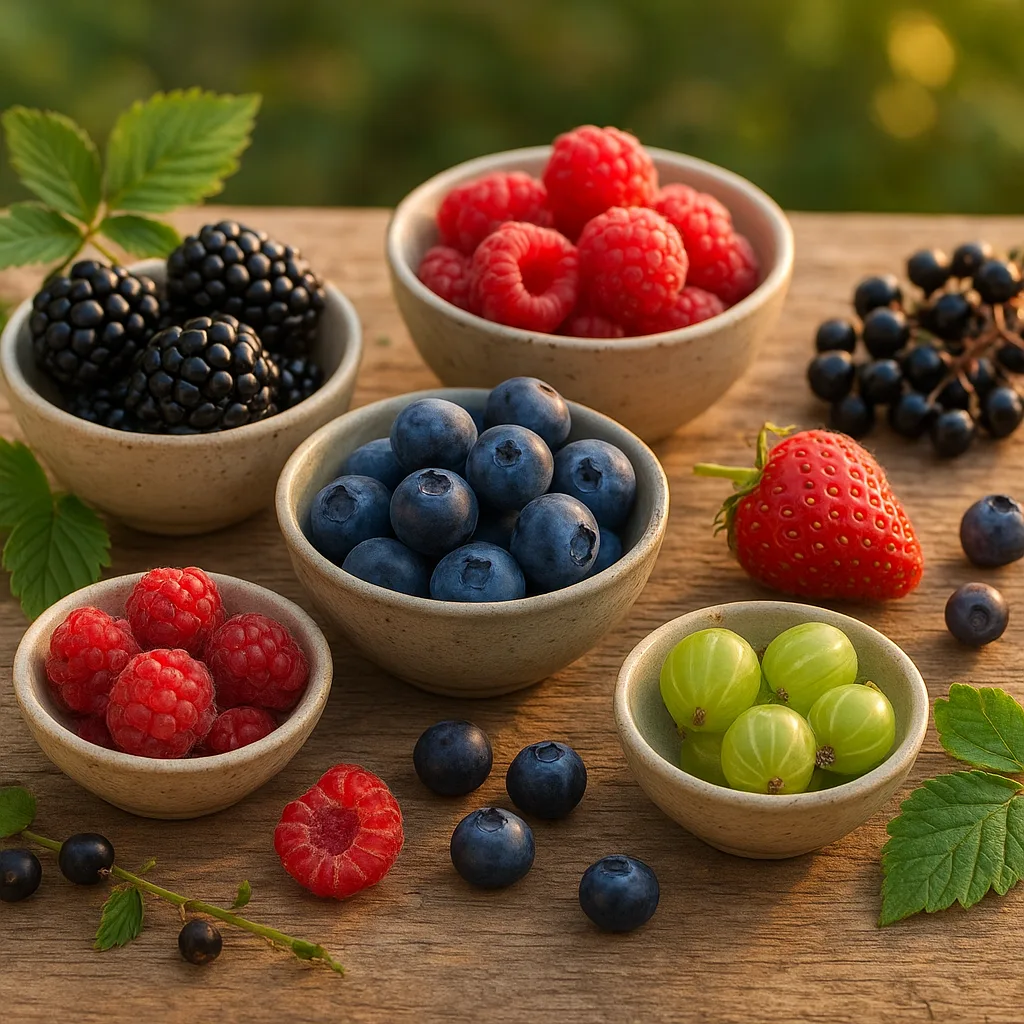
- Who this guide is for: hikers, gardeners, foragers, parents, and curious observers
- What you will learn: visual ID, habitat, seasonality, uses, and safety
- How to use this info: match color, size, stem and leaf clues; verify with an app such as Orvik
What is a berry? Botanical and common definitions
The word berry is used two ways. In common language a berry is any small, pulpy fruit. Botanically, however, a berry is a simple fruit produced from a single ovary with seeds embedded in the flesh. Many fruits called berries in everyday speech are not botanical berries.
Botanical vs common usage
- Botanical berries: tomatoes (Solanum lycopersicum), grapes (Vitis spp.), and blueberries (Vaccinium spp.).
- Aggregate fruits often called berries: raspberries and blackberries are aggregates of drupelets, technically not true berries.
- Accessory fruits often called berries: strawberries are accessory fruits because the seeds are on the outside.
Why this matters for identification
- Knowing botanical structure helps separate lookalikes: aggregate drupelets versus single-seeded berries.
- Structure shows how fruit detaches: raspberries leave a hollow core, blackberries retain the receptacle.
Key species people ask about
Below are field notes for the species most often searched when someone asks "what are these berries". Each subsection contains quick visual cues, measurements, habitat and season.
For more on this topic, see our guide on Spotting Toxic Berries in the Wild.
Raspberries (Rubus idaeus and related species)
- Appearance: aggregate fruit composed of 50–100 drupelets, color ranges from red to black or golden depending on cultivar; typical aggregate diameter 1.5–3 cm (0.6–1.2 in).
- Key visual cues: hollow core when picked, individual drupelets are rounded and glossy, fine hairs on canes; leaves pinnate with 3–5 leaflets, serrated margins.
- Habitat and distribution: temperate zones across Europe, Asia and North America; common on forest edges, disturbed soil, hedgerows.
- Season: summer-bearing varieties July to August; everbearing or autumn-bearing fruit late summer to October.
Bilberries (Vaccinium myrtillus)
- Appearance: true berry, round, 4–8 mm diameter, deep blue-black skin with indigo-blue juice and flesh that stains fingers and tongues.
- Key visual cues: small size, single-seeded tiny seeds dispersed through the pulp, solitary berries or small clusters, leaves are small, ovate and often turn red in autumn.
- Habitat and distribution: native to northern Europe and parts of Asia and North America; favor acidic, well-drained soils in heaths, coniferous woodland and moorland.
- Season: peak midsummer, typically June to August depending on latitude.
Boysenberries (Rubus ursinus × idaeus; hybrid)
- Appearance: large, elongated aggregate fruit with 30–50 drupelets, deep maroon to near-black when ripe, typically 2–3 cm (0.8–1.2 in) long and weighing 3–6 g.
- Key visual cues: glossy drupelets, more elongated than typical blackberry, often softer and juicier; canes resemble other Rubus with arching habit and thorns.
- Habitat and distribution: developed in California; cultivated in Pacific Northwest, parts of Europe and Australia.
- Season: mid to late summer, often July–September.
Kiwi berries (Actinidia arguta and Actinidia kolomikta)
- Appearance: smooth-skinned, grape-sized fruits 2–4 cm (0.8–1.6 in) long, green flesh with tiny black seeds; skin is thin and edible, unlike common kiwifruit.
- Key visual cues: oval to slightly egg-shaped, skin may be green to bronze, vine with alternate leaves, often variegated in A. kolomikta.
- Habitat and distribution: native to northeast Asia; cultivated in New Zealand, Europe and North America in temperate gardens and orchards.
- Season: ripen late summer to early autumn, typically August–October depending on climate.
Other common berries worth knowing
- Blueberries (Vaccinium corymbosum and related): 8–12 mm diameter, dusty bloom on skin, sweet-tart flavor.
- Blackberries (Rubus fruticosus aggregate): larger than raspberries, 2–3.5 cm, retain white core when picked.
- Elderberries (Sambucus nigra): clusters of many small dark berries; raw elderberries are mildly toxic unless cooked.
Practical field identification tips
Identification is best done with a combination of visual cues, habitat and season. Use your eyes first, then check leaves, stems and how the fruit detaches. If in doubt, photograph the plant, berries, leaves, stems and surroundings and verify with Orvik or a local field guide.
You may also find our article on Goji Berries: A Field Guide to the Red Superfruit helpful.
- Start with size: measure or estimate berry diameter in millimeters or inches.
- Note color and staining: does the juice stain fingers deep blue/purple (bilberry, blueberry) or leave minimal stain (raspberry)?
- Observe the fruit structure: aggregate drupelets (raspberry/blackberry) versus single-fleshed berry (bilberry, kiwi berry).
- Detach behavior: hollow core on raspberries; blackberries keep the receptacle.
- Leaf and cane traits: thorns present? leaflets number and shape? variegation on kiwi vines?
Quick measurement guidelines
- Use a coin or ruler: a US penny is 19 mm across, a euro cent 16.25 mm; compare berry to coin to estimate size.
- Raspberry aggregate: typically 15–30 mm wide. Individual drupelet: 2–5 mm.
- Bilberry: 4–8 mm diameter. Kiwi berry: 20–40 mm long.
Comparison: How to tell similar berries apart
Many misidentifications happen because species share colors. Below are side-by-side clues to separate common lookalikes.
Raspberry vs Blackberry
- Raspberry: aggregate drupelets that leave a hollow core on the plant; color red, gold, black or purple; drupelets often smaller and the whole fruit lighter.
- Blackberry: stays firm on the receptacle so fruit is not hollow; usually larger and darker (deep black) when ripe; glossy drupelets.
- Field tip: pull fruit gently; if a white core comes away with it, it is a blackberry.
Black raspberry vs common raspberry
- Black raspberry (Rubus occidentalis): deeply pigmented black or purple, often smaller and rounder than Rubus idaeus hybrids; distinctive fragrance when crushed.
- Common red raspberry (Rubus idaeus): more translucent red, slightly larger drupelets.
Bilberry vs Blueberry
- Bilberry (Vaccinium myrtillus): fruit usually solitary or in pairs, flesh dark throughout, intense staining, smaller 4–8 mm.
- Blueberry (Vaccinium corymbosum): pale flesh with ring near the center, less staining, often larger 7–12 mm and sold in clonal highbush form.
Boysenberry vs Loganberry vs Blackberry
- Boysenberry: hybrid large, glossy maroon-black, softer and more elongated than blackberry.
- Loganberry: cross between blackberry and raspberry, usually more elongated and tart.
- Blackberry: usually rounder or more dome-shaped and firmer.
Kiwi berry vs Grape
- Kiwi berry: edible thin skin, green flesh with radiating seed pattern and tiny black seeds, subtle hair or none on skin depending on cultivar, taste like a small kiwifruit.
- Grape: different seeds arrangement, skin texture often more translucent; grapes rarely have the radiating seed pattern and typical kiwi aroma.
Uses, nutrition and what raspberries are good for
Raspberries are not only delicious; they pack nutrition and culinary versatility. Here is a concise overview of benefits and uses.
Looking beyond this category? Check out Photo Guide: Recognize Snakes in the Wild.
- Nutritional profile per 100 g fresh raspberries: approximately 52 kcal, 11.9 g carbohydrates, 6.5 g dietary fiber, 26.2 mg vitamin C, 0.67 mg manganese and small amounts of vitamin K and B vitamins.
- Health attributes: high fiber supports digestion, vitamin C aids immunity and antioxidant compounds such as ellagic acid and anthocyanins provide anti-inflammatory and potential anticancer effects in lab studies.
- Culinary uses: fresh eating, preserves, jams, coulis, desserts, fermented beverages, and freezing. Raspberries pair with yogurt, chocolate, citrus and savory herbs like tarragon.
- Preservation tips: freeze on a tray spaced apart then bag to preserve shape; low-sugar canning or pectin-based jams are common.
Toxicity, lookalikes and safety precautions
Not all colorful berries are safe to eat. Some species produce toxins that can cause gastrointestinal upset, neurological symptoms or worse. Always confirm identification before consuming wild berries.
Related reading: Identifying Elderberries in the Wild.
Common poisonous lookalikes
- Deadly nightshade (Atropa belladonna): glossy black berries, but plant has distinctive bell-shaped flowers and alternate leaves; toxins cause dilated pupils, hallucinations, and can be fatal.
- American pokeweed (Phytolacca americana): dark purple berries in elongated clusters; young shoots are sometimes eaten after careful preparation, but raw berries are toxic.
- Holly (Ilex spp.): red berries in winter; toxicity causes nausea and vomiting, especially in children and pets.
- Yew (Taxus spp.): red arils that are poisonous; only the fleshy aril may be eaten by birds, but seed/kernel is extremely toxic.
Guidelines to stay safe
- If you are less than 95% sure, do not eat wild berries.
- Check multiple plant parts: leaves, flowers, canes/vines and growth habit.
- Cook or process if you are unsure about mild toxicity, and consult authoritative sources or a local extension office.
- Use photo-identification tools such as Orvik to cross-check identifications; combine app suggestions with field traits.
Foragers' best practices and legal/ethical guidelines
Responsible foraging protects ecosystems and ensures ongoing access to wild foods. Follow local regulations and be mindful of private property boundaries.
- Gather sustainably: take only a portion (for example, no more than one-third of a patch) to allow wildlife and plants to regenerate.
- Know local rules: many parks and protected areas prohibit foraging; private land requires permission.
- Sanitation: wash fruit before eating, and keep foraged berries cool and dry to limit spoilage.
- Use tools: a good field guide, a pocket ruler, and Orvik for rapid image-based ID will reduce mistakes.
Conclusion
When you wonder "what are these berries," combine visual cues — size, color, structure, and staining — with habitat and season to make a confident ID. Raspberries, bilberries, boysenberries and kiwi berries each have distinct traits: raspberries are aggregate fruits with a hollow core; bilberries are small, deeply pigmented true berries; boysenberries are large hybrids with an elongated shape; kiwi berries are grape-sized edible-skinned kiwis. Use Orvik as a practical second opinion by photographing the plant in context, and always follow safety rules when foraging. With practice and careful observation, you can identify most common berries in the field and enjoy them safely.
Frequently Asked Questions