
Quick answer: What do elderberries look like?
Elderberries (commonly Sambucus nigra in Europe and Sambucus canadensis in North America) are small, glossy, purplish-black to deep blue-black berries that grow in flat-topped, umbrella-like clusters (cymes) on shrubs or small trees. Individual berries are round and 4–8 mm in diameter and sit on red-tinted stalks. Leaves are pinnate with 5–9 lance-shaped leaflets, and the plant often bears large, fragrant white flower clusters in late spring to early summer.
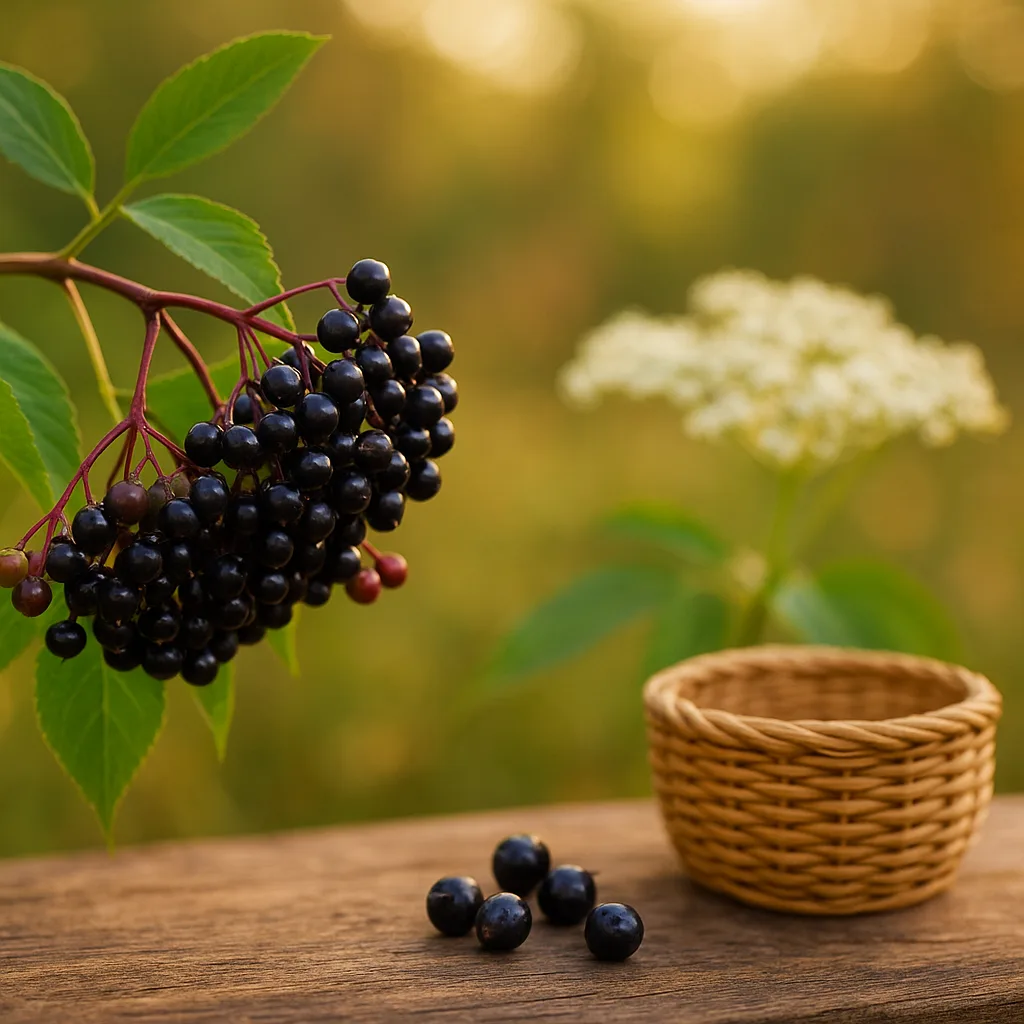
Botanical description: the plant, leaves, flowers and fruit
- Scientific names: Sambucus nigra (European black elder), Sambucus canadensis (American elder), plus other species in the genus Sambucus.
- Growth form: woody shrub or small tree, typically 1–6 meters (3–20 ft) tall depending on species and site.
- Leaves: opposite, pinnate with 5–9 leaflets; each leaflet usually 4–12 cm (1.5–4.5 in) long, serrated margins, lanceolate to elliptic shape.
- Flowers: creamy-white to off-white, 3–7 mm across, in large flat-topped cymes commonly 10–25 cm (4–10 in) across, fragrant and showy in late spring/early summer.
- Fruit (berries): spherical, 4–8 mm (0.16–0.31 in) diameter, turning from green to red and then dark purple/black when ripe; berries often have a faint glaucous (wax) bloom and are borne in dense clusters.
Key visual points
- Clustered fruit: look for many small berries packed into a single, broad, umbrella-like cluster.
- Pinnate leaves with multiple leaflets — unlike blueberries and huckleberries, which have single simple leaves.
- Fragrant white flower clusters precede the fruit and are an excellent seasonal clue.
What the berries themselves look like: color, size, texture
When someone asks "what do elderberries look like," they usually want a vivid, practical description of the fruit. Here’s what to look for:
- Color: ripe berries are deep purple-black or blue-black. Before ripening they pass through green and often a red or maroon phase.
- Size: most elderberries are 4–8 mm in diameter — small, roughly the size of a peppercorn to a small pea.
- Shape: perfectly round to slightly flattened spheres; the fruit is a true berry botanically.
- Texture: glossy or slightly matte skin; when crushed they release dark purple juice. The berries contain several small seeds and a slightly pulpy flesh.
- Cluster characteristics: berries form in broad, compound cymes that are usually 5–25 cm across. The supporting stalks (peduncles) can be reddish or green and are fairly sturdy.
Seasonality and ripening cues
- Flowering: late spring to early summer (May–June in temperate zones).
- Fruit ripening: mid to late summer through early fall (July–September), depending on latitude and elevation.
- Ripeness signals: color change to uniform dark purple-black and a slight softness to the touch. Unripe red or green berries are bitter and more likely toxic.
Habitat and geographic distribution
Elderberries are adaptable and widespread, but they favor certain environments. Understanding habitat helps narrow identification.
For more on this topic, see our guide on Wild & Garden Berries: How to Identify Them.
- Typical habitats: forest edges, hedgerows, riparian zones (stream and river banks), clearings, and disturbed sites such as roadsides.
- Soil and light: prefer moist, well-drained soils but tolerate a range from wet sites to somewhat dry uplands; usually found in full sun to partial shade.
- Geographic range: S. nigra is native to Europe, western Asia and North Africa; S. canadensis and other Sambucus species occur throughout North America. Many species have been widely planted and naturalized beyond their native ranges.
- Hardiness: many elder species grow in USDA zones 3–9 depending on species and cultivar.
Seasonal behavior and lifecycle
- Early spring: leaf buds swell and leaves emerge.
- Late spring–early summer: large white flower clusters bloom and attract pollinators (bees, flies).
- Summer: tiny green fruit develop and gradually change color.
- Late summer–early fall: fruit ripens to deep blue-black; birds feed heavily and disperse seeds.
Common lookalikes: how to tell elderberries apart from other berries
Foragers and photographers often confuse elderberries with other small dark berries. Below are practical, visual comparisons to help you separate them in the field.
You may also find our article on Elderberries: A Field Guide to Identification & Use helpful.
Elderberries vs. Huckleberries
- Botany: huckleberries are usually in the genus Vaccinium or Gaylussacia; elder is Sambucus.
- Leaves: huckleberries have simple, alternate leaves (single leaf per node), typically small and oval; elder has compound pinnate leaves with multiple leaflets.
- Berries: huckleberries often have a smooth crown (calyx) at the top like blueberries and may be slightly larger (4–10 mm); elderberries form in large flat clusters, not single fruits on woody canes.
- Growth form: huckleberries are low shrubs (often 0.2–2 m tall); elder is a larger shrub or small tree up to several meters.
Elderberries vs. Blueberries
- Blueberries (genus Vaccinium) have a distinctive blossom end: a small crown or star-shaped calyx left when picked. Elderberries do not.
- Blueberries grow as individual berries on small stems along woody branches; elderberries are in dense umbrella-like clusters.
- Leaves: blueberries have simple, entire leaves; elder's pinnate, multi-leaflet leaves are a clear difference.
Elderberries vs. Blackberries and Boysenberries
- Blackberries and boysenberries are aggregate fruits made of many drupelets (genus Rubus). They are much larger — typically 1–3 cm (10–30 mm) in length — and conical or elongated, not perfect spheres.
- When picked, true raspberries leave a hollow core; blackberries keep the core. Elderberries are single-seeded berries, not aggregates.
- Growth habit: Rubus species are brambles with canes and often thorns; elder shrubs have woody stems without cane-like growth and no bramble thorns.
Elderberries vs. Black Raspberries
- Black raspberries (Rubus occidentalis) are aggregate and have a matte, dusty bloom; they’re typically 8–15 mm in diameter and conical. Elderberries are smaller, spherical, and sit in clusters rather than singly on canes.
- Stem and leaf differences: raspberries have pinnate leaves too but are on cane systems with stipules; elder's leaves are attached to woody stems of a shrub or tree form.
Practical ID checklist for foragers and photographers
If you’re out in the field and want to confirm whether a plant is elderberry, run down this checklist. Using a visual ID app like Orvik can make this faster by matching your photo to trusted references.
- Look at the leaves: Are they compound with 5–9 leaflets? If yes, elder is possible.
- Examine the fruiting structure: Are the berries in broad, flat clusters (umbrella-like cymes)? If yes, elder is likely.
- Measure one berry: is it about 4–8 mm in diameter? Smaller or larger points away from elder.
- Observe color and ripeness: ripe elderberries are uniformly dark purple-black; mottled red or green means unripe.
- Check plant height and habitat: elderwoods are shrubs/trees often near water or edges.
- Use technology: take a clear close-up of the leaf arrangement and the whole cluster. Apps like Orvik can compare features and suggest IDs based on visual patterns and distribution data.
Tips for photographing for ID
- Take one photo of the whole plant to show growth form and habitat.
- Get close-ups of the leaf underside, leaflet shape, and serration.
- Photograph the flower cluster (if present) and fruit cluster from multiple angles.
- Include a ruler or a coin for scale if you can.
Safety, toxicity and edible uses
Elderberries have a long culinary and medicinal history, but they require caution.
You might also be interested in Photo Guide: Recognize Snakes in the Wild.
- Toxic parts: raw berries (especially unripe green or red ones), leaves, stems, roots and seeds contain cyanogenic glycosides and other compounds (e.g., sambunigrin, lectins) that can cause nausea, vomiting and diarrhea.
- Safe use: cooking (boiling) breaks down the toxins. Elderberry syrups, jams, pies and cooked preserves made from ripe, properly processed berries are commonly consumed.
- Dosage and processing: use established recipes and blanch or simmer berries for at least 10–15 minutes; strain out seeds and solids for syrups. Commercial elderberry products use tested extraction and pasteurization protocols.
- Allergies and reactions: some people may have sensitivity; start with small amounts when trying elder products.
- Children and pets: avoid feeding raw elderberries or plant parts. Seek medical attention if accidental ingestion causes severe symptoms.
First aid and what to do if someone eats raw elderberries
- Remove any remaining berries from the mouth and rinse with water.
- If mild stomach upset occurs, monitor hydration; if symptoms progress (persistent vomiting, difficulty breathing, severe weakness), seek emergency care.
- Bring a photo or the plant sample to a medical provider if possible, or use an ID app like Orvik to confirm the species when describing the exposure.
Using identification tools and apps in the field
Visual ID apps can accelerate correct identification—especially when you’re comparing lookalikes. Orvik is an AI-powered visual identification app that analyzes leaf arrangement, cluster shape and color to suggest likely matches. Here’s how to get the most accurate results:
Related reading: Spotting Toxic Berries in the Wild.
- Photograph the whole plant, a close-up of the leaflets, and the fruit cluster.
- Upload multiple images: apps perform better with varied angles and detail.
- Cross-check: use Orvik’s suggestions along with local range maps and seasonal cues before consuming any wild fruit.
Why human judgment still matters
- A digital ID is a tool, not a substitute for experience; confirm visually with key features (compound leaves, cluster type, plant habit).
- When in doubt, do not consume. Many berries have toxic lookalikes and misidentification can be dangerous.
Conclusion
Elderberries are distinctive when you know what to look for: small (4–8 mm), round, dark purple-black berries in broad flat clusters on shrubs with pinnate leaves. Key cues include the compound leaves, the umbrella-like inflorescence, and the timing of ripe fruit in late summer. Use a methodical checklist and photographic documentation, and consider tools like Orvik to help verify visual matches. Remember that raw elderberries and other plant parts can be toxic; only consume berries that are fully ripe and properly processed.
Frequently Asked Questions
- Are elderberries the same as blackberries?
- No. Blackberries are aggregate fruits on cane-forming brambles (Rubus) and are larger and conical, while elderberries are small, single-seeded berries in flat clusters on Sambucus shrubs.
- Can I eat elderberries straight from the bush?
- Not raw. Unripe and raw elderberries and other plant parts contain toxic compounds. Cook ripe elderberries (boil or simmer) to destroy toxins before eating.
- How can I tell a huckleberry from an elderberry?
- Huckleberries have simple, alternate leaves and individual berries on stems. Elderberries have pinnate leaves with multiple leaflets and berries in dense, umbrella-like clusters.
- When do elderberries ripen?
- Elderberries generally ripen mid-summer to early fall (July–September), depending on latitude and local climate.
- Are all dark wild berries edible when ripe?
- No. Several dark berries are toxic even when ripe. Proper identification and knowledge of species-specific safety are essential.
- How big are elderberry bushes?
- Most elder species grow as shrubs or small trees from about 1 to 6 meters (3–20 feet) tall, though cultivated varieties can be smaller.
- Can apps like Orvik help identify elderberries?
- Yes. Orvik’s AI visual ID can quickly suggest matches using photos of leaves and fruit, but always cross-check identifying features and local range before consuming any wild produce.