
What is acai? A botanical and cultural definition
Acai (pronounced ah-sah-EE) refers to the small, dark purple fruit of several closely related tropical palms in the genus Euterpe, most commonly Euterpe oleracea. In Portuguese it is spelled açaí. The word comes from a Tupí language and means “fruit that cries,” a reference to the dark, oily juice the fruit releases when squeezed.
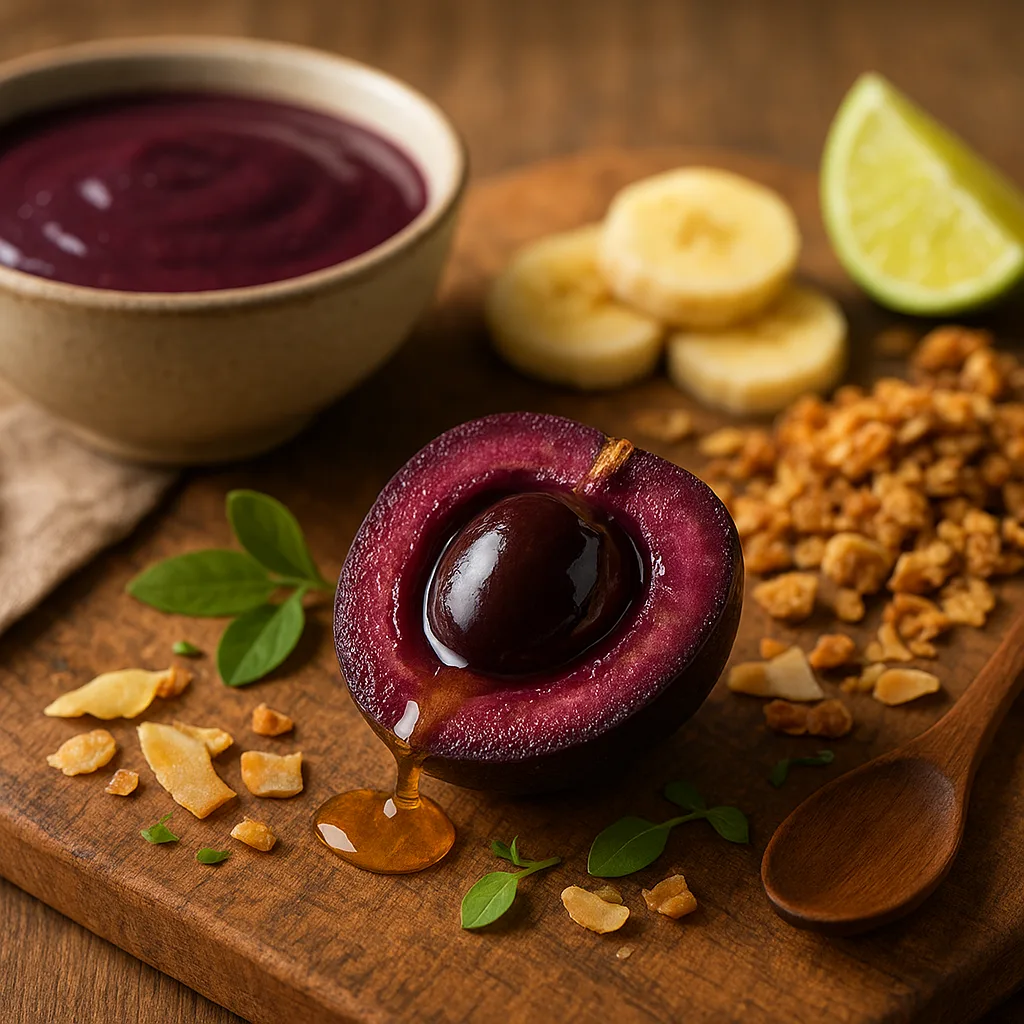
- Scientific name: Euterpe oleracea (most commonly harvested)
- Plant type: tall, slender pinnate-leaf palm, often multi-stemmed
- Fruit type: drupe-like berry with a single large seed
When people ask “what is the acai” or “acai what is it,” they usually mean the purple berry itself or the common commercial forms: frozen pulp, powders, or supplements derived from the pulp. Though frequently called a berry, acai is technically a drupe—an outer fleshy part encasing a single hard seed.
Identification: how to recognize acai fruit and the palm
Recognizing acai in the field requires attention to both the palm and the fruit. Here are the practical visual cues that separate acai from other palms and berries.
Key visual features of the fruit
- Size: small, typically 1–2 cm (10–20 mm) in diameter—about the size of a large blueberry or small grape.
- Color: deep purple to black when ripe; immature fruits are greenish to reddish-purple.
- Shape: nearly spherical (globose) with a smooth, leathery skin.
- Texture: thin exocarp (skin) with a thin layer of purple flesh over a large, hard seed that makes up most of the fruit’s volume.
- Seed: a single smooth, oblong seed (endocarp) that occupies roughly 80–90% of the fruit’s internal space.
Key visual features of the acai palm
- Height: slender trunks reaching approximately 7–20 m tall in the wild, often with several stems arising from the base.
- Leaves: pinnate fronds 2–3 m long with numerous linear leaflets.
- Fruit clusters: large, branching panicles (inflorescences) that hang from the crown and bear hundreds to thousands of berries in compact bunches.
- Trunk diameter: relatively thin, often 6–10 cm, which makes many palms appear tall and graceful rather than massive.
Field tip: acai fruits are borne in dense bunches on long stalks (rachillae) that dangle under the crown. If you see a cluster of small, purple-black berries in this arrangement on a tall palm in wet forest or floodplain, acai is a strong candidate. Smartphone apps like Orvik can help here: photograph the leaf structure, fruit clusters, and trunk together to get accurate visual ID suggestions.
Where acai grows: habitat, distribution, and seasonality
Acai palms are native to the Amazon Basin and adjacent wet tropical lowlands of South America. Their ecology is tightly linked to water.
For more on this topic, see our guide on Blueberries: Nature’s Tiny Powerhouses.
Geographic distribution
- Primary range: northern Brazil (especially Pará and Amazonas states), parts of Peru, Suriname, Guyana, and French Guiana.
- Also cultivated or naturalized: parts of Central America and other tropical regions with similar wet conditions.
Typical habitats
- Seasonally flooded várzea and igapó forests (river floodplains)
- Swampy lowland areas with high groundwater
- Disturbed riverbanks and secondary growth where palms form dense stands
Seasonal behavior and harvest
- Flowering and fruiting cycles vary by locality, but many stands produce ripe berries year-round with peaks in certain months depending on rainfall.
- In managed groves, harvests occur several times per year. Wild stands may be seasonally abundant for a few months.
- Because the fruit is short-lived after ripening, local harvest practices are often highly organized to bring pulp quickly to markets.
Consequence for collectors: acai’s association with floodplain habitats means you’ll often find it where the soil is saturated or seasonally inundated. When using Orvik to identify palms, include habitat photos—wet soil, standing water, or river proximity are strong contextual clues.
Nutritional profile and what acai berry is good for
Acai has attracted global attention for its deep purple flesh and reported health properties. Here’s what the science and nutritional analysis tell us.
Major nutritional components (typical pulp, unsweetened)
- Calories: relatively modest in pure pulp—roughly 60–100 kcal per 100 g, depending on moisture and processing.
- Fats: moderate for a fruit—4–8 g per 100 g, with a mix of monounsaturated (oleic) and saturated (palmitic) fatty acids.
- Carbohydrates and fiber: small to moderate carbohydrate load with 2–4 g fiber per 100 g.
- Protein: low—around 1–2 g per 100 g.
- Phytonutrients: rich in anthocyanins (pigments giving the purple color), other polyphenols, and tocopherols (vitamin E compounds).
Commonly cited benefits and evidence
- Antioxidant activity: acai pulp contains anthocyanins and other polyphenols that show antioxidant activity in laboratory assays.
- Heart-healthy fats: the monounsaturated fats in acai are similar to those in olive oil and may support lipid profiles when replacing saturated fats.
- Fiber and digestion: the pulp contributes dietary fiber, which supports regularity.
- Energy and nutrient density: as a concentrated tropical fruit pulp, acai offers a compact source of energy and lipophilic nutrients.
Important nuance: many of the strongest clinical claims (e.g., “acai cures X” or dramatic weight-loss effects) are unsupported by robust human trials. The berry is nutrient-rich compared with some fruits, but it is not a miracle food. How acai is processed changes its nutrition drastically—bowls topped with syrup and granola can be high in added sugars and calories.
Safety and toxicity warnings
- Commercial products: many acai bowls, juices, and smoothies contain added sugars and fats; check ingredient lists.
- Allergies: rare, but possible—people with known tree-fruit or palm allergies should exercise caution.
- Supplements: extracts and concentrated capsules are less regulated; potency labels may vary and interactions with medications are not well studied. Consult a healthcare professional if you take blood thinners or have chronic conditions.
- Wild fruit consumption: always consider contamination or spoilage—acai pulp ferments quickly in heat, so raw wild fruit eaten without proper preparation can cause stomach upset.
Common forms, culinary uses, and how to buy acai
Most people encounter acai not as fresh berries (which spoil fast and are unevenly distributed) but as several processed formats.
You may also find our article on Miracle Berries: Nature’s Sweet Trick helpful.
Typical commercial forms
- Frozen puree/pulp: the most common retail form—pureed acai frozen immediately after processing to protect flavor and nutrients.
- Freeze-dried powder: reconstitutable but concentrated; preserves flavor and color well.
- Juices and blends: often mixed with other fruit juices and sometimes sweetened.
- Supplements: capsules or extracts, often standardized to polyphenol content.
- Fresh fruit: rarely available outside the Amazon due to short shelf life.
How to use acai
- Blend frozen pulp with a splash of water or juice to make smoothies or the classic acai bowl base.
- Sprinkle reconstituted powder into yogurt, oatmeal, or shakes for color and antioxidants.
- Use frozen pulp in sauces or sorbets that benefit from rich color and flavor.
- Beware of added sugar—prefer unsweetened or lightly sweetened products if you want the pure fruit profile.
Shopping tip: labels that list other fruit juices or sugar high on the ingredient list usually indicate a diluted product. If the label reads “acai puree (Euterpe oleracea) — 100%” you are likely buying unsweetened pulp. Orvik’s image and label-reading features can help when you’re in a store and want a quick product check.
Comparison: acai vs blueberries and other purple berries
Because acai is often marketed as a “superberry,” it is useful to compare it with more familiar berries such as the blueberry.
Acai vs Blueberry — quick comparison
- Botany: acai is a palm fruit (genus Euterpe); blueberries are bushes in the genus Vaccinium.
- Size & structure: acai ~10–20 mm diameter with a single large seed; blueberry 5–15 mm with many small seeds embedded in flesh.
- Fat content: acai contains measurable plant fats (4–8 g/100 g); blueberries are very low in fat.
- Flavor: acai is richer, earthier, and slightly astringent; blueberries are sweeter and tangier.
- Availability: blueberries are globally available fresh; acai is usually available frozen or processed outside Amazonia.
Other comparisons (acai vs elderberry, goji)
- Elderberry: more tart and used historically for syrups; different species and phytochemical profile.
- Goji: East Asian shrub fruit with very different taste and micronutrient composition; often sold dried.
Field ID tip: if the fruit grows in a bunch on a tall palm and has a large single seed, it’s acai, not a blueberry or goji. Use Orvik to compare your photo against verified herbarium and field images to avoid misidentification.
Looking beyond this category? Check out Dolphin Diets: What They Eat and Why.
Foraging, cultivation, and conservation
Acai has moved from a local staple to a global commodity. That shift has ecological and social dimensions worth knowing.
Related reading: Goji Berries: A Field Guide to the Red Superfruit.
Foraging and wild harvest tips
- Only harvest where you have permission—many stands are on private or communal land.
- Harvest ripe fruit: look for deep purple-black color; unripe fruit will be green or reddish.
- Take care around tall palms—fruits are often high in the crown and require climbing skills or long poles.
- Process quickly: once picked, fruit can ferment within hours in hot conditions, so pulp should be processed or chilled immediately.
Cultivation and sustainable practices
- Many producers cultivate acai in managed plantations or extract wild-harvested fruit; sustainable harvests rely on leaving enough fruit for wildlife and regeneration.
- Agroforestry models integrate acai palms with other crops to support biodiversity and local livelihoods.
- Certification schemes and fair-trade channels can help support sustainable practices, but labeling varies—investigate producers if sustainability matters to you.
Conservation notes
- Overharvesting, habitat conversion, and unsustainable stand management can reduce genetic diversity and disrupt floodplain ecosystems.
- Responsible sourcing—supporting producers who maintain mixed-species stands—helps preserve floodplain ecology.
Local knowledge is invaluable for sustainable acai use. When in doubt, consult local foragers or use tools like Orvik to document and share observations that can support community-based management.
Practical tips: buying, preparing, and storing acai
Whether you’re buying frozen pulp or trying an acai bowl, these practical tips will improve outcomes and help you judge authenticity.
Buying tips
- Choose unsweetened frozen puree if you want the pure fruit profile.
- Check ingredient lists for added sugars, juices, or fillers; many “acai bowls” are heavily sweetened.
- Prefer reputable brands that state origin (e.g., Amazon region of Brazil) and processing methods.
Preparation tips
- Blend frozen acai pulp with a small amount of liquid—apple juice, coconut water, or milk—just enough to make a thick, spoonable texture.
- Top with fresh fruit, nuts, seeds, and a modest sprinkle of granola; avoid over-sugaring.
- Freeze-dried powder is handy for baking or smoothies—use conservative amounts since it concentrates flavor and color.
Storage
- Frozen pulp: keep at or below -18 °C (0 °F) until use; thaw in the refrigerator and use quickly.
- Powder: store in a cool, dry place, sealed from moisture and light.
Conclusion
Acai is a distinctive Amazonian palm fruit—deep purple, rich in anthocyanins and healthy fats, and most commonly encountered as frozen pulp or powder outside its native range. It is not a blueberry, though it shares a dark color and antioxidant reputation. Acai offers nutritional benefits when consumed in its pure form, but many commercial preparations add sugars and calories that cloud those benefits. Foragers and curious eaters should pay attention to identification details—fruit size, single large seed, and the tall palm habit—and to habitat cues in wet floodplain forests. Tools like Orvik can help confirm identification and label-reading when shopping.
Frequently Asked Questions
- Is acai a berry or a drupe?
- Acai is botanically a drupe—an outer fleshy layer surrounding a single large seed—but it’s commonly called a berry in culinary contexts.
- What is acai good for?
- Acai is rich in anthocyanins and healthy fats, offers fiber, and provides antioxidant activity in lab tests. It can support a nutritious diet but is not a proven cure for diseases.
- How do I identify acai in the wild?
- Look for small (1–2 cm), deep purple-black fruits in dense clusters on tall, slender palms with pinnate fronds; each fruit contains a single large seed. Photograph the plant and habitat—tools like Orvik can help confirm the ID.
- Are acai bowls healthy?
- They can be, if made with unsweetened acai pulp and light toppings. Many commercial bowls are high in added sugars and calories, so check ingredients and portion sizes.
- Can acai cause allergic reactions or interact with medications?
- Allergic reactions are rare but possible. Concentrated supplements may interact with medications or be inconsistent in potency; consult a healthcare professional if you’re on medication or have allergies.
- How should I store acai products?
- Frozen pulp should be kept at or below -18 °C (0 °F) and used quickly after thawing. Freeze-dried powder stores best in a cool, dry place sealed from light and moisture.
- Is acai the same as a blueberry?
- No. Acai is a palm fruit (drupe) with higher fat content and a single large seed; blueberries are shrubs in the genus Vaccinium with different texture, taste, and nutrient profiles.