
When you find a small hard-bodied insect on your windowsill or a startling iridescent beetle on a tree, you want answers fast: what species is it, is it harmful, and how should you respond? Someone typing "beetle identifier" into a search bar is looking for a quick, reliable visual ID and practical next steps. This field guide pairs naturalist expertise with modern tools like Orvik, an AI-powered visual identification app, to give clear, actionable beetle identification tips.
Why people search for a beetle identifier
Search intent drives what you need from a beetle identifier. Most queries fall into a few categories:
- Immediate safety concerns: Is it venomous or toxic?
- Home pest identification: Is it a wood borer, carpet pest, or pantry invader?
- Curiosity and citizen science: What species is this and where does it occur?
- Gardening & forestry impacts: Will it defoliate trees or feed on crops?
Understanding the reason behind a query helps direct identification: a homeowner needs different details (behavior, lifecycle, control) than a naturalist (taxonomy, distribution, field marks). Orvik helps bridge that gap by using photos to match field marks to species-level candidates and offering habitat and range data.
Beetle anatomy and key visual cues for identification
To identify beetles reliably, learn the consistent anatomical features and how they vary. Most beetles belong to the order Coleoptera and share common traits.
Anatomy to inspect
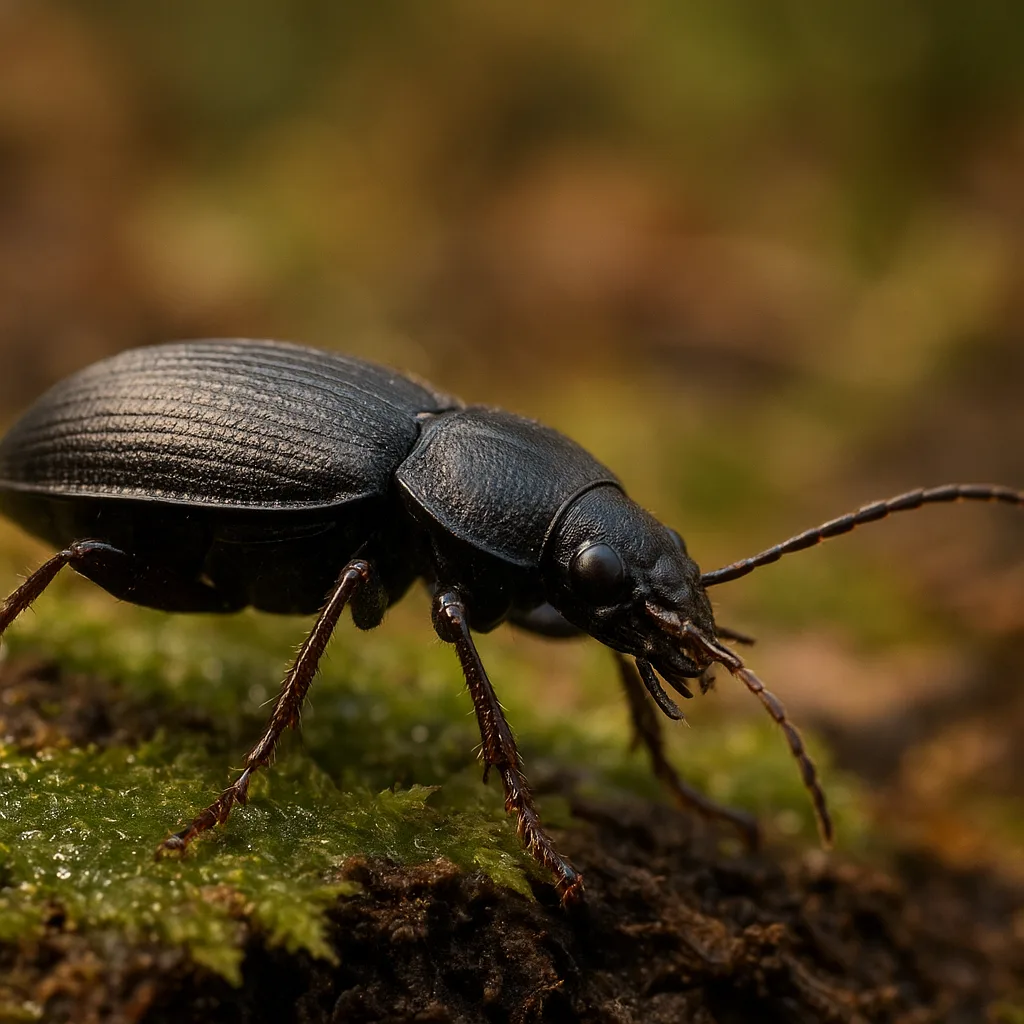
- Elytra: Hardened wing covers. Note color, texture (smooth, punctate, ridged), and whether they meet in a straight suture down the back.
- Pronotum: Plate behind the head—shape and any spines or collars are diagnostic.
- Antennae: Filiform, clubbed, serrate, lamellate (as in scarabs); length relative to body matters.
- Legs and tarsi: Number of apparent segments, spines, and whether legs are fossorial (digging) as in scarab beetles.
- Size: Measure length in millimeters from head to elytral tip.
Color, texture, and pattern
- Metallic/iridescent: Many Buprestidae (jewel beetles) and some Scarabaeidae show bright greens, blues, bronzes—note if the iridescence is structural (changes with angle) or pigment-based.
- Matte vs glossy: Ground beetles (Carabidae) are often matte, while many scarabs are glossy.
- Stripes and spots: Elytral stripes (e.g., certain longhorns) or round spots (lady beetles) are often species-level markers.
Size ranges to remember
- Tiny beetles: 1–3 mm (e.g., some stored-product pests, feather-wing beetles)
- Small beetles: 4–10 mm (e.g., carpet beetles, many rove beetles)
- Medium beetles: 11–25 mm (e.g., lady beetles, many leaf beetles)
- Large beetles: 26–100+ mm (e.g., stag beetles, rhinoceros beetles)
Recording precise measurements (use a ruler or calipers) dramatically improves identification accuracy. Take multiple photos: dorsal, lateral, close-up of antennae and legs, and habitat context.
House beetles identification: common indoor species and a practical chart
Homes harbor a predictable set of beetles. Some are harmless visitors; others damage fabrics, stored food, or structures. Below is a practical house beetle identification chart presented in descriptive form to help you match field marks quickly.
For more on this topic, see our guide on Spotting Bed Bugs: A Clear Visual Guide.
- Carpet beetles (Anthrenus spp., Attagenus spp.)
- Size: 2–5 mm
- Visual: Round-oval, mottled with brown, white, yellow scales; larvae are fuzzy "woolly bears" 3–5 mm long
- Habitat: Indoors on carpets, wool, stored fabrics, under baseboards
- Seasonality: Adults active spring–summer; larvae persist year-round in undisturbed areas
- Powderpost beetles (Family: Bostrichidae, Lyctidae)
- Size: 3–7 mm
- Visual: Elongate, cylindrical, reddish-brown to dark brown; exit holes 1–3 mm diameter
- Habitat: Dry hardwoods—flooring, furniture
- Damage signs: Fine powdery frass with shiny wood granules
- Spider beetles (Ptinidae family)
- Size: 3–4 mm
- Visual: Humped, spider-like silhouette, glossy brown to black
- Habitat: Stored products—grains, dried foods, pantry intersections
- Mealworm/Flour beetles (Tribolium castaneum)
- Size: 3–4 mm
- Visual: Reddish-brown, elongated
- Habitat: Flour, cereals, pet food
- Wood-boring beetles (Cerambycidae, Anobiidae)
- Size: varies widely, 5–50 mm
- Visual: Longhorns have very long antennae; death-watch beetles (Anobiidae) small with round holes
- Damage signs: Larger exit holes (3–10 mm), frass, structural weakening
For an at-a-glance house beetle identification chart, record: size (mm), color/pattern, larval form (if observed), habitat inside house, and any damage. That succinct dataset is exactly what image-based tools like Orvik use to produce matched suggestions.
Green beetle identification: species often mistaken for one another
"Green beetle" is a common search. Several unrelated beetles are green—some are harmless, others are pests.
Common green beetles and ID cues
- Emerald ash borer (Agrilus planipennis)
- Size: 8.5–14 mm long, 3–3.4 mm wide
- Color: Metallic emerald green with a purple or copper-brown underside
- Distinctive: Elongate, flattened body; larvae are wood-boring and lethal to ash trees
- Distribution: Native to Asia; invasive in North America and Europe (specific counties/states documented)
- Green June beetle (Cotinis nitida)
- Size: 20–30 mm
- Color: Metallic green head and pronotum with bronze elytra and yellowish margin
- Behavior: Strong flier, often seen on fruit and flowers in mid–late summer
- Rose chafer (Cetonia aurata)
- Size: 15–20 mm
- Color: Iridescent green with subtle gold flecking
- Habitat: Europe; feeds on flowers, especially roses
How to tell green beetles apart
- Measure length in millimeters—size differences are often decisive (e.g., emerald ash borer 8–14 mm vs green June beetle 20–30 mm).
- Look at body shape—flattened and elongate suggests Buprestidae (jewel beetles); stout and rounded suggests Scarabaeidae.
- Check habitat—borers are associated with specific host trees (ash for emerald ash borer); flower-feeding scarabs appear on blossoms.
When in doubt, photograph the beetle from multiple angles and run the images through a visual tool like Orvik, which cross-references visual features with range maps and host associations to narrow possibilities.
Field workflow: how to use a beetle identifier effectively (photo and data best practices)
Whether using Orvik or any visual ID tool, follow a consistent workflow to maximize accurate results.
You may also find our article on Identify the Bug in Your Home or Garden helpful.
- Capture multiple photos:
- Dorsal view (top), lateral (side), close-up of antennae and legs, close-up of pronotum/elytra texture.
- Include an object for scale (a 10 mm ruler or a coin) to give size context.
- Note habitat and behavior:
- Location (GPS or nearest town), substrate (on leaf, wood, inside house), time of day, and season.
- Measure and describe:
- Estimate length in millimeters and note colors and textures in plain language plus close details (e.g., "elytra with fine punctures, three longitudinal ridges").
- Run visual ID and cross-check:
- Submit photos to Orvik or a trusted field guide; review suggested matches, paying attention to confidence scores and range matches.
- Confirm with secondary clues:
- Host plant or material, frass characteristics, and life stage (larva vs adult) help confirm or rule out candidates.
For integrative ID, combine image recognition with simple natural history: does the beetle's host plant grow nearby? Do local range maps overlap? Orvik uses both visual and contextual data to prioritize likely species.
Comparison: beetle vs true bug, and similar-looking species
People often confuse beetles with "bugs" (hemipterans) or with other arthropods. Clear differences help avoid misidentification.
Beetle (Coleoptera) vs True Bug (Hemiptera)
- Elytra: Beetles have hardened elytra covering the hind wings. True bugs have forewings that are partly leathery and partly membranous (hemelytra).
- Mouthparts: Beetles chew with mandibles. True bugs have piercing-sucking rostra for fluids.
- Antennae: Often varied in both groups, but long, bead-like antennae with a piercing mouthpart indicate a bug, not a beetle.
Carpet beetle (Anthrenus) vs Varied Clover Seed Beetles
- Carpet beetle: Small (2–4 mm), rounded, scaled with mottled patterns; larvae are distinct fuzzy feeders on proteins.
- Clover seed beetle: More elongate, often less scaled, associated with legumes in fields rather than indoor fabrics.
Comparison charts—photographs side-by-side with annotated features—are exceptionally useful. Orvik and other visual ID platforms often present these comparisons when species look similar.
You might also be interested in AI Field Guide: Identify Birds Fast.
Safety, toxicity, and control recommendations
Most beetles are harmless to humans, but a few require caution or prompt management.
- Blister beetles (Family Meloidae): Produce cantharidin, a topical irritant. Do not crush these on skin or pets—wash area if contact occurs and seek medical advice for severe reactions.
- Wood-boring beetles: Structural pests (e.g., powderpost beetles, Asian longhorned beetle Anoplophora glabripennis) can damage timber. If you suspect active infestation, document exit holes and frass and contact a licensed pest management professional or your local extension office.
- Pest species in stored products: Remove contaminated food, deep-clean shelves, and store new purchases in sealed containers. For persistent infestations, consider pheromone traps and professional remediation.
General safety tips:
Related reading: Ladybug Diets: A Field Guide to What They Eat.
- Handle unknown beetles with gloves if you must touch them.
- Keep pets and children away from suspect beetles (e.g., blister beetles).
- Document infestations with photos and samples (double-bag dead specimens) before disposal—this helps experts confirm the species.
Where to go next: resources, citizen science, and expert help
After a species is tentatively identified with a tool like Orvik, you may want confirmation or further action.
- Local extension services: County or state extension offices can confirm pest status and recommend control steps (often free verification).
- Museums and universities: Entomology departments accept photo or specimen identifications and can provide authoritative verification.
- Citizen science platforms: iNaturalist, BugGuide, and regional biodiversity portals archive observations and improve range maps when you upload verified sightings.
- Orvik: Use Orvik for rapid, image-based candidate lists and to export data for expert review—its AI narrows down possibilities using both visual and geographic cues.
Combining AI tools with human experts provides the best outcomes: tools like Orvik prioritize candidates at scale, and local specialists provide final verification and management recommendations.
Conclusion
When someone searches for a "beetle identifier" they want a fast, reliable match and clear next steps. Accurate identification rests on careful photos (multiple angles and scale), precise notes on habitat and size, and an understanding of key features: elytra, pronotum, antennae, and patterns. Use visual tools like Orvik to get rapid candidate IDs, then confirm with local experts, especially for potential pests or toxic species. With a combination of fieldcraft and technology, you can identify most beetles accurately and decide whether to tolerate, manage, or report them.
Frequently Asked Questions
- What is the fastest way to identify a beetle?
- Take clear photos from multiple angles (dorsal, lateral, close-ups of antennae and legs), include a scale, note habitat and size in millimeters, and use a visual ID app like Orvik to get candidate matches before confirming with local experts.
- How can I tell if a beetle is harming my house?
- Look for signs: frass (powdery or granular wood dust), holes in wood or fabrics, larvae (e.g., fuzzy carpet beetle larvae), and repeated sightings. Document with photos and contact extension services if structural damage is suspected.
- Are any beetles poisonous to touch?
- Most beetles are not poisonous, but blister beetles (Meloidae) secrete cantharidin, which causes skin blisters. Avoid crushing unknown beetles on skin and wash contact areas with soap and water.
- What’s the difference between a green June beetle and emerald ash borer?
- Emerald ash borer (Agrilus planipennis) is smaller (8.5–14 mm), elongate and flattened, and attacks ash trees, while green June beetles (Cotinis nitida) are larger (20–30 mm), more robust, and feed on fruits and flowers.
- Can I use photos alone to identify beetles?
- Photos are often sufficient for genus-level identification and sometimes species-level if quality is high and key features are visible. Including habitat, size, and date increases accuracy considerably.
- How do I tell a beetle from a true bug?
- Beetles have hardened elytra covering the hind wings and chewing mouthparts; true bugs have hemelytra (partly leathery forewings) and piercing-sucking mouthparts (a beak-like rostrum).
- Is there a straightforward house beetle identification chart?
- Yes—record size, color/pattern, larval form, indoor location, and any damage to quickly match common house beetles (carpet beetles, powderpost beetles, flour beetles). Tools like Orvik can convert these data to likely species.