
Identification overview: what to look for
The brown recluse (scientific name Loxosceles reclusa) is a small, shy spider best known for a distinctive dorsal marking and an unusual eye arrangement. If you searched "how to identify a spider" or specifically "brown recluse spider how to identify," you want rapid, reliable visual cues and clear next steps. Below are the core field marks professionals use.
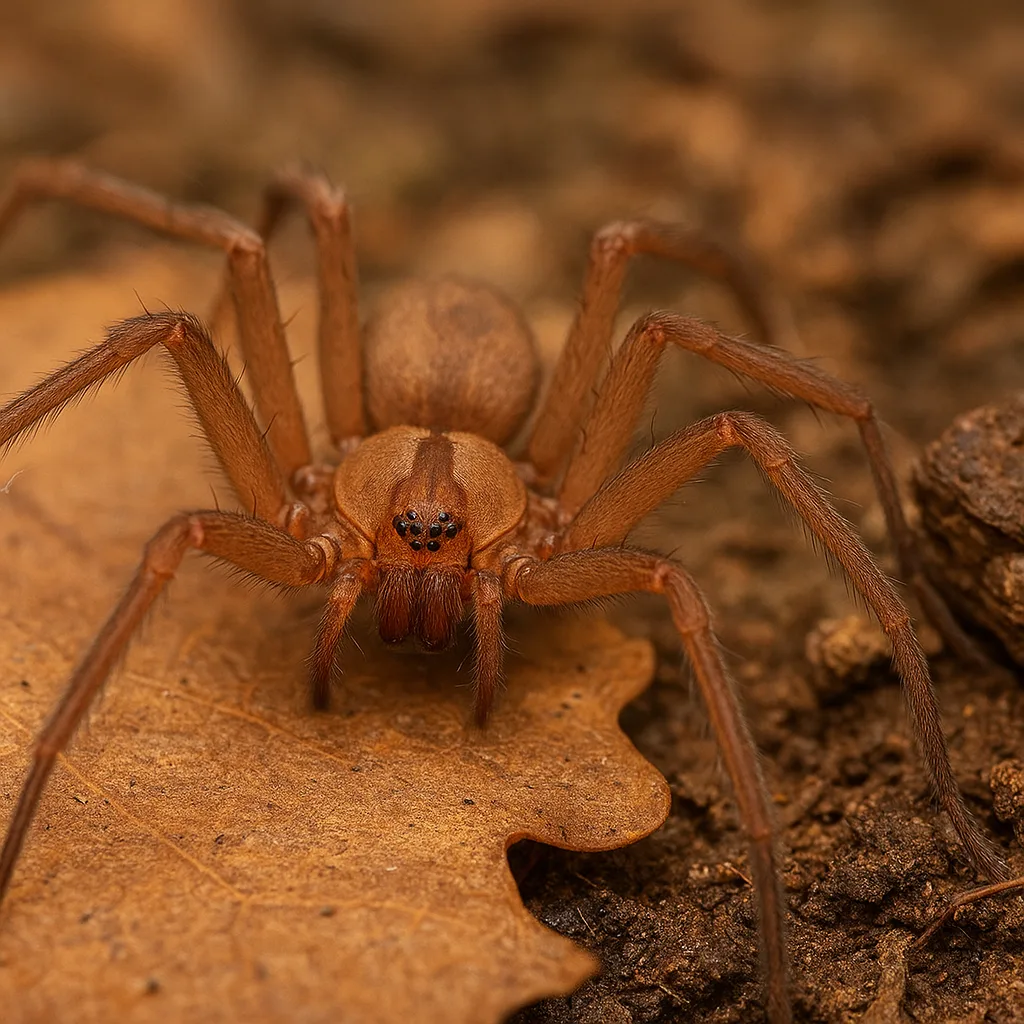
- Size: Body length typically 6–20 mm (0.24–0.79 in); legspan often 20–35 mm.
- Color: Uniformly light to dark tan or brown; no bright metallic colors.
- Violin (fiddle) mark: A darker, often subtle violin-shaped mark on the cephalothorax (thoracic shield).
- Eye pattern: Six eyes arranged in three dyads (two, two, two). This is unusual—most spiders have eight eyes.
- Legs and texture: Legs are longish but not spiny, with fine short hairs and a velvety appearance; legs and abdomen usually uniformly colored.
- Web: Sparse, irregular retreat webs in undisturbed places, not large orb webs.
Step-by-step visual ID guide
Follow these practical steps if you want to know "how do i identify a spider" in your house or yard. Use a magnifier or smartphone macro lens; never handle an unknown spider.
1. Measure and observe at a safe distance
- Estimate body length (6–20 mm) and overall legspan (up to ~35 mm).
- Note overall color: brown recluses are uniformly tan to medium brown, sometimes described as "violin brown."
- Record habitat: inside boxes, closets, shoes, attics, woodpiles, or under eaves.
2. Look for the violin (fiddle) marking
The violin-shaped mark is on the cephalothorax (the joint head-thorax piece). It is often darker than the surrounding cuticle and points backward toward the abdomen. Important cautions:
- The violin is a helpful clue but not definitive: some other spiders have similar patterns or faded markings.
- Do not rely solely on the violin shape; combine with eye pattern and leg features.
3. Verify the unique six-eye pattern
This is the single most reliable field character: brown recluses have six eyes in three pairs (2-2-2) with small spacing between pairs. Most common spiders have eight eyes (4-4 or other arrangements). To check this:
For more on this topic, see our guide on How Dangerous Is the Brown Recluse? Clear Answers.
- Use a 10–20× hand lens or a macro photograph taken perpendicular to the spider's face.
- If the spider clearly shows eight eyes, it cannot be a brown recluse.
4. Check leg and abdomen details
- Legs: no obvious spines; legs are covered with fine hairs giving a velvety look.
- Abdomen: typically plain, without dramatic banding or a glossy sheen seen in some false widows or black widows.
- Web and posture: brown recluses hide in retreats and often sit with legs tucked; they do not spin orb-shaped webs.
5. Photographing for assessment
- Use natural light or a flash; get a dorsal shot showing the cephalothorax and violin, and a frontal/oblique shot to document the eye pattern.
- Include a scale reference (coin, ruler) to show size.
- Upload clear images to an ID tool like Orvik or consult an arachnologist—good photos greatly improve accuracy.
Habitat, geographic distribution, and seasonal behavior
Knowing where brown recluses are native and when they are most active helps answer "how do you identify a black widow spider" versus a brown recluse—location and timing are essential context.
Geographic range
- Native to the central and southern United States. Core states include: Missouri, Arkansas, Oklahoma, Kansas, Texas, Louisiana, Mississippi, Tennessee, Kentucky, and parts of Illinois and Indiana.
- Isolated specimens are sometimes transported by humans (in boxes, furniture), so reports outside the native range are often introductions and should be verified.
Preferred habitats
- Indoors: undisturbed storage boxes, closets, shoes, behind baseboards, attics, and crawlspaces.
- Outdoors: woodpiles, under rocks, in sheds, under peeling bark, and in dry sheltered crevices.
Seasonal behavior
- More active in warm months (spring–fall) when males wander to find mates—this is when encounters rise.
- In winter, they retreat to sheltered indoor spaces and are less frequently seen.
Common lookalikes — X vs Y: How to tell them apart
Many searches such as "how to identify a false widow spider" or "how to id a spider" stem from misidentification. Below are the most common lookalikes and distinguishing features.
You may also find our article on Spotting Bed Bugs: A Clear Visual Guide helpful.
Brown recluse vs False widow (Steatoda species)
- False widow: rounder, plumper abdomen; shiny, often with cream or pale markings; eight eyes (not six).
- Brown recluse: longer, more flattened cephalothorax with violin; six eyes; legs more uniformly colored and velvety.
- Behavior: Steatoda often builds tangled webs near human structures; recluses prefer tight retreats.
Brown recluse vs Black widow (Latrodectus spp.)
- Black widow: glossy jet-black or dark brown, distinct red hourglass on the ventral abdomen in adult females, very round abdomen, eight eyes in two rows.
- Brown recluse: brown/tan, no vivid hourglass, violin mark on cephalothorax, six eyes.
Brown recluse vs Yellow sac spider (Cheiracanthium spp.)
- Yellow sac: pale yellow to greenish, slender body, different head/cephalothorax shape, eight eyes; sometimes implicated in bites but venom produces different clinical signs.
- Brown recluse: darker violin shading and six eyes.
Brown recluse vs Wolf spiders and others
- Wolf spiders (Lycosidae): typically more robust, patterned abdomens, eight eyes with two large anterior eyes, active hunters seen in the open.
- Cellar spiders (Pholcidae): very long legs, small bodies, eight eyes, distinct web structure.
Safety, venom effects, and what to do if bitten
People often search "how do you identify a black widow spider" because of concerns about dangerous bites. Brown recluse bites are medically significant in a minority of cases. Accurate identification helps guide treatment.
Venom and typical symptoms
- Venom contains sphingomyelinase D, which can cause localized tissue damage (necrosis) in some patients.
- Early symptoms: pain, redness, and swelling at the bite site within minutes to hours; a blister may form.
- Severe reactions: expanding necrotic ulceration, systemic symptoms (fever, malaise, nausea) occur in a minority of cases—most bites are mild.
Immediate first aid
- Move to safety; do not attempt to handle the spider with bare hands.
- Wash the wound with soap and water; apply a clean dressing.
- Take a clear photo of the spider if it can be safely captured or photographed—this aids identification by Orvik or medical staff.
- Apply cold packs to reduce swelling; keep the affected limb immobilized and at rest.
When to seek medical care
- Any progressive local tissue damage, worsening pain, or signs of systemic illness (fever, vomiting, faintness) — seek urgent medical evaluation.
- If possible, bring or photograph the spider to help clinicians identify it. Many skin lesions are misattributed to spider bites—accurate ID matters.
How to confirm an identification (useful tools and expert steps)
People asking "how can i identify a spider" or "how do i identify a spider" want confidence. Use a combination of photographs, key features, and expert resources.
Looking beyond this category? Check out Identify Plants Fast: Expert Guide to Free Apps.
Related reading: Spotting Stink Bugs: Key Identification Traits.
- Photograph key angles: dorsal (violin), frontal (eye pattern), lateral (leg and abdomen outline), and habitat context with a scale reference.
- Use a macro lens or phone close-up: 10–20× magnification helps reveal the six-eye pattern.
- Upload photos to a visual ID tool like Orvik for quick, AI-assisted identifications that flag likely matches and show confidence levels.
- For uncertain or medically important cases, consult a local extension office, university arachnologist, or pest management professional who can examine a specimen under a stereomicroscope.
When using Orvik, provide multiple clear images and note the location where the spider was found—this contextual data improves the app's accuracy. Orvik is useful for initial screening but should be paired with expert review for bite-related concerns.
Prevention and control: keeping brown recluses out of your home
Practical prevention reduces encounters and bite risk. If you are trying to "how to id a spider" because you found one inside, follow these containment and exclusion steps.
- Declutter storage areas: boxes, newspapers, and old clothes provide ideal retreats.
- Store shoes and clothing off the floor and shake items before wearing if they’ve been in storage.
- Seal cracks, gaps, and vents around foundations, doors, and windows; use weatherstripping and door sweeps.
- Keep woodpiles and debris away from the house; maintain a tidy yard and remove hiding places.
- Use sticky traps in closets and under furniture to monitor activity; inspect traps weekly.
- If infestation is suspected, consult a licensed pest control operator—chemical control requires targeted application in retreats.
Frequently Asked Questions
- What are the key visual features of a brown recluse?
- Key features are a 6–20 mm body, uniform tan to brown color, a darker violin-shaped mark on the cephalothorax, six eyes in three pairs (2-2-2), and legs without prominent spines.
- Can the violin mark alone identify a brown recluse?
- No. The violin is a helpful clue but not definitive. Confirm with the six-eye pattern, leg and abdomen characteristics, and habitat context.
- How do I safely photograph a suspected brown recluse?
- Do not touch the spider. Use a macro or close-up photo from a safe distance, include a coin or ruler for scale, and capture dorsal and frontal angles to show the violin and eye pattern.
- Are brown recluse bites always necrotic?
- No. While some bites cause necrosis due to sphingomyelinase D venom, many bites are mild. Severe necrosis and systemic reactions are relatively uncommon.
- Where are brown recluses commonly found geographically?
- They are native to the central and southern United States (e.g., Missouri, Arkansas, Oklahoma, Kansas, Texas, Louisiana, Tennessee) but can be transported elsewhere in belongings.
- How can Orvik help me identify a spider?
- Orvik uses AI-assisted visual identification—uploading multiple clear photos with scale and location data can provide a likely match and confidence level, which you can then confirm with experts if needed.