
How bug id by photo actually works
When someone searches for "bug id by photo" they want a fast, reliable answer: what is this organism, is it dangerous, and how should I treat it? Modern visual identification combines computer vision, curated reference databases, and human curation. Apps such as Orvik use machine learning models trained on millions of labeled images to match your upload to likely species or higher taxonomic groups.
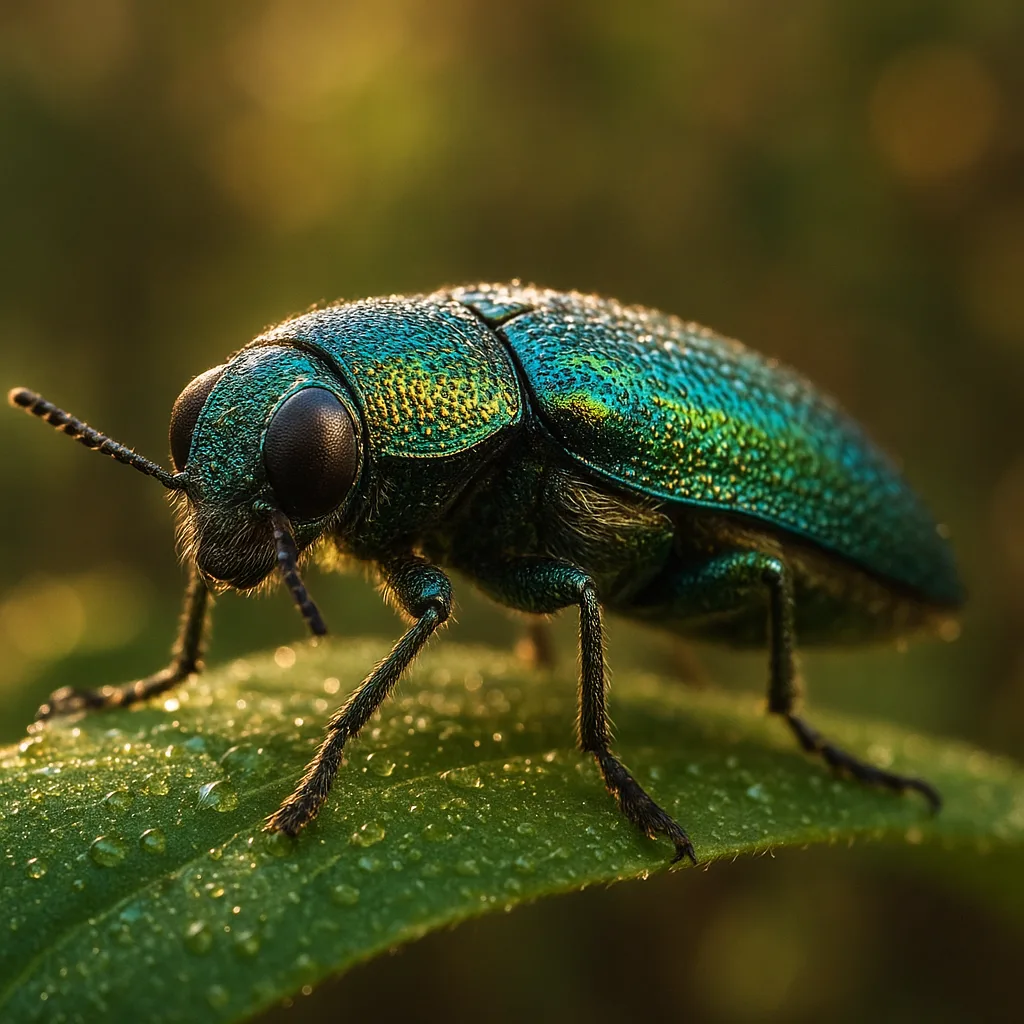
Key components of a photo-based ID system
- Image preprocessing — algorithms normalize lighting, crop the subject, and enhance details (edge detection, contrast).
- Feature extraction — the model measures shapes, color distributions, texture patterns, and key landmarks such as wing veins or antennal segments.
- Classification — deep neural networks (convolutional nets) compare extracted features to a database of labeled specimens and return ranked suggestions with confidence scores (e.g., 92% confidence).
- Contextual data — location (GPS), date, and habitat narrow down possibilities; for example Danaus plexippus (monarch) in northeastern USA is far more likely in August than a tropical species.
- Human verification — expert entomologists review low-confidence or medically relevant IDs to reduce false positives.
Orvik integrates these steps and shows probable matches along with diagnostic traits and similar-looking species to help non-experts decide.
How to take photos that give accurate IDs
Quality of the input photo is the single most important factor. A blurry or distant shot often yields only a family-level match, while a sharp, well-lit multi-angle set can produce species-level ID.
Practical photography tips
- Get close but don’t harm the insect: use a macro lens or the phone's macro mode to capture details. Aim for a subject size of roughly 1,000–3,000 pixels across in the cropped image.
- Take multiple angles: dorsal (top), lateral (side), head-on, and close-ups of diagnostic parts (antennae, legs, wing venation, mouthparts).
- Include scale: place a ruler, coin (US quarter ≈ 24.3 mm) or a 1 cm mark near the specimen to show size.
- Use natural diffuse light: morning or late afternoon works best. Avoid harsh shadows and direct flash that washes out color.
- Stabilize the camera: use a tripod or rest your elbows to avoid motion blur; shutter speeds of 1/200 s or faster are ideal for active insects.
- Record location and date: GPS metadata improves accuracy dramatically by excluding species outside your region or season.
- Tip: For nocturnal species, take a daytime photo of a captured specimen in a ventilated container rather than using strong flash at night.
- Apps like Orvik accept photos from phones, digital cameras, and even screenshots from Ring doorbell captures — useful when the insect is on a porch light.
Visual cues for common insect groups (with measurements and species examples)
Knowing the diagnostic visual cues helps you interpret identification suggestions. Below are common groups with measurable cues and representative species.
For more on this topic, see our guide on Identify Caterpillars by Photo: Expert Field Guide.
Beetles (Order Coleoptera)
- Body shape: hardened forewings (elytra) meet in a straight line down the back.
- Size range: tiny 1.5 mm (Cleridae larvae) to 120 mm (Goliathus spp.).
- Color/pattern: metallic greens (Chrysochroa spp.), spots (Coccinellidae), longitudinal stripes (Cerambycidae).
- Example: Asian longhorned beetle (Anoplophora glabripennis) — 20–35 mm, glossy black with 10–20 irregular white spots, long banded antennae equal to 1.5× body length.
Bees and wasps (Orders Hymenoptera)
- Bees: stout, branched (plumose) hairs for pollen; antennae typically 12–13 segments in females; body 4–20 mm for many species (honey bee Apis mellifera ≈ 12–15 mm).
- Wasps: smooth bodies, narrower "wasp waist" (petiole). Examples: paper wasp (Polistes spp.) 15–25 mm, yellow jackets (Vespula spp.) 10–16 mm.
- Color: bees often brown/yellow; wasps more black/yellow banding or metallic colors in solitary species.
True bugs (Order Hemiptera)
- Identifying features: piercing-sucking beak (rostrum), forewings partially hardened (hemelytra) in many species.
- Examples: Stink bugs (Pentatomidae) 10–20 mm, shield shape; leaf-footed bugs (Coreidae) have expanded tibiae on hind legs.
Moths and butterflies (Order Lepidoptera)
- Wing scales produce patterns; antenna shape is diagnostic — clubbed in butterflies, filamentous or feathery in moths.
- Wingspan ranges from 10 mm (small moths) to 280 mm (Atlas moth, Attacus atlas).
- Example: Monarch butterfly (Danaus plexippus) — wingspan 90–100 mm, orange with black veins and white spots on the margin.
Spiders (Class Arachnida) — not insects but often included
- Eight legs, two body segments (cephalothorax and abdomen), no antennae. Many ID features include eye arrangement and abdominal markings.
- Venomous species to watch: black widow (Latrodectus mactans) — 6–13 mm body, shiny black with red hourglass on ventral abdomen; brown recluse (Loxosceles reclusa) — 6–20 mm, violin-shaped dorsal marking.
Habitat, geographic distribution, and seasonal cues
Location and season dramatically narrow the list of candidate species. A photo of a brown, 12 mm beetle from northern Canada in January is unlikely to be the same as one found in Florida in July.
How habitat and season inform ID
- Microhabitat — under logs, on flowers, on indoor walls. Example: Clothes moths (Tineola bisselliella) prefer dark indoor spaces near natural fibers.
- Geographic range — use country/state-level presence. The invasive emerald ash borer (Agrilus planipennis) is established widely in North America since 2002, but its native range is northeast Asia.
- Seasonality — many insects have strict flight seasons. European oak processionary moth (Thaumetopoea processionea) caterpillars are active in spring; adult flight may occur in summer months.
Orvik leverages your photo's GPS and timestamp to filter candidate species by known ranges and phenology, raising identification accuracy.
Safety and toxicity: what to do if you find a dangerous bug
Many people searching for "bug photo id" want to know whether a bite or sting they received was from a harmful species. Identification here is medically relevant and must be handled with care.
You may also find our article on Identify Insects from Photos Like a Field Naturalist helpful.
Common medically relevant species and first aid
- Stinging Hymenoptera: wasps, hornets, yellow jackets — pain, localized swelling; treat with cold compress, antihistamine for itching, and seek emergency care for breathing difficulty (anaphylaxis).
- Spider envenomation: black widow (Latrodectus) — severe muscle pain, abdominal cramping; immobilize the limb, seek urgent medical care. Brown recluse (Loxosceles) — may cause necrotic lesions; clean wound and get medical attention if necrosis, fever, or spreading redness appears.
- Ticks: Ixodes scapularis (blacklegged tick) can transmit Lyme disease (Borrelia burgdorferi). Remove with fine-tipped tweezers, grasping close to skin and pulling straight out; save the tick in a sealed container for identification.
Safety tips:
- If the insect is on you, shake it off rather than swatting when possible to avoid provoking stings.
- Never handle unknown spiders or scorpions with bare hands; use a jar and card if you must capture for ID.
- If someone shows signs of severe allergic reaction (hives, swelling of face/throat, difficulty breathing), call emergency services immediately.
Comparison: How to tell similar species apart
Many misidentifications happen because look-alike species share color or size. Below are focused comparisons that answer common consumer searches like "picture bug identifier" or "bug photo id".
Bees vs Wasps: quick checklist
- Hair: bees are hairy (pollen collection); wasps have smooth, shiny bodies.
- Waist: wasps have a distinct narrow petiole; bees are more robust and less constricted.
- Behavior: bees visit flowers for pollen; wasps often hunt other insects or scavenge.
- Example species: honey bee (Apis mellifera) vs German yellow jacket (Vespula germanica).
Caterpillars vs Millipedes
- Legs: caterpillars have 3 pairs of true legs near the head plus prolegs on abdominal segments; millipedes have many similar-looking pairs of legs per segment and a cylindrical body.
- Movement: caterpillars move in waves; millipedes move steadily and curl when disturbed.
Stink bug vs Leaf-footed bug
- Shape: stink bugs (Pentatomidae) are broadly shield-shaped, 12–20 mm; leaf-footed bugs (Coreidae) have an elongated body with leaf-like hind tibiae expansions.
- Defensive odor: stink bugs emit a pungent odor when crushed; leaf-footed bugs do not typically produce the same scent.
Limitations of photo-based ID and when to seek expert help
Photo-based identification is powerful but not infallible. Understanding limitations helps manage expectations and know when to seek a specialist.
Looking beyond this category? Check out How to ID a Bird from a Photo.
Common sources of error
- Poor image quality — low resolution, motion blur, backlighting.
- Life-stage differences — larval, pupal, and adult stages can look completely different (e.g., caterpillar vs butterfly).
- Sexual dimorphism — male and female morphologies can differ considerably (e.g., many spiders and beetles).
- Mimicry and cryptic species — some harmless insects mimic dangerous ones (e.g., hoverflies mimic bees), and sibling species require microscopic or genetic characters for separation.
When the ID affects health, agriculture, or biosecurity (e.g., suspected invasive species), consult an entomologist, university extension, or submit specimens to local authorities. Orvik flags low-confidence results and suggests escalation paths.
Related reading: Field Guide to Identifying Insects.
Best practices for using apps like Orvik and other picture identifiers
People searching for "pic identifier" or "ring identifier by picture" are looking for practical workflows: capture, upload, interpret, and act. Here’s an expert-approved approach.
Step-by-step workflow
- Capture multiple clear photos with scale and location metadata.
- Upload to Orvik or another reputable identification app; include notes (behavior, habitat).
- Review the top matches and read diagnostic traits the app provides (e.g., "elytra spots, antenna segment count").
- Compare your photos to reference images and distribution maps provided by the app.
- If the ID is uncertain or medically relevant, follow the app’s guidance to contact an expert or local extension service.
- Privacy note: many apps request location data to improve IDs. If privacy is a concern, share only coarse location or remove metadata before upload; but expect lower accuracy.
- Compatibility: Orvik accepts photos from phones, DSLR cameras, and screenshots from security devices (for example, Ring doorbell snapshots), though original high-resolution files yield better results.
Conclusion
Searching for "bug id by photo" reflects a need for accurate, actionable identification—whether for curiosity, safety, or conservation. High-quality photos, contextual data (location and date), and an understanding of key visual traits make species-level ID much more achievable. Tools like Orvik combine AI and expert knowledge to turn your photos into reliable answers, but remember the limitations: life stage differences, cryptic species, and image quality can still require expert follow-up. Use careful photography, consult app guidance, and seek medical or entomological help when stakes are high.
Frequently Asked Questions
- How accurate is a bug ID by photo?
- Accuracy depends on image quality and the group being identified. Family-level IDs often exceed 90% with good photos; species-level IDs typically range from 70–95%.
- Can I identify a bug from a Ring doorbell screenshot?
- Yes, if resolution is sufficient and the insect is clear. Orvik and similar apps can process such images, though close-up photos improve confidence.
- What photos give the best chance for species-level ID?
- Multiple high-resolution images showing dorsal, lateral, and head views, close-ups of antennae or wing veins, and a scale reference (coin or ruler) yield the best results.
- Are photo IDs reliable for medically important species?
- Photo IDs can flag likely medically relevant species, but any potential envenomation or allergic reaction should be treated as a medical emergency and confirmed by professionals.
- Why does an app suggest multiple species?
- Multiple suggestions reflect uncertainty due to similar-looking species, poor image detail, lack of scale, or broad geographic ranges; adding context often resolves ambiguity.
- Should I remove metadata before uploading a photo for privacy?
- You can remove GPS metadata to protect privacy, but doing so may reduce ID accuracy because location helps narrow possible species.
- Can apps identify larvae or nymphs?
- Some can, but immature stages are more challenging and often require expert examination or rearing to adulthood for confident identification.
- How should I act if I find an invasive species?
- Record clear photos with location and date, upload to an ID app like Orvik to get a preliminary identification, and notify local agricultural extension or biosecurity authorities for confirmation and guidance.