
What people mean by "caterpillar identifier" and why it matters
When someone searches for a caterpillar identifier they usually want three things: a fast way to match an unknown larva to a species, reliable visual cues to confirm the match, and practical advice about habitat, host plants, and safety. Whether you are a gardener noticing defoliation, a parent curious about a hairy visitor, or a naturalist cataloguing local biodiversity, a trustworthy identifier reduces mistakes and helps you understand the animal's life stage and ecological role.
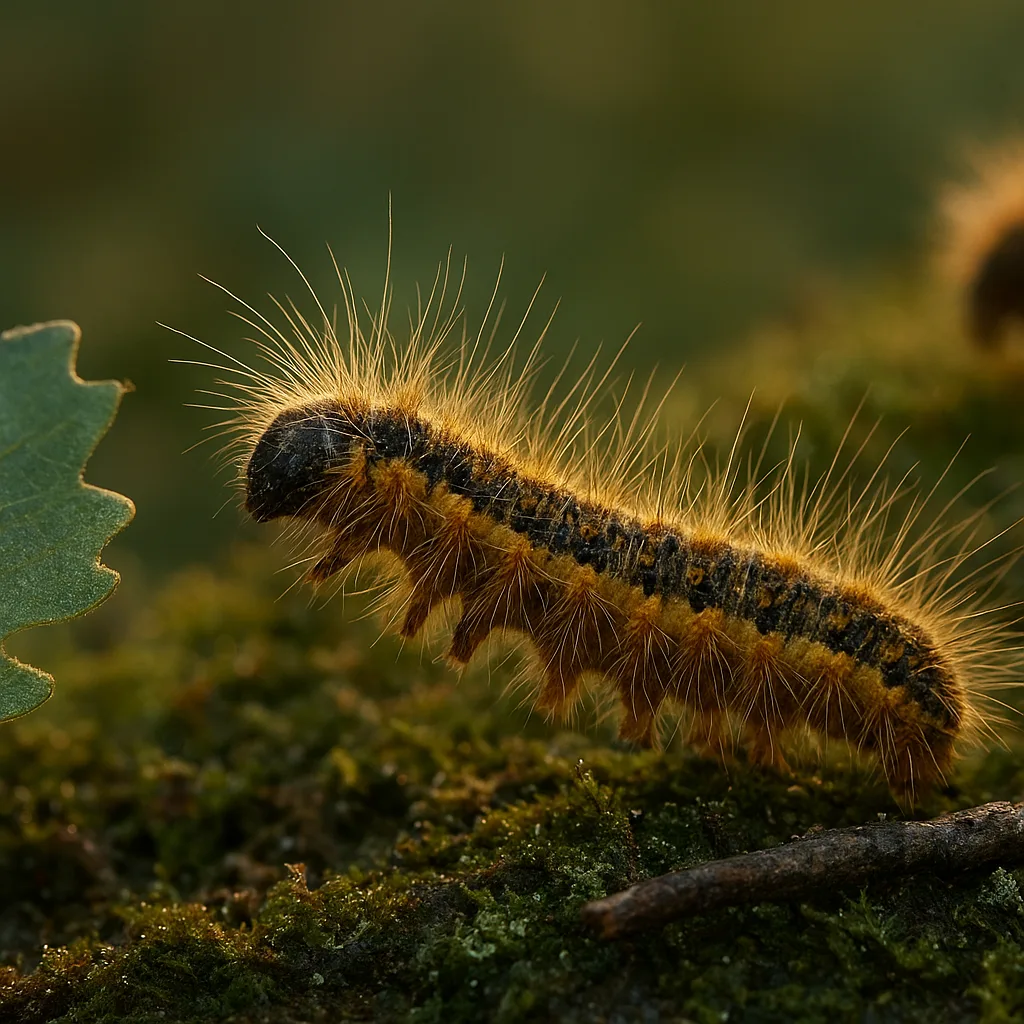
- Instant recognition: species or close taxon from a photo
- Field cues: color, size, pattern, texture, host plant
- Practical info: range, seasonality, and any toxicity
Modern tools like Orvik—an AI-powered visual identification app—bridge field expertise with quick photo-based suggestions, making caterpillar recognition accessible even to beginners.
Key visual features to use in caterpillar identification
Caterpillars are insect larvae (order Lepidoptera). Identifying them depends on observing a set of morphological and behavioral features. Accurate identification usually requires combining several cues rather than relying on a single trait.
Primary visual cues
- Overall color: green, brown, black, yellow, or multicolored—often influenced by host plant and camouflage needs.
- Size and length: measured from head capsule to anal prolegs. Common ranges: 5–15 mm (tiny species), 20–80 mm (larger species like sphingids).
- Body shape: cylindrical, flattened, humpbacked, or spindle-shaped.
- Prolegs: number and placement—geometer caterpillars (inchworms) typically have only two or three pairs of prolegs vs. most Lepidoptera with five pairs.
- Head capsule: smooth, patterned, or armored-looking; size relative to the body.
- Setae and tufts: hairs (simple or urticating), tussocks, or dense woolly coatings.
- Spines, horns, or tails: presence of a horn (e.g., Manduca hornworms), branched horns (hickory horned devil), or tails (some Lycaenidae).
- Distinct patterns: stripes (longitudinal), spots, false eyespots, diagonal marks or chevrons.
Behavioral and ecological cues
- Host plant: many caterpillars are specialist feeders—oak (Quercus), milkweed (Asclepias), tomato/solanaceae, willow (Salix), etc.
- Feeding pattern: edge-feeding, skeletonizing, or mining leaves.
- Time of year: many species have distinct seasonal generations (phenology). Example: monarch larvae (Danaus plexippus) commonly present late spring through fall in temperate North America.
- Geographic range: species confined to particular bioregions—check local field guides or Orvik results for regional filters.
Caterpillar identification charts: green, brown, and general charts
Identification charts are visual keys that group common species by dominant traits. Below are practical chart outlines you can use in the field or replicate in a notebook. For mobile use, an app like Orvik can generate similar visual matches from your photos.
Green caterpillar identification chart (common North American examples)
- Bright, unmarked green (slender) — inchworms (Geometridae): 10–30 mm, looping gait, host: trees/shrubs.
- Green with diagonal white/yellow stripes — eastern tiger swallowtail (Papilio glaucus larvae early instars are green with eyespots): 30–40 mm early, 40–60 mm later; host: cherry, willow, birch.
- Green with a dorsal horn — tomato/tobacco hornworm (Manduca quinquemaculata / M. sexta): 60–90 mm, host: Solanaceae like tomato and tobacco.
- Bright green, velvety with a lateral white line — luna moth (Actias luna) caterpillar: 50–70 mm, host: hickory, sweetgum, birch.
Brown caterpillar identification chart
- Brown, camouflaged, rough texture — many Noctuidae cutworms: 20–40 mm, often in soil or at stem bases.
- Brown with tufts or tussocks — tussock moth larvae (Orgyia, Lymantriinae): 15–30 mm, conspicuous tufts of hair, sometimes urticating.
- Brown with banding and mottling — many geometrids and cryptic species that mimic twigs.
Using charts in the field
- Start with color and silhouette, then check proleg count and host plant.
- Photograph dorsal and lateral views and include the leaf or stem for scale.
- When in doubt, cross-reference multiple traits rather than relying on a single mark.
Caterpillar identification by picture: best practices and tips
Photos are the most practical input for a caterpillar identifier. To maximize the accuracy of automated tools like Orvik and human experts, follow these photographic best practices.
For more on this topic, see our guide on Identify Insects from Photos Like a Field Naturalist.
How to photograph for best identification
- Take at least three angles: dorsal (top), lateral (side), and head-on if possible.
- Include a scale: a coin, ruler, or a leaf next to the caterpillar to show size (measurements in mm are ideal).
- Capture the host plant or substrate—many species are tied to a plant genus.
- Avoid heavy shadows; use natural diffuse light to show true color and texture.
- Keep the image in-focus; a macro or close-up mode is often necessary for small structures (set autofocus on the caterpillar not the leaf).
How AI-powered identifiers like Orvik work
- Image processing extracts color, shape, pattern and texture features.
- Machine learning models compare features to an indexed database of labeled specimens and field photos.
- Results include confidence scores and likely species or genus matches, with links to range and host plant data.
Orvik combines these steps with location and date metadata to refine suggestions—especially helpful in areas with similar-looking species.
Moth caterpillar identification vs. butterfly caterpillar identification
Many people ask "moth caterpillar identification" specifically because moth larvae can look very different from butterfly larvae. Understanding the typical differences will guide faster identification.
General morphological differences
- Prolegs: Both moth and butterfly larvae may have five pairs of abdominal prolegs, but some moth families (Geometridae) have fewer—resulting in the classic inchworm looping gait.
- Defensive structures: Moth caterpillars (e.g., Saturniidae and Lymantriinae) commonly have urticating hairs, dense setae, or prominent spines. Butterfly larvae often have smoother bodies or single pairs of tentacular organs (Papilionidae).
- Behavior: Many butterfly larvae are exposed feeders and often have aposematic coloration (e.g., monarch Danaus plexippus), while moth larvae include both exposed and concealed feeders (leaf miners, stem borers).
Examples and comparison
- Monarch (butterfly) vs. Tussock moth caterpillar (moth)
- Monarch: bright yellow/black/white stripes, smooth body, 35–45 mm, feeds on milkweed (Asclepias), aposematic due to cardenolides.
- Tussock moth: fuzzy, tufts of hair, may provoke dermatitis in sensitive people, variable color, often smaller but can defoliate shrubs.
- Swallowtail caterpillar vs. sphinx moth caterpillar
- Swallowtail (Papilio spp.): often has a distinct osmeterium (fleshy orange gland ejected when disturbed), true leg pairs visible, host-specific to Rutaceae or Apiaceae.
- Sphinx (Manduca spp.): large, robust, with a dorsal horn on the last abdominal segment; can exceed 80 mm.
Profiles of common caterpillars: identification, range, host plants, and season
Below are concise expert profiles of commonly encountered caterpillars in temperate North America and parts of Europe. Use these as reference nodes in a caterpillar identification chart or in-app identification workflow.
You may also find our article on Identify Any Insect from a Photo — Field-Proven Tips helpful.
Monarch (Danaus plexippus)
- Size: 35–45 mm
- Color/marks: bold black, white, and yellow bands; head and thorax striped
- Host plants: milkweed (Asclepias spp.)
- Range: widespread in North America; migratory populations
- Season: spring to fall (multiple broods)
Tomato hornworm (Manduca quinquemaculata) / Tobacco hornworm (M. sexta)
- Size: 60–90 mm
- Color/marks: green with white diagonal stripes; conspicuous dorsal horn near posterior
- Host plants: tomatoes, peppers, tobacco (Solanaceae)
- Range: continental North America
- Season: summer generations; severe in warm months
Eastern tiger swallowtail larva (Papilio glaucus)
- Size: 30–60 mm
- Color/marks: early instars bird-dropping mimic (brown/white); later instars bright green with false eyespots
- Host plants: willow, cherry, birch
- Range: eastern North America
- Season: spring through summer
Gypsy moth caterpillar (Lymantria dispar)
- Size: 30–50 mm
- Color/marks: hairy with paired blue and red spots along back
- Host plants: very polyphagous—oak, apple, willow
- Range: invasive in North America, native to Eurasia; focal outbreaks
- Season: spring to early summer; significant defoliation during outbreaks
Inchworm (Family Geometridae)
- Size: 10–40 mm
- Color/marks: slender, twig-like, variable; moves with looping motion
- Host plants: diverse—trees, shrubs, herbaceous plants
- Range: global
- Season: variable; many appear in spring/early summer
Woolly bear (Pyrrharctia isabella)
- Size: 20–40 mm
- Color/marks: black both ends with a brown/orange midsection (variation exists)
- Host plants: generalist—grasses, clovers, asters
- Range: North America
- Season: late summer into fall
Safety: stings, urticating hairs, and handling guidelines
Some caterpillars have defensive mechanisms that can cause harm to people or pets. While most are harmless, a few have venomous spines or urticating hairs that can cause irritation, rashes, or systemic symptoms.
Which caterpillars are dangerous?
- Urticating hairs: Tussock moths (Orgyia), certain saturniids, and some Lonomia species (South America) can provoke dermatitis. Lonomia obliqua is notably dangerous and linked to hemorrhagic syndrome—rare but potentially fatal where present.
- Spines/horns: Some stinging caterpillars in Limacodidae (e.g., Megalopyge opercularis, the puss caterpillar) have hollow spines that inject venom—resulting in intense pain and systemic symptoms.
- Contact reactions: hairs can transfer irritants by touch or airborne when abundances are high.
First-aid if stung or irritated
- Remove visible hairs with cellophane tape or adhesive (do not rub).
- Wash the area with soap and water.
- Apply cold compress for pain and swelling.
- Use topical hydrocortisone cream or oral antihistamines for itching; seek medical care for severe reactions.
Always supervise children who find caterpillars and teach them not to touch unfamiliar hairy or spiny larvae.
Looking beyond this category? Check out Identify Your Dog from a Photo: Expert Guide.
Common identification challenges and practical comparisons
Some caterpillars are easily confused because of convergent camouflage or seasonal variation. Below are practical comparisons to help separate lookalikes.
Related reading: Field Guide: Identify Spiders from Photos.
Green caterpillar identification: green vs. green
- Green soft-bodied, smooth: likely a swallowtail, sphinx, or some Lycaenidae—check for horn (sphinx) or osmeterium (swallowtail).
- Green with longitudinal white stripe: could be a geometrid or certain Noctuidae; count prolegs: fewer indicate a geometrid.
- Green with lateral yellow/white line and eye-spots: many Saturniidae and Sphingidae—note host plant to narrow possibilities.
Brown caterpillar identification: twig mimic vs. hairy
- Twig-like brown, rigid posture: often geometrids or noctuids using camouflage—observe posture and movement.
- Brown and fuzzy: likely a woolly bear or tussock moth—note hair distribution and look for paired colored tufts.
When to seek expert help or genetic confirmation
- If morphological features are ambiguous (e.g., early instars that are highly variable)
- If the specimen is a potential pest requiring management decisions
- If a dangerous or medically significant species is suspected—consult local extension services or medical professionals
Using tools like Orvik and other resources for accurate ID
Apps such as Orvik provide rapid, AI-assisted identification from photos and can be an excellent first step. Orvik leverages image recognition plus location-season filters to reduce false positives. Here are a few tips to get the best results:
How to use Orvik effectively
- Upload multiple clear images (dorsal, lateral, host plant).
- Add location and date if the app doesn't auto-fill—seasonal context matters.
- Compare the app's top matches and read linked natural history notes; use host plant and range as tie-breakers.
Orvik is especially useful for hobbyists and professionals who need quick, confident IDs in the field. For critical cases (regulatory pests, medical risk), follow up with a voucher specimen or extension service.
Conclusion
Accurate caterpillar identification combines careful observation of color, size, shape, proleg count, host plant, and seasonality. Use charts (green caterpillar identification chart, brown caterpillar identification chart) to narrow possibilities, then confirm with detailed photos. AI tools like Orvik speed up identification and provide contextual data such as geographic range and host plants, but when in doubt seek verification from entomologists or extension services—especially for potentially harmful species.
Frequently Asked Questions
- What is the fastest way to identify a caterpillar from a photo?
- Take clear dorsal and lateral photos with a scale and host plant visible, then use an AI-powered caterpillar identifier like Orvik and cross-check host and range.
- How do I tell a moth caterpillar from a butterfly caterpillar?
- Look at behavior, proleg count and defensive structures—many moth larvae have more hair or spines and some (Geometridae) have fewer prolegs and a looping gait.
- Are all hairy caterpillars dangerous?
- No. Most hairs are harmless, but tussock moths, puss caterpillars and some limacodids can cause irritation. Avoid handling unknown species and seek medical advice if stung.
- Can an app like Orvik identify caterpillars accurately?
- Yes—AI apps are effective when provided with clear photos and location data. Orvik offers probable matches with supporting natural history and range information.
- What should I include in a photo for the best ID?
- Provide clear, in-focus dorsal and side views, a close-up of the head pattern, a shot of the host plant, and a scale (coin or ruler) for size.
- How do I distinguish green caterpillars that look similar?
- Check for horns or osmeteria, count prolegs, note striping or eyespots, and use the host plant and seasonality to narrow the species.
- When should I contact an expert?
- Contact local extension services or an entomologist for suspected invasive species, large-scale defoliation, or potential medically significant stings.