
Introduction: Why people ask how to identify a queen bee
When someone searches "how to identify a queen bee" they are usually trying to answer one of three practical questions: Is this hive healthy and functioning? Have I found a queen during a swarm or inspection? Or am I mistaking a wasp or hornet for a queen bee? Identifying a queen is a mix of biology, behavior and close visual inspection. In this guide you will find clear visual cues, measurements, habitat and seasonal notes, plus safety guidance for field observations. Tools like Orvik—an AI-powered visual identification app—can help confirm your observations from photos in seconds.
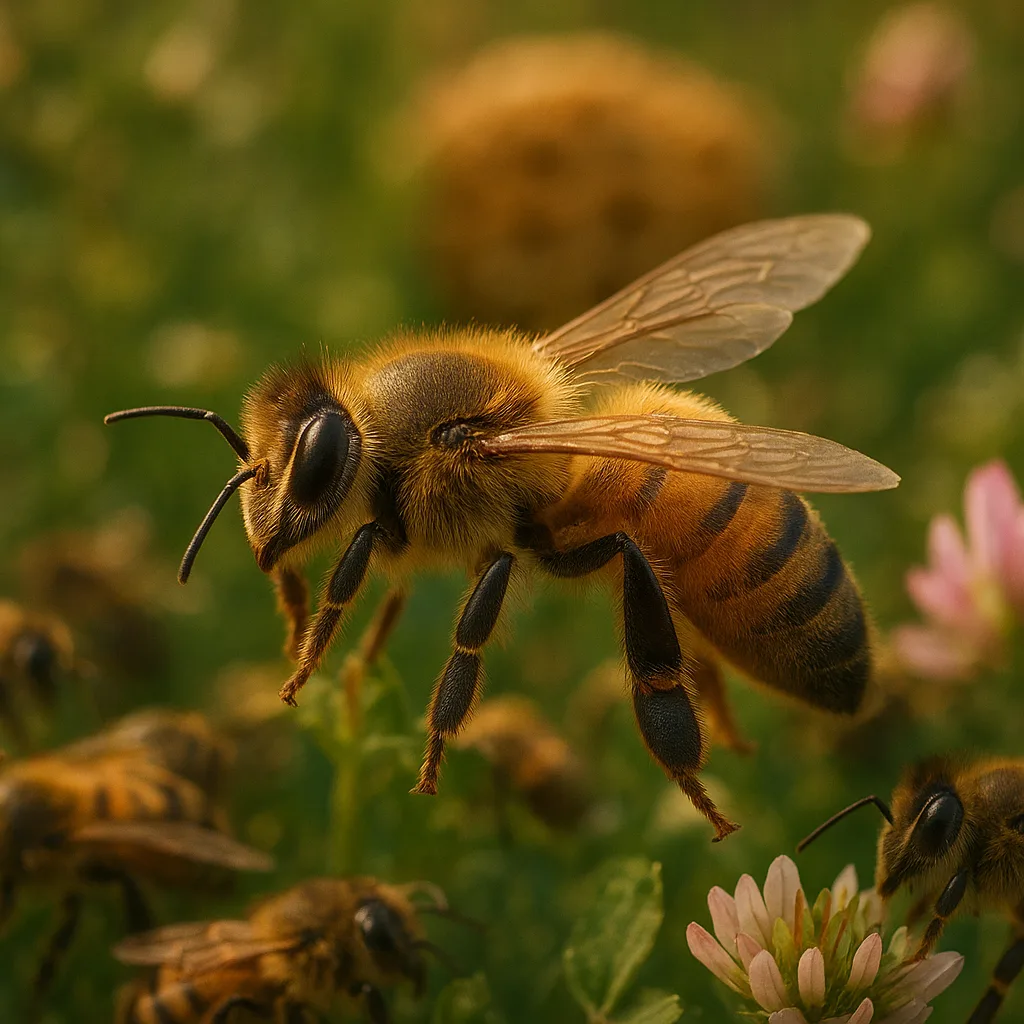
- Audience: beekeepers, gardeners, homeowners, naturalists and pest professionals.
- Goals: recognize a queen by size, shape and behavior; distinguish bees from wasps/hornets; know when to call a professional.
- Outcomes: practical field ID steps, photographic tips, and safety notes.
Queen bee biology and why she looks different
The queen is the reproductive female of honey bee colonies (genus Apis). Most backyard and commercial colonies are Apis mellifera (the western honey bee); in parts of Asia you may encounter Apis cerana. Queens are physiologically adapted for egg-laying and months- to years-long survival rather than for foraging.
Key biological facts
- Species: Apis mellifera (common in Europe, Africa, the Americas), Apis cerana (Asia).
- Length: Typically 18–22 mm for a mature honey bee queen (worker bees are usually 12–15 mm; drones 15–17 mm).
- Abdomen: Elongated and tapered, often extending well beyond the wing tips.
- Egg-laying rate: A healthy queen can lay around 1,000–2,000 eggs per day at peak season.
- Lifecycle: Queens develop from worker-sized larvae fed royal jelly; after emergence they take mating flights, mate with multiple drones, and return to lay eggs.
Visual identification: the field marks to look for
Visual cues are the fastest way to single out a queen during an inspection or if you encounter a swarm. Use a calm, methodical approach. If you’re working with photos, shoot a lateral (side) view and a dorsal (top) view of the bee; both views reveal key traits.
Primary visual cues
- Size and proportions: Look for an abdomen that is visibly longer and more tapered than workers. Queen length: ~18–22 mm.
- Abdomen shape: Smooth, elongated and slightly glossy; often extends beyond the wing tips when at rest.
- Thorax: More robust, sometimes with fewer obvious hair bands than workers but not always.
- Wings: Wings can look relatively shorter because of the extended abdomen; wing veins are similar to workers.
- Behavior: Queens move deliberately and are often surrounded by workers attending her (retinue behavior) who feed and groom her.
- Markings: Queens may be marked by beekeepers with a dot of paint on the thorax; if unmarked, look for subtle color contrasts—some queens are slightly darker or paler depending on subspecies.
Photographic tips for clear ID
- Keep distance: use a telephoto or zoom (2–3x) to avoid disturbing the colony.
- Capture multiple angles: lateral and dorsal shots reveal shape and index of abdomen-to-wing ratio.
- Include scale: a ruler or known object (finger, hive tool) helps estimate length in mm.
- Use natural light and steady focus: avoid motion blur and harsh flash that can obscure details.
Queen vs Worker vs Drone: how to tell them apart
Understanding the differences between castes is essential. Each caste has a distinct role and morphology.
Comparison list
- Queen (reproductive female):
- Length: 18–22 mm
- Long, tapered abdomen that often extends beyond the wings
- Fewer conspicuous hairs; smooth, glossy abdomen
- Usually attended by worker bees (retinue)
- Unique behavior: seldom forage, mostly stays in brood area
- Worker (sterile female):
- Length: 12–15 mm
- Shorter, stubbier abdomen
- Pollen baskets (corbiculae) on hind legs visible when carrying pollen
- Hairier body adapted to pollen collection
- Drone (male):
- Length: 15–17 mm
- More robust, rounder abdomen; larger eyes that meet on top of head
- No stinger
- Behavior: often found near hive entrances or in drone congregation areas
Queen vs wasp or hornet: common confusions and how to resolve them
Wasps and hornets can be mistaken for bees at a glance, especially if you see a larger insect near a hive site. Knowing the differences protects you and helps identify potential pest species.
For more on this topic, see our guide on Spotting Carpenter Ants: A Practical Field Guide.
Key differences in appearance and texture
- Body hair: Bees (including queens) are generally hairier; wasps and hornets have smoother, shinier bodies.
- Waist: Wasps have a distinct narrow waist (petiole) between thorax and abdomen; honey bees have a more continuous body shape.
- Color patterns: Wasps often show bright yellow and black, sometimes with white or red markings. Hornets (genus Vespa) can be larger and robust with contrasting bands.
- Legs: Wasps' legs hang down in flight; bees tuck their legs closer to the body.
Common wasp/hornet species to know
- Vespula vulgaris (common yellowjacket) — often nests in the ground or cavities.
- Vespa crabro (European hornet) — large, aerial papery nests in tree hollows or buildings.
- Dolichovespula maculata (bald-faced hornet) — large round grey paper nests in trees.
- Polistes spp. (paper wasps) — umbrella-shaped open comb nests often under eaves.
Types of wasp nests and ground wasp nest identification
- Aerial papery nests: Round or football-shaped, built from chewed wood fibers mixed with saliva; typical of hornets and some yellowjackets.
- Open comb nests: Umbrella-like combs under eaves or porches — common for Polistes.
- Ground nests: Small, discrete holes or low-profile soil mounds with active wasp traffic — commonly Vespula species.
- Mud nests: Hard, clay-like tubes often on walls — made by mud daubers.
When you see a papery nest or ground hole, note the insect's silhouette and flight pattern. Bees returning to a beehive carry pollen and fly straight, while wasps are more erratic.
Beehive identification and signs a queen is present
Recognizing whether a hive contains a queen is less about seeing her and more about interpreting hive signs. Most beekeepers rarely see the queen directly, but they rely on brood patterns and colony behavior.
Signs a queen is present and healthy
- Consistent brood pattern: A healthy queen produces a compact brood pattern with few empty cells in the center of the frame.
- Presence of eggs: Eggs are small, white, and upright at the base of cells. Fresh eggs within every cell of a brood area indicate active laying.
- Young larvae: Curled white larvae indicate recent egg-laying and normal development.
- Queen cups and emergency queens: Multiple queen cells (especially in the margins) may indicate an upcoming swarm or supersedure (queen replacement).
- Retinue behavior: If you see a single bee being surrounded by attendants feeding and grooming her, that’s likely the queen.
Seasonal and geographic considerations
- Temperate zones: Queens are most active in spring–summer, laying heavily during warm months. Colonies may reduce brood production in winter.
- Warm climates: In subtropical regions queens may lay year-round with occasional peaks tied to nectar flow.
- Swarming season: Late spring to early summer in many temperate areas is when colonies produce new queens and swarms occur.
Safe practices: observing queens, dealing with nests and stings
Approach bees and wasps with respect. Even honey bees will defend a nest and wasps/hornets can be aggressive. Follow these safety steps.
You may also find our article on Spotting a Roach: A Field Guide helpful.
Field safety checklist
- Keep calm and move slowly; sudden movements provoke defensive behavior.
- Maintain a safe distance (3–5 meters) from nests and swarms unless you are a trained beekeeper.
- Wear protective clothing—veil, gloves and suit—when inspecting a hive.
- For large wasp or hornet nests near homes, contact a licensed pest control professional; these species can be dangerous when disturbed.
- If stung, monitor for allergic reactions (hives, difficulty breathing, swelling of face/throat) and seek emergency care immediately if present.
Remember: honey bees rarely pursue people more than several meters, but hornets and paper wasps may be more persistent. Removing or disturbing nests without protective gear or training is unsafe.
Tools and practical tips: using Orvik and other ID aids in the field
Photography and AI-assisted identification make accurate ID easier. Orvik and similar tools can rapidly analyze an image and suggest likely species or caste, but you should confirm with behavior and habitat observations.
You might also be interested in Identify Your Cat: A Field Guide.
Practical workflow for field ID
- Observe from a distance and note flight patterns and whether insects carry pollen.
- Photograph multiple angles: close-up lateral, dorsal and the nest if safe.
- Use Orvik to run a visual ID from your photos; the app can quickly narrow down Apis vs Vespula vs Vespa, and sometimes highlight castes.
- Corroborate AI suggestions by checking brood pattern, egg presence, and retinue behavior inside hives.
- When in doubt, consult a local beekeeper association or extension service for confirmation.
Orvik is particularly useful when you have a single photo and need fast suggestions. It does not replace careful inspection but complements visual checks by flagging likely species and offering confidence scores.
Related reading: Spotting Bed Bugs: A Clear Visual Guide.
What to do if you find a queen or a suspicious nest
Different situations call for different actions. Here are clear steps based on common encounters.
Found a queen during inspection or swarming
- If you locate a queen during a routine frame inspection, mark her gently with a non-toxic, beekeeper-grade paint if you plan to monitor her (many beekeepers use the International Queen Marking System color for the year).
- If you encounter a swarm and want to capture it, use a clean box or nuc, gently encourage bees inside, and contact a local beekeeper or swarm collector.
- If unsure whether the queen is present inside a hive: look for eggs and a healthy brood pattern. Absence of eggs for several days can indicate queenlessness.
Found a suspicious wasp or hornet nest
- Keep children and pets away from the area.
- Do not attempt removal yourself unless you are trained and equipped for wasp control.
- Contact licensed pest control for hornets (Vespa) or ground-nesting yellowjackets; they require specialized removal methods.
For beehive relocation (if a hive is in an unwanted location), coordinated removal by a beekeeper is the humane and preferred option. Many beekeepers will remove and rehome feral colonies if accessible and safe.
Conclusion
Identifying a queen bee is primarily about recognizing proportions and behavior: an elongated tapered abdomen, a calm but purposeful gait, and the company of attending workers. Use measurements (18–22 mm), brood signs (eggs, compact brood pattern), and habitat cues to confirm your ID. When you need fast confirmation from a photo, tools like Orvik can accelerate identification. Above all, respect bees and wasps in the field, follow safety precautions, and seek professional help for aggressive or hard-to-reach nests.
Frequently Asked Questions
- How big is a queen honey bee compared to a worker?
- A queen honey bee is typically 18–22 mm long, noticeably longer and more tapered than worker bees, which are usually 12–15 mm.
- Can I identify a queen by color alone?
- No. Color varies by subspecies and regional strains. Focus on shape, abdomen length, and behavior rather than color alone.
- How can I tell a queen from a large drone?
- Queens have a longer, tapered abdomen that extends beyond the wings and are surrounded by attending workers. Drones have larger eyes and a rounder abdomen and do not receive a retinue.
- Are hornets and wasps dangerous to confuse with queen bees?
- Yes. Hornets (Vespa) and yellowjackets (Vespula) can be aggressive and deliver multiple stings. Note the smooth body, narrow waist and papery nests to distinguish them from bees.
- What are signs that a hive has a healthy queen?
- A healthy queen produces a compact, uniform brood pattern, visible eggs and young larvae, and normal colony activity. Rapid egg-laying (up to 1,000–2,000 eggs/day at peak) is a sign of vigor.
- Should I use an app like Orvik to identify a queen?
- Yes—apps like Orvik are excellent for quick photo-based identifications. They provide likely matches and confidence scores, but always corroborate with physical signs and expert advice when possible.
- What should I do if I find a wasp nest in my yard?
- Keep your distance, secure children and pets, and contact a licensed pest control specialist for removal—especially for ground nests, hornets, or nests inside walls.