
If you've ever asked "how do I identify a bug?" or "how can I identify an insect?" this guide brings field-tested techniques, clear visual cues, and practical tools together. Whether you are a gardener, a parent, a naturalist or a curious hiker, learning to identify insects hinges on observing a few consistent anatomical traits, behaviors, habitats and seasonal patterns. I draw on entomological standards—body segmentation, wing types, mouthparts and measurements—to show how to identify insects reliably in the field and with apps like Orvik.
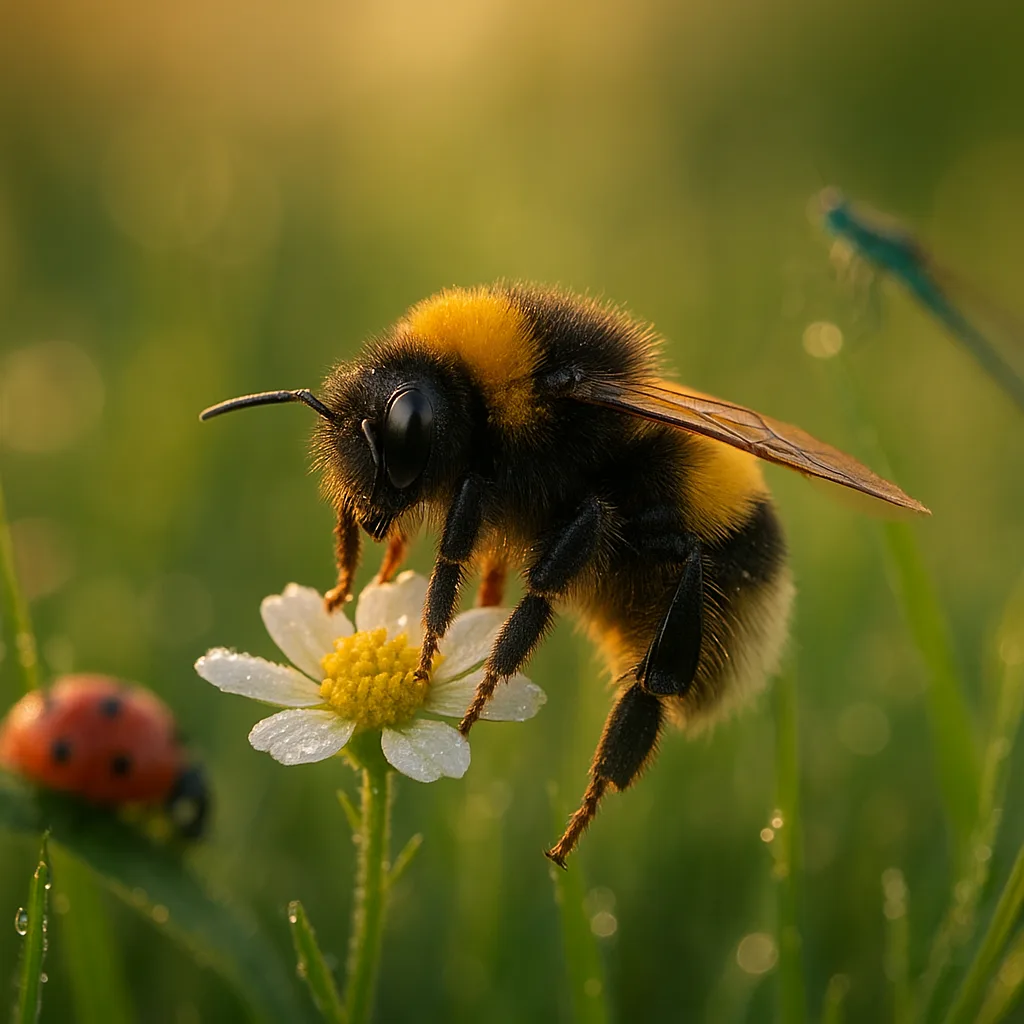
1. Why insect identification matters
Identifying insects correctly matters for safety, ecology, agriculture and curiosity. Precise ID helps you:
- Assess risk (stinging or biting species such as Apis mellifera or Vespula wasps).
- Protect plants (identify pest species like the Colorado potato beetle Leptinotarsa decemlineata).
- Support conservation and citizen science (report pollinators such as the monarch Danaus plexippus).
- Understand local biodiversity and seasonal shifts.
What people are usually asking
Common search queries—how to identify a bug, how do i identify a bug, how to id a bug—reflect three real needs: quick field ID, safety guidance, and a route to expert confirmation. This guide covers all three.
2. Basic insect anatomy and the key characters to check
Insects share a basic plan: three body regions (head, thorax, abdomen), three pairs of legs (six legs total), compound eyes, and usually one or two pairs of wings. Use these characters first—then refine with more detailed markers.
For more on this topic, see our guide on Identify Insects from Photos Like a Field Naturalist.
- Size: measure in millimetres (mm). Many beetles are 2–40 mm; some scarabs reach 100–150 mm. Ants commonly range 2–25 mm.
- Body shape: elongated, flattened, globose, cylindrical. Beetles have compact, hard-bodied forms; true bugs often appear shield-shaped.
- Wings: hardened forewings (elytra) vs. membranous wings, wing venation, presence/absence of wings.
- Leg type: grasping raptorial legs (praying mantis), jumping legs (saltatorial—grasshoppers), swimming legs (natatorial—diving beetles).
- Mouthparts: chewing (mandibulate) vs. piercing-sucking (hemipteran rostrum) vs. siphoning (butterflies).
Field quick-check: 30-second ID
- Count legs: six = insect; eight = arachnid (spider), not an insect.
- Look at wings: hardened elytra? membranous? single pair? none?
- Note mouthparts: visible mandibles, proboscis, or needle-like beak?
- Measure length roughly with a ruler or by comparison (e.g., width of a penny = ~19 mm).
3. How to identify insects in the field: step-by-step
When you encounter an unknown bug, a short, consistent routine yields the best ID later on. This protocol helps both human observation and AI tools like Orvik.
- Observe first, handle later: avoid touching stinging or toxic species. Photograph from several angles.
- Photograph for scale: include a ruler or coin (e.g., US quarter = 24 mm) to provide size reference.
- Record habitat: leaf litter, tree canopy, freshwater margins, indoors. Many species are habitat-specific.
- Note behavior: is it flying, jumping, feeding on plant sap, predatory? Time of day matters—moths at night, many bees in daylight.
- Collect details: color patterns, leg numbers, antennae type (filiform, clubbed, serrate), presence of cerci or ovipositor.
Best photo angles
- Dorsal (top) view showing overall shape and wing structure.
- Lateral (side) view showing profile, legs and mouthparts.
- Frontal or head-close showing antennae and eyes (if safe and possible).
4. Common insect orders and visual cues
Most field IDs fall into a few orders. Learning emblematic traits and representative species accelerates recognition.
Coleoptera (Beetles)
- Key traits: two pairs of wings, forewings hardened into elytra that meet in a straight line down the back.
- Size range: 1–150 mm. Examples: lady beetles (Coccinellidae) 3–8 mm; stag beetles (Lucanidae) up to 75–150 mm.
- Look for: punctures or striations on elytra, tarsal formula (use for lab ID), clubbed antennae in some families.
Lepidoptera (Moths and Butterflies)
- Key traits: two pairs of scaled wings; butterfly antennae clubbed; moth antennae filamentous or feathery.
- Size: wingspans typically 10–200 mm. Monarch Danaus plexippus wingspan ≈ 90–105 mm.
- Look for: resting posture (butterflies fold vertically, many moths flat), pupal type (chrysalis vs cocoon).
Hymenoptera (Bees, Wasps, Ants)
- Key traits: two pairs of membranous wings, constricted waist (petiole) in many species, ovipositor sometimes modified as a sting.
- Size: ants 2–25 mm, honey bee Apis mellifera ~12–15 mm.
- Look for: hairiness (bees are often hairy for pollen), nest type (paper wasps, ground-nesting bees).
Diptera (True Flies)
- Key traits: one pair of wings (hindwings reduced as halteres), often large compound eyes, sucking mouthparts in many families.
- Common examples: housefly Musca domestica 6–7 mm, mosquitoes like Aedes 3–6 mm.
- Look for: wing venation patterns, antennae structure (plumose in male mosquitoes).
Hemiptera (True Bugs)
- Key traits: piercing-sucking mouthparts (beak or rostrum), forewings partly hardened near base (hemelytra) in many species.
- Includes aphids, stink bugs (Pentatomidae), and leafhoppers.
- Look for: triangular scutellum (stink bugs), soft-bodied, often plant-sap feeding.
Orthoptera (Grasshoppers, Crickets)
- Key traits: enlarged hind femora for jumping, tegmina (leathery forewings), chewing mouthparts.
- Sizes: 10–100 mm depending on species; locusts can reach 70–90 mm body length.
5. X vs Y: How to tell similar insects apart
Comparisons are where most beginners stumble. Below are common confusions and clear visual cues to separate look-alikes.
You may also find our article on Ladybug Diets: A Field Guide to What They Eat helpful.
Beetle vs True Bug
- Beetle (Coleoptera): forewings entirely hardened (elytra) and cover abdomen; mouthparts typically chewing and visible.
- True bug (Hemiptera): forewings partly hardened with a membranous tip (hemelytra), a distinct rostrum under the head for sucking.
- Quick test: lift the wing margin—beetles have a continuous hard shell; hemipterans reveal a softer membrane near the tip.
Wasp vs Bee vs Hornet
- Bees (Apidae, e.g., Apis mellifera): densely hairy, pollen-carrying structures (scopa or corbicula), more robust bodies.
- Wasps (Vespidae): smoother bodies, distinct narrow waist, elongated legs that hang during flight in some species.
- Hornets (genus Vespa): larger wasps, 20–35 mm body length in many temperate species; aggressive nest defense.
Moth vs Butterfly
- Butterflies: diurnal, clubbed antennae, rest with wings closed upright.
- Moths: mostly nocturnal, filamentous or feathered antennae, rest with wings flat or tented over body; many have cryptic coloration.
6. Habitat, geography and seasonality as ID clues
Knowing where and when you find an insect narrows possibilities dramatically.
- Habitat: aquatic margins yield dragonflies (order Odonata) and water beetles (Dytiscidae). Deciduous woodlands are prime for moth diversity and many beetles.
- Geography: species ranges matter—Asian tiger mosquito Aedes albopictus prefers warm, temperate regions and is spreading globally; check regional guides.
- Seasonality: many insects have defined flight times—emergence windows: spring (ants, many bees), summer (butterflies, wasps), fall (some beetles and late-season moths).
Examples
- Monarch butterflies migrate north in spring and south in autumn—finding Danaus plexippus in late winter in California indicates overwintering populations.
- Stoneflies occur in cold, well-oxygenated streams; finding nymphs suggests good water quality.
7. Safety, toxicity and ethical handling
While most insects are harmless, a few can sting, bite or cause dermatological reactions. Handle with care and follow ethical collecting principles.
- Stinging Hymenoptera: treat wasps, hornets and bees as potentially dangerous; do not swat nests. Allergic individuals should carry an epinephrine auto-injector if prescribed.
- Toxic caterpillars: puss caterpillar (Megalopyge opercularis) and Lonomia species have venomous hairs—avoid direct contact.
- Vectors: mosquitoes (e.g., Aedes) can transmit diseases; use repellents and avoid standing water.
- Non-insect look-alikes: ticks (Ixodida) are arachnids, not insects—special removal technique required.
Ethics of collection
- Minimize harm: photograph live insects rather than collecting when possible.
- Permit rules: check local laws—some areas require permits to collect specimens, especially for protected species.
8. Tools, keys and apps for confirmation (including Orvik)
Field observation combined with resources speeds identification. Use dichotomous keys, field guides, and AI tools like Orvik to confirm suspicions.
Looking beyond this category? Check out AI Field Guide: Identify Birds Fast.
- Field guides: region-specific guides list species with diagnostic photos. Look for guides with scale bars and multiple views.
- Dichotomous keys: use morphological steps (e.g., "wings present? yes/no") to narrow groups—these are systematic and reliable for experts.
- AI photo ID apps: Orvik and similar tools use image recognition trained on millions of labeled photos. They provide fast, probabilistic IDs and often link to distribution data.
How to get the best AI-assisted ID
- Upload multiple clear photos showing dorsal, lateral, and close-up head shots.
- Include scale and habitat notes in the submission.
- Cross-check AI suggestions with a trusted guide or expert, especially for medically significant species.
9. Advanced tips and citizen science
Once you master basics, contribute to knowledge. Citizen science platforms (iNaturalist, local entomological societies) use your observations to track ranges and phenology.
Related reading: Spotting the Queen Bee: A Field Guide.
- Record precise location (GPS coordinates) and date—these data are invaluable for tracking shifts caused by climate change.
- Learn to recognize larval forms—many insects look completely different as larvae (caterpillars, grubs, maggots).
- Use simple preservation techniques if collecting: ethyl acetate for short-term euthanasia, dry pinning for beetles, and labels with date, location, collector.
When to consult an expert
- Potentially dangerous species (report to local health agencies if vector-borne concerns exist).
- Unclear IDs where management decisions hinge on accuracy (e.g., quarantine pests).
- Unusual records that might indicate range expansion or new introductions.
10. Resources and next steps
Start with a local field guide and build a small kit: a 0–150 mm ruler, a hand lens (10x), a camera or smartphone, and a notebook. Practice with common families, and use Orvik to validate your identifications and learn from suggestions.
- Essential kit: ruler, 10x hand lens, soft forceps, vials, and notebook.
- Recommended reading: "A Field Guide to Insects" (Peterson series), regional keys from your local university extension.
- Digital tools: Orvik for rapid image ID, iNaturalist for community verification, and regional databases for species ranges.
Conclusion
Understanding how to identify insects combines observation, simple measurements, knowledge of anatomy, and the right resources. Start with size, wing type, mouthparts and habitat; photograph carefully; and use tools such as Orvik alongside field guides and keys. With practice you will move from "how do you identify a bug?" to confidently naming species and contributing to ecological knowledge.
Frequently Asked Questions
- How can I identify a bug quickly in the field?
- Use a 30-second routine: count legs, note wings, check mouthparts, estimate size with a coin or ruler, and record habitat. Take dorsal and side photos for later analysis.
- Are ticks insects?
- No. Ticks are arachnids (eight legs) and not insects. Insects have six legs and three body segments.
- What’s the best app to identify insects?
- Apps vary, but AI-powered apps like Orvik are useful for rapid, photo-based suggestions. Always cross-check with field guides for critical identifications.
- How do I tell a beetle from a true bug?
- Beetles (Coleoptera) have fully hardened forewings (elytra) covering the abdomen; true bugs (Hemiptera) often have hemelytra with membranous tips and a visible sucking rostrum.
- Which insects are dangerous?
- Stinging Hymenoptera (some bees, wasps, hornets) can be harmful, especially to allergic people. Some caterpillars (e.g., puss caterpillar) and disease-vectoring mosquitoes are also hazardous.
- How do I measure an insect?
- Use a ruler or include a common object (coin, pencil) in photos. Record body length in millimetres from head to abdomen; wingspan is measured across the extended wings.
- Should I collect insects for ID?
- Photographs are often sufficient. If collecting, follow local regulations, minimize harm, and label specimens with date, location and collector details.