
When you search to identify bug by photo you want a fast, reliable answer — not a guess. Whether you're holding a 10 mm ladybird (Coccinellidae) or a 5 cm hawk moth (Sphingidae), the right photo plus a few field cues can pinpoint family, genus or even species. This guide explains the visual signals experts use, how to photograph insects for the best results, how AI tools such as Orvik speed identification, and what to do once you know what you found.
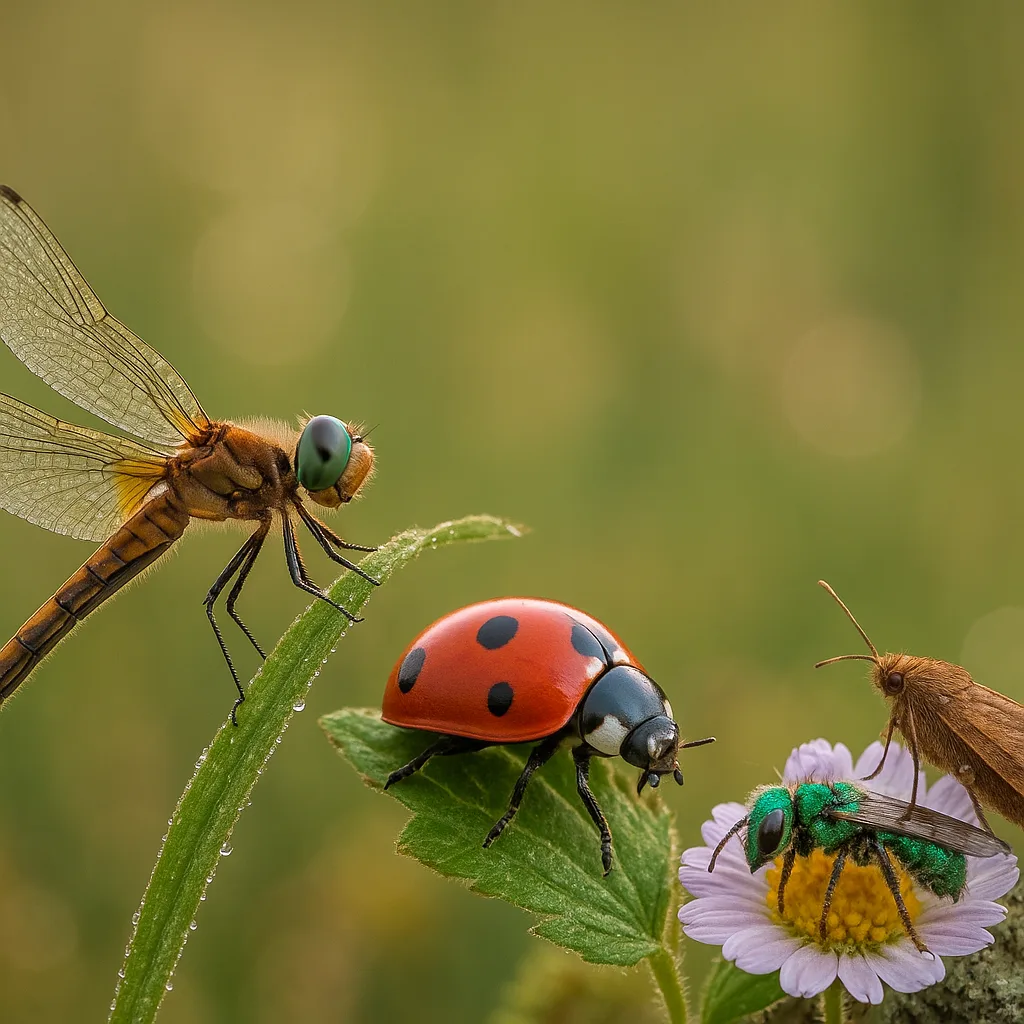
1. How to Photograph a Bug for Accurate Identification
Good identifications begin with good photographs. A single blurry or poorly lit image limits what both humans and AI can see. Follow these practical tips to capture diagnostic details.
Camera settings and composition
- Use macro mode or a dedicated macro lens for small insects (1–20 mm). For phones, enable close-up or macro if available.
- Focus on the insect's key features: dorsal (top) view, lateral (side) view, and a close-up of the head and antennae. Aim for at least 1,500 pixels on the insect in the frame.
- Use natural diffuse light. Early morning or late afternoon gives softer light; avoid harsh midday sun that flattens colors.
- Stabilize the camera: use a tripod, rest your arms on a surface, or use your phone’s burst mode and select the sharpest frame.
- Include a scale reference: a ruler, a coin (e.g., 24.26 mm U.S. quarter), or a blade of grass helps estimate size.
Practical shooting checklist
- Get multiple angles: top, side, and head close-up.
- Fill the frame with the insect when possible; avoid crops that cut off legs or wings.
- Note the habitat where you photographed it (e.g., under oak bark, on milkweed, in house basement).
2. Visual Cues That Matter: What to Look For
Entomologists rely on measurable traits. Below are the primary visual cues and how to use them.
For more on this topic, see our guide on Field Guide to Identifying Insects.
Size and proportions
- Measure or estimate body length: ants can range 1.5–30 mm; many moths and butterflies range 10–120 mm wingspan.
- Relative proportions: elongated bodies often indicate beetles (Coleoptera) or larvae; a narrow 'waist' suggests many Hymenoptera (ants, bees, wasps).
Color, patterns and texture
- Note base color and markings: spots, stripes, bands, metallic sheen. For example, Harmonia axyridis (Asian lady beetle) often shows variable spot number; Coccinella septempunctata typically has seven distinct spots.
- Surface texture: smooth and glossy (many beetles) vs. hairy (bumblebees, Bombus spp.).
Antennae, legs and mouthparts
- Antenna shape: clubbed (butterflies), filiform/filamentous (many moths), elbowed (ants, Formicidae).
- Leg count and specialization: jumping hind legs suggest Orthoptera (grasshoppers), raptorial front legs indicate Mantodea (mantises).
Wings and wing venation
- Presence/absence of wings: flightless ground beetles (Carabidae) often have fused elytra; flies (Diptera) have one pair of wings plus halteres.
- Wing patterns: many moths have diagnostic bands and eye spots; the venation pattern is key for species-level ID in some families.
3. Using AI Tools Like Orvik for Photo Identification
AI identification platforms accelerate and standardize the process by comparing uploaded photos to large labeled datasets. Orvik uses convolutional neural networks trained on millions of insect images and metadata — such as location and date — to rank likely matches.
You may also find our article on Field Guide: Identify Spiders from Photos helpful.
How to get the best results with Orvik
- Upload multiple views: dorsal, lateral, head close-up. AI confidence increases with more diagnostic angles.
- Provide context: include habitat (e.g., "on milkweed"), GPS location if available, and date — many species are seasonal.
- Check the confidence score and compare suggested species’ key traits to your photo before accepting a match.
Limitations and verification
- Some species require microscopic characters (genitalia, minute setae) to distinguish; AI can misidentify cryptic species complexes.
- Use Orvik as a first pass, then consult local field guides or an expert for verification when needed, especially for pest control or medical concerns.
4. Common Insect Groups and Identification Notes
Below are the major groups people commonly photograph, with concrete identification tips, typical sizes, habitats, and seasonal timing.
Beetles (Coleoptera)
- Traits: hardened forewings (elytra), chewing mouthparts. Size from 2 mm (minute bark beetles) to >100 mm (some stag beetles).
- Examples: Japanese beetle Popillia japonica (8–11 mm, metallic green with coppery elytra) vs. June beetles Phyllophaga spp. (12–25 mm, brown).
- Habitat: foliage feeders in gardens, under bark, in soil. Adults often seasonal: many emerge late spring–summer.
True bugs (Hemiptera)
- Traits: piercing-sucking mouthparts (a proboscis), visible wing overlap forming an X on the back in many species, hemelytra in many.
- Examples: the boxelder bug Boisea trivittata (12–14 mm, black with red veins) vs. stink bugs (Pentatomidae) which are broader and shield-shaped.
- Seasonality: many aggregate on sunny walls in fall to overwinter.
Bees, wasps, ants (Hymenoptera)
- Traits: two pairs of wings (when present), narrow waist often between thorax and abdomen, many social species.
- Examples: honeybee Apis mellifera (12–15 mm, hairy, banded abdomen) vs. paper wasp Polistes dominula (15–20 mm, slender body and long legs).
- Safety: treat unknown Hymenoptera cautiously — stings can cause anaphylaxis in sensitive people.
Moths and butterflies (Lepidoptera)
- Traits: scales covering wings, coiled proboscis in adults. Wingspans range from 10 mm micromoths to 300 mm atlas moths.
- Examples: Monarch Danaus plexippus (wingspan 90–105 mm, orange and black) flies on milkweed; sphinx moths (Sphingidae) are robust with narrow wings and fast flight.
- Seasonality: many species have distinct flight periods — spring, summer, autumn migrations.
Flies (Diptera)
- Traits: one pair of wings and halteres, diverse mouthparts (sponging, piercing). Size 1–25 mm commonly.
- Examples: housefly Musca domestica (6–7 mm) vs. hoverflies (Syrphidae) which often mimic bees but have single pair of wings and large compound eyes.
Spiders and other arachnids (for comparison)
- Note: spiders are not insects (8 legs, two body segments). Common medically important species include Latrodectus mactans (black widow) and Loxosceles reclusa (brown recluse).
- Always identify as arachnid vs insect before making decisions about control or treatment.
5. Comparison: How to Tell Lookalikes Apart
Many misidentifications arise from superficial similarity. Below are common confusions and the diagnostic differences to check in your photo.
You might also be interested in Mastering Coin Identification: A Field Guide.
Ladybird (ladybug) vs. Asian lady beetle
- Look for pronotum markings: Harmonia axyridis often has an M-shaped black mark on the white pronotum and variable spot counts; Coccinella septempunctata usually has seven clear black spots and a uniform red background.
- Size: 4–8 mm typical for both; check elytra shape — Asian lady beetles are more rounded.
June beetle vs. Japanese beetle
- Popillia japonica: 8–11 mm, metallic green and copper, distinct white tufts under the abdomen.
- Phyllophaga spp.: 12–25 mm, matte brown to black, more robust and larger.
Wasp vs. Hoverfly (bee mimic)
- Count wings: flies (including hoverflies) have a single pair of wings; wasps have two pairs. In photos, look for the blurred second wing or the lack of it and presence of large compound eyes near the front.
- Leg posture: hoverflies often hold legs tucked and mimic bees' coloration but lack a narrow waist.
Moth vs. Butterfly
- Daytime activity: butterflies are diurnal while most moths are nocturnal, though exceptions exist.
- Antennae: butterflies usually have clubbed antennae; moths often have feathery or filamentous antennae.
6. Safety, Toxicity and Medical Considerations
Identifying a bug is not just curiosity — it can be a health or property matter. Here are practical safety guidelines tied to identification.
Related reading: Identify Caterpillars by Photo: Expert Field Guide.
When a bug poses medical risk
- Stinging insects: if the photo shows a wasp (Vespidae), hornet (Vespinae), or a social yellowjacket (Vespula spp.), treat it as potentially dangerous. Remove stingers promptly; seek emergency care for breathing difficulty, widespread hives, or fainting.
- Venomous spiders: black widows (Latrodectus) have a distinct hourglass marking; brown recluse (Loxosceles) has a violin-shaped dark mark. If bitten, seek medical attention — save the specimen photo if possible.
- Ticks: though not insects, ticks (Ixodida) are often photographed for identification. Remove attached ticks promptly with fine tweezers and save the specimen for potential testing.
Pesticide and control cautions
- Wrong identification can lead to ineffective or dangerous treatments. For example, insect growth regulators target specific insect physiology and won't affect spiders.
- Only use chemical controls according to label directions. Consider nonchemical approaches (exclusion, habitat modification) for long-term solutions.
7. After Identification: What to Do Next
Once you've used your photo (and perhaps Orvik) to identify an insect, these are the usual next steps depending on the result.
For curious naturalists and record-keepers
- Log the observation with date, GPS, habitat, and photos. Use citizen-science platforms or local naturalist groups to contribute to biodiversity records.
- Note phenology: many species have discrete flight times (e.g., adult dragonflies July–September), which helps future IDs.
For homeowners and pest issues
- Confirm the pest stage: many damages are caused by larvae (e.g., wood-boring beetle larvae) rather than adults.
- Consult extension services or pest professionals for species-specific control. Incorrect treatment can worsen infestations.
For medical or safety concerns
- Keep the specimen or high-confidence photos. Provide these to medical personnel if needed.
- Follow local health guidance for vector-borne disease exposures (ticks, mosquitoes).
Frequently Asked Questions
- How do I take the best photo to identify an insect?
- Take multiple sharp photos (dorsal, lateral, head close-up) in natural diffuse light, include a scale reference, and stabilize your camera. Ensure diagnostic parts — antennae, wings, legs — are visible.
- Can AI like Orvik reliably identify all insects from photos?
- AI can accurately identify many species and families when images show diagnostic features and include location data, but cryptic species and those requiring microscopic examination may need expert confirmation.
- What should I do if I suspect a venomous spider or stinging insect?
- Treat with caution: remove yourself from the area, photograph from a safe distance, seek medical attention for significant symptoms (respiratory issues, swelling) and provide the photo to healthcare providers.
- Are photos enough to report a species to a citizen science project?
- Yes. Most citizen-science platforms accept photo records with date and location. High-quality images that show diagnostic features are preferred for verification.
- How can I tell a wasp from a hoverfly in a photo?
- Check wing count (flies have one pair), look for a narrow petiole (wasps), and examine antennae and leg posture. Hoverflies mimic bees but lack the narrow waist and have large compound eyes close together.
- Should I kill or collect an insect for identification?
- Not usually necessary. Photos are often sufficient. Collecting may be warranted for lab confirmation in medical or pest cases — follow local regulations and ethical guidelines.
- How important is habitat information for ID?
- Very important. Host plants, microhabitat (under bark, on pond edges), and geographic location narrow down likely species and improve accuracy, both for humans and AI like Orvik.