
When people search for a "larvae identification chart" they want quick, accurate answers: what is this worm-like creature in my garden, in my clothing, or on my pet? This comprehensive guide gives field-tested visual keys, measurement cues, seasonal and habitat notes, and clear comparisons to separate look-alikes. It is written for naturalists, homeowners, and professionals who need authoritative identification in the field — and it includes practical tips for photographing specimens for AI tools such as Orvik.
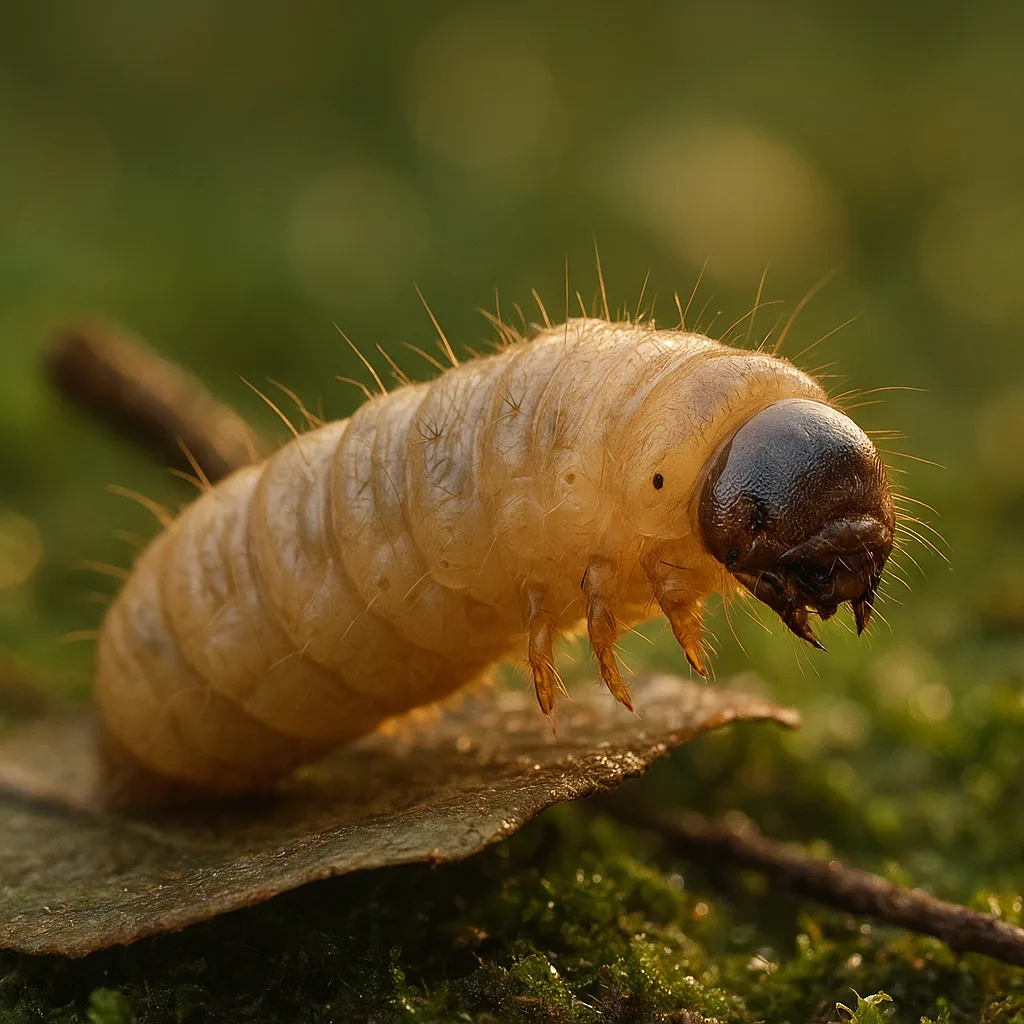
Why a larvae identification chart matters
Larvae can be pivotal: some are beneficial predators or pollinators, others cause agricultural or household damage, and a few pose health risks. A chart is not just a picture: it is a set of observable characters (size, body shape, legs, patterns, spiracles) combined with context (host plant, material, location, season) that lets you make a confident ID.
- Immediate identification reduces damage (e.g., clothes moth larvae vs safe detritivores).
- Helps choose the right control: mechanical removal, biological control, or chemical treatment.
- Improves reporting and tracking of invasive species (e.g., Lycorma delicatula, the spotted lanternfly).
- Improves safety: identify stinging or toxic larvae before handling.
How to use a larvae identification chart
A chart is a decision tree of visual cues. Start with gross morphology, then check finer features. Use a ruler or scale in your photo for precision. Modern AI tools like Orvik augment human inspection by matching multi-angle photos to verified specimens, but they work best when you provide scale and habitat notes.
Key characters to record
- Length (mm or cm): measure a live or preserved specimen next to a ruler.
- Color and pattern: note dorsal stripes, spots, mottling.
- Body shape: cylindrical, flattened, C-shaped, tapering, segmented.
- Appendages: presence of thoracic legs (3 pairs), prolegs (0–5 pairs), or no legs.
- Head capsule: distinct and sclerotized or reduced/inconspicuous.
- Surface texture: hairy/setose, smooth, scaly, waxy, or tuberculate.
- Association: host plant, fabric, soil, pet bedding, or dwelling interior.
Practical measurement tips
- Use a ruler or coin (US quarter ≈ 24 mm) in the same plane as the larva for scale.
- Photograph dorsal, lateral, and ventral views when possible.
- Note behavior: active crawler, stationary in a silken case, burrowing, or feeding in groups.
Common larval groups and identification keys
Below are the major larval types you will encounter, with distinguishing features and representative species.
For more on this topic, see our guide on Identify That Spider: A Practical Field Guide.
Caterpillars (Lepidoptera: moths and butterflies)
- Appearance: elongated, segmented, often brightly colored or camouflaged. Typically 5–80 mm long depending on species.
- Legs: three pairs of true thoracic legs and up to five pairs of fleshy prolegs on abdominal segments (usually on segments 3–6 and 10).
- Other features: prolegs have tiny hooks called crochets (visible under magnification); well-developed head capsule with chewing mandibles.
- Examples: cabbage white caterpillar (Pieris rapae) 12–25 mm; gypsy moth larvae (Lymantria dispar) 30–70 mm.
Beetle larvae (Coleoptera)
- Appearance: grubs often C-shaped (scarabaeids), stout and white, or elongate and somewhat flattened (carabids, coccinellids).
- Legs: three pairs of distinct thoracic legs; no prolegs.
- Examples: scarab grubs 10–50 mm, wireworms (Elateridae larvae) slender, elongate 5–25 mm.
Fly larvae (Diptera, maggots)
- Appearance: legless, tapered or blunt-ended, soft-bodied, often creamy-white; size 2–20 mm depending on species.
- Head: reduced or internalized in many species; breathing tubes or posterior spiracles critical for species ID.
- Examples: housefly (Musca domestica) maggots 6–12 mm; blowfly larvae up to 12–17 mm.
Flea larvae
- Appearance: very small (2–5 mm), pale, worm-like with fine setae; distinct from full adults which are laterally flattened and reddish-brown.
- Habitat: carpets, pet bedding, cracks; feed on organic debris and adult flea feces (“flea dirt”).
- Note: adult fleas are 1.5–3.3 mm and capable of jumping; larvae are not.
Ladybug larvae (Coccinellidae)
- Appearance: elongated, alligator-like, often black with bright orange markings; length 4–8 mm in early instars up to 8–12 mm near pupation.
- Habitat: on plants where aphids are present; active predators—beneficial in gardens.
Practical visual cues and comparison sections
This section provides head-to-head comparisons for common ID confusion points. Use the numbers and features below as an identification checklist.
Moth caterpillar vs beetle grub
- Moth caterpillar: has 3 pairs of thoracic legs + up to 5 pairs of prolegs; soft, often colorful; moves in waves using prolegs.
- Beetle grub: usually C-shaped, thick-bodied; only 3 pairs of thoracic legs; stout and rigid when disturbed.
- Size cues: scarab grubs commonly 15–40 mm; caterpillars vary widely but many garden species 10–30 mm.
Moth vs butterfly (larval and adult differences)
- Larvae: moth caterpillars often hairier or more cryptic; butterfly caterpillars frequently smoother with distinctive horns or fleshy projections.
- Adults: moths usually have feathery or filamentous antennae; butterflies have clubbed antennae.
- Pupa: butterflies form an exposed chrysalis; moths often spin a silk cocoon or pupate in soil/litter.
Flea vs tick vs mite (practical household ID)
- Flea adult: 1.5–3.3 mm, laterally flattened, shiny reddish-brown, excellent jumpers.
- Tick adult: 3–5 mm (unfed), oval, eight legs (arachnid), slow-moving; engorged ticks much larger.
- Mites: typically <1 mm, require magnification to see details; many are not visible to naked eye.
Ladybug larvae vs aphid nymphs
- Ladybug larvae: elongate, armored look, mobile predators, often dark with orange spots; 4–8 mm.
- Aphid nymphs: softer-bodied, pear-shaped, stationary/slow, pale green to brown; 1–3 mm.
Habitat, geographic distribution, and seasonal biology
Context is often decisive. Where and when you find a larva narrows the possibilities enormously.
- Household pests (e.g., clothes moths Tineola bisselliella): found inside wardrobes, in natural-fiber clothing, carpets, and upholstered furniture; larvae active year-round indoors but peak activity occurs in warmer months if unheated spaces are involved.
- Garden caterpillars: many Lepidoptera larvae are seasonal — spring and summer (March–September in temperate zones) — with species-specific voltinism (1–3 generations per year).
- Spotted lanternfly (Lycorma delicatula): eggs laid in late fall; egg masses visible in winter on bark, stone, outdoor furniture. Nymphs appear in spring and early summer; adults are present July–November in temperate North America.
- Fleas: thrive where hosts (dogs, cats, rodents) are present; lifecycle accelerates in warm (20–30°C), humid conditions, with complete lifecycle in 2–4 weeks under ideal conditions.
Geographic ranges are specific: many tropical species never occur in temperate regions and vice versa. Use local field guides or an AI-assisted tool like Orvik to cross-reference geographic likelihood.
You may also find our article on Spotting Carpenter Ants: A Practical Field Guide helpful.
Pest identification: moth holes, moth eggs, spotted lanternfly eggs, fleas, and ladybugs
This section answers common, urgent questions tied to the related search queries you may have used.
How to identify moth holes in clothes
- Appearance of damage: irregular, round-to-oval holes 1–25 mm across; often concentrated in wool, cashmere, silk, and other keratin-rich fibers.
- Location cues: holes along seams, in the back of wardrobe items, or in stored blankets; seldom in synthetic fabrics unless blended with natural fibers.
- Larval signs: presence of small, dirty silk webbing, pellet-like fecal casings (frass), and faded discolored patches where larvae have fed.
- Species tip: clothes moth larvae (Tineola bisselliella and Tinea pellionella) larvae typically 6–12 mm long, cream to pale brown, and spin silken tunnels or cases.
How to identify moth eggs
- Size and shape: typically 0.5–2.0 mm, spherical to oval; may be translucent, pearly white, yellowish, or brown.
- Placement: on the underside of leaves for plant-feeding moths; on fabric seams, in crevices, or on walls for clothes moths.
- Cluster vs solitary: many moths lay eggs in batches on host plants; clothes moths may lay scattered eggs over suitable fibers.
How to identify spotted lanternfly eggs
- Egg mass appearance: 30–50 mm long, containing ~30–50 eggs each around 2–3 mm; covered with a gray, waxy, mud-like coating that dries to a tan crust.
- Placement: on smooth bark, stone, vehicles, outdoor furniture — often in the open from late fall through spring.
- Geographic note: established in the northeastern United States and spreading; consult local extension agencies for reporting and removal guidance.
How to identify a flea
- Adults: 1.5–3.3 mm, laterally flattened, wingless, dark reddish-brown, with powerful hind legs for jumping.
- Signs of infestation: excessive pet scratching, flea dirt (black pepper-like specks that turn red when wet), and bites often clustered on the lower legs or around pet necks.
- Larvae: small, 2–5 mm, pale, worm-like, found in carpets, cracks, and pet bedding.
How to identify a ladybug
- Adults: dome-shaped, 3–10 mm, elytra red/orange with black spots (number and pattern species-specific); pronotal markings (e.g., M-shaped) help identify Harmonia axyridis (Asian lady beetle).
- Larvae: elongated, alligator-like, usually 4–8 mm before pupation, black with orange markings; beneficial predators of aphids.
Safety note: while most ladybugs are harmless, Asian lady beetles can emit a defensive hemolymph that may stain surfaces and cause mild allergic reactions in sensitive people.
Using images and AI for identification
High-quality images dramatically increase ID accuracy. AI apps such as Orvik analyze visual patterns and metadata (location, date) to suggest likely matches, but human validation remains crucial for pest control or conservation actions.
Looking beyond this category? Check out Goji Berries: A Field Guide to the Red Superfruit.
Photography best practices for AI and expert review
- Include a scale: a ruler or coin in the same plane as the specimen.
- Capture multiple views: dorsal, lateral, head close-up, and any distinctive ventral or posterior features (e.g., spiracles or prolegs).
- Note the substrate and host: leaf species, fabric type, or surface where found.
- Record context: number of individuals, behavior (feeding, stationary), and time of day.
What AI gets right (and what it can miss)
- Strengths: matching color patterns, general body shapes, and commonly photographed species with large reference datasets.
- Limitations: distinguishing closely related species that require microscopic characters (e.g., spiracle structure), or identifying immature instars with variable coloration.
- Best practice: use AI suggestions (like Orvik) as a starting point, then confirm with morphological keys, habitat data, or expert consultation for critical cases.
Safety, handling, and control measures
Some larvae sting or secrete toxins; others pose risks to pets or damage valuable materials. Follow safety protocols.
Related reading: Ladybug Diets: A Field Guide to What They Eat.
- Avoid direct handling of unknown larvae. Use forceps or gloves. Certain caterpillars (e.g., Lonomia spp.) have urticating spines that can cause severe reactions.
- For clothes moths: isolate affected garments, launder at >60°C or dry clean, freeze delicate items at -20°C for 72 hours to kill eggs/larvae, and vacuum wardrobes and edges thoroughly.
- For fleas: treat pets with veterinarian-recommended systemic or topical products, launder bedding at 60°C, vacuum carpets, and consider professional pest control for heavy infestations.
- For spotted lanternfly: scrape egg masses into a container with alcohol or hand-sanitize rubbing alcohol to destroy eggs; report sightings to local agricultural extension offices as required.
Warning: do not ingest or deliberately expose pets/children to any larvae specimens. Many produce irritants or can cause gastrointestinal upset if swallowed.
Conclusion
A reliable larvae identification chart combines morphological characters (size, legs, spiracles, patterns) with ecological context (host, location, season). Use scale-bearing photos, multiple angles, and metadata for best results. AI tools like Orvik can speed identification, but always cross-check AI suggestions with physical characters and local expertise before taking control measures. With these keys and practices you can quickly tell apart common larvae — from clothes moths and fleas to ladybug larvae and spotted lanternfly eggs — and act effectively and safely.
Frequently Asked Questions
- How can I tell clothes moth larvae from carpet beetle larvae?
- Clothes moth larvae are cream-colored with a distinct head capsule and often spin silk; typically 6–12 mm. Carpet beetle larvae are brownish, tapered, covered in bristly hairs, 2–5 mm, and do not spin silk.
- What do spotted lanternfly eggs look like?
- Spotted lanternfly eggs are about 2–3 mm each in masses 25–50 mm long containing ~30–50 eggs, covered in a gray, mud-like waxy coating. They appear on bark, stone, outdoor furniture, and vehicles.
- How do I identify flea activity in my home?
- Look for adult fleas (1.5–3.3 mm, reddish-brown, good jumpers), flea dirt (black specks that turn red when wet), pets scratching, and small pale larvae (2–5 mm) in carpets and bedding.
- What distinguishing features separate caterpillars from beetle grubs?
- Caterpillars (Lepidoptera) have 3 pairs of thoracic legs plus up to 5 pairs of fleshy prolegs with crochets; beetle grubs have only 3 pairs of thoracic legs, are often C-shaped and lack prolegs.
- How can I photograph larvae so Orvik or other AI tools give accurate IDs?
- Include a ruler or coin for scale, take multiple views (dorsal, side, head close-up), note the host/substrate, and record behavior and location data to improve AI accuracy.
- Are all larvae safe to handle?
- No. Some larvae have stinging hairs or toxic secretions. Use gloves or forceps when handling unknown larvae and avoid contact with face and eyes.
- How can I identify moth holes in clothes?
- Moth holes are irregular, 1–25 mm, often in natural fibers and along seams. Look for silk webbing, small pellet-like frass, and faded patches where larvae have fed.