
Quick answer: what do ladybugs eat?
At a glance, most ladybugs (family Coccinellidae) are voracious predators of soft-bodied insects — especially aphids. But the full story is richer: some species eat mite eggs, scale insects, thrips, whiteflies, insect eggs and larvae; others supplement their diet with pollen, nectar, or honeydew; a few (notably in the subfamily Epilachninae) are primarily herbivores and feed on plant leaves. If you want to know exactly what that ladybug in your garden is eating, tools like Orvik can identify the species from a photo and point to its typical diet and habits.
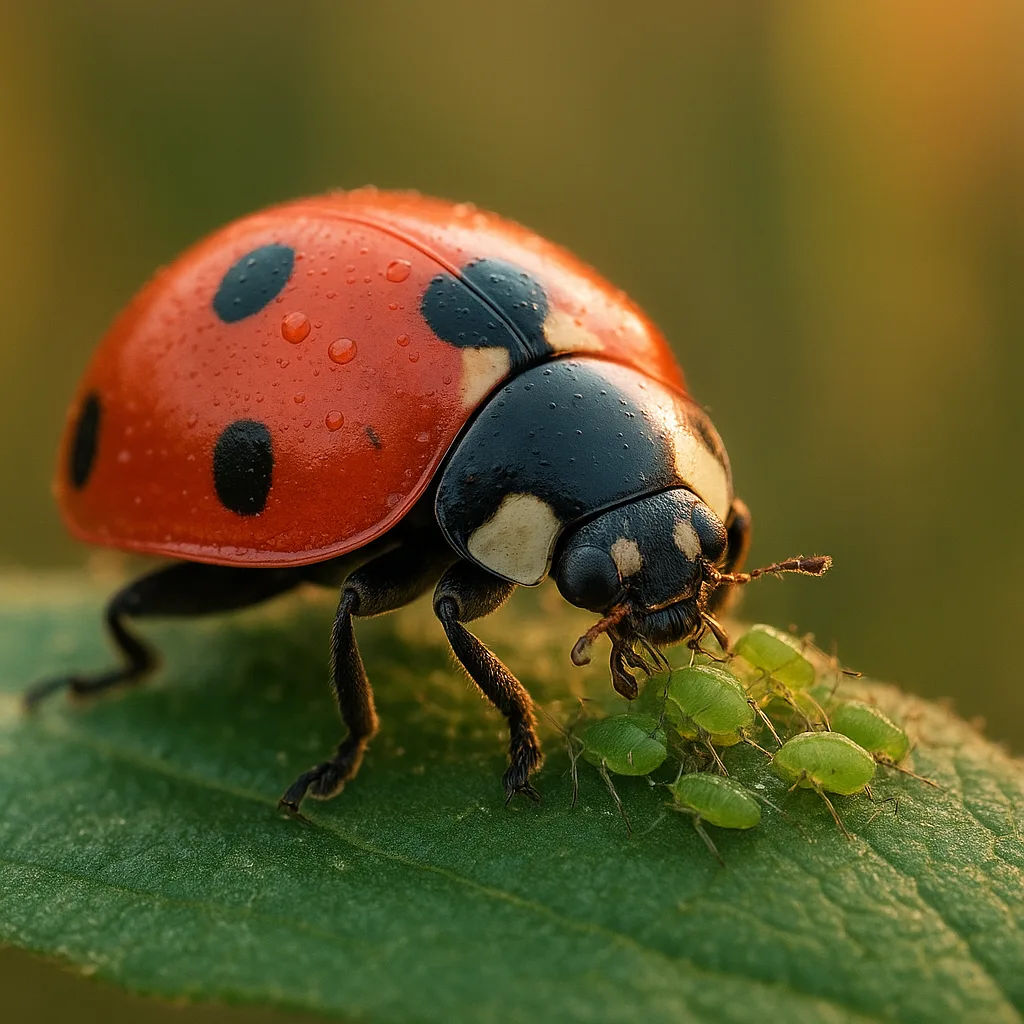
- Primary diet for most species: aphids and other soft-bodied pests
- Supplementary foods: pollen, nectar, honeydew, and fungi for some species
- Exceptions: plant-eating ladybugs (e.g., Epilachna spp.) that feed on leaves
Ladybug life stages and feeding behavior
Understanding what ladybugs eat means looking at their whole life cycle. Feeding habits change dramatically from egg to adult.
Eggs
- Laid in clusters on plant stems or near prey colonies (especially aphids)
- Not feeding — eggs are placed strategically so larvae hatch near food
Larvae
Larvae are the most voracious feeding stage. Ladybug larvae are elongated, often alligator-like in appearance, and may be spotted actively hunting.
- Diet: primarily aphids, scale crawlers, small insect eggs and larvae, mites
- Feeding rate: a single larva can consume dozens of prey items per day and several hundred to a few thousand prey across its development, depending on species and prey size (estimates vary by environment)
- Size: larvae typically 4–8 mm at maturity for common species; larger species reach >10 mm
Pupae
- Non-feeding, immobile stage attached to vegetation
- Transformation between larva and adult — no food intake
Adults
Adult ladybugs continue predation but may broaden their diet seasonally.
- Diet: aphids, whiteflies, scale insects, mites, insect eggs; some adults eat pollen/nectar
- Daily intake: adults eat variable amounts — from a few to dozens of prey items daily, depending on prey size and availability
- Seasonal behavior: in spring and summer active hunters; in fall many species aggregate to overwinter and may not feed much during cold months
What bugs and insects do ladybugs eat?
When a gardener types "what bugs do ladybugs eat" they are usually asking which pests ladybugs control. Below are the most common prey items and short notes on each.
For more on this topic, see our guide on Stink Bug Diets, ID, and How to Control Them.
Top prey species
- Aphids (Aphidoidea): the staple diet for most predatory ladybugs; both nymphs and adults attack multiple aphid species on vegetables, ornamentals and trees.
- Scale insects (Coccoidea): especially the soft-bodied crawlers that are vulnerable to ladybug predation.
- Mealybugs (Pseudococcidae): common in greenhouses and on houseplants, eaten by some ladybug species.
- Whiteflies (Aleyrodidae): small whitefly nymphs and eggs can be taken by ladybugs and their larvae.
- Mites (Acari): some ladybug species feed on pest mites.
- Thrips & insect eggs: smaller prey and eggs are included in the diet of hungry larvae and adults.
How prey size and density affect ladybug feeding
- Ladybugs prefer dense colonies of small prey (e.g., aphid colonies) because prey are easier to find and feed on efficiently.
- Large, well-armored insects are rarely eaten; ladybugs favor soft-bodied or early-stage pest insects.
- Availability of alternative food (pollen, honeydew) can reduce predation pressure on pests when prey are scarce.
What can ladybugs eat besides insects?
While predation defines their role as beneficial insects, many ladybugs are opportunistic and their diets can include non-animal items.
Pollen, nectar and honeydew
- Many adult ladybugs visit flowers for pollen and nectar — this provides carbohydrates and extends longevity when prey is scarce.
- Honeydew (sugary excrement of sap-sucking insects) is consumed by some species and can attract ladybugs to infested plants.
Fungi and mildew-eating species
- Some coccinellid species specialize on fungus (e.g., feeding on powdery mildew spores) rather than insects.
Plant-eating ladybugs
Not all ladybugs are beneficial predators. The subfamily Epilachninae includes species that feed on leaves and are agricultural pests. Examples:
- Mexican bean beetle (Epilachna varivestis): feeds on bean leaves.
- Squash lady beetle and other Epilachna species: feed on cucurbits and other crop plants.
Ladybugs in the ecosystem: predators, prey and seasonality
Ladybugs are both predators and prey. Knowing what eats ladybugs and when they are active helps you manage and protect beneficial populations.
Predators and mortality factors (what kills ladybugs)
- Predators: birds, frogs, spiders, damsel bugs and some larger predatory insects.
- Parasitoids: Dinocampus coccinellae, a braconid wasp, lays eggs in some ladybugs; the developing larva eventually kills its host.
- Pathogens and fungi: fungal pathogens such as Hesperomyces (a parasitic fungus) and entomopathogenic fungi kill individuals and can spread in dense aggregations.
- Pesticides: broad-spectrum insecticides and systemic insecticides are a major cause of ladybug mortality in agricultural and garden settings.
- Competition and invasive species: invasive species like the Asian lady beetle (Harmonia axyridis) outcompete natives in some regions.
Seasonal behavior and overwintering
- In temperate zones, many ladybugs enter diapause and overwinter in aggregations on sunny, sheltered sites — rock crevices, building eaves, leaf litter.
- Migration to overwintering sites often occurs in autumn; spring return to feeding follows warming temperatures (often >10–15°C).
- During wintering, ladybugs feed minimally; in milder climates some may remain active and feed on available prey or pollen.
Identification tips: how to tell what species you’re looking at
"Ladybug eat what" queries often come with photos of unknown beetles. Visual identification gives clues about likely diet.
You may also find our article on Identify Insects from Photos Like a Field Naturalist helpful.
Key visual cues
- Size: most ladybugs range 1–10 mm; larger species (e.g., >8 mm) may be different genera or leaf-eating species.
- Color and pattern: classic red or orange elytra with black spots (e.g., Coccinella septempunctata has seven spots); yellow/orange without spots or with variable patterns suggests Harmonia axyridis (Asian lady beetle).
- Shape: dome-shaped, almost hemispherical bodies are typical; flatter, elongated beetles may be other families.
- Legs and antennae: visible, short antennae and relatively short legs for crawling on plants.
- Texture: glossy elytra (wing covers) on most species; some fungus-eating species have matte or differently textured covers.
X vs Y: How to tell similar insects apart
- Ladybug vs Leaf Beetle (Chrysomelidae): leaf beetles often have less-domed bodies, longer antennae, and feed on leaves (look for feeding damage patterns).
- Ladybug vs Asian lady beetle (Harmonia axyridis): Asian lady beetle is variable in spot pattern and may have a distinctive M- or W-shaped mark on the pronotum; it is invasive in many regions and often aggregates indoors in autumn.
- Ladybug vs Stink Bug: stink bugs are shield-shaped and larger (12–20 mm), not dome-shaped; they are Hemiptera, not beetles.
If you have a photo, Orvik’s visual ID features can suggest species-level identifications and probable diets — especially useful when deciding whether a sighting is a beneficial native or a pest species.
What attracts ladybugs and how to encourage them
Gardeners wondering "what attracts ladybugs" are often trying to increase natural pest control. Attracting ladybugs means providing food, water, shelter and avoiding chemicals that kill them.
Plants and habitat
- Plant flowers that provide pollen and nectar: dill, fennel, cilantro, yarrow, tansy, marigold, cosmos.
- Provide ground cover and shelter: mulched borders, hedgerows, rock piles and undisturbed leaf litter for overwintering.
- Grow diverse plantings to support prey species at low levels — ladybugs follow prey to the plants.
Practical garden tips
- Avoid broad-spectrum insecticides and systemic neonicotinoids that harm ladybugs and their prey.
- Provide shallow water sources (dishes with pebbles) for drinking.
- Minimize disruptive late-season clean-up in some areas to allow overwintering sites.
- Use release cautiously: commercially sold ladybugs often disperse quickly and may introduce non-native strains; favor conservation of resident populations.
Special topic: what do stick insects eat?
The related query "what do stick insects eat" is common among people comparing garden insects. Stick insects (order Phasmatodea) are herbivores, and their diet is very different from predatory ladybugs.
Looking beyond this category? Check out Mastering Coin Identification: A Field Guide.
- Typical diet: leaves of bramble (Rubus), oak (Quercus), rose (Rosa), eucalyptus (in regions where they are native), and other woody shrubs and trees.
- Feeding behavior: adults and nymphs chew leaves; they do not hunt other insects.
- Housing/keeping: as pets, they need fresh leafy branches and high humidity for many species.
Bottom line: stick insects are plant-eaters, not beneficial predators like most ladybugs.
Related reading: Spotting the Queen Bee: A Field Guide.
Safety, toxicity and human interactions
Ladybugs are generally harmless and beneficial, but there are a few safety notes to consider.
- Allergic reactions: some people are sensitive to ladybug hemolymph (the yellowish fluid they can exude as a defense) and may experience mild allergic reactions or skin irritation.
- Bites: a few species, notably the Asian lady beetle (Harmonia axyridis), can bite humans briefly; bites are usually minor and not dangerous.
- Toxicity to pets: ladybugs are not highly toxic to pets, but large quantities eaten by dogs or cats may cause mild gastrointestinal upset.
- Pesticide risks: using insecticides to kill garden pests often kills ladybugs — avoid chemicals if you rely on biological control.
Practical tips for gardeners, farmers and observers
When someone searches "ladybug eat what" they want actionable guidance: how to attract ladybugs, how to recognize beneficial versus pest species, and how to protect them.
- Identify the species — use Orvik or a field guide to confirm whether a beetle is a beneficial predator or a plant-feeding species.
- Monitor prey levels: maintain low-to-moderate aphid populations rather than wiping them out with chemicals; this sustains ladybug populations.
- Provide floral resources and shelter; avoid late-season burning or aggressive clean-up of potential overwintering habitat.
- Be cautious with purchased ladybugs: release at dusk near aphid-infested plants and provide water and shelter, but expect many to disperse.
- Use integrated pest management (IPM): combine cultural controls, selective biologicals, and targeted controls to preserve beneficial insects.
Conclusion
So, what do ladybugs eat? Mostly aphids and a variety of other soft-bodied pests — but the diet varies by species and life stage. Some ladybugs supplement with pollen, nectar or honeydew, and a few species are leaf-feeding herbivores. Knowing the species is the key to understanding their role in your garden; Orvik can help identify the beetle in your photo and point to likely food sources and behaviors. Protecting ladybugs means providing habitat, avoiding broad-spectrum pesticides, and using IPM principles so these valuable allies can control pests naturally.
Frequently Asked Questions
- What do ladybugs eat in the garden?
- Most ladybugs eat aphids, scale crawlers, mealybugs, mites, whitefly nymphs and insect eggs; adults may also take pollen, nectar or honeydew.
- Do ladybugs eat mosquitoes?
- No; ladybugs are predators of plant pests and generally do not eat adult mosquitoes.
- What kills ladybugs?
- Broad-spectrum pesticides, parasitoid wasps, fungal pathogens, predators (birds, spiders) and habitat loss are major causes of ladybug mortality.
- Are all ladybugs beneficial?
- Most are beneficial predators, but some species in the subfamily Epilachninae are herbivores that feed on crop leaves and can be pests.
- How can I attract ladybugs to my garden?
- Provide pollen/nectar plants (dill, yarrow, cosmos), shelter (mulch, hedgerows), water sources and avoid broad-spectrum insecticides to encourage ladybugs.
- What do stick insects eat?
- Stick insects (Phasmatodea) are herbivores and feed on leaves such as bramble, oak, rose and other woody shrubs.
- How many aphids does a ladybug eat?
- Consumption varies by species and life stage; larvae can eat dozens per day and several hundred across development, while adults may eat from a few to dozens daily depending on prey size.