
When you ask "what does a stink bug look like?" you want more than a vague idea — you want clear, field-tested cues to tell stink bugs apart from other common insects. This guide gives specific measurements, scientific names, color patterns, life stages, habitat notes and practical ID tips. If you have a photo, apps like Orvik can confirm your sighting, but below are the visual cues a naturalist uses first.
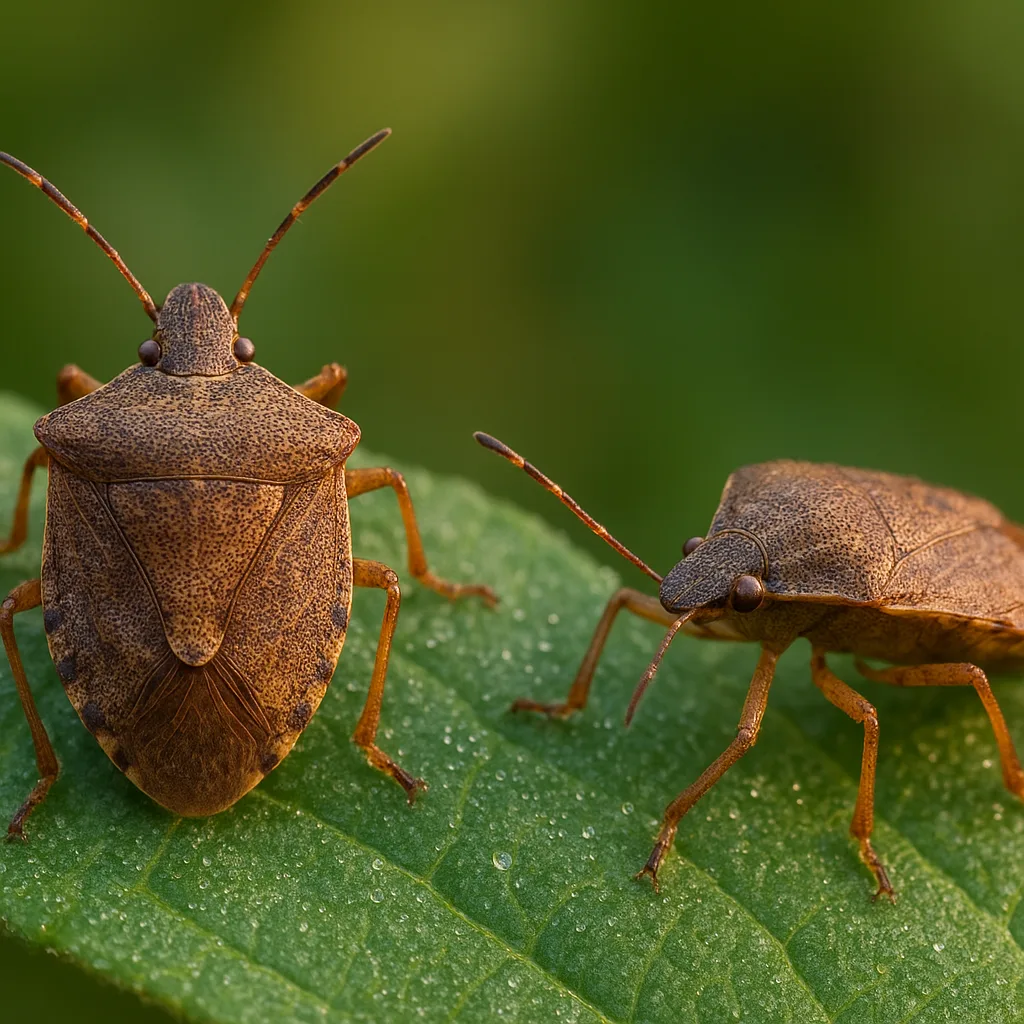
Quick Answer: What a Stink Bug Looks Like
At a glance, most adult stink bugs are unmistakable because of their shield-shaped bodies and a characteristic scutellum (a triangular plate) that can be large and visible between the wing covers. Key quick facts:
- Shape: Broad, shield-like (dorsoventrally flattened)
- Size: Adults typically 12–17 mm (0.5–0.7 in) for many common species; some can be slightly larger (up to 25 mm / 1 in)
- Color: Ranges from mottled brown to bright green; some species have metallic or patterned markings
- Antennae: Often banded with lighter and darker segments
- Distinctive smell: Emits a pungent odor when disturbed (hence the name)
These quick cues help decide whether you’re looking at a member of the family Pentatomidae (true stink bugs) or a superficially similar insect.
Detailed Anatomy and Measurements
Adult form — exact measurements and parts
Understanding measurable anatomy makes identification precise. Typical measurements and features for adult Pentatomidae:
- Length: 8–25 mm (0.3–1.0 in); most common species in temperate zones 12–17 mm
- Width: Broad, roughly two-thirds the length across the widest point
- Body shape: Trapezoidal or shield-shaped, with a flat back and slightly rounded margins
- Head: Small relative to body, with compound eyes and five-segmented antennae
- Thorax & scutellum: Pronounced scutellum often triangular and visible between hemelytra (wing covers)
- Legs: Slender; tarsi usually with 2–3 segments depending on species
Nymphs and developmental stages
Young stink bugs (nymphs) differ dramatically from adults and are often mistaken for other insects:
- Instars: Nymphs go through five instars before adulthood; size increases each stage
- Shape: Rounder and more dome-shaped in early instars; lack full wings
- Color: Many species’ nymphs are bright red, black, or orange with distinct spots or banding
- Behavior: Often aggregate in groups on host plants; easier to spot due to contrast with foliage
Common Species and Scientific Names
Knowing the scientific name helps narrow identification because many species vary by color and region. Key species you are likely to encounter:
- Brown marmorated stink bug — Halyomorpha halys: 12–17 mm, mottled brown, with distinctive pale bands on the antennae and alternating light/dark banding on the abdomen edge. Introduced from East Asia and now widespread in North America and Europe.
- Southern green stink bug — Nezara viridula: 12–15 mm, bright green in adult stage, sometimes with a yellow or red margin and a roughly oval shield; worldwide pest of vegetables.
- Green shield bug — Palomena prasina (in Europe): 14–18 mm, uniformly green in summer, browner in autumn.
- Carpocoris purpureipennis and other shield bugs: Varied color patterns—use pattern and antennae banding for ID.
Regional checklists and local field guides complement these names; if you photograph a specimen, Orvik’s visual ID can match to species-level suggestions using images and distribution data.
For more on this topic, see our guide on Spotting Bed Bugs: A Clear Visual Guide.
Habitat, Geographic Distribution & Seasonal Behavior
Where stink bugs live
Stink bugs are primarily plant-feeders. Habitats vary by species but commonly include:
- Orchards, gardens, crop fields (soybean, corn, tomatoes, apples)
- Woodland edges, hedgerows and urban gardens where host plants are present
- Underside of leaves, stems, fruit surfaces — they probe with a piercing-sucking rostrum
Geographic distribution
Some species are cosmopolitan; others are regional:
- Halyomorpha halys — native to East Asia; invasive in North America, Europe, and parts of South America
- Nezara viridula — pantropical and subtropical distribution, established in many temperate regions
- Local Pentatomidae species — many continents have endemic species with distinct color morphs
Seasonal behavior and overwintering
Seasonality is an important identification clue:
- Adults are most active in spring through fall (temperate zones).
- Many species seek sheltered overwintering sites in late autumn — inside buildings, under bark, or leaf litter.
- Brown marmorated stink bugs commonly enter homes in autumn and become dormant indoors until spring.
Similar Bugs — Comparison Guide: How to Tell Them Apart
When people search "what does a stink bug look like," they often confuse stink bugs with other common insects. Below are direct comparisons with visual cues.
Stink bugs vs. ladybugs (ladybirds / Coccinellidae)
- Shape: Ladybugs are rounder and dome-shaped; stink bugs are flattened and shield-shaped.
- Size: Ladybugs 1.5–10 mm typically smaller than many stink bugs (12–17 mm).
- Color/pattern: Ladybugs commonly red/orange with black spots; stink bugs often green or mottled brown with no rounded polka-dot pattern.
- Wings: Ladybugs’ elytra form a smooth dome; stink bugs have a triangular scutellum visible in center of back.
Stink bugs vs. june bugs (June beetles, Scarabaeidae)
- Body: June beetles are robust and oval with hard elytra and distinct head; stink bugs are flat and shield-like.
- Antennae: June beetles have lamellate (fan-like) antennae; stink bugs have segmented, thread-like antennae.
- Movement: June beetles fly strongly at night; stink bugs walk and can fly but often cling to plants.
Stink bugs vs. love bugs
- Love bugs (Plecia nearctica) are small, slender two-winged flies seen flying in mating pairs. Stink bugs are true bugs with a shield body and four wings.
- Color: Love bugs are black; stink bugs vary green or brown.
Stink bugs vs. pill bugs (woodlice) — often misnamed 'bugs'
- Pill bugs are crustaceans (Armadillidiidae), have segmented, roll-up shells and many legs. Stink bugs are insects with six legs and cannot roll into a ball.
- Habitat: Pill bugs are ground-dwelling, under logs/rocks; stink bugs live on plants and enter homes seasonally.
Beetles that look like ladybugs or bugs that look like ladybugs
Several beetles can mimic ladybug coloration (aposematic red/black), but note these differences:
You may also find our article on Stink Bug Diets, ID, and How to Control Them helpful.
- Look for hard elytra (beetles) vs partially membranous forewings (hemelytra) that stink bugs have — stink bug wing tips are leathery at the base and membranous at the tip.
- Leg and antenna structure: Beetles often have clubbed antennae; stink bugs’ antennae are straight and segmented.
- Spot or stripe arrangement: Ladybird-mimicking beetles typically have evenly rounded dome shapes and continuous color fields; stink bugs rarely mimic this dome form.
Practical Identification Tips and Field Techniques
Visual cues to check in the field
Use this checklist when you encounter an unknown insect. Each bullet is a quick test you can perform without special equipment.
- Observe body shape: Is it broad and shield-like? If yes, suspect a stink bug.
- Measure or estimate size: A 12–17 mm insect with a shield shape is likely Pentatomidae.
- Inspect the scutellum: A large triangular scutellum is diagnostic for many true bugs, including stink bugs.
- Check the antennae for banding: alternating light/dark bands are common in Halyomorpha halys.
- Look for wing texture: hemelytra (leathery base, membranous tip) differ from rigid beetle elytra.
Using photography and apps like Orvik
Photographic records speed identification and allow cross-checking with databases. Tips for photos:
- Take dorsal (top-down) shots to show body shape, scutellum and wing pattern.
- Capture close-ups of the head and antennae to reveal banding or segments.
- Photograph nymphs separately — they may appear as bright blobs of color that don’t look like adults.
- Upload multiple images to an AI-powered tool such as Orvik to get candidate species and distribution matches.
Safety, Toxicity, and Pest Status
Are stink bugs dangerous to humans?
Stink bugs are not considered dangerous in the sense of stinging or delivering venom. Important safety notes:
Looking beyond this category? Check out Dolphin Diets: What They Eat and Why.
- They do not bite humans under normal circumstances; bites are rare and non-venomous.
- The main concern is their defensive odor — volatile compounds such as trans-2-decenal and trans-2-octenal can be irritating and leave persistent smells on skin, clothing, or indoor surfaces.
- Some people report mild allergic reactions or respiratory irritation from the odor; handle specimens minimally and wash hands after contact.
Pest status and agricultural impact
Several stink bug species are major agricultural pests:
- Brown marmorated stink bug (Halyomorpha halys) causes fruit scarring on apples, peaches, and damages corn and soybeans, often reducing marketable yields.
- Green stink bugs (Nezara viridula and others) feed on pods and developing seeds of legumes, causing deformities and yield loss.
- Damage is usually from piercing-sucking feeding that causes necrotic spots, fruit drop, or malformed produce.
Recommended handling and control tips
- Do not crush indoors; sweeping or vacuuming (with a bag you can seal) is safer than squashing to avoid odor.
- Seal entry points in buildings in autumn to reduce overwintering infestations.
- For crop protection, integrated pest management (IPM) strategies — monitoring, pheromone traps, targeted insecticide use and biological controls — are preferred over blanket pesticide application.
If you are uncertain whether an insect in your home or garden is a stink bug or a look-alike, upload photos to Orvik for a rapid, image-based suggestion that factors in location and seasonal data.
Related reading: Spotting the Queen Bee: A Field Guide.
Common Misidentifications and How to Avoid Them
People often mistake other insects for stink bugs. These short notes help avoid errors:
- If the insect rolls up into a ball, it’s a pill bug (woodlouse) — not an insect but a crustacean.
- If the insect is dome-shaped and brightly spotted (red/orange/black), it’s probably a ladybug (Coccinellidae).
- Shiny green beetles that are round and have hard wing covers are likely leaf beetles or scarabs, not shield-shaped stink bugs.
When in doubt, focus on the scutellum, antenna segmentation, and wing texture — those traits separate true bugs from beetles and other arthropods.
Conclusion
To summarize: a stink bug typically has a shield-shaped body, measures about 12–17 mm in many common species, and ranges in color from mottled brown to bright green. Key diagnostic features include the triangular scutellum, banded antennae on some species, and the hemelytra wing texture. They’re widespread on crops and garden plants, can be seasonal invaders of homes, and are best identified using a combination of visible traits, photographs, and tools like Orvik for confirmation.
Keep a photo log when you find suspect insects and use the visual cues above to decide whether you’re looking at a stink bug or a look-alike such as a ladybug, june bug, love bug, or pill bug. If you need a quick ID from a photo, Orvik’s AI-powered visual recognition is a useful complement to the field techniques listed here.
Frequently Asked Questions
- How big are stink bugs?
- Most adult stink bugs are 8–25 mm long, with common species in temperate regions around 12–17 mm (0.5–0.7 in). Size varies by species and sex.
- Do stink bugs bite or sting?
- Stink bugs do not sting or inject venom. Bites on humans are rare and non-venomous. Their main defense is a strong odor released when disturbed.
- How can I tell a stink bug from a ladybug?
- Stink bugs are flat and shield-shaped with a triangular scutellum; ladybugs are dome-shaped, smaller, and typically have round spots. Antennae and wing texture also differ.
- Why do stink bugs come into my house in the fall?
- Many species, especially Halyomorpha halys (brown marmorated stink bug), seek warm, sheltered overwintering sites in late autumn and enter buildings through small gaps.
- Are stink bugs harmful to plants?
- Yes. Many species pierce fruit and seeds with their rostrum, causing scarring, seed loss, and deformation. They are agricultural pests on crops like apples, soybeans, and corn.
- Can I identify a stink bug from a photo?
- Often, yes. A clear dorsal photo showing body shape, scutellum, antennae, and color pattern can allow species-level suggestions. Tools like Orvik enhance accuracy by matching images and location data.
- What should I do if I find stink bugs indoors?
- Avoid crushing them to prevent odor. Use a vacuum with a sealable bag or sweep them into a jar. Seal entry points around windows and doors to prevent further entry.