
Introduction: Why people ask "what kills earwigs"
When gardeners and homeowners type "what kills earwigs" they usually want one or more of the following: identification (are these earwigs or another insect?), safe ways to remove or reduce numbers, immediate knockdown for a visible infestation, and long-term prevention. Earwigs (most commonly Forficula auricularia and related species) are nocturnal, moisture-loving insects with characteristic forceps-like pincers (cerci) on their abdomen. They are seldom dangerous to humans, but can damage young plants, tender leaves and fruit, or become a nuisance in homes.
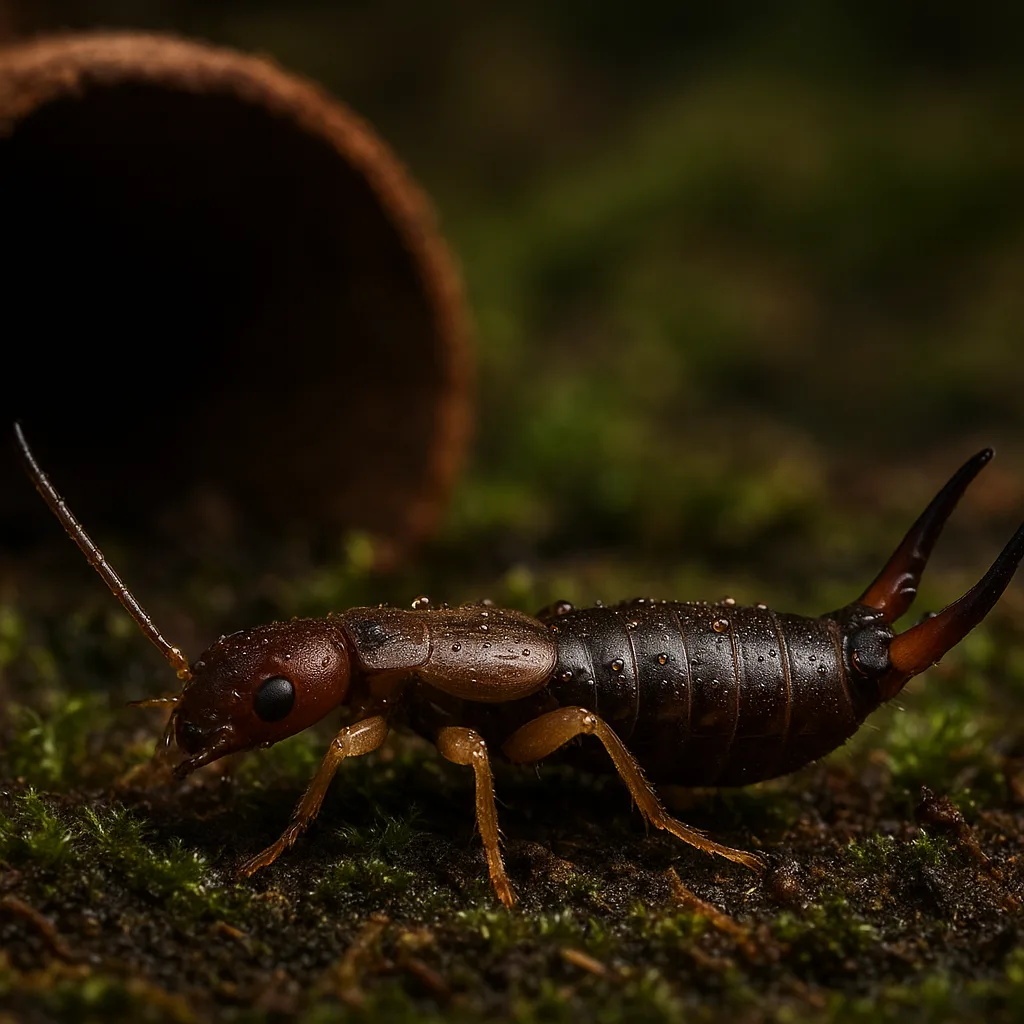
- Target readers: gardeners, homeowners, pest managers
- Main goals: identification, immediate controls, prevention
- Tools covered: traps, physical methods, diatomaceous earth, predators, and pesticides
Identification: How to recognize earwigs
Correct identification is the first step before asking "what kills earwigs" — some lookalikes (cockroaches, sowbugs, ground beetles) need different treatments. Use visual cues and, if uncertain, photograph the insect and use a visual ID tool such as Orvik to confirm species.
Key visual cues
- Body shape: elongated, flattened body 5–25 mm long (Forficula auricularia adults typically 12–15 mm).
- Color: brown to reddish-brown, often darker on the head and lighter on the legs and abdomen.
- Pincers (cerci): curved forceps at the rear — males have more curved, robust forceps; females' are shorter and straighter.
- Wings: short leathery forewings (elytra) and folded membranous hind wings in some species — many individuals rarely fly despite having wings.
- Behavioral cues: active at night, hide in moist crevices during day, attracted to light and damp organic mulch.
Comparison: Earwigs vs similar insects
- Earwig vs Cockroach: Earwigs are more elongated and have noticeable rear forceps; cockroaches have broader bodies, longer antennae, and lack pincers.
- Earwig vs Sowbug/Pillbug: Sowbugs are squat, segmented, and have seven pairs of legs; earwigs are elongated with forceps and two cerci only.
- Earwig vs Ground Beetle: Ground beetles are often metallic or black, have no forceps, and a different pronotum shape; earwigs are more flexible-bodied.
Habitat, distribution, and seasonal behavior
Earwigs are globally widespread. Forficula auricularia, the common European earwig, is established across North America, Europe, New Zealand and Australia. They favor temperate climates and habitats with moisture and shelter.
- Habitat: under mulch, bark, stones, in compost heaps, flowerbeds, under siding and in damp basements.
- Distribution: cosmopolitan species in temperate regions; local population density varies with humidity and winter survival.
- Seasonal behavior: Eggs are typically laid in spring; nymphs develop through summer. Adults peak in abundance in summer and early fall; they seek shelter and may enter houses in cooler weather.
Natural enemies and biological controls
If you want to reduce earwig numbers without chemicals, consider biological and cultural approaches. Natural enemies can lower populations but rarely eradicate them alone.
For more on this topic, see our guide on Stink Bug Diets, ID, and How to Control Them.
Predators and parasites
- Birds: starlings and other insectivorous birds eat earwigs; maintaining bird-friendly habitat can help.
- Ground beetles and toads: generalist predators in gardens will eat earwigs.
- Parasitoids and pathogens: certain nematodes, fungal pathogens (Beauveria bassiana) and parasitic wasps target earwigs in some regions.
Biological control tips
- Encourage biodiversity: native plants, bird perches and ground cover that support predators.
- Use entomopathogenic nematodes (Steinernema carpocapsae) in moist soils where label directions indicate earwig control.
- Introduce fungal biopesticides (Beauveria spp.) where registered; these infect insects but require proper temperature and humidity to work.
Physical and cultural controls: non-chemical ways to kill or repel earwigs
Many people asking "what kills earwigs" prefer low‑toxicity approaches. Here are proven physical and cultural methods that reduce numbers and are safe for gardens and homes.
Traps and removal
- Rolled newspaper trap: Moisten newspaper, roll into logs, place near infested plants overnight; in morning, shake into a bucket of soapy water and dispose.
- Oil trap: Bury a shallow can (tuna can) flush with soil, add vegetable oil mixed with a tablespoon of soy-based attractant; earwigs fall in and drown.
- Glue boards: Good for indoors in garages and basements to monitor and remove individuals.
Habitat modification (prevention)
- Reduce moisture: fix leaks, improve drainage, avoid overwatering — earwigs need high humidity to thrive.
- Remove hiding places: clear mulch from foundation zones (3–6 inches), remove stacks of wood, leaf litter and stones close to house perimeter.
- Seal entry points: caulk gaps, install door sweeps, screen vents.
- Landscape tips: keep ground cover and dense mulch a minimum of 30–45 cm (12–18 in) from foundations to reduce migration indoors.
Immediate physical kill
- Hand-pick and drown in soapy water (effective for small infestations).
- Vacuuming (household vacuum) can quickly remove visible indoor earwigs; empty canister outdoors.
Diatomaceous earth and other inert dusts: does diatomaceous earth kill earwigs and other bugs?
Diatomaceous earth (DE) is a desiccant made from fossilized diatoms and kills many crawling insects by abrading their protective waxy cuticle, causing dehydration. You asked about "diatomaceous earth kills what bugs" — DE can kill earwigs, ants, roaches, fleas, bed bugs, and some soft-bodied insects, but its effectiveness depends on dryness and correct application.
What DE kills and limitations
- Effective against: ants (including some outdoor species), earwigs, roaches (crawling stages), fleas, mites, many soft-bodied insects.
- Less effective or slow against: fast-moving or heavily armored insects; not immediate — may take 24–72 hours to kill.
- Not suitable for: water-dwelling pests or wet environments; once wet, DE loses effectiveness until dry.
How to use DE safely and effectively
- Use food-grade DE, not pool-grade (which is chemically treated).
- Apply a thin, even dust in dry, protected areas — cracks, under mulch (away from windy spots), along foundation gaps, in crawlspaces.
- Avoid inhaling dust; wear a dust mask and keep children and pets away during application. Inhalation can irritate lungs.
- Reapply after rain or irrigation; effectiveness declines as DE becomes damp.
Chemical controls: pesticides that kill earwigs (and related pests)
When physical measures and biological controls fall short, targeted chemical controls can be used. Homeowners should choose products labeled for earwigs and follow the label. Below are commonly used options and how they compare with treatments for ants, aphids, ladybugs, and water bugs.
You may also find our article on Identify That Spider: A Practical Field Guide helpful.
Common insecticides and application tips
- Pyrethroids (permethrin, bifenthrin, cyfluthrin): provide quick knockdown and residual control on perimeters. Use as directed; avoid spraying flowering plants where pollinators visit.
- Boric acid and baits: useful for ants and cockroaches; boric acid is slower-acting and best placed where pets/kids cannot access.
- Insecticidal soaps and horticultural oils: work well on soft-bodied pests like aphids; soaps have limited effect on hard-bodied earwigs but are safe for spot treatments on plants.
- Gel baits and granular baits: often used for ants and cockroaches; some granular baits for perimeter treatment will reduce earwig sheltering sites.
Safety and toxicity warnings
- Always read and follow the pesticide label — the label is the law and contains application rates (g per m2 or ounces per gallon).
- Avoid broad-spectrum sprays on flowering plants to protect pollinators — if you must spray, do so at dusk or when flowers are not open.
- Many insecticides (neonicotinoids, some pyrethroids) are toxic to aquatic life — do not apply near storm drains, ponds or waterways.
- Keep pets and children away from treated areas until products dry or label-specified reentry intervals have passed.
Targeted guidance: related pests people often ask about
Searches that include "what kills earwigs" often overlap with queries about ants, aphids, ladybugs, bees and water bugs. Briefly: here's how recommended controls compare.
What kills ants immediately?
- Contact sprays with pyrethrins or pyrethroids give immediate kill of visible ants but do not control the colony. For long-term control use baits (borax, hydramethylnon, fipronil) to transfer to nest and queen.
What kills aphids?
- Use insecticidal soap, neem oil or strong water spray to dislodge and kill aphids. Beneficial predators (ladybugs, lacewings) and systemic insecticides for severe cases are options.
What will kill ladybugs?
- Ladybugs (Coccinellidae) are beneficial predators of aphids. They can be killed by pyrethroids, soaps, DE, and hand removal if they become an indoor nuisance. Consider exclusion over killing — if dealing with Asian lady beetles (Harmonia axyridis), seal entry points and use vacuums rather than sprays.
What repels bees?
- Do not kill bees; they are critical pollinators. Repellents: smoke, peppermint oil, citronella, and maintaining alternative nesting habitat can discourage bees from unwanted locations. If a hive is problematic, contact a local beekeeper or pest professional.
What kills water bugs?
- "Water bugs" often refer to large cockroaches (Periplaneta americana). Effective methods: bait gels (indoxacarb, hydramethylnon), boric acid dust in voids, perimeter treatments by professionals, and sanitation to remove food/water sources.
Comparisons: methods evaluated side-by-side
Choosing between options requires understanding speed, safety, cost, and residual control. Below are practical comparisons.
Looking beyond this category? Check out Mastering Coin Identification: A Field Guide.
Diatomaceous earth vs chemical insecticides
- Speed: DE is slower (24–72 h) vs pyrethroids (minutes to hours).
- Safety: Food-grade DE is low-toxicity but is a respiratory irritant; chemical insecticides carry higher acute toxicity and environmental risks.
- Residual: Chemicals often have longer residual; DE must remain dry to be effective.
Traps/physical controls vs baits/sprays
- Traps: low environmental impact, good for monitoring and small reductions.
- Baits: effective for colony-level control of ants and cockroaches but must be placed correctly.
- Sprays: immediate knockdown but may miss nests and harm non-targets; best used as part of an integrated approach.
Practical action plan: step-by-step to reduce earwigs now and long-term
For people searching "what kills earwigs" and wanting practical steps, follow this integrated pest management (IPM) plan.
Related reading: Spotting Carpenter Ants: A Practical Field Guide.
- Confirm ID: Photograph the insect and use Orvik or a local extension office to confirm it’s an earwig — this avoids misapplication for lookalikes.
- Remove immediate individuals: Hand-pick at night with gloves, roll traps, or vacuum indoors.
- Reduce habitat: Move mulch 12–18 in from foundations, clear debris, improve drainage.
- Install traps: Use oil or newspaper traps along garden perimeter for ongoing capture.
- Apply DE or targeted perimeter dusts: In dry protected zones near foundations and under porches — follow safety precautions.
- Use chemical control as last resort: Apply labeled perimeter residuals (pyrethroid-based) around foundation cracks if infestation persists; consider professional help for heavy infestations.
- Monitor: Check traps weekly and reassess after moisture events; repeat cultural measures seasonally.
When to call a professional and using Orvik for help
If you have a heavy infestation (dozens nightly indoors), recurring problems despite prevention, or uncertainty about species (some roaches and water bugs require different treatments), contact a licensed pest control professional. Use Orvik to document specimens — its AI-guided visual ID can speed diagnosis and help you share accurate photos with professionals or extension services.
- Professionals can apply labeled treatments with proper equipment and provide guarantees.
- Orvik is useful for rapid identification and tracking distribution; capture clear, close-up photos showing size, color and the rear forceps for best results.
Conclusion
Answering "what kills earwigs" starts with correctly identifying the insect, reducing habitat and moisture, and choosing a control suited to your tolerance for chemicals. For quick reduction, physical traps and hand removal or diatomaceous earth are effective low-toxicity options. For persistent problems, baits and targeted perimeter insecticides applied according to label instructions will reduce numbers. Wherever possible, favor integrated approaches: cultural changes, biological controls and monitoring. Tools such as Orvik help with confident identification and improve the likelihood of choosing the right strategy.
Frequently Asked Questions
- Do earwigs bite or pose a health risk?
- Earwigs can pinch with their forceps but are not venomous and rarely break skin. They are not significant disease vectors; the risk to humans is minimal.
- Will diatomaceous earth kill earwigs immediately?
- No. Food-grade diatomaceous earth desiccates insects and typically takes 24–72 hours to kill. It must stay dry and be applied where earwigs contact the dust.
- What repels bees without killing them?
- Use smoke or natural repellents like peppermint or citronella oil to deter bees from immediate areas. For hives or heavy infestations, contact a beekeeper rather than using pesticides that kill bees.
- How can I kill ants immediately indoors?
- Contact sprays containing pyrethrins or pyrethroids will kill visible ants quickly, but to control the colony use bait stations with borax or commercial ant baits placed according to label directions.
- Are ladybugs harmful and should they be killed?
- Most ladybugs are beneficial predators of aphids and should not be killed. If they become indoor nuisances (e.g., Asian lady beetles), vacuum them or seal entry points rather than using broad insecticides.
- Can earwigs be controlled naturally in the garden?
- Yes. Reduce moisture and hiding places, use traps like rolled newspaper or oil cans, encourage predators, and apply biologicals such as entomopathogenic nematodes where appropriate.
- What kills water bugs (large cockroaches)?
- Effective treatments include gel baits (indoxacarb, hydramethylnon), boric acid applied in voids, and professional perimeter treatments. Sanitation and moisture control are also critical.