
Why people ask “what type of bug is this”
When someone types or snaps a photo asking “what type of bug is this,” they want quick, confident answers: Is it harmful? Is it a pest? Is it a beneficial species? Where did it come from? How can I tell it apart from lookalikes? This guide gives field-tested visual keys, habitat cues, and safety advice so you can identify insects, moths, beetles and similar arthropods with more certainty.
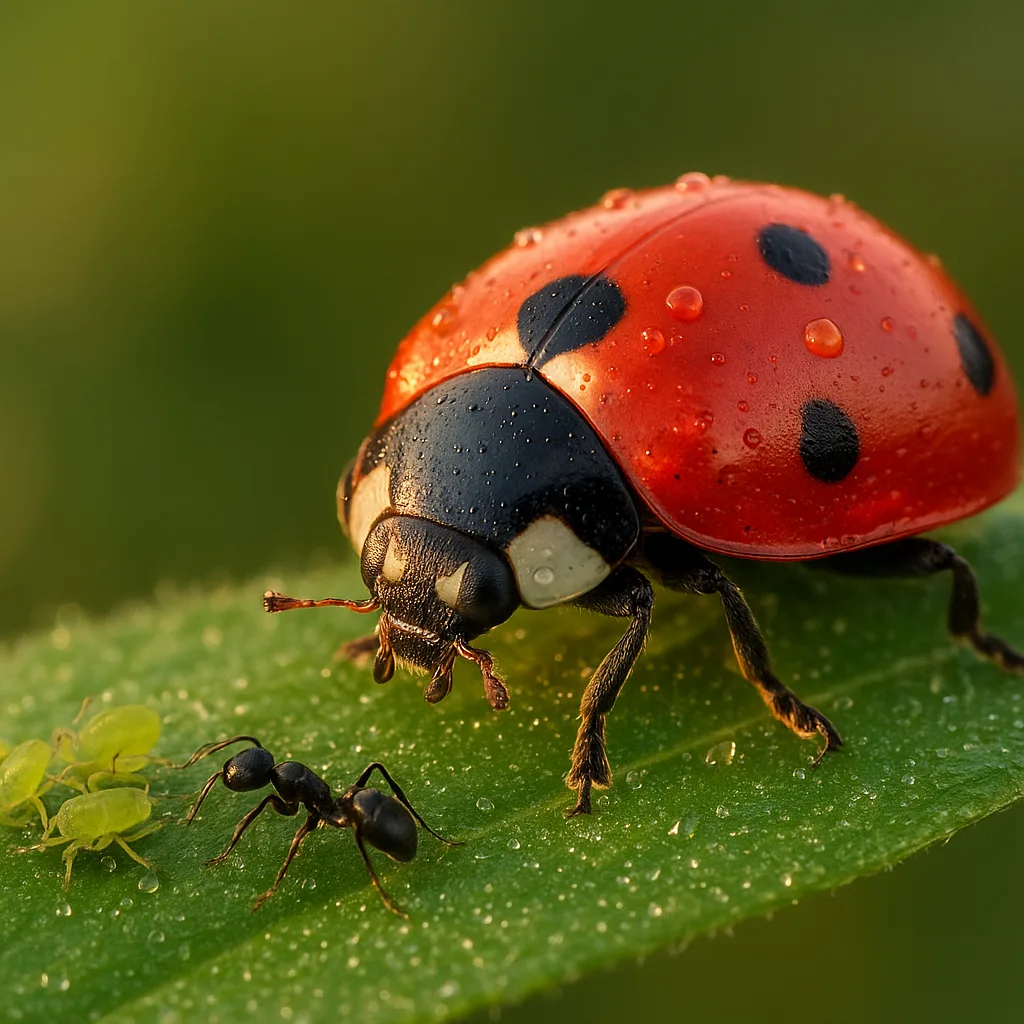
- Common motivations: health concerns, home damage, curiosity, conservation.
- Typical questions: size, color, life stage, whether it stings/biters, and seasonal patterns.
- Tools to help: direct observation, scale references, macro photos, and apps such as Orvik for quick identifications.
Insect ID fundamentals: what to look for first
Successful identification begins with consistent observations. Measure, describe, and photograph these key characters.
Primary visual cues
- Size: total body length in millimeters. For example, a common lady beetle (Coccinella septempunctata) is 6–8 mm; a luna moth (Actias luna) has a wingspan of 90–105 mm.
- Body shape: elongated (e.g., rove beetles), oval (ladybirds), teardrop (many moths), cylindrical (carpenter bees).
- Wings: number, texture (hard elytra vs. membranous wings), resting posture (flat over back vs. tent-like).
- Antennae: filiform, clubbed, feathery (plumose), or elbowed—important in moths, beetles, and ants.
- Legs: number visible, length, presence of enlarged hind legs (saltatorial) for grasshoppers.
- Color and pattern: spots, stripes, iridescence, translucent wings, metallic sheen.
Contextual clues
- Location: indoors (kitchen, basement), outdoors (garden, woodland), water margins.
- Substrate: on wood, plant leaves, under bark, in soil—many species are habitat-specific.
- Time of day and season: diurnal vs. nocturnal; many moths are seen at night in spring and summer.
- Behavior: flying, crawling, jumping, swarming, or producing webbing or burrows.
Major insect groups and quick ID signatures
Below are the major groups you’ll encounter and the most reliable visual keys for each.
Beetles (Order: Coleoptera)
- Identification tips: two hardened forewings (elytra) meeting in a straight line down the back; chewing mouthparts.
- Size range: 0.3 mm (Ptiliidae, featherwing beetles) to 100+ mm (Goliathus spp.).
- Examples: lady beetles (Coccinellidae) 4–10 mm, ground beetles (Carabidae) 5–30 mm, longhorn beetles (Cerambycidae) 10–80 mm.
Moths and Butterflies (Order: Lepidoptera)
- Identification tips: two pairs of scaly wings; proboscis (coiled mouthpart) present in adults; larvae are caterpillars.
- Moths typically hold wings flat or tented when at rest; butterflies hold wings vertically.
- Size: wingspans from 4 mm (micromoths) to 300 mm (giant silk moths).
True bugs (Order: Hemiptera)
- Identification tips: piercing-sucking mouthparts (a beak or rostrum); half-hardened forewings (hemelytra) in many species; often triangular scutellum.
- Includes stink bugs (Pentatomidae), aphids (Aphidoidea), and assassin bugs (Reduviidae).
- Size: aphids 1–6 mm; shield bugs 10–20 mm.
Flies (Order: Diptera)
- Identification tips: single pair of wings with a pair of halteres (reduced hindwings); large compound eyes common.
- Includes mosquitoes (Culicidae), house flies (Muscidae), hoverflies (Syrphidae).
- Size: 1.5–15 mm typical for many species.
Bees, wasps and ants (Order: Hymenoptera)
- Identification tips: two pairs of membranous wings (often reduced in ants), constricted “wasp waist” in many species, elbowed antennae in ants.
- Examples: honey bee (Apis mellifera) 12–15 mm, paper wasp (Polistes spp.) 15–20 mm, fire ant (Solenopsis invicta) workers 2–6 mm.
What type of moth or beetle is this? Focused comparisons
Many people specifically ask “what type of moth is this” or “what type of beetle is this.” The trick is to distinguish key groups and then narrow to family or species.
For more on this topic, see our guide on Spotting Bed Bugs: A Clear Visual Guide.
Moth vs. butterfly: five quick visual checks
- Antennae: butterflies usually have clubbed antennae; moths often have feathery or filamentous antennae.
- Resting posture: butterflies fold wings upright; many moths flatten wings or hold them tent-like.
- Body: moths often have thicker, hairier bodies; butterflies are typically more slender.
- Nocturnal vs diurnal: most moths are nocturnal, but many day-flying moths exist (e.g., Sphingidae).
- Pupal stage: butterflies form an exposed chrysalis; many moths spin a cocoon.
Beetle vs. true bug: telltale differences
- Wings: beetles have hard elytra that fully cover the abdomen; true bugs often have hemelytra with a half-hardened/half-membranous structure.
- Mouthparts: beetles have chewing mandibles; true bugs have a proboscis for sucking liquids.
- Damage patterns: beetles often chew leaves in distinct notches; sap-sucking bugs cause stippling or distorted growth.
How small can a bug be? What is the smallest bug?
When someone searches “what is the smallest bug,” they might mean either the smallest insect overall or the smallest common household pest.
Smallest known insects (scientific extremes)
- Smallest described insect: the male of the chalcid wasp Dicopomorpha echmepterygis has been measured at ~0.139 mm in length—smaller than many single-celled organisms.
- Featherwing beetles (Family Ptiliidae) include species around 0.3 mm long; these are among the smallest Coleoptera.
- Many minute parasitic wasps (Chalcidoidea, Mymaridae) commonly range from 0.2–1.0 mm.
Smallest common pests you might find at home
- Aphids: 1–4 mm; often found on plant stems or undersides of leaves.
- Booklice (Psocoptera): 1–3 mm; found in damp books, paper, or moldy areas.
- Fleas: 1.5–3.5 mm; laterally compressed, jumping, associated with pets.
How to photograph and document a specimen for ID
Good photos and contextual notes are the fastest path to a reliable ID—whether you use Orvik or consult a field guide or expert.
Photography checklist
- Take multiple angles: dorsal (top), lateral (side), frontal (head), and close-up of antennae or mouthparts.
- Include scale: a ruler or a familiar object (coin) helps estimate size in millimeters or centimeters.
- Capture habitat: leaf, stem, soil, wood, indoor location—habitat often narrows possibilities immediately.
- Lighting: natural diffused light reduces glare. Use a macro lens or smartphone macro mode for small details.
Notes to record
- Date and time of observation (seasonal patterns matter).
- Exact location (habitat type and region—geographic distribution is key).
- Behavior: flying, feeding, mating, or producing damage.
Apps like Orvik can analyze photos and metadata, rapidly narrowing candidate species and pointing you to distinguishing features—useful when you need an ID quickly in the field.
You may also find our article on Ladybug Diets: A Field Guide to What They Eat helpful.
Safety, toxicity, and first-aid considerations
Not all insects are dangerous, but a few require caution. Accurate identification helps you assess risk and respond appropriately.
Common harmful insects and risks
- Stinging insects: honey bees (Apis mellifera), paper wasps (Polistes), hornets. Stings can cause allergic anaphylaxis in susceptible people.
- Biting or blood-feeding: mosquitoes (Culicidae) can transmit viruses; ticks (not insects but arachnids) transmit Lyme disease.
- Toxic beetles: blister beetles (Family Meloidae) exude cantharidin and can cause skin blisters on contact.
- Disease vectors: kissing bugs (Triatominae) can carry Trypanosoma cruzi; certain fleas can vector Yersinia pestis historically.
Practical safety steps
- Do not handle unknown insects with bare hands—use a jar and piece of stiff paper to trap or move them.
- If stung and symptoms are severe (difficulty breathing, swelling of face/throat), call emergency services immediately.
- For skin contact with blistering beetles, wash the affected area with soap and water; seek medical attention for extensive reactions.
- Use integrated pest management (IPM) for household infestations: exclusion, sanitation, physical removal; reserve pesticides for persistent problems.
Comparison corner: common lookalikes and how to tell them apart
Misidentification leads to unnecessary alarm or ineffective control. Below are side-by-side comparisons to help you narrow down suspects.
Looking beyond this category? Check out How to Identify Any Rock in the Field.
Carpenter bee vs. bumblebee
- Carpenter bees (Genus Xylocopa): 15–25 mm, shiny, mostly hairless abdomen, often bore round holes in soft wood.
- Bumblebees (Genus Bombus): 10–25 mm, dense hair on abdomen, no wood-boring behavior.
House centipede vs. cockroach
- House centipede (Scutigera coleoptrata): elongated with 15 pairs of long legs, fast runner, predatory on other arthropods.
- Cockroach (Order Blattodea): broader, flattened body with six legs, not multiple leg pairs extending like a comb.
Clothes moth vs. pantry moth
- Clothes moths (Tineidae): small (6–8 mm wingspan), golden or buff-colored, larvae feed on wool, fur, or textiles.
- Pantry moths (Plodia interpunctella): 14–20 mm wingspan, forewings with bi-colored pattern (reddish-brown near tips), larvae feed on stored grains.
Putting it all together: a practical identification workflow
If you’re confronted with an unknown insect, use this stepwise approach to reach a safe, confident identification.
Related reading: Stink Bug Diets, ID, and How to Control Them.
- Observe and measure: note body length (mm), wing type, antennae, and color pattern.
- Record context: habitat, time, behavior, and any damage symptoms.
- Photograph multiple angles with a scale; upload to a tool like Orvik for instant suggestions and confidence scores.
- Compare to reference photos and keys: family-level traits first, then narrow to genus or species.
- If harmful or uncertain, consult a local extension service, entomologist, or pest professional before applying chemical controls.
Orvik integrates AI with user photos and metadata to prioritize likely species and highlight diagnostic characters—useful when you need an expert second opinion in seconds.
Conclusion
When you ask “what type of bug is this,” you’re after more than a name — you want to know whether it poses a risk, whether it’s a pest or beneficial, and how to respond. Start with clear photos, measurements, and habitat notes. Use visual keys—wings, antennae, mouthparts, and behavior—to place the sighting in a major insect group, then narrow down to family or species. For an efficient, evidence-based ID, supplement field notes with a tool like Orvik and consult a local expert when safety or management decisions depend on an accurate diagnosis.
Frequently Asked Questions
- How can I tell if a bug will sting or bite?
- Look for obvious stingers or defensive postures: bees and wasps have a narrow waist and visible stinger; biting insects like mosquitoes have piercing mouthparts. If unsure, avoid handling and photograph from a safe distance.
- What is the smallest insect I might find at home?
- Common tiny home pests include aphids and booklice at 1–4 mm. The absolute smallest insects in nature are parasitic wasps that can be <0.2 mm, but these are rarely noticed indoors.
- Is it a bug or a beetle? How do I tell?
- Beetles have hardened elytra covering the back; true bugs have a visible proboscis and often a half-hardened forewing. Check mouthparts and wing structure to differentiate.
- Can I use my phone to identify insects accurately?
- Yes—high-quality macro photos with scale and habitat context greatly improve accuracy. Uploading images to an AI tool like Orvik speeds identification and highlights diagnostic features.
- When should I call a professional pest controller?
- Call a professional for stinging insect nests near human activity, suspected disease vectors, infestations that damage structures (termites), or when DIY measures fail.
- Are all brightly colored insects dangerous?
- No. Bright coloration can be a warning (aposematism) in some species, but many harmless insects mimic warning colors. Identification, not color alone, determines risk.