
What people mean by "acacia scientific name"
When someone searches for acacia scientific name they are usually trying to answer one of three practical questions: which botanical name applies to the tree they see, how the name fits into modern taxonomy, and how to separate Acacia from lookalikes in the field. Acacia is a diverse group of legume trees and shrubs with a complex naming history, so a clear, concise explanation helps both casual observers and professionals identify specimens with confidence.
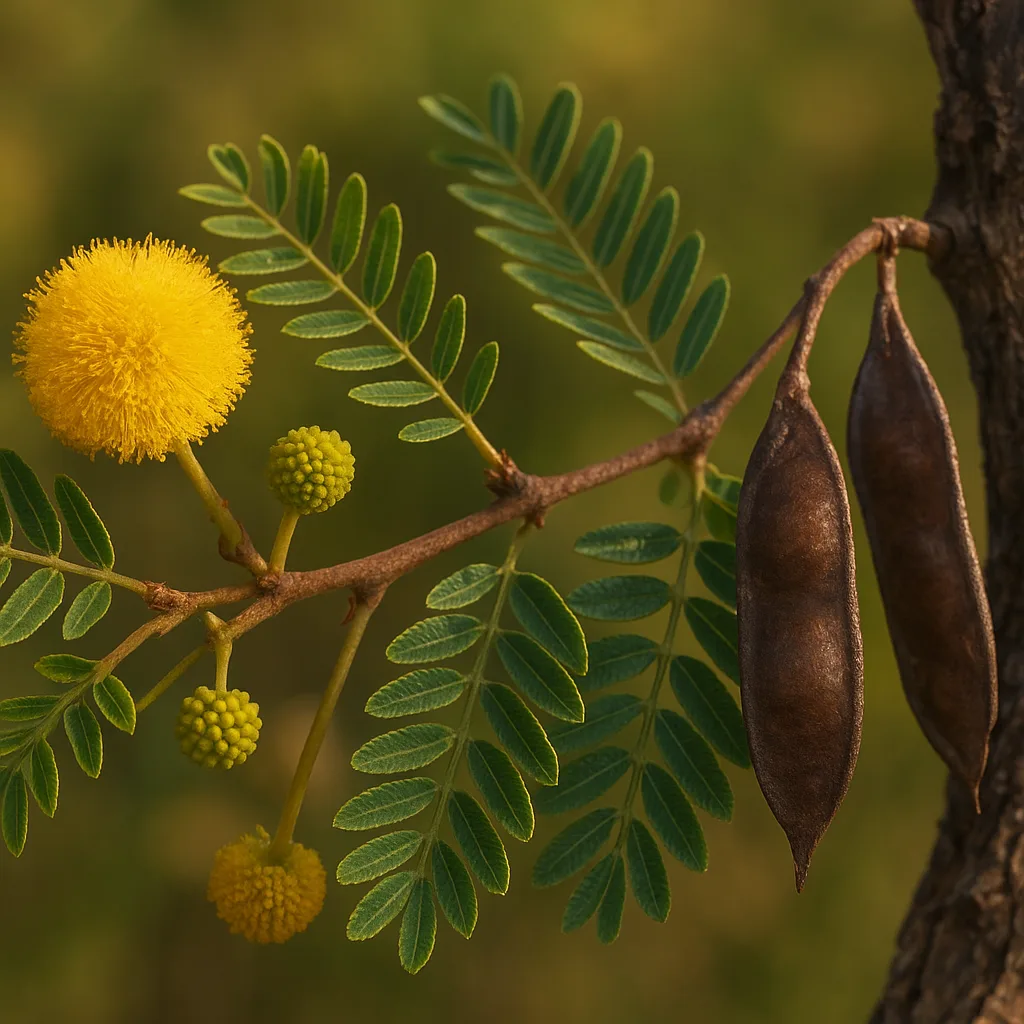
- Are you holding a specimen in hand or a photo on your phone? Visual cues matter.
- Do you need the formal botanical name for a report or planting label? Taxonomy matters.
- Do you want to know if the tree is toxic, invasive, or useful? Ecology and uses matter.
Taxonomy and the acacia scientific name
Acacia belongs to the legume family, Fabaceae, subfamily Mimosoideae. The name Acacia L. dates back to Carl Linnaeus in 1753. But botanical revisions over the past 30 years have split the old Acacia sensu lato into several genera. For practical identification you need to know which scientific name applies locally.
Key facts and numbers
- Family: Fabaceae (legumes)
- Original broad group: Acacia sensu lato, roughly 1,200–1,400 species worldwide
- Modern arrangement: many African and American species reassigned to genera such as Vachellia and Senegalia; most Australian species retained the name Acacia
What is the "official" acacia scientific name?
There is no single acacia scientific name for all trees commonly called acacia. When botanists need precision, they use a binomial such as Acacia dealbata, Vachellia nilotica, or Senegalia catechu. Key points:
- If the tree is an Australian wattle, the genus is usually Acacia (for example Acacia pycnantha, the golden wattle).
- If the tree is an African thorn commonly called babul or Egyptian thorn, the accepted name is often Vachellia nilotica (formerly Acacia nilotica or Acacia arabica).
- If the plant has bipinnate leaves and hooked thorns, it may belong to Senegalia rather than Acacia sensu stricto.
Common acacia species and their common names
Common names vary regionally. Here are several species people commonly encounter and the names you might see on signs or in local guides.
For more on this topic, see our guide on Identifying Dieffenbachia: Common Names & Tips.
- Acacia dealbata – common name: silver wattle or mimosa in horticulture; noted for fluffy, bright yellow flower heads in late winter to spring. Scientific name often used for Australian wattles.
- Vachellia nilotica (synonym Acacia arabica or Acacia nilotica) – common names: babul, Egyptian thorn, prickly acacia. A thorny African species with compound leaves and scented cream to yellow flower heads.
- Acacia auriculiformis – common names: earleaf acacia, northern black wattle, Australian wattle. Native to northern Australia, Papua New Guinea and Indonesia; has distinctive sickle-shaped phyllodes and golden cylindrical flower spikes.
- Acacia senegal – common name: gum arabic tree; source of commercial gum arabic in Sudan and Sahel regions.
Related plants you might also search
Searches for acacia often appear alongside other garden and street plants. Two queries to address directly:
- Aloe vera common name – Aloe vera is commonly called aloe, true aloe, or medicinal aloe. It is a succulent in the Asphodelaceae family and unrelated to acacia.
- Tecoma capensis common name – Tecoma capensis is the Cape honeysuckle or trumpet flower, a tubular-flowered shrub in Bignoniaceae and not a legume.
Including these in your searches helps when municipal plant lists or mixed plantings include both succulents and wattles.
How to identify an acacia in the field
Acacia identification relies on a suite of visual features. Below are practical cues you can use with a hand lens, ruler, or a smartphone camera. Orvik can speed identification by analyzing images of these features and suggesting likely species.
You may also find our article on Field Guide to Flower Names helpful.
Leaves and phyllodes
- Phyllodes vs true leaves: Many Australian acacias have phyllodes, which are flattened leaf stems that look like simple leaves. Phyllodes are usually 3–20 cm long, often sickle-shaped or linear.
- Bipinnate leaves: Many African and American species have bipinnate (twice-compound) leaves with small leaflets 2–10 mm long.
- Color and texture: Phyllodes are often leathery, dull green to gray-green. Young growth may be glaucous or hairy.
Flowers and inflorescences
- Shape: Flowers typically form bright yellow spherical heads 3–8 mm in diameter or elongated cylindrical spikes 1–5 cm long.
- Color: Most acacias have cream to golden yellow flowers; a few species produce white, orange, or even red-tinged blooms.
- Timing: In temperate zones, many wattles flower in late winter to spring. Tropical species often flower in the dry season or year-round.
Thorns and stipules
- Thorns: Presence, arrangement, and shape of thorns are diagnostic. Vachellia species often have paired, straight or hooked thorns at nodes. Some Acacia sensu stricto have no thorns.
- Stipular spines: Look for stipules or modified leaf tips at the base of leaf petioles.
Pods and seeds
- Pods: Typical legume pods vary from firm and woody 5–15 cm long to thin and papery; pod margins, constrictions between seeds, and surface hairs are useful.
- Seeds: Usually 3–8 mm, hard and oblong; often dark brown or black. The aril (fleshy appendage) may attract ants for dispersal.
Practical field checklist
- Photograph leaf/ phyllode (include upper and lower surface) and a ruler for scale.
- Photograph inflorescences close-up and the whole tree for habit.
- Note thorns: single, paired, hooked, or absent; take macro photos.
- Capture a pod if present; record measurements and texture.
- Use Orvik to upload photos of these features for automated suggestions.
Habitat, geographic distribution, and seasonal behavior
Different acacia species occupy a wide range of habitats from arid savannas to wet tropical forests. Understanding habitat narrows identification possibilities quickly.
- Australia: Most native wattles (Acacia spp.) dominate open forests, woodlands and heath. They tolerate poor soils and many species fix nitrogen.
- Africa and South Asia: Vachellia and Senegalia species dominate savannas and dry riverine systems. Vachellia nilotica is common along riverbanks and disturbed lands.
- Introduced regions: Several species, such as Acacia dealbata and Acacia auriculiformis, are widely planted in subtropical regions and sometimes become invasive.
Seasonal behavior
- Flowering: Temperate species often flower late winter to spring; tropical species flower in the dry season or intermittently year-round.
- Leaf phenology: Many acacias are evergreen in the tropics and semi-deciduous in temperate climates. Phyllodes persist long after true leaflets would have fallen.
- Reproduction: Seed pods typically mature several weeks to months after flowering. Some species require scarification or fire cues for germination.
Uses, toxicity, and safety
Acacias have many human uses but also some hazards. Knowing which species you have affects whether pods are edible, gums are useful, or thorns present a danger.
You might also be interested in Field Guide to Visual ID with Orvik.
- Uses
- Timber and fuelwood: Dense wood from species such as Acacia melanoxylon is valued for furniture and charcoal.
- Gums and tannins: Acacia senegal produces gum arabic; several species provide tannins for tanning leather.
- Ornamental planting: Acacia dealbata and Acacia auriculiformis are used widely for screening and landscape color.
- Soil improvement: Many species fix atmospheric nitrogen via root nodules, improving poor soils.
- Toxicity and cautions
- Some acacia species contain alkaloids. For example, Acacia confusa and several Australian species contain tryptamine-like compounds; these can be toxic or psychoactive.
- Gums and seeds: Gum arabic is edible and safe; seeds of some species are bitter or contain toxic compounds and should not be eaten without species-level confirmation.
- Thorns: Vachellia species with long paired thorns cause injury to livestock and humans and can injure tires and clothing.
- Allergic reactions: Pollen from prolific flowering acacias can exacerbate hay fever in sensitive individuals.
When in doubt, do not ingest parts of an acacia unless the species is positively identified and has a documented safe use. Use Orvik to compare your specimen against verified herbarium and field images.
Related reading: Maple Leaf ID: Recognizing Acer Species in the Field.
Comparison: Acacia vs similar trees and plants
Many species are confused with acacias. Below are side-by-side comparisons to help separate lookalikes.
Acacia vs Vachellia and Senegalia
- Genus split: Modern taxonomy places many former Acacia species into Vachellia and Senegalia.
- Thorns: Vachellia species often have paired stipular spines at nodes; Senegalia may have hooked or straight spines or none.
- Leaves: Vachellia and Senegalia more commonly have bipinnate leaves, while many Acacia sensu stricto (Australian) have phyllodes.
Acacia vs Albizia (silk tree)
- Flowers: Albizia produce fluffy, brush-like flowers with long showy stamens (pink to cream) on large flat heads, whereas many acacias have compact spherical yellow heads or cylindrical spikes.
- Leaves: Albizia leaves are bipinnate and much larger; acacia phyllodes are simple and not bipinnate.
Acacia vs Mimosa (sensitive plant)
- Mimosa pudica is a low, touch-sensitive herb with small bipinnate leaves and a single spherical pink flower head; Acacia trees are woody and larger with yellow flowers and different leaf morphology.
Acacia vs non-legumes like Aloe and Tecoma
- Aloe vera is a succulent with fleshy, thick, serrated leaves arranged in a rosette. It lacks compound leaves, pods, or the characteristic globular yellow flowers of acacias.
- Tecoma capensis (Cape honeysuckle) is a tubular-flowered shrub with opposite pinnate leaves and red-orange trumpet-shaped flowers; it does not produce pods like legumes.
When confused, photographing leaf arrangement, flower type, and any pods provides the fastest route to correct identification. Orvik can analyze these images and show distinguishing characters and likely species matches.
Frequently Asked Questions
- What is the scientific name for the common acacia tree?
- There is no single scientific name for all trees called acacia. You need a species name such as Acacia dealbata (silver wattle) or Vachellia nilotica (babul).
- Is Acacia arabica the same as babul?
- Yes. Acacia arabica is an older synonym for Vachellia nilotica, commonly known as babul or Egyptian thorn.
- What is Acacia auriculiformis common name?
- Acacia auriculiformis is commonly called earleaf acacia, northern black wattle, or Australian wattle.
- How can I tell an acacia from an albizia?
- Compare flowers and leaves: acacias often have yellow spherical heads or cylindrical spikes and sometimes phyllodes; albizias have brush-like pinkish flowers and large bipinnate leaves.
- Are acacia seeds or gums edible?
- Gum from species like Acacia senegal (gum arabic) is edible and used commercially. Seeds may be edible in some species after processing, but many are bitter or toxic; do not eat seeds without positive identification.
- Can acacias be invasive?
- Yes. Several acacia species have become invasive outside their native range and can outcompete native vegetation, alter fire regimes, and change soils.