
When someone types "aglaonema common name" into a search bar, they usually want a quick, reliable answer plus practical help: what is this plant called, how to identify it at a glance, how to care for it, and whether it's safe around pets and children. This field guide gives you that answer and far more: precise visual cues, habitat and distribution, seasonal behavior, comparisons with similarly searched plants, safety warnings, and hands-on identification tips you can use with tools such as Orvik to confirm IDs in the field.
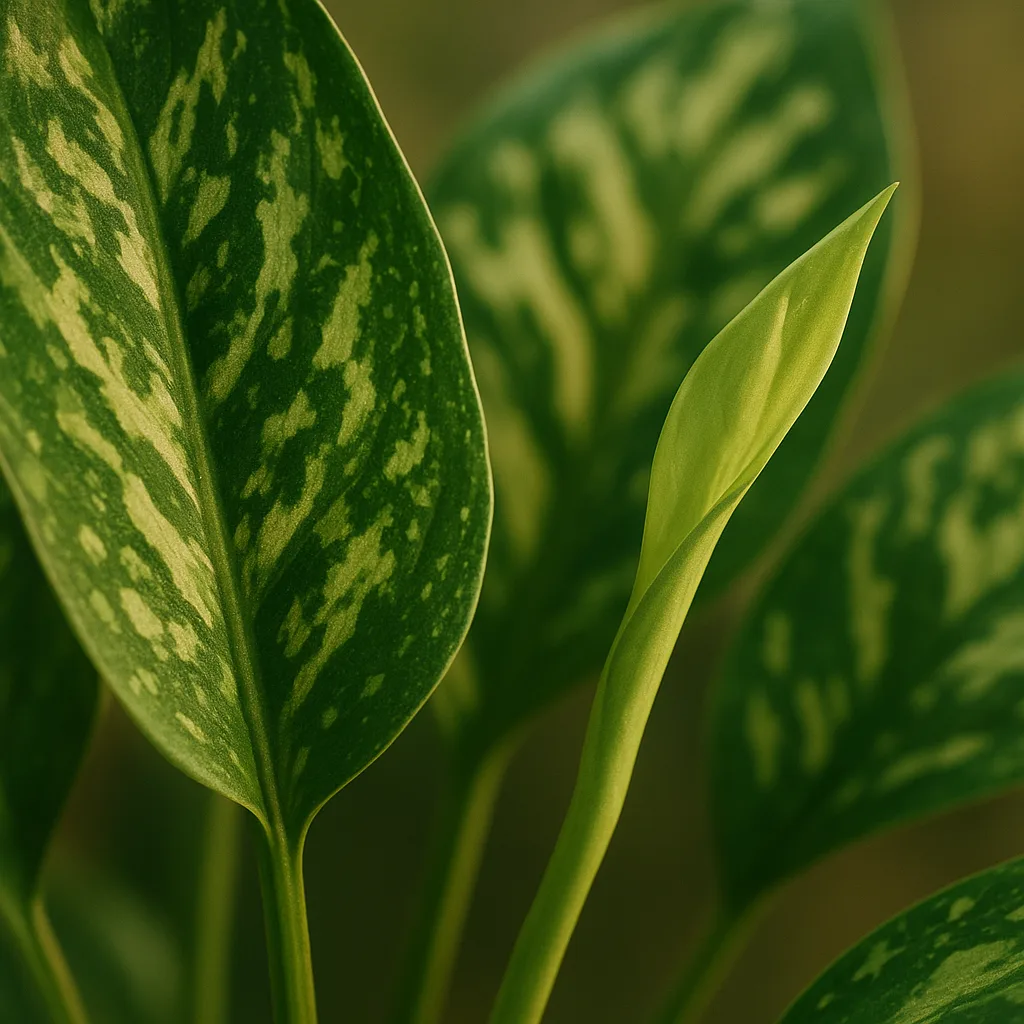
What is Aglaonema?
Aglaonema is a genus of evergreen perennial plants in the arum family, Araceae. There are roughly 20–30 accepted species depending on the taxonomic treatment, and dozens of cultivated hybrids and cultivars prized for their foliage. Aglaonema are native to tropical and subtropical Asia, including Malaysia, Indonesia, the Philippines, Thailand and parts of New Guinea.
- Family: Araceae (the aroid family)
- Genus: Aglaonema
- Growth form: Clumping, rhizomatous perennials
- Typical mature height: 30–90 cm (12–36 inches) indoors; up to 1.2 m in ideal outdoor stands
- Leaf length: commonly 10–35 cm; width 3–12 cm depending on cultivar
Aglaonema common name and naming history
The most widely used common name for Aglaonema is Chinese evergreen. That name reflects the plant's evergreen nature and its late-19th-century popularity in European and North American horticulture, when many tropical houseplants were marketed with an orientalized label. Scientifically, the genus name Aglaonema comes from Greek aglaós (bright) + néma (thread), a reference to the inflorescence structure shared by aroids.
- Main common name: Chinese evergreen
- Other informal names: Evergreen aglaonema, silver evergreen (for silver-variegated cultivars)
- Scientific examples: Aglaonema modestum, Aglaonema commutatum, Aglaonema 'Silver Queen', Aglaonema 'Siam Aurora'
Why the name can be misleading
- "Chinese" in the name is horticultural shorthand, not a strict native-range claim — the genus occurs throughout Southeast Asia, not only China.
- Different cultivars vary markedly in color and habit, so two "Chinese evergreens" can look very different.
Identification: How to recognize Aglaonema
Identifying Aglaonema reliably requires attention to leaf shape, venation, texture, and growth habit. Below are the practical visual cues to check when you have a plant in hand or a photograph to examine.
For more on this topic, see our guide on Identifying the Chinese evergreen in the field.
- Leaf arrangement: Leaves originate from short upright stems in a basal clump. They rise from a thickened rhizome or crown, not from a true woody trunk.
- Leaf shape and size: Simple, lanceolate to elliptic leaves, typically 10–35 cm long and 3–12 cm wide. Leaf tips are pointed to rounded depending on cultivar.
- Color and variegation: Many cultivars show silver, cream, pink, red or white variegation against green. Variegation often appears as central patches, speckles, or lateral stripes along the midrib.
- Venation: Pinnate main vein with lateral veins visible but not deeply sunken. Contrast between vein color and blade can help—silver-variegated varieties often have darker veins showing through pale areas.
- Texture: Leaves are leathery to semi-succulent and glossy; petioles are short and thick (2–6 cm typical).
- Inflorescence: Aroid-type spathe and spadix; small and greenish-white, often unnoticed indoors. Spathes are 2–5 cm long; spadix length similar.
Quick field checklist
- Are leaves arranged in a basal clump rising from a rhizome?
- Do leaves measure roughly 10–35 cm long and appear leathery?
- Is there silver/cream/colored variegation (often central or streaked)?
- Are inflorescences small spathes/spadices typical of Araceae?
Habitat, geographic distribution, and seasonal behavior
Understanding where Aglaonema grows in the wild helps explain many of its care preferences and seasonal behaviors in cultivation.
- Native habitat: Lowland and montane rainforests of Southeast Asia; typically understory plants found on the forest floor or along shaded riverbanks.
- Geographic range: Malaysia, Indonesia, Philippines, Thailand, and parts of New Guinea; some species extend into southern China and India.
- Light regime: Adapted to low to filtered light—understory plants that handle shade and dappled sunlight rather than full sun.
- Seasonality: In the wild growth slows in cooler dry seasons; in cultivation, growth is fastest in spring–summer when temperature and humidity rise.
Environmental parameters (wild vs. home)
- Wild ambient temperature: commonly 20–30 °C (68–86 °F)
- Preferred indoor temperature: 18–29 °C (65–85 °F); avoid temperatures below ~15 °C (59 °F)
- Humidity: typically 60–90% in native habitats; they tolerate 40–60% indoors but perform best with higher humidity
Care and cultivation: practical tips
Because Aglaonema evolved on shady forest floors, its care requirements are forgiving. That said, following a few specific guidelines will keep your plants vigorous and reduce pest problems.
You may also find our article on Photo-Based Plant ID: Field-Proven Techniques helpful.
- Light: Bright, indirect light is best. Low light tolerates well, but intense direct sun will scorch leaves. Aim for 1000–2000 lux (100–200 foot-candles) for variegated cultivars.
- Water: Keep the potting mix evenly moist but not waterlogged. Allow the top 2–3 cm (0.8–1.2 in) of soil to dry between waterings under normal indoor conditions.
- Soil: Use a well-draining mix: equal parts peat or coco coir, coarse perlite, and a loamy component. pH 5.5–6.5 preferred.
- Fertilizer: Feed lightly during active growth (spring–summer). A balanced 20-20-20 water-soluble fertilizer at half strength every 4–6 weeks is typical; reduce feeding in autumn–winter.
- Potting and propagation: Repot every 2–3 years or when roots crowd. Propagate by division at the rhizome or by stem cuttings with 1–2 nodes rooted in water or a light mix.
- Pests and problems: Watch for mealybugs, spider mites, and scale. Brown leaf tips often indicate low humidity or inconsistent watering; yellowing lower leaves may be natural aging or overwatering.
Propagation steps (division)
- Remove plant from pot and gently tease away soil to expose rhizome.
- Locate natural divisions with 3–5 healthy leaves and firm roots.
- Cut or separate divisions using a sterile knife; dust wounds with charcoal if desired.
- Plant divisions in a well-draining potting mix and keep lightly moist until established (2–6 weeks).
Safety and toxicity warnings
Aglaonema contains insoluble calcium oxalate crystals (raphides) common in many Araceae. These crystals cause mechanical irritation and are the primary toxic principle—there are also secondary compounds that can exacerbate symptoms.
- Symptoms in humans and pets: Immediate burning/tingling of lips, mouth, tongue; drooling, swelling of oral tissues, vomiting, difficulty swallowing. Skin contact can cause localized irritation in sensitive people.
- Severity: Usually causes painful but self-limiting symptoms; severe swelling of the airway is rare but possible—seek emergency care if breathing difficulty occurs.
- First aid: Rinse mouth thoroughly, remove plant material from mouth, give small sips of water/milk, and seek medical or veterinary advice if symptoms are severe or persistent.
- Precautions: Place plants out of reach of children and pets; wear gloves when pruning if you are sensitive.
Safe handling checklist
- Keep plants elevated or in rooms inaccessible to pets/children.
- Wash hands after handling or pruning.
- Label houseplants with toxicity notes if you have young children or pets.
Aglaonema vs other commonly searched plants: quick comparisons
People searching for "aglaonema common name" often land on pages for other plants with similar names or visual traits. Below are short, practical comparisons with key species queried by users.
You might also be interested in Inside the Acai Berry: Nature’s Amazonian Purple Fruit.
Related reading: Identify Plants Fast: Expert Guide to Free Apps.
Aglaonema vs Amaranthus (amaranth)
- Amaranthus scientific name: Amaranthus spp. (family Amaranthaceae).
- Amaranth common name: amaranth; many species are annual herbs, some cultivated for grain or leafy greens.
- How to tell apart: Amaranth is an herbaceous plant with panicles or dense inflorescences of small flowers and often erect habit. Leaves are thin, not leathery, and lack the aroid spathe/spadix. Aglaonema is a clumping evergreen with thick, glossy leaves and a small aroid inflorescence.
Aglaonema vs Amaryllis
- Amaryllis common name is frequently used for plants sold as Hippeastrum hybrids; true Amaryllis belladonna is a South African bulb.
- Amaryllis/Hippeastrum are bulbous plants that produce strap-like leaves and large, showy, lily-like flowers on a tall scape.
- How to tell apart: Amaryllis has large, trumpet-shaped flowers and grows from a bulb; Aglaonema has a rhizome and inconspicuous aroid spathes. Leaf texture and flower form differ dramatically.
Aglaonema vs Anthurium andraeanum
- Anthurium andraeanum common names: flamingo flower, tailflower, painter's palette.
- Both are Araceae, so both have spathes and spadices; however, Anthurium typically has a single, showy, brightly colored spathe (red, pink or white) and a protruding spadix that lasts for weeks.
- How to tell apart: Anthurium leaves are often large, heart-shaped, and the plant commonly has a more upright, single-stem habit with aerial roots; Aglaonema is a low clumping plant with variegated foliage and small, greenish spathes that are usually unnoticed.
Aglaonema vs Dandelion
- Dandelion scientific name: Taraxacum officinale.
- Dandelion is a herbaceous rosette with toothed leaves and bright yellow composite flowers; it is a temperate lawn weed—totally different ecology and morphology.
- How to tell apart: If you see a basal rosette of lobed leaves and yellow daisy-like flowers, it is a dandelion, not Aglaonema.
Aglaonema vs Datura
- Datura scientific name: Datura spp. (Solanaceae), e.g., Datura stramonium.
- Datura are annuals or short-lived perennials with large, trumpet-shaped flowers and spiny seed capsules; highly toxic alkaloids cause anticholinergic poisoning.
- How to tell apart: Datura shows large, showy night-blooming flowers and a very different leaf form—no resemblance to leathery, variegated Aglaonema leaves.
Aglaonema vs Duranta erecta
- Duranta erecta common names: golden dewdrop, pigeon berry, skyflower (family Verbenaceae).
- Duranta is a woody shrub with clusters of purple or blue flowers and yellow/orange berries in tropical to subtropical landscapes.
- How to tell apart: Duranta is woody, often multi-stemmed and produces terminal flower clusters—unlike the broad-leafed clumping Aglaonema.
X vs Y: How to tell them apart (quick summary)
- Look at growth form: bulb vs rhizome vs woody stem vs herbaceous annual.
- Examine leaf texture: leathery glossy (Aglaonema) vs thin and papery (amaranth/dandelion).
- Note the flowers: aroid spathe/spadix (Aglaonema/Anthurium) vs large trumpet flowers (Amaryllis/Hippeastrum/Datura) vs composite heads (dandelion).
Using Orvik and visual ID tools to confirm plant IDs
Visual ID apps such as Orvik can accelerate identification when you have a photo but are unsure. Orvik uses AI-trained models to match leaf shapes, variegation patterns, venation, and plant habit. Here’s how to get actionable results.
- Step 1: Take clear photos — include a full-plant shot, a close-up of a leaf (top and underside if possible), and a shot of the base/rhizome or stem.
- Step 2: Upload images to Orvik and include location data if available — geographic range helps narrow species matches.
- Step 3: Compare the app's suggestions against visual cues in this guide (leaf size, variegation patterns, aroid spathe presence) to confirm or rule out Aglaonema.
- Step 4: If Orvik gives multiple plausible matches, use the care and habitat notes to distinguish cultivated hybrids from wild species.
Using Orvik alongside this field knowledge reduces misidentification—especially with lookalike aroids such as Anthurium or some Philodendron cultivars. Orvik is particularly useful when seasonal or cultivation conditions have altered leaf color or when only juvenile foliage is available for ID.
Frequently Asked Questions
- What is the aglaonema common name?
- The most widely used common name is Chinese evergreen.
- Are Aglaonema toxic to pets?
- Yes. Aglaonema contains calcium oxalate crystals that cause oral irritation, drooling, vomiting, and swelling; seek veterinary care for significant ingestion.
- How do I identify an Aglaonema by sight?
- Look for a clumping habit from a rhizome, leathery lanceolate leaves 10–35 cm long, and common silver/cream/colored variegation. Inflorescences are small aroid spathes that are usually inconspicuous.
- How should I care for Aglaonema indoors?
- Provide bright indirect light or low light, keep soil evenly moist but not waterlogged (top 2–3 cm dry between waterings), use well-draining peat-based mix, maintain 18–29 °C temperatures and moderate to high humidity.
- Can Aglaonema be propagated at home?
- Yes. The easiest methods are division of the rhizome or stem cuttings with nodes rooted in water or a light potting mix.
- How does Aglaonema differ from Anthurium andraeanum?
- Both are aroids, but Anthurium andraeanum typically has a large, colorful spathe and heart-shaped leaves, while Aglaonema is a low clumping plant with variegated foliage and small, greenish spathes.
- Can I use Orvik to confirm an Aglaonema ID?
- Yes. Upload clear photos (whole plant, leaf close-ups, base) and include location data; use Orvik’s matches alongside visual cues in this guide for the most reliable ID.