
Introduction: What people mean by “begonia common name”
When someone types "begonia common name" into a search engine they are usually trying to do one of three things: identify an unknown plant in a photo; learn which begonia variety fits their climate and decor; or check if a plant is safe for pets and children. Begonias are a large, variable genus (about 1,800 species) with many cultivated hybrids and dozens of widely used vernacular names—"wax begonia," "Rex begonia," "angel-wing begonia," and "tuberous begonia" among them. This article gives clear visual ID cues, region and habitat notes, safety advice, and practical comparison tips so you can confidently match the right common name to the plant you see, whether in a garden or the forest understory.
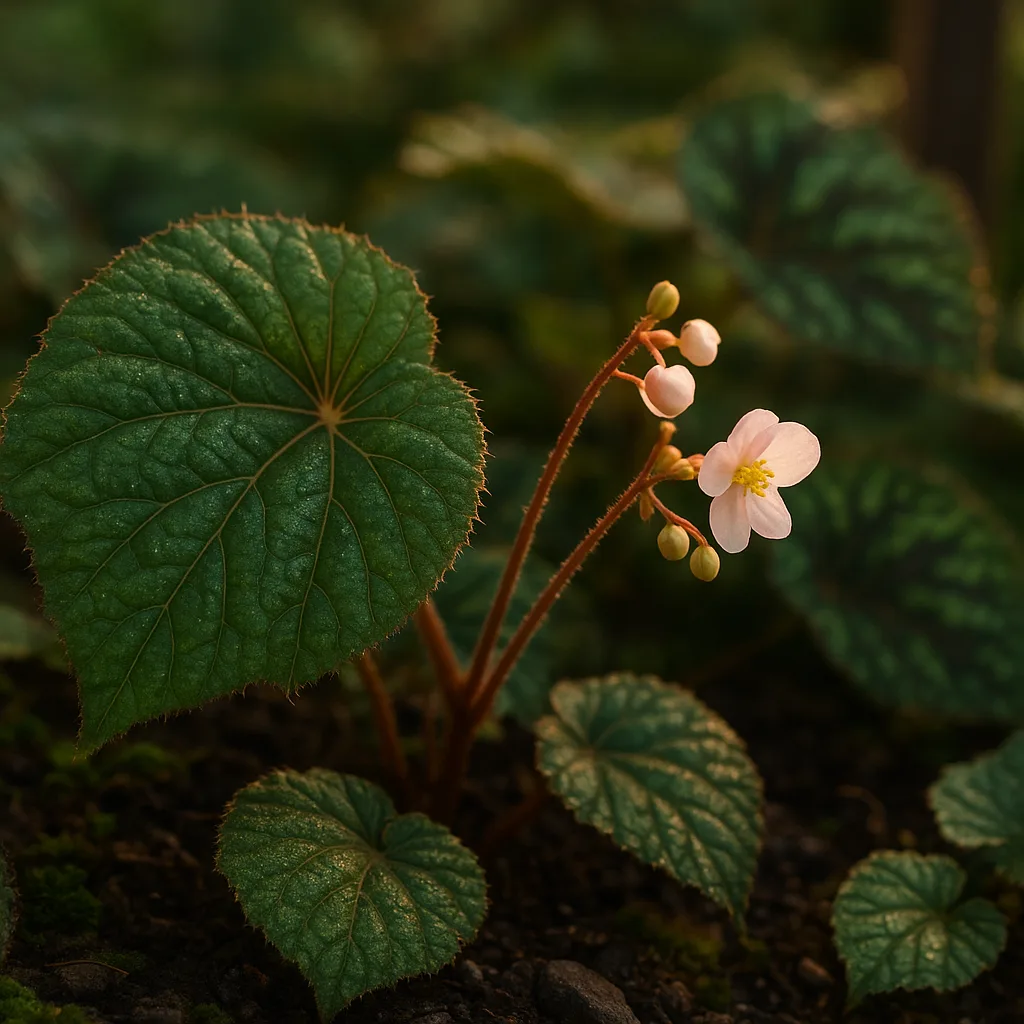
- Target audience: gardeners, foragers, landscapers, and nature-app users.
- Objective: Provide reliable ID traits, distributions, and look-alikes.
- Tools: Use Orvik or a field guide plus the visual cues below for best results.
Begonia taxonomy and the most used common names
Begonia is a genus in the family Begoniaceae with roughly 1,800 accepted species, plus thousands of cultivars created for foliage and flowers. Because Begonia species come from tropical and subtropical regions worldwide, many local common names developed.
- Wax begonia — often used for Begonia × semperflorens-cultorum group; compact, glossy leaves, popular in bedding.
- Rex begonia — Begonia rex or Begonia rex-cultorum group; prized for dramatic, variegated leaves up to 20–30 cm across.
- Angel wing begonia — common name for cane-type hybrids with elongated, wing-shaped leaves and a cane-like stem; often 60–150 cm tall.
- Tuberous begonia — Begonia tuberhybrida group; developed from tuberous species that form storage tubers and bloom with showy flowers.
- Rhizomatous begonia — any species or cultivar that spreads by rhizomes; leaves tend to be low and layered.
Note: Common names are useful for quick communication but approximate taxonomic differences. When in doubt, a scientific name or a photo-based ID (for example using Orvik) will reduce ambiguity.
How to identify a begonia: clear visual cues
Begonias are recognizable by a set of consistent morphological traits. Below are reliable field markers that an expert looks for first:
Leaf shape and texture
- Asymmetrical leaf base: a key diagnostic feature — one side of the leaf blade is usually larger where it meets the petiole (oblique or unequal leaf base).
- Leaf sizes: from 1–3 cm in miniature cultivars to 20–30+ cm in Rex and some cane types; texture ranges from succulent and glossy to deeply textured or velvety.
- Color and pattern: solid green, bronze, silver variegation, or patterned (e.g., Begonia maculata has white polka dots on olive leaves).
Stems and growth habit
- Stem types: fleshy/short (rhizomatous and wax types), cane-like (elongated and woody-ish in angel-wing/cane begonias), or tuberous (swollen underground tubers).
- Height: compact bedding begonias 5–30 cm; cane types 60–150+ cm; shrub or trailing habits also exist.
- Arrangement: many begonias are clump-forming; rhizomatous types produce layered leaves that spread horizontally.
Flowers
- Unisexual flowers on the same plant (monoecious): male flowers (many petals/stamens) and female flowers (fewer petals, ovary present).
- Colors: white, pink, red, orange, and yellow; tuberous varieties often bred for large, showy blooms 4–8 cm across.
- Structure: small to conspicuous; in some species floral traits are subtle and not a good ID without leaves.
Other physical clues
- Underground structures: tubers (round, fleshy storage organs) or creeping rhizomes in certain groups.
- Surface details: hairs or glandular tips on some species; waxy cuticle on others.
Practical field measurement tips: note leaf length and width (cm), stem diameter (mm), and flower diameter (mm–cm). Photograph both the upper and lower leaf surfaces and the asymmetrical leaf base; those images are the most diagnostic and upload-friendly to Orvik.
For more on this topic, see our guide on Identifying Red Berry Bushes in the Wild.
Habitat, geographic distribution and seasonal behavior
Begonias are primarily tropical and subtropical plants with a few species extending into warm temperate zones. Their natural history tells you where to expect them in the landscape.
- Native regions: Americas (Central and South America), Africa (Madagascar rich in endemics), and Asia (SE Asia has many species). Total species ~1,800.
- Typical habitats: shaded forest understory, stream banks, rock crevices, humus-rich soils, and as epiphytes on trees for some species.
- Hardiness and cultivation: most species suited to USDA zones 9–11 outdoors; many are treated as annuals or houseplants in temperate climates.
Seasonal behavior:
- Leaf flush: many begonias have a spring and summer growth surge; tuberous types break dormancy in spring and flower in late summer.
- Flowering: small species may flower intermittently; tuberous and hybrid bedding begonias often peak mid-summer to early autumn.
- Dormancy: some tuberous species go dormant in cooler months and require dry storage of tubers.
Comparisons: Begonia vs common look‑alike plants and related search queries
Searches for unexpected phrases such as "plumbago auriculata common name" or "bamboo common name" sometimes lead users to compare these species with begonias. Below are short, practical comparisons to resolve confusion.
You may also find our article on Identifying Jasmine: Name, Meaning, and Botany helpful.
Begonia vs Plumbago (Plumbago auriculata common name)
- Plumbago auriculata common names: blue plumbago, Cape leadwort, or skyflower. It’s a woody shrub with clusters of tubular, sky-blue flowers.
- Telltale differences: plumbago has opposite, ovate leaves and long racemes of tubular flowers; no leaf asymmetry and woody, branching stems — unlike begonias’ fleshy stems and oblique leaf bases.
Begonia vs Bamboo (bamboo common name; Bambusa vulgaris and Bambusa arundinacea common name)
- Bamboos such as Bambusa vulgaris (often called common bamboo or golden bamboo) are perennial grasses with hollow, segmented woody culms reaching several meters tall.
- Bambusa arundinacea (regional names vary) is treated as one of several Asiatic bamboos; common names depend on locale and are not related to begonias.
- Telltale differences: bamboo is tall, jointed-stemmed and grassy; begonias are herbaceous with leaves borne on petioles and do not produce woody canes like bamboo (except cane-type begonias which are not true bamboos).
Begonia vs Barleria cristata (barleria cristata common name)
- Barleria cristata common names: Philippine violet or crested barleria. It’s a member of the Acanthaceae and bears tubular, funnel-shaped flowers.
- Telltale differences: Barleria has opposite leaves and tubular flowers with a distinctive five-lobed corolla; begonias have asymmetrical leaves and unisexual flowers without the same tube-lipped structure.
Begonia vs Barringtonia asiatica (barringtonia asiatica common name)
- Barringtonia asiatica common names: sea poison tree, box fruit. It’s a large coastal tree with dramatic, pendulous white flowers and huge, spherical fruits.
- Telltale differences: size and habit — Barringtonia is a tree (several meters tall) with alternate, entire leaves; begonias are generally much smaller herbs or shrubs with asymmetrical leaves.
Begonia vs Bauhinia purpurea (bauhinia purpurea common name)
- Bauhinia purpurea is commonly called the purple cluster orchid tree or purple bauhinia; it has distinctive bilobed (two-lobed) leaves and orchid-like flowers.
- Telltale differences: Bauhinia leaves are symmetrical and bilobed; begonias have asymmetrical leaf bases and very different floral forms.
These comparisons show that many of the related search queries are for very different plant groups. In field ID, focus on leaf base symmetry (or lack of it), stem texture, and flower form—those features usually separate begonias from shrubs, trees, and grasses.
Care, propagation and horticultural uses
Knowing the common name helps you apply the right cultural practices. Below are care rules grouped by major begonia types.
- Wax and bedding begonias (Begonia × semperflorens): prefer partial shade, evenly moist, rich humus, temps 15–25°C, used in beds and containers.
- Rex and rhizomatous types: bright, indirect light, high humidity, well-draining mixes with peat and perlite, avoid overwatering the crown.
- Tuberous begonias: start tubers in spring, keep in cool, bright conditions; allow dormancy in winter for overwintering tubers (store dry at ~10°C).
- Cane/angel-wing types: tolerate brighter light, light pruning to shape, stake if stems become tall.
Propagation methods
- Leaf cuttings: effective for Rex types—use a leaf section on damp media; new plantlets arise from veins or petiole base.
- Stem cuttings: cane and wax types root easily in water or mix; 5–10 cm cuttings root within 2–4 weeks.
- Tubers: divide dormant tubers or start single tubers in pots in spring.
- Division: clump-forming rhizomatous species divide in spring when growth resumes.
Safety, toxicity and uses
Begonias are generally grown for ornamental use, but safety information matters for households with pets and children and for anyone considering edible uses.
You might also be interested in Wild & Garden Berries: How to Identify Them.
- Toxicity: Begonias contain insoluble calcium oxalate crystals which can cause oral irritation, drooling, vomiting, and difficulty swallowing in animals and humans if chewed. They are considered mildly to moderately toxic to dogs and cats.
- Handling precautions: wear gloves if you’re sensitive to plant sap; wash hands after handling sap or crushed leaves. Keep potted begonias out of reach of pets and toddlers that nibble plants.
- Edibility: some gardeners use begonia flowers as an edible garnish for their acidic, citrus-like flavor, but only a few species and cultivars are commonly consumed—always verify the cultivar and start with small amounts to test for sensitivity.
If in doubt about a particular cultivar’s toxicity, consult a veterinarian or poison control center. Use Orvik to capture the plant and check identification if you find a suspicious plant in a child- or pet-accessible area.
Related reading: Identify Garden Weeds Fast with Smart Photo ID.
Using Orvik and field tips for accurate ID
Photo-based ID apps like Orvik can speed up identification, but follow these techniques to maximize accuracy.
- Take multiple photos: include close-ups of the leaf base (show asymmetry), the leaf underside, the stem base, and any flowers (male and female if visible).
- Capture scale: place a ruler or coin for scale, or note leaf length in cm.
- Context shots: photograph the whole plant in its habitat to show growth habit (epiphytic, clumping, trailing).
- Use Orvik with notes: add location (GPS), habitat (forest, garden), and season—this metadata improves the app’s suggestions.
Orvik’s visual recognition engine performs best when images feature diagnostic traits. For begonias that are primarily identified by leaf base asymmetry, a single clear photo of that area often yields the correct common name or cultivar group suggestion. For uncertain cases—rare wild species or highly similar hybrids—pair Orvik’s results with a botanical key or consult a local botanist.
Conclusion
When someone searches "begonia common name" they are usually seeking a practical, visual identification and care guidance. The most reliable field markers are the asymmetrical leaf base, stem type (rhizome, tuber, or cane), leaf texture and pattern, and flower form. Use these cues in combination with regional habitat knowledge and a photo-based tool like Orvik to arrive quickly at the correct common name—wax, Rex, angel-wing, tuberous, or other groups. Remember safety: begonias contain calcium oxalates and can irritate pets and people. With careful observation and good photos, you can identify and care for begonias confidently whether they are in a tropical understory or your planter box.
Frequently Asked Questions
- What is the common name for the genus Begonia?
- There is no single common name for the entire genus; common names depend on the group—examples are wax begonia, Rex begonia, angel-wing begonia, and tuberous begonia.
- How can I tell a begonia from other plants at a glance?
- Look for an asymmetrical (oblique) leaf base, fleshy or rhizomatous stems, and often showy but unisexual flowers; those traits distinguish begonias from most shrubs, trees, and grasses.
- Are begonias safe for pets and children?
- Begonias contain calcium oxalate crystals that can cause oral irritation, vomiting, and drooling in pets and people; keep them out of reach and contact a vet or poison control if ingestion occurs.
- What does 'plumbago auriculata common name' refer to?
- Plumbago auriculata is commonly called blue plumbago, Cape leadwort, or skyflower; it is a woody shrub with tubular blue flowers and is not closely related to begonias.
- What's the common name for Bambusa vulgaris and how is it different from begonia?
- Bambusa vulgaris is commonly known as common bamboo or golden bamboo; it is a tall, woody grass with jointed culms—completely different habit and structure from herbaceous begonias.
- Can I use an app like Orvik to identify a begonia?
- Yes—Orvik and similar visual ID apps are useful. For best results provide multiple clear photos showing the leaf base, leaf underside, stem, flowers, and habitat details.
- How do I propagate a Rex begonia?
- Rex begonias root readily from leaf cuttings—either whole-leaf or vein-section cuttings on damp sterile media. Keep humidity high and provide bright, indirect light until plantlets establish.