
What is the botanical name for hibiscus?
When someone searches for the "botanical name for hibiscus," they are usually asking which scientific name describes plants commonly called hibiscus. At the broad level, the botanical name is the genus Hibiscus L., in the family Malvaceae. The genus contains roughly 200–300 species of herbs, shrubs and small trees, each with its own species-level botanical name (for example, Hibiscus rosa-sinensis).
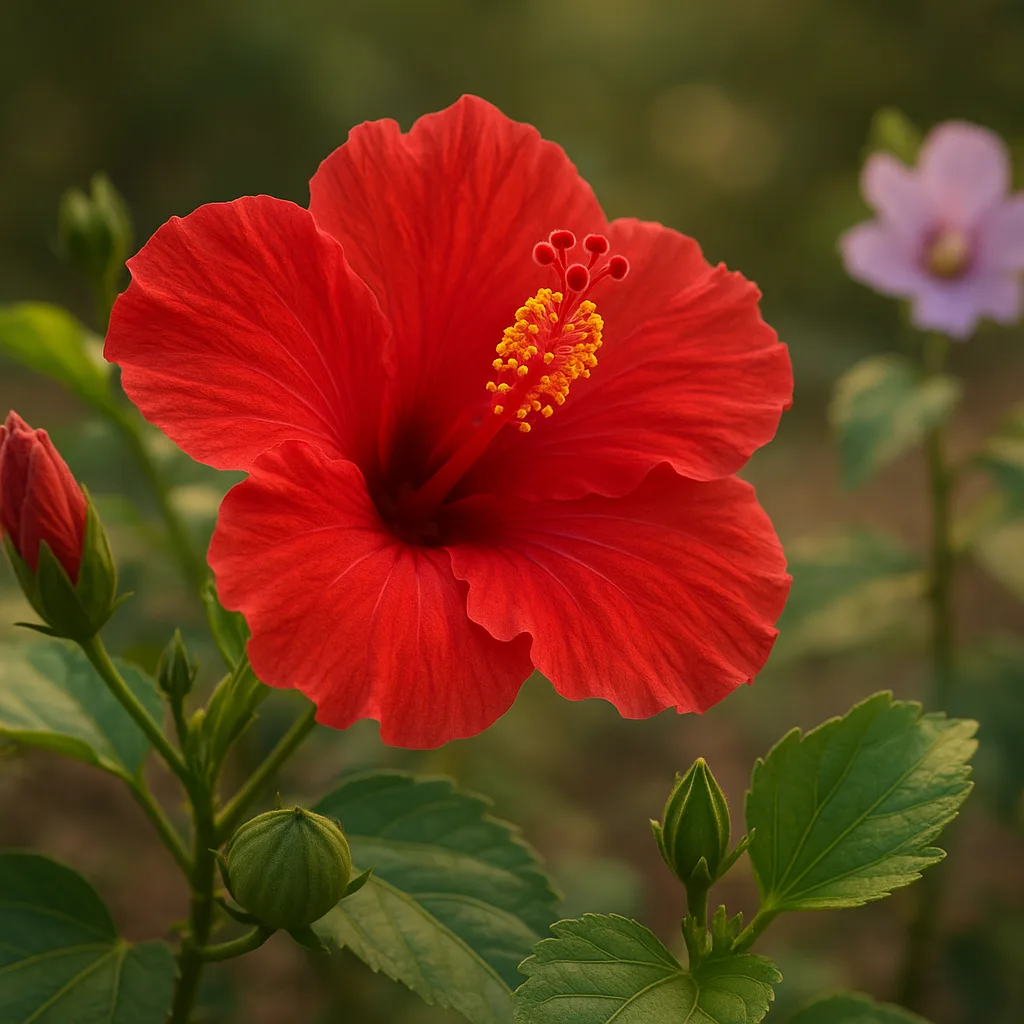
- Genus: Hibiscus L.
- Family: Malvaceae (the mallow family)
- Number of species: approximately 200–300 globally
- Type of plants: annuals, perennials, shrubs, and small trees
Botanical (scientific) names follow binomial nomenclature: the genus name (Hibiscus) plus a specific epithet (e.g., rosa-sinensis). Scientific names are standardized and used internationally to avoid the confusion that comes with common names.
Common names vs scientific names: why they matter
Common names are useful in everyday language but are imprecise. The phrase "common name of hibiscus" can refer to many different plants depending on region and language. Scientific names remove that ambiguity.
- Common names: hibiscus, rose mallow, shoeflower, tropical hibiscus, marsh mallow (varies by species and region)
- Scientific names: precise labels like Hibiscus rosa-sinensis, H. syriacus, H. moscheutos, H. sabdariffa.
For example, the common name "Chinese hibiscus" or "shoe flower" usually refers to Hibiscus rosa-sinensis. Meanwhile, "rose of Sharon" typically refers to Hibiscus syriacus. If you need to look up care instructions, range, or toxicity, search the botanical (scientific) name to get accurate, species-specific information.
Key hibiscus species and their botanical names
Different species of Hibiscus have distinct appearances, habitats and uses. Below are some of the most commonly encountered species, with quick ID points and distribution.
- Hibiscus rosa-sinensis (Chinese hibiscus, shoeflower)
- Flower size: typically 8–15 cm (3–6 in) across
- Plant type: evergreen shrub or small tree, usually 1–5 m tall in cultivation
- Habitat: tropical and subtropical gardens; widely cultivated worldwide
- Notes: many cultivated hybrids and double-flowered forms; large, vivid single-flower varieties common
- Hibiscus syriacus (Rose of Sharon)
- Flower size: 5–8 cm (2–3 in)
- Plant type: deciduous shrub, typically 1–3 m tall
- Habitat: temperate gardens; hardy to USDA zones 5–8
- Notes: blooms late summer into fall; woody stems and smaller flowers than tropical hibiscus
- Hibiscus moscheutos (Swamp rose mallow, hardy hibiscus)
- Flower size: large, 12–25 cm (5–10 in)
- Plant type: herbaceous perennial; dies back in winter; 1–2 m tall
- Habitat: marshes and wet meadows in eastern North America; hardy to USDA zones 4–8
- Hibiscus sabdariffa (roselle)
- Flower size: 6–8 cm (2.5–3 in)
- Plant type: annual or short-lived perennial; 1–2 m tall
- Habitat: tropical cultivation for edible calyces used in teas and jams; pantropical distribution
- Notes: calyx turns red and is harvested for hibiscus tea (karkade)
- Hibiscus trionum (flower-of-the-hour)
- Flower size: 4–6 cm (1.5–2.5 in)
- Plant type: annual or short-lived perennial; typically lower-growing
- Habitat: disturbed soils, Mediterranean climates
How to identify a hibiscus plant: practical visual cues
Identification in the field relies on a combination of flower structure, leaf shape, plant habit and other small details. Use the following checklist when examining a suspected hibiscus:
For more on this topic, see our guide on Understanding Lily Identity: Names & Science.
- Examine the flower:
- Petal count: typically 5 broad petals (some cultivated varieties have doubled petals).
- Corolla size: ranges from 4 cm to over 25 cm across depending on species.
- Stamen column: a distinctive fused column of stamens (staminal column) protruding from the center bearing yellow anthers — a hallmark of the genus.
- Symmetry: radial (actinomorphic) — the flower is generally symmetrical around the center.
- Look at leaves and stems:
- Leaf arrangement: alternate (not opposite).
- Leaf shape: usually simple and ovate to lanceolate, often 3–15 cm long, with toothed (serrated) margins in many species.
- Texture: leaves may be glossy (as in tropical species) or matte; some species have fuzzy undersides.
- Stems: tropical hibiscus have softer, green stems; woody species like H. syriacus have lignified stems.
- Observe buds and fruit:
- Buds are generally ovoid and elongated; they open quickly and may last only a day in some tropical species.
- Fruit is a dry capsule that splits open, usually containing several seeds.
- Measure growth habit and timing:
- Shrubs and small trees (tropical hibiscus) often reach 1–5 m; herbaceous species are typically 0.5–2 m tall.
- Flowering season: tropical species can bloom year-round with enough warmth; temperate species bloom in summer and into early fall.
When possible, photograph the entire plant, close-ups of the flower center (showing the staminal column), leaves (upper and lower surfaces) and overall habit. Tools such as Orvik can analyze photographs and compare features to known specimens, helping narrow possibilities quickly.
Habitat, geographic distribution and seasonal behavior
Hibiscus species occur across the globe but are concentrated in tropical and subtropical regions. Some species have adapted to temperate climates and are widely cultivated beyond their native ranges.
- Tropical species (e.g., H. rosa-sinensis, H. sabdariffa): native to Asia and Africa; thrive in USDA zones 9–11 and often grown as houseplants in colder zones.
- Temperate/hardy species (e.g., H. syriacus, H. moscheutos): adapted to zones 4–8; can survive frost and return from rootstock or woody stems.
- Wetland species (e.g., some populations of H. moscheutos): prefer marshy or river-edge habitats.
Seasonal behavior varies by species and climate:
You may also find our article on Understanding Pine Trees: Latin Names Explained helpful.
- In warm climates, tropical hibiscus may flower continuously with periodic flushes of new buds.
- In temperate climates, many hibiscus bloom in mid- to late summer; H. syriacus often flowers later in summer and into autumn.
- Hardy hibiscus die back to the ground in winter (zones colder than the plant’s tolerance) and regrow from roots in spring.
Uses, safety and toxicity
Hibiscus species are used ornamentally, medicinally and culinarily. Safety varies by species and context.
- Edible uses
- Hibiscus sabdariffa (roselle) is widely used: the red calyces are steeped to make hibiscus tea (tart, cranberry-like flavor), syrups and jams. Fresh petals of some species are also used as garnishes.
- Medicinal and cultural uses
- Traditional medicines use hibiscus extracts for blood pressure, digestive and liver remedies; scientific results vary by species and preparation.
- Toxicity and safety
- Most common ornamental hibiscus species (H. rosa-sinensis, H. syriacus) are considered non-toxic to humans and are not known to be dangerously toxic to pets. The ASPCA lists common hibiscus as non-toxic to cats and dogs.
- However, ingestion of large amounts of any plant matter can cause gastrointestinal upset in people and animals. Pesticide-treated plants may also be hazardous if ingested.
- Allergic reactions to pollen or sap are possible but not widespread.
When considering edible use, confirm the species (for example, only H. sabdariffa is the standard for hibiscus tea) and confirm plants haven’t been treated with chemicals. Apps like Orvik can help identify the species visually before tasting or using a plant.
Comparison: how to tell common hibiscus species apart
Below are direct comparisons that answer common queries such as "hibiscus rosa sinensis common name" or "hibiscus plant scientific name" and help you decide which species you’re looking at.
Hibiscus rosa-sinensis vs Hibiscus syriacus
- Flower size: H. rosa-sinensis 8–15 cm; H. syriacus 5–8 cm.
- Leaf type: H. rosa-sinensis evergreen glossy leaves, often broader; H. syriacus deciduous, smaller, thinner leaves.
- Stem: H. rosa-sinensis softer, green stems; H. syriacus woody stems and shrub architecture.
- Blooming season: tropical H. rosa-sinensis flowers year-round in warm climates; H. syriacus blooms in summer and autumn in temperate zones.
Hardy hibiscus (H. moscheutos) vs tropical hibiscus (H. rosa-sinensis)
- Habit: H. moscheutos is herbaceous and dies back in winter; H. rosa-sinensis is woody and evergreen in warm climates.
- Flower duration: hardy hibiscus flowers can be larger (up to 25 cm) but individual blooms are typically short-lived; tropical hibiscus flowers are slightly smaller but may be produced continuously.
- Leaf texture: hardy hibiscus often has larger, coarser leaves; tropical has smoother, glossier foliage.
Hibiscus vs other Malvaceae lookalikes (mallows, hollyhock)
- All share the staminal column, but leaf shapes, growth form and flower proportions differ.
- Hollyhocks (Alcea) and mallows (Malva) often have more papery petals and different fruit (schizocarps vs capsules), and their flowers are typically arranged on tall spikes rather than solitary large blooms.
When in doubt, check the central staminal column and leaf arrangement; these are reliable genus-level indicators. Use a photo-based tool such as Orvik to compare your specimen against curated reference images and botanical descriptions.
Looking beyond this category? Check out Inside the Acai Berry: Nature’s Amazonian Purple Fruit.
Field workflow: identifying a hibiscus with confidence
Here is a step-by-step field workflow you can use when you encounter an unknown hibiscus-like plant:
Related reading: Understanding Daffodils: Names, ID & Care.
- Take clear photos: whole plant, leaf upper and lower surfaces, close-up of the flower center (staminal column), bud and fruit if present.
- Measure or estimate: flower diameter, leaf length, plant height, and note habit (woody/deciduous vs herbaceous/evergreen).
- Note habitat and GPS or region: wetland, garden, roadside, latitude/longitude if possible.
- Use a plant-identification tool (e.g., Orvik) to get candidate species; cross-check features against authoritative descriptions and local floras.
- Confirm: evaluate the best match by comparing 4–6 diagnostic traits (flower size, stamen column, leaf margin, seasonality, growth form).
Combining on-the-ground observation with an image-recognition assistant will reduce misidentifications. Orvik, for example, uses visual feature analysis to propose probable species and links to additional data on distribution and diagnostic traits.
Practical notes for gardeners and naturalists
Whether you’re planting hibiscus in a garden, surveying a wild population or making tea, these practical tips will help:
- Planting and hardiness: Know your species' USDA hardiness zone. Tropical hibiscus (H. rosa-sinensis) generally needs zones 9–11 or winter protection; hardy hibiscus (H. moscheutos) tolerates zones 4–8.
- Light and soil: Most hibiscus prefer full sun (6+ hours/day) and well-drained, fertile soil. Wetland species tolerate saturated soils.
- Pruning: Prune woody types in early spring to shape and encourage new growth; cut herbaceous species back after frost.
- Pest/disease vigilance: Watch for aphids, spider mites, fungal leaf spots; good air circulation and proper watering reduce problems.
- Ethical foraging: Only harvest edible parts (e.g., H. sabdariffa calyces) from known, chemical-free plants and with landowner permission.
Conclusion
The phrase "botanical name for hibiscus" most often refers to the genus Hibiscus L., which contains hundreds of species each with its own scientific name (for example, Hibiscus rosa-sinensis, H. syriacus, H. moscheutos, H. sabdariffa). Accurate identification relies on flower structure (notably the characteristic staminal column), leaf shape, growth habit, flowering season and geographic context. For field identification, combine careful measurements and photographs with digital tools—Orvik is a helpful app that can analyze images and suggest species matches, saving time and improving accuracy. Whether you’re a gardener, forager or naturalist, knowing the botanical name will link you to the correct cultural, safety and ecological information you need.
Frequently Asked Questions
- What is the hibiscus latin name?
- The hibiscus Latin name for the genus is Hibiscus L. Individual species have specific Latin names, such as Hibiscus rosa-sinensis and Hibiscus syriacus.
- What is the botanical name of the hibiscus flower?
- The botanical name depends on the species. The common garden tropical hibiscus is Hibiscus rosa-sinensis; a hardy species is Hibiscus syriacus.
- Is hibiscus toxic to pets?
- Most common ornamental hibiscus species (e.g., Hibiscus rosa-sinensis) are considered non-toxic to cats and dogs, though large ingestions can cause mild gastrointestinal upset. Avoid plants treated with pesticides.
- How can I tell Hibiscus rosa-sinensis from Hibiscus syriacus?
- H. rosa-sinensis is an evergreen tropical shrub with larger glossy leaves and bigger flowers (8–15 cm); H. syriacus is deciduous, woody, smaller-flowered (5–8 cm) and blooms later in temperate summers.
- Which hibiscus is used for hibiscus tea?
- Hibiscus sabdariffa (roselle) is the primary species cultivated for its red calyces, which are used to make hibiscus tea (karkade).
- How long do hibiscus flowers last?
- Individual hibiscus flowers often last a single day or less in many tropical species, though plants produce continuous blooms. Some hardy species also have short-lived flowers but produce many during the season.
- Can I use an app to identify my hibiscus?
- Yes. Photo-based identification apps like Orvik analyze leaf and flower features and compare them to reference records to suggest species matches; always cross-check suggestions with botanical descriptions.
- How many species of hibiscus are there?
- The genus Hibiscus contains roughly 200–300 species worldwide, depending on taxonomic treatment and recent revisions.