
When you want to know the botanical name for rose, you're usually asking for more than a single Latin word — you want the taxonomic context, the species or cultivar identity, and practical keys for telling similar plants apart. This guide covers the formal names (Rosa and species like Rosa canina L.), the meaning and history of the name "rose," visual identification cues (petals, leaves, hips, prickles), habitat and distribution, major garden types and common names, and safe handling tips. If you use an identification app like Orvik, these features and terms will help you confirm suggestions quickly.
1. Botanical name and taxonomy of the rose
The formal, scientific or botanical name for the rose is centered on the genus Rosa (family Rosaceae). Botanists use a binomial system: the genus (Rosa) plus a species epithet (e.g., canina), often followed by the author abbreviation (L. for Linnaeus).
Key taxonomic facts
- Genus: Rosa (family Rosaceae).
- Species: roughly ~150–200 wild species are recognized, depending on the taxonomic treatment.
- Chromosome counts: common base number is n = 7, with diploids (2n = 14), tetraploids (2n = 28), pentaploids and other polyploids common in cultivated roses.
- Cultivars: named cultivars are written as Rosa 'Cultivar Name' (e.g., Rosa 'Peace').
- Hybrid and cultivated groups: hybrid teas, floribundas, shrub roses, rugosas, climbers, species roses, and more.
Naming conventions
- Binomial for wild species: Rosa canina L. (dog rose).
- Named cultivars use single quotes and are not italicized: Rosa 'Iceberg'.
- Group names (e.g., Hybrid Tea) describe horticultural classes, not formal botanical ranks.
2. Latin name for rose and the meaning of "rose"
The Latin/ botanical word for the rose is Rosa. The common English word "rose" derives from Latin rosa, which itself comes from older Indo-European roots and probably from Greek rhódon. The word has long been associated symbolically with love, beauty and secrecy (the term sub rosa).
Meaning and etymology
- Root: Latin rosa → Greek rhódon → ancient Indo-European antecedent.
- Cultural meaning: commonly symbolizes love, secrecy, and medicinal uses in many cultures.
- Botanical nuance: "rose" refers to the entire genus Rosa, encompassing wild species and thousands of garden cultivars.
3. Common names, rose bush names, and types of roses
People searching "rose plant name" or "rose bush names" are often trying to connect a familiar common name with the correct botanical name or to place a garden rose within a horticultural class.
For more on this topic, see our guide on Field Guide to Flower Names.
Common names and how they map
- Dog rose — Rosa canina
- Rugosa rose — Rosa rugosa
- Tea rose — historically from Rosa × odorata and its hybrids
- Japanese rose — often refers to Rosa rugosa or certain cultivars
- Wild rose — generic term for simple-petaled species; often 5 petals
Major horticultural groups (types of roses)
- Species (wild) roses: single-flowered, simple forms, e.g., Rosa banksiae, Rosa woodsii.
- Hybrid Teas: long-stemmed, usually large flowers — cultivars like Rosa 'Peace'.
- Floribundas and Polyanthas: many-flowered clusters for repeated bloom.
- Shrub roses and landscape roses: disease-resistant, often repeat-blooming shrubs.
- Old garden roses (heritage): e.g., gallicas, damasks, alba — valued for fragrance and history.
- Rugosa roses: very hardy, with wrinkled leaves and large hips; common species R. rugosa.
- Climbers and ramblers: vigorous canes, often trained on structures; e.g., Rosa multiflora (rambling type).
4. Practical identification tips: how to recognize a rose
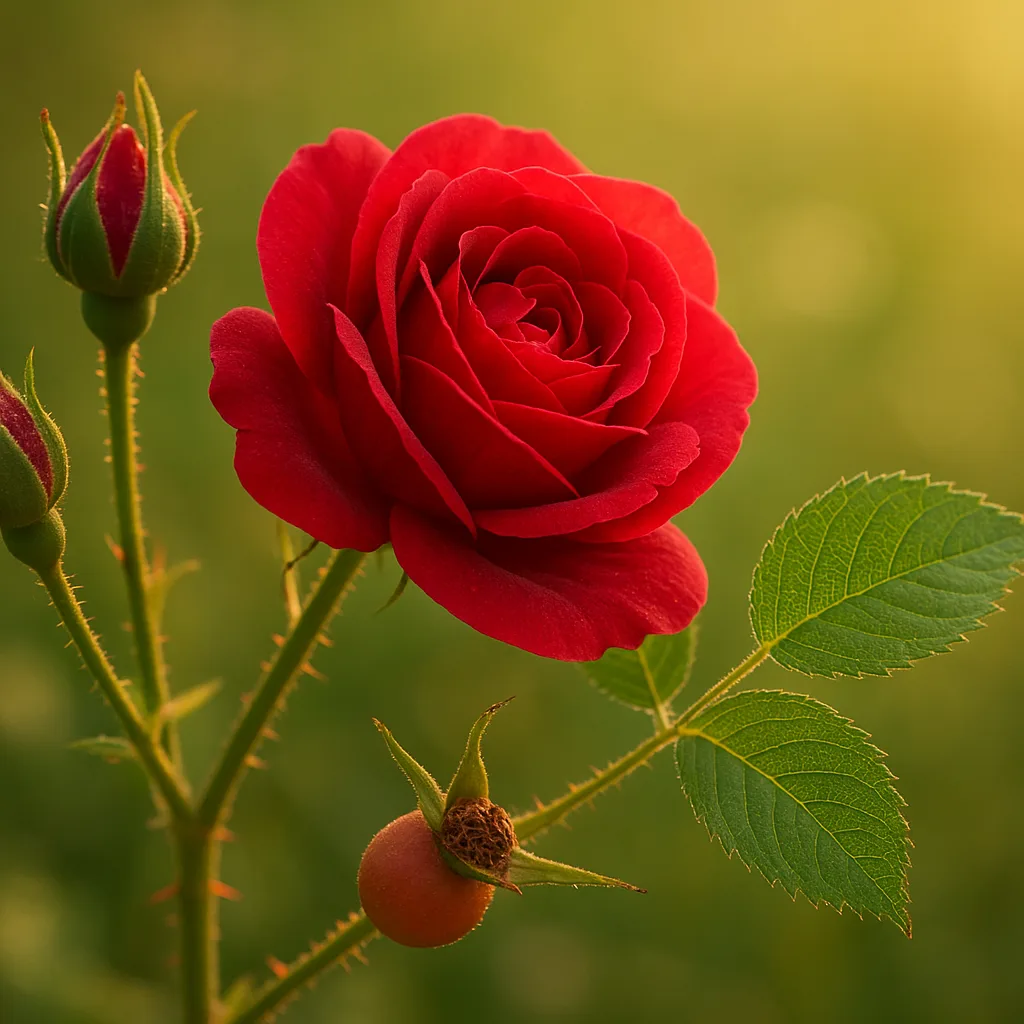
Identifying roses in the field requires attention to flower structure, leaves, stems, and fruit (hips). Below are practical, visual cues that work with photographs or in person. Orvik can speed identification by highlighting these features from images.
Flowers and petals
- Petal count: wild species usually have 5 petals; cultivated roses often have many (double to very double) petals — counts can exceed 100 in some hybrids.
- Flower shape: single (flat), cupped, rosette, high-centered (common in hybrid teas).
- Diameter: from small 1–2 cm single flowers on some species to 8–15+ cm in large hybrid cultivars.
- Color: extremely variable — white, pink, red, yellow, orange, near-black, bi-colors; some species change color with age.
Leaves and leaflets
- Leaves: alternate, pinnate, usually with 5–9 leaflets (occasionally 3 or more in some species).
- Leaflet size: typically 2–7 cm long, ovate to elliptic, often serrated margins.
- Texture: rugose (wrinkled) in species like R. rugosa; glossy in some cultivars.
Stems, prickles and stipules
- Prickles (often called thorns): sharp, variable in size and shape; botanically they are outgrowths of the epidermis, not true woody thorns.
- Stipules: paired appendages at the base of the leaf stalk are common — note size and persistence.
- Stem color and glands: can be green, reddish, or brownish, sometimes with glandular spots.
Hips (fruit)
- Shape: round, ovoid, pear-shaped or elongated; diameter usually 0.5–3.5 cm depending on species.
- Color when ripe: red, orange, purple, or blackish in some species.
- Seeds: numerous small achenes within the hip; hips are rich in vitamin C in many species.
Visual ID checklist (quick field guide)
- Count petals: 5 = likely a species/wild rose; many = cultivated hybrid.
- Observe leaves: pinnate with 5–9 serrate leaflets suggests Rosa.
- Inspect stems: presence of prickles and paired stipules supports rose ID.
- Check fruits: presence of a hip (capsule-shaped berry) strongly indicates a rose.
5. Habitat, geographic distribution, and seasonal behavior
Roses are broadly distributed across temperate regions of the Northern Hemisphere, with a few species in subtropical zones. Knowing where a plant is growing helps narrow identification.
You may also find our article on How Flowers Get Their Scientific Names helpful.
Geographic distribution
- Native areas: Asia (largest diversity), Europe, North Africa, and North America.
- Most species center of diversity: temperate to subtropical Asia (China, Himalaya, Japan).
- Cultivation: roses now occur worldwide in gardens, parks, hedgerows and naturalized sites.
Habitat types
- Woodland edges and scrub: many species occupy edge habitats with good light.
- Grassland and meadow margins: some species like Rosa canina are common in hedgerows.
- Coastal dunes and salt-spray areas: R. rugosa tolerates sandy, salty soils.
- Cultivated landscapes: garden beds, containers, trained as climbers on walls and pergolas.
Seasonal behavior
- Leaf habit: generally deciduous in temperate climates; a few species and cultivars behave semi-evergreen in mild climates.
- Bloom cycles: once-blooming species typically flower in late spring to early summer; remontant (repeat-flowering) cultivars bloom from late spring through fall, with flushes every 4–6 weeks for many modern roses.
- Fruit maturation: hips usually develop after flowering and ripen in late summer to autumn; they persist into winter on some species.
6. Safety, toxicity and uses
Roses are generally safe and widely used — ornamental, culinary and medicinal — but there are practical safety considerations.
Edibility and uses
- Rose hips: many species produce edible hips rich in vitamin C (e.g., R. canina, R. rugosa). Hips are used in teas, syrups and preserves.
- Petioles and petals: rose petals are used in foods, perfumery and cosmetics; ensure cultivar is untreated with pesticides before ingestion.
- Medicinal history: traditional uses include vitamin-rich preparations and mild astringent applications.
Safety and toxicity warnings
- Puncture wounds: rose prickles can cause skin punctures; clean wounds promptly. Seek medical care if a wound is deep, shows signs of infection (redness, swelling, pus), or if you are not up to date on tetanus immunization.
- Allergic reactions: rare contact dermatitis from rose sap or essential oils can occur in sensitive individuals.
- Pets and livestock: rose hips and petals are generally non-toxic to dogs and cats, but thorns can injure animals; watch for splinters or puncture wounds.
7. Comparison: how to tell similar plants apart
Searchers who ask "botanical name for rose" often need to distinguish roses from look-alikes (e.g., camellias, peonies, and some shrubs). Below are targeted comparisons and common confusions.
Looking beyond this category? Check out AI Field Guide: Identify Birds Fast.
Roses vs Camellias
- Leaves: camellias have simple, glossy leaves without stipules; roses have pinnate leaves with serrated leaflets and stipules.
- Flowers: camellias have numerous petals but no hip fruit; roses develop hips after flowering.
- Prickles: camellias lack prickles; roses nearly always have prickles on stems.
Roses vs Peonies
- Leaves: peonies have compound leaves but of different pattern and no stipules; rose leaves are pinnate with distinct serrations.
- Stems and buds: peonies lack prickles and have thick herbaceous stems; roses are woody shrubs or climbers with prickles.
- Fruit: peonies produce follicles, not hips.
Rosa rugosa vs Rosa multiflora (common confusion)
- R. rugosa: very wrinkled (rugose) leaves, large solitary flowers or small clusters, large round hips 1.5–3 cm, very salt-tolerant; usually 80–150 cm tall.
- R. multiflora: small leaflets (7–11), masses of small white to pinkish flowers in clusters, small hips 0.5–1 cm, can be invasive climber reaching 3–5 m.
Species rose vs cultivated hybrid (how to tell)
- Petal number: 5 suggests species; many suggests hybrid.
- Fragrance: strong, complex fragrance often present in old garden roses and species; modern hybrids may be bred more for bloom form than scent.
- Growth habit: species often have more natural, shrub-like or arching habits; hybrids can show highly controlled forms (tall single-stemmed hybrid-teas).
8. Using Orvik and other tools for rose identification
Field identification of roses can be accelerated with good photographs and apps. Orvik — an AI-powered visual identification app — can help by analyzing close-up photos of petals, leaves, hips and stems to suggest likely species or cultivars. Combine app output with the visual checklist above for reliable identifications.
Related reading: Understanding Hydrangea Names — From Common to Scientific.
Practical tips for using identification apps
- Photograph multiple features: full plant habit, close-up of flowers (from top and side), leaf arrangement, stem prickles, and hips.
- Date and location: many apps use location and seasonality to narrow likely species — note GPS or nearest town.
- Cross-check: treat app suggestions (including Orvik) as hypotheses; confirm by comparing botanical features and literature or local floras.
Orvik performs best when you capture clear photos of the diagnostic traits listed above and when you provide contextual notes (e.g., "wild rose on coastal dune").
Conclusion
The core botanical name for rose is the genus Rosa, with many species (e.g., Rosa canina, Rosa rugosa) and thousands of cultivars (Rosa 'Cultivar Name'). People searching "botanical name for rose" usually want identification, nomenclatural clarity, or to match a common name to a scientific one. Use the identification checklist—petal count, pinnate leaves, stipules, prickles and hips—to narrow options in the field. Apps like Orvik can help validate IDs from images, but always confirm with visible diagnostic traits, habitat, and seasonality. Handle roses carefully: hips are edible in many species, but prickles can puncture skin and cause infection. With practice, you'll be able to distinguish species roses, hybrid teas, and common look-alikes confidently.
Frequently Asked Questions
- What is the botanical name for rose?
- The botanical (genus) name for rose is Rosa. Wild species have binomials such as Rosa canina (dog rose) or Rosa rugosa (rugosa rose).
- Is "rose" a Latin name or common name?
- "Rose" is the English common name derived from Latin rosa. The formal Latin genus name is Rosa.
- How do I tell a species rose from a hybrid?
- Count petals (5 suggests species), check leaflets (consistent pinnate pattern), examine hips (present in species after flowering), and note growth habit and fragrance; hybrids often have many petals and a more cultivated form.
- Are rose hips edible?
- Many rose hips (e.g., R. canina, R. rugosa) are edible and high in vitamin C, but only consume hips from plants not treated with pesticides and properly identified.
- Can an app identify the exact cultivar of a rose?
- Apps like Orvik can suggest species and likely cultivars based on images, but exact cultivar ID is sometimes difficult; use multiple photos, provenance, and horticultural records to confirm.
- What are common look-alikes for roses?
- Common look-alikes include camellias and peonies; check for prickles, pinnate leaves, stipules and hips to confirm a rose.
- Is Rosa the only genus called "rose"?
- In common usage, "rose" refers to the genus Rosa. Some unrelated plants have 'rose' in their common names (e.g., rosebay), but these are not true roses.