
What botanists mean by "lily" and the botanical name
When people ask for the "botanical name of lily," they usually want the scientific designation used by botanists to refer to the true lilies. The group commonly called lilies in horticulture and floristry is centered on the genus Lilium, in the family Liliaceae. However, many plants with "lily" in their common name—daylilies, calla lilies, water lilies—belong to other genera and families. This section explains the core term and clarifies common confusions.
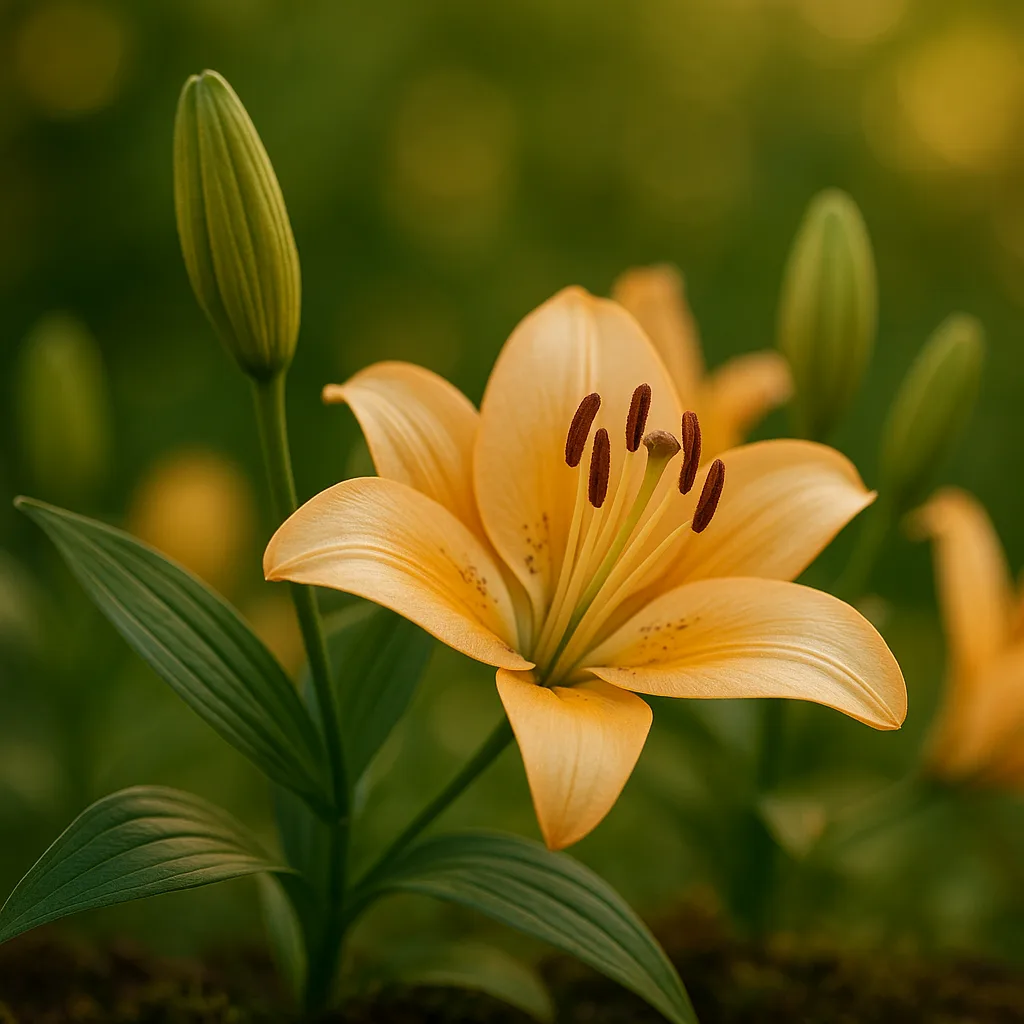
Lilium: the true lily
- Botanical (Latin) name: Lilium (genus).
- Family: Liliaceae (the lily family).
- Estimated species: roughly 110–120 species accepted worldwide, plus countless garden hybrids and cultivars.
Why people ask about "lily" names
- Common names vary by region—"lily" can mean different plants in different places.
- Gardeners, pet owners, and foragers want clarity because many "lilies" have different toxicities and care needs.
- Botanical names (Latin names) give precise identification—e.g., Lilium longiflorum vs Lilium lancifolium.
Lily taxonomy and the Latin name
Taxonomy organizes plants hierarchically. For true lilies the key levels are:
- Kingdom: Plantae
- Order: Liliales
- Family: Liliaceae
- Genus: Lilium
- Species: e.g., Lilium candidum, Lilium regale, Lilium longiflorum
Notable species and Latin names
- Lilium candidum — Madonna lily, native to the Balkans and Middle East.
- Lilium longiflorum — Easter lily, white trumpet-shaped flowers; widely grown for cut flowers.
- Lilium lancifolium (synonym L. tigrinum) — tiger lily, orange with black spots.
- Lilium regale — regal lily, strongly fragrant, long white trumpets with purple throat.
These Latin names follow binomial nomenclature (genus + specific epithet). When you want precision—especially for research, cultivation, or safety—use the botanical name rather than a common name.
Practical identification tips: visual cues and measurements
Identifying a true lily in the field combines several visual and tactile clues. Below are the most reliable characters to examine, and the typical ranges for measurements.
Key visual features
- Flowers: Six tepals (petals + sepals that look alike), often trumpet-shaped, bowl-shaped, or recurved. Flower diameter typically 5–20 cm, depending on species.
- Anthers and stamens: Six stamens with prominent anthers that release powdery pollen; anther length often 8–25 mm.
- Leaves: Typically alternate or in whorls on the stem, simple and entire; sizes range from 1–20 cm long depending on species.
- Stems: Erect, unbranched or occasionally branching; height commonly 30–150 cm, though some species reach 200 cm in optimal conditions.
- Bulbs: True lilies grow from scaly bulbs (not tubers); bulb diameter often 2–8 cm in cultivated types.
- Surface texture & pattern: Many species have spots, streaks, or a smooth, waxy surface; some aristocratic types are heavily scented (Oriental group).
Field measurement checklist (quick ID)
- Measure plant height from ground to tip of highest flower or bud.
- Measure one flower's diameter across opposing tepals.
- Count tepals (should be 6 on true lilies) and stamens (6).
- Inspect the base for a scaly bulb (not a rhizome or fibrous root).
- Note leaf arrangement (whorled vs alternate) and shape (narrow linear vs broad).
Apps like Orvik can help by letting you photograph the flower, stem, leaves, and bulb; the image recognition narrows matches and stores location and time—helpful for difficult or hybrid specimens.
For more on this topic, see our guide on Understanding Pine Trees: Latin Names Explained.
Comparisons: true lilies vs common look‑alikes
Many plants carry "lily" in their common names but are not in the genus Lilium. Below are practical keys to tell them apart.
Lilium vs Hemerocallis (daylilies)
- Botanical names: Lilium (true lilies) vs Hemerocallis (daylilies).
- Flower attachment: Daylily flowers arise from scapes with straplike leaves at the base; true lilies have flowers on an aerial stem with leaves along that stem.
- Bulb vs crown: True lilies grow from bulbs; daylilies grow from a fleshy crown and fibrous roots.
- Flower lifespan: Daylily individual blooms typically last 1 day; true lily flowers persist longer—several days to a week.
Lilium vs Zantedeschia (calla lily) and water lilies
- Calla lily (Zantedeschia) is in the Araceae family, not Liliaceae; it has a spathe and spadix, not tepals.
- Water lilies (family Nymphaeaceae) are aquatic with floating leaves—totally different habit and structure.
Lilium vs Tulipa (tulips)
- Botanical name for tulip: Tulipa (family Liliaceae sensu lato historically; modern systems place tulips in family Liliaceae or sometimes Liliaceae sensu lato debated). Tulips are distinguished by a single six-tepal bowl-shaped flower perched above a basal rosette of leaves, whereas many lilies have multiple nodding flowers along a tall stem.
- Leaves: Tulip leaves are broader, often with a bluish waxy bloom; lily leaves are typically narrow, linear, or lanceolate and attached along the stem.
- Bulb scales differ: tulip bulbs are tunicate with papery outer coats; lily bulbs are scaly without a continuous tunic.
When in doubt, photograph multiple parts (flowers, leaves, bulb) and compare—Orvik can speed this process by matching to verified images and flagging likely look-alikes.
Habitat, geographic distribution, and seasonal behavior
True lilies are primarily temperate plants with centers of diversity in East Asia (China, Japan), the Himalayas, and parts of Europe and North America. Their ecological preferences and seasonal timing vary by species and hybrid group.
Geographic distribution and habitats
- East Asia: greatest species richness—many woodland and alpine lilies.
- Europe and Mediterranean: species like L. candidum prefer dry summer dormancy and calcareous soils.
- North America: species such as Lilium columbianum and L. michiganense occupy meadows, wood margins, and montane slopes.
- Habitats range from sea level to alpine meadows at 2,500–3,500 m in some Himalayan species.
Seasonal behavior and flowering times
- Bloom times: generally May–August, depending on species and latitude.
- Asiatic hybrids: often early to mid-summer (June–July).
- Oriental hybrids: typically mid to late summer (July–August), strongly fragrant.
- Martagon and some species lilies: often late spring to early summer (May–June).
- Bulb dormancy: many lilies go dormant in late summer or autumn, depending on moisture regime.
Local climate modifies these ranges—higher elevations yield shorter growing seasons and later bloom dates. Orvik’s geotagged images help build a local phenology (flowering calendar) so you can compare observed bloom time to expected windows for a species.
You may also find our article on Understanding Hibiscus: Names, ID & Key Species helpful.
Cultivation, propagation, and uses
Lilies are among the most widely grown ornamental bulbs. Here are practical horticultural parameters and propagation methods for gardeners and growers.
Growing conditions
- Sun: most lilies prefer full sun to light afternoon shade—about 6+ hours of direct sun for best flowering.
- Soil: well-drained loam; pH generally 6.0–7.0 for most garden lilies.
- Hardiness: many hardy lilies suit USDA zones 4–9, but tropical species require frost-free environments.
- Planting depth: bulbs are typically planted 2–3 times bulb height (often 10–15 cm deep for a 4–6 cm bulb).
Propagation methods
- Division of bulbs and offsets — the fastest way to increase stock.
- Scaling: removing scales to produce bulblets under controlled conditions.
- Seed: takes longer (2–5 years) to reach flowering size but preserves genetic diversity.
Cut-flower industry facts: many commercial lilies are forced greenhouse-grown; vase life varies from 7–14 days depending on variety and handling. Fragrant groups (Oriental, trumpet) are prized for scent and long-lasting blooms.
Toxicity and safety
Understanding toxicity is essential—especially for households with pets or children.
Looking beyond this category? Check out Dolphin Diets: What They Eat and Why.
- Cats: True lilies (Lilium and Hemerocallis) are extremely toxic to domestic cats. Ingesting any part—pollen, petal, leaf, or water from the vase—can cause acute kidney failure. Veterinary emergency care is required if ingestion is suspected.
- Dogs and humans: Most lilies produce gastrointestinal upset if large amounts are ingested. Symptoms may include nausea, vomiting, and diarrhea. Allergic skin reactions occur rarely.
- Garden handling: Wear gloves if you have sensitive skin; some people experience contact dermatitis from bulbs or sap.
- Safe practices:
- Keep all lilies out of reach of pets, especially cats.
- Do not place bouquets of true lilies where cats can nibble.
- Label bulbs accurately with botanical names so toxic species are clearly identified.
Apps like Orvik are useful here: rapid photo identification plus species-level names help you know whether a plant in your yard is hazardous and how to act quickly.
Related reading: Understanding Daffodils: Names, ID & Care.
How to identify lilies in the field (tools and workflow)
Combining observation, simple measurements, and digital tools yields the most reliable identifications. Below is a step-by-step workflow favored by field botanists and serious gardeners.
- Photograph multiple parts: whole plant, inflorescence (flower cluster), a single flower face-on and from the side, leaves (close-up), and the bulb or base if visible.
- Record context: GPS location, elevation, habitat notes (woodland, meadow, roadside), soil wetness, and date.
- Measure and note: plant height, flower diameter, leaf length and arrangement, bulb size if available.
- Look for diagnostic traits: spots, tepals recurved or not, fragrance, presence of stolons or bulbils (e.g., tiger lily produces bulbils in leaf axils).
- Use Orvik or a similar visual ID app to compare your images against curated collections and herbarium references; review suggested matches and verify against key traits.
- Consult floras or regional keys for confirmation—local guides often narrow down species better than global keys.
This combined approach reduces errors—particularly important where look-alikes occur or when handling toxic plants.
Conclusion
When someone searches for the "botanical name of lily" they are usually seeking precision: which species or cultivated type is present, what the Latin name is, and what that tells them about care, habitat, or safety. The true lilies are members of the genus Lilium (roughly 110–120 species). Distinguishing true lilies from daylilies, calla lilies, and other look-alikes requires attention to bulbs, leaf arrangement, number of tepals, and flower form. Practical field work—photographing multiple parts, measuring flowers and stems, noting bloom time—combined with modern tools like Orvik gives a rapid and reliable identification pathway. Always consider toxicity—especially to cats—and label plants using botanical names to avoid dangerous confusion.
Frequently Asked Questions
- What is the botanical name of a true lily?
- The botanical (Latin) name for true lilies is Lilium (genus), in the family Liliaceae. Species names follow, for example Lilium longiflorum or Lilium candidum.
- Are tulips lilies and what is the tulip's scientific name?
- Tulips are not true lilies. Their botanical name is Tulipa. While both are bulbous flowering plants, tulips and lilies differ in flower structure, leaves, and bulb type.
- How can I tell a lily from a daylily?
- True lilies (Lilium) grow from scaly bulbs and have flowers on an aerial stem with leaves along it; daylilies (Hemerocallis) have a crown of straplike leaves, fleshy roots, and blooms that typically last one day.
- Why is the botanical name important?
- Botanical names provide precise identification across languages and regions, which is crucial for cultivation advice, toxicology information, and scientific communication.
- Are lilies toxic to pets?
- Yes. Many true lilies (Lilium) and daylilies (Hemerocallis) are highly toxic to cats and can cause fatal kidney failure. Keep these plants away from pets and contact a veterinarian immediately if ingestion occurs.
- How many species of Lilium exist?
- Botanists recognize approximately 110–120 species of Lilium worldwide, concentrated in East Asia, with additional species in Europe and North America.
- Can an app identify a lily accurately?
- Yes—when you provide clear photos of multiple plant parts and context. Orvik and similar apps compare images with curated datasets and can rapidly suggest likely matches, but expert confirmation is recommended for rare species.