
Introduction: What people mean by "botanical name of marigold"
When someone searches for the botanical name of marigold, they are usually trying to answer one of two questions: "Which scientific name applies to the plant I have?" or "Is the common marigold in my garden a Tagetes or a Calendula?" The common name "marigold" is applied to several distinct genera and species, so a precise botanical answer matters for identification, gardening, medicinal use, and safety.
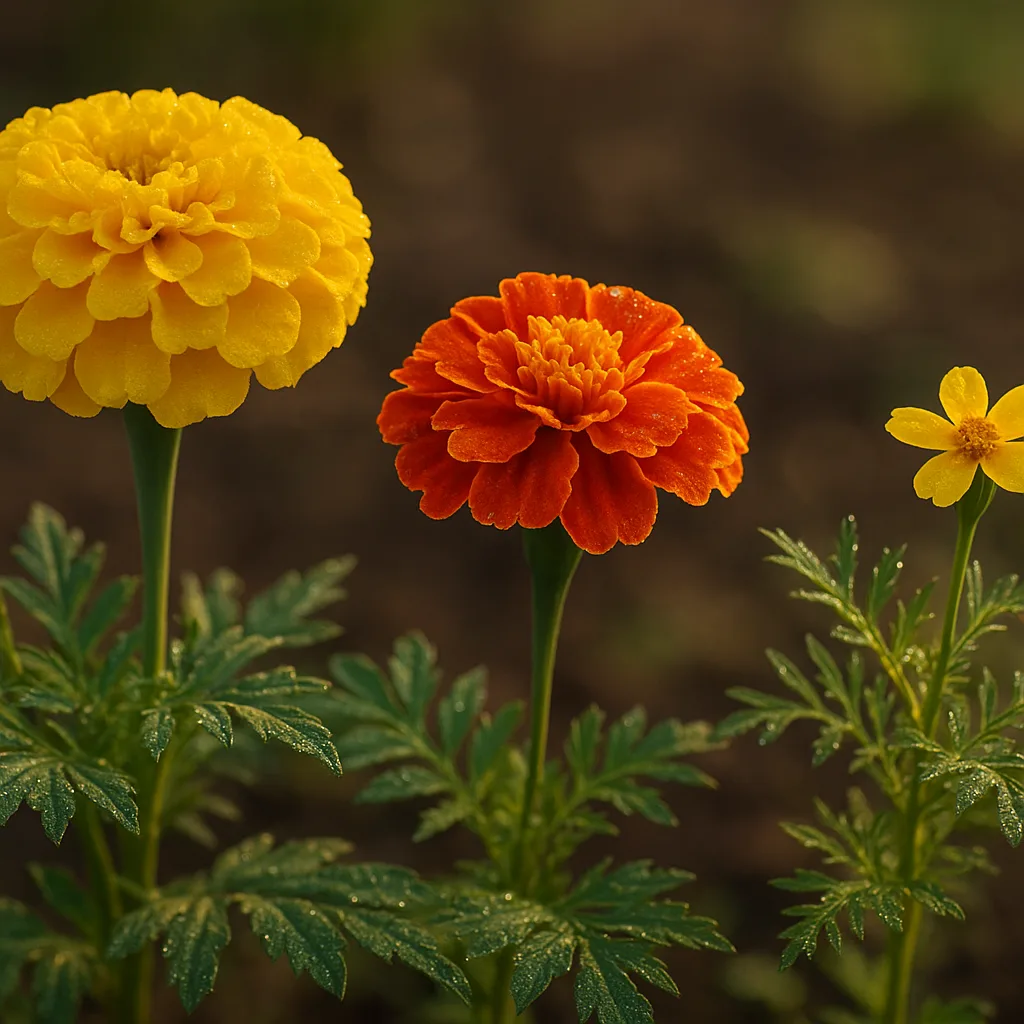
- Primary genera referred to as marigold: Tagetes and Calendula.
- Related common-name confusion: morning glory and other unrelated flowers sometimes appear in casual searches.
- Tools like Orvik can speed accurate identification by analyzing visible traits from photos.
Botanical names explained: Tagetes vs Calendula
Botanical (scientific or Latin) names are the formal names used by botanists to avoid confusion that common names create. For "marigold," two botanical clusters are most important:
Tagetes (New World marigolds)
Tagetes is a genus in the family Asteraceae, native to the Americas—primarily Mexico and Central America. Common species and their botanical names include:
- Tagetes erecta — African marigold (also called Aztec or American marigold); tall, large-headed.
- Tagetes patula — French marigold; compact, often bi-colored blooms.
- Tagetes tenuifolia — signet or slender marigold; delicate, small-flowered.
When a gardener types "african marigold scientific name" into search, the answer is Tagetes erecta. The Tagetes genus contains 50–60 species with characteristic pungent-scented leaves and composite flower heads made up of ray and disk florets.
Calendula (Old World "pot marigolds")
Calendula officinalis, commonly called pot marigold or English marigold, belongs to the Asteraceae family as well but is a different genus. Native to southern Europe, Calendula has a long history of medicinal and culinary use.
- Botanical name often searched as "calendula scientific name" is Calendula officinalis.
- Calendula flowers are usually uniformly orange, yellow, or cream, and petals are softer and broader than many Tagetes species.
Visual identification: how to tell Tagetes from Calendula in the field
Identification relies on several visual cues: flower head structure, petal and disk morphology, leaf shape and arrangement, plant height, and scent. Below are practical tips with measurements and patterns to observe.
For more on this topic, see our guide on Which Bamboo Is Which? Latin Names Explained.
Tagetes (African, French, signet) visual cues
- Flower heads: composite heads 2–10 cm diameter depending on species. T. erecta often 6–10 cm across; T. patula 3–6 cm; T. tenuifolia 1–3 cm.
- Petals (ray florets): usually rayed with rounded or slightly notched tips; often with a central disk of small tubular disk florets.
- Leaf shape: pinnate to pinnatisect leaves, 4–15 cm long, opposite arrangement on the stem; leaflets narrow (10–50 mm long) and often serrated.
- Foliage scent: strong, pungent, resinous; crush leaves between fingers and you should smell a distinctive citrusy or musky aroma.
- Plant height: T. erecta 60–120 cm; T. patula 15–45 cm; T. tenuifolia 15–40 cm.
- Season: bloom mid-summer to first frost in temperate zones.
Calendula visual cues
- Flower heads: typically 3–7 cm across, with a single row or multiple rows of broad ray florets; disk sometimes reduced or hidden.
- Petals: softer, broadly obovate (spoon-shaped), sometimes with a slightly scalloped margin.
- Leaves: simple, oblong to lanceolate leaves, 3–12 cm long, slightly hairy on both surfaces; leaves are alternate rather than opposite.
- Scent: faint, slightly herbal—far less pungent than Tagetes when crushed.
- Plant height: usually 30–60 cm in cultivation.
- Season: blooms spring through fall in mild climates and often into fall before frost.
Habitat, geographic distribution, and seasonal behavior
Knowing where you found a plant and the time of year helps narrow the botanical name of marigold.
- Native ranges:
- Tagetes: native to the Americas—Mexico is a center of diversity for Tagetes species.
- Calendula officinalis: native to the Mediterranean and western Europe.
- Garden and wild habitats:
- Tagetes: thrives in full sun, tolerates poor soils, commonly sown in annual beds and borders, can naturalize in disturbed soils.
- Calendula: prefers full sun to part shade, richer soils, commonly found in cottage gardens and medicinal herb beds.
- Geographic distribution: Both genera are now cultivated worldwide. Tagetes species are especially widespread in warmer temperate to tropical areas; Calendula is common across Europe, North America (as an escapee), and parts of Asia.
- Seasonal behavior: Both are generally annuals (Calendula sometimes behaves as a short-lived perennial in mild climates). Major bloom period is late spring through autumn, often peaking in midsummer.
Uses in gardens, culinary and medicinal contexts
Understanding the botanical name informs how you use the plant: Calendula has established edible and medicinal uses, while Tagetes is primarily ornamental and used in companion planting and pest control.
- Ornamental: Tagetes (especially T. erecta and T. patula) provide bold, long-lasting color in borders and mass plantings. Calendula gives soft, long-blooming heads suited to cottage gardens.
- Culinary and medicinal:
- Calendula officinalis — petals are edible; used fresh in salads, as a saffron substitute, and in topical salves for minor wounds and inflammation. Many herbal monographs cite typical topical preparations and dosages (e.g., 2–5% calendula in herbal ointments), but consult a clinician before medicinal use.
- Tagetes — some species are used for flavoring in Mexico (e.g., T. lucida) and for dye; most Tagetes are not commonly used in mainstream cuisine.
- Gardening benefits: Tagetes are known for attracting pollinators like bees and attracting beneficial insects that prey on pests; they are also used as trap crops for nematodes and certain pests in vegetable beds.
Tip: Use Orvik to photograph a flower head and leaf arrangement; the app helps separate Tagetes from Calendula quickly by matching visual markers.
Safety, toxicity, and handling precautions
Safety depends on species and use. Always verify the botanical name before eating or applying a plant medicinally.
You may also find our article on Which plant is the true money plant? helpful.
- Calendula officinalis:
- Generally regarded as safe for culinary use; petals are commonly eaten. However, allergic reactions can occur in people sensitive to Asteraceae family plants (ragweed, daisies).
- Topical use is common; pregnant or breastfeeding women should consult a healthcare provider before therapeutic use.
- Tagetes species:
- Typically considered non-toxic to humans when handled, but ingestion in large quantities could cause gastrointestinal upset.
- Some pets (dogs, cats) can become ill if they eat large amounts; Tagetes essential oils can cause irritation. Check species-specific guidance for T. lucida and other less common taxa.
- Dermatitis: Both Calendula and Tagetes can cause contact dermatitis in sensitive individuals—wear gloves if you have a history of plant allergies.
Always confirm the plant's scientific name before relying on edible or medicinal claims. Orvik can help confirm identification from a photo, reducing the risk of misidentification.
Comparisons: Tagetes vs Calendula vs morning glory (how to tell them apart)
Comparisons help resolve the most common confusions. Below are side-by-side traits that will help you decide which botanical name of marigold applies to the plant in front of you.
Tagetes vs Calendula (quick comparison)
- Leaves: Tagetes—pinnate, opposite; Calendula—simple, alternate.
- Scent: Tagetes—strong and pungent when crushed; Calendula—mild herbal scent.
- Petal shape: Tagetes—often narrower ray florets with distinct disk; Calendula—broad, rounded petals, disk sometimes reduced.
- Height: Tagetes erecta up to 1–1.2 m; Calendula typically 0.3–0.6 m.
- Uses: Tagetes—ornamental and companion planting; Calendula—edible, medicinal, ornamental.
Why morning glory shows up in searches for "marigold"
Some users confuse common names or recall a flower's color rather than its shape. Morning glory (genus Ipomoea, e.g., Ipomoea purpurea) has:
Looking beyond this category? Check out Inside the Acai Berry: Nature’s Amazonian Purple Fruit.
- Funnel-shaped, actinomorphic (radially symmetrical) flowers with fused petals—very different from the composite, daisy-like heads of Tagetes and Calendula.
- Twining vine habit and heart-shaped leaves—unmistakable once you compare habit and flower form.
So if you have a climbing vine with trumpet flowers, the correct botanical name is likely an Ipomoea species (morning glory), not a marigold.
Practical field checklist for identifying marigolds (useful for Orvik users)
When you’re in the garden or on a walk and want to determine the botanical name of marigold, use this checklist. Photograph the plant and, if using Orvik, provide both a flower-head and a leaf close-up.
Related reading: Mint's Botanical Identity: Mentha, Species & ID.
- Measure the flower-head diameter (cm) and note color(s).
- Examine leaf arrangement: opposite vs alternate; simple vs pinnate.
- Crush a small piece of leaf and note scent strength.
- Observe plant habit: upright single stem, bushy compact, or trailing/vining?
- Record plant height in centimeters and whether stems are branched.
- Note habitat (garden bed, disturbed soil, sunny border) and date—seasonal context helps.
- Typical readings that point to Tagetes: flower head >5 cm, pinnate leaves, pungent leaf scent, plant 30–120 cm tall.
- Typical readings that point to Calendula: flower head 3–7 cm, simple alternate leaves 3–12 cm, mild scent, plant 30–60 cm tall.
Tip: Photograph a cross-section of the head (showing disk florets) and the undersides of leaves; Orvik uses these details to refine identifications.
Conclusion: Naming matters — and tools like Orvik make it easier
"Botanical name of marigold" is not a single-answer question. The most useful immediate answers are Tagetes (several species including Tagetes erecta and Tagetes patula) and Calendula officinalis. Each has distinct leaf morphology, scent, flower structure, and uses. For gardeners, herbalists, and curious nature-lovers, identifying the correct botanical name prevents mistakes in cultivation, consumption, and ecological interpretation.
Documenting measurements and clear photos of flowers and leaves will give you confidence; use Orvik in the field as a second set of eyes to confirm your identification quickly and accurately.
Frequently Asked Questions
- What is the botanical name of marigold?
- There isn’t a single botanical name: commonly it refers to Tagetes species (e.g., Tagetes erecta, Tagetes patula) or to Calendula officinalis (pot marigold).
- What is the African marigold scientific name?
- The African marigold is usually Tagetes erecta.
- What is the calendula scientific name?
- Calendula species commonly called pot marigold are represented by Calendula officinalis.
- How can I tell a Tagetes from a Calendula?
- Check leaves (Tagetes pinnate, Calendula simple), scent (Tagetes pungent), petal shape (Tagetes narrower rays, Calendula broader petals) and plant height.
- Are marigolds edible?
- Calendula officinalis petals are edible and used in salads and teas; Tagetes are less commonly eaten and some species may cause stomach upset—confirm identification before eating.
- Can marigolds be harmful to pets?
- Both Tagetes and Calendula can cause mild gastrointestinal upset in pets if ingested in quantity; some animals may react more strongly—consult a veterinarian if ingestion occurs.
- Why does my search for marigold yield morning glory?
- Common-name confusion and color-based searches can pull up unrelated plants; morning glory (Ipomoea spp.) is a vine with trumpet flowers and is botanically distinct from marigolds.
- How can Orvik help me identify marigolds?
- Orvik analyzes photos for leaf arrangement, flower structure, and other visual markers to help distinguish Tagetes vs Calendula and provide likely botanical names.