
Why people search "bushes plants names"
When someone types "bushes plants names" into a search engine they usually want to: identify an unfamiliar shrub they saw, find planting options for a garden or hedge, or learn whether a bush is poisonous or invasive. Practical answers require names, quick visual cues, habitat notes, and actionable guidance for planting or removal.
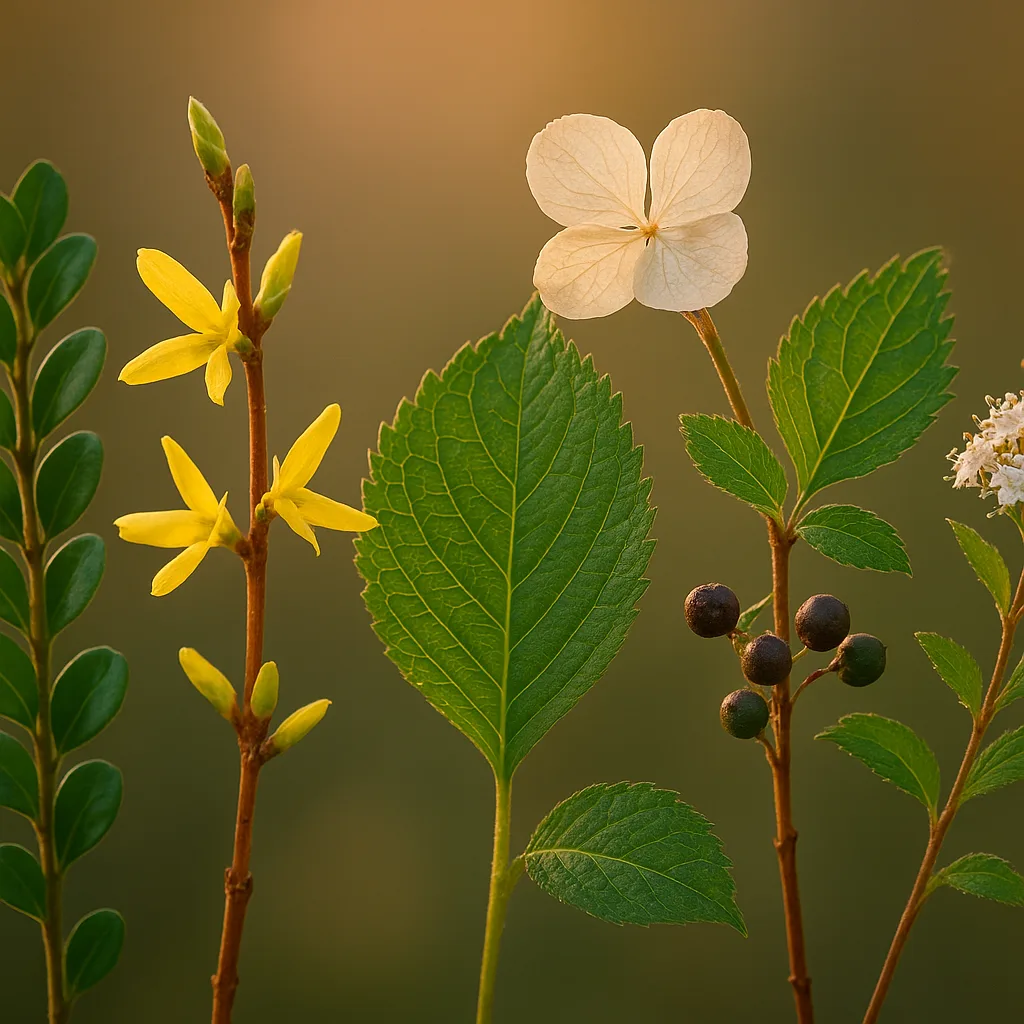
- Identification: leaves, bark, flowers, fruit and growth habit.
- Selection: sun/shade tolerance, size at maturity (meters/feet), maintenance needs.
- Safety: toxicity to people, pets, or livestock.
- Local relevance: species common to a region such as India, Europe, or North America.
How to identify shrubs: key visual cues
Shrubs are woody plants with multiple stems and a mature height usually between 0.5 and 5 meters (1.5–16 ft). Identification relies on a checklist of observable characters. Use a smartphone camera and apps such as Orvik to cross-reference photos with field traits.
Leaves and arrangement
- Simple vs compound leaves: simple leaves are single blades; compound leaves have leaflets (e.g., Berberis vs Rosa).
- Leaf margin: entire, serrated, lobed — measure lengths: many shrubs have leaves 1–15 cm long.
- Arrangement: alternate, opposite, or whorled (opposite arrangement is key for Viburnum and Hydrangea).
Habit and size
- Height: note in meters and feet (e.g., boxwood typically 0.5–2 m / 1.5–6.5 ft).
- Form: mounded, arching, upright, columnar, groundcover.
- Stem number: many low shrubs are multi-stemmed from the base; some like young hollies form single trunks then branch.
Flowers, fruit and seasonal cues
- Flower color and timing: spring-flowering (forsythia), summer-blooming (lantana), autumn berries (holly).
- Fruit type: berries, drupes, capsules — note color and persistence through winter.
- Phenology: deciduous vs evergreen behavior by season and climate zone.
Bark and texture
- Bark color and peeling (e.g., Leptospermum and some Photinia show distinctive bark).
- Spines and thorns: barberry (Berberis) and pyracantha have sharp structures useful for ID.
- Surface texture: glossy vs matte leaves and pubescence (hairiness) on new growth.
20 common bushes and shrub names (with quick ID)
Below are 20 widely encountered shrubs with scientific names, size ranges, key visual cues, habitat and any safety notes. This selection includes species common in temperate gardens and species found in India.
- Boxwood (Buxus sempervirens) — 0.5–3 m (1.5–10 ft): small, glossy evergreen leaves, opposite arrangement, dense mounded habit; used for hedging; hardy to USDA zones 5–9.
- Forsythia (Forsythia × intermedia) — 1–3 m (3–10 ft): early spring bright yellow bell-shaped flowers on bare stems; deciduous; prefers full sun; hardy Z3–9.
- Azalea / Rhododendron (Rhododendron spp.) — 0.5–5 m (1.5–16 ft): evergreen or deciduous; large showy clusters of funnel-shaped flowers in spring; leaves elliptic, often leathery; acid soil preference.
- Lavender (Lavandula angustifolia) — 0.3–1 m (1–3 ft): aromatic narrow gray-green leaves, spikes of purple flowers in summer; thrives in well-drained sun; Mediterranean origin.
- Indian Rose Hibiscus (Hibiscus rosa-sinensis) — 1–3 m (3–10 ft): large showy 10–15 cm diameter flowers in red/yellow/orange; evergreen in tropics; commonly grown across India as hedges.
- Lantana (Lantana camara) — 0.5–2 m (1.5–6.5 ft): multicolored flower clusters, rough textured leaves, invasive in many warm regions; berries toxic to pets and children.
- Bougainvillea (Bougainvillea glabra) — variable, often trained as a shrub 1–4 m (3–13 ft): colorful papery bracts, thorny stems; heat- and drought-tolerant; common in India.
- Oleander (Nerium oleander) — 1–6 m (3–20 ft): long narrow evergreen leaves, clusters of funnel-shaped flowers; highly toxic—avoid ingestion or use caution if planted where children/pets roam.
- Pyracantha (Firethorn) (Pyracantha spp.) — 1–4 m (3–13 ft): thorny evergreen, white spring flowers and orange/red berries in autumn; good for security hedges.
- Photinia (Photinia × fraseri) — 1.5–4 m (5–13 ft): new growth flushed red, then glossy green leaves; white spring panicles of flowers; used for hedges; susceptible to leaf spot in humid climates.
- Duranta (Duranta erecta) — 1–4 m (3–13 ft): arching branches, lilac flowers followed by golden or blue berries; widely planted in tropical/subtropical regions; berries toxic to humans.
- Ixora (Ixora coccinea) — 0.5–2 m (1.5–6.5 ft): dense evergreen shrub, clusters of small tubular flowers (red, orange, pink); common in Indian gardens and tropical hedging.
- Rose (Rosa spp., shrub roses) — 0.5–3 m (1.5–10 ft): compound leaves, thorny stems, showy blossoms; vast cultivar range; pruning needs vary by type.
- Spiraea (Spiraea japonica) — 0.3–1.5 m (1–5 ft): small deciduous leaves, clusters of pink or white flowers in spring/summer; low-maintenance landscape shrub.
- Viburnum (Viburnum opulus and others) — 1–4 m (3–13 ft): opposite leaves, clusters of white flowers in spring, red berries in fall; many species native to temperate zones.
- Berberis (Barberry) (Berberis thunbergii) — 0.5–2 m (1.5–6.5 ft): thorny stems, small simple leaves often tinted red in autumn; invasive in some regions.
- Cotoneaster (Cotoneaster horizontalis) — 0.3–2 m (1–6.5 ft): arching habit, small glossy leaves, red pome fruits persisting into winter; used on slopes and banks.
- Holly (Ilex aquifolium) — 1–5 m (3–16 ft): glossy spiny leaves and red berries in winter; dioecious (male and female plants needed for fruit); toxic to livestock in large quantities.
- Rosemary (Salvia rosmarinus, formerly Rosmarinus officinalis) — 0.5–2 m (1.5–6.5 ft): needle-like aromatic leaves, small blue flowers; used as a shrub in Mediterranean climates; drought-tolerant.
- Duranta vs Lantana quick note — both produce showy clusters but Duranta has larger pendent clusters of purple flowers and blue drupes, while Lantana has tight multicolored flower heads and spherical berries.
Bush-like plants are called: terminology and differences
People often use "bush" and "shrub" interchangeably. Botanically:
For more on this topic, see our guide on Field Guide: Common Cactus Types and How to ID Them.
- Shrub: woody plant less than 5–6 m tall, multi-stemmed.
- Shrublet or subshrub: low-growing woody plant usually under 0.5–1 m.
- Bush: informal term often meaning a rounded shrub or thicket of shrubs.
- Small tree: single-stemmed, >5 m at maturity.
- Hedge: deliberately planted line of shrubs for screening or boundary.
Knowing these distinctions helps with pruning, spacing and legal/regulatory matters (e.g., nuisance vegetation rules).
2 shrubs name and 5 shrubs name: quick lists for specific needs
Users searching for short lists often want planting ideas. Below are compact recommendations for common landscape goals.
You may also find our article on Understanding Hydrangea Names — From Common to Scientific helpful.
2 shrubs name — low-maintenance privacy pair
- Photinia × fraseri — fast-growing, dense foliage (1.5–4 m).
- Viburnum tinus — evergreen, fragrant winter flowers, year-round screening.
5 shrubs name — low-water mixed hedge
- Lavandula angustifolia — aromatic, drought-tolerant.
- Rosmarinus / Salvia rosmarinus — evergreen, culinary use.
- Bougainvillea (trained as shrub) — drought-resistant color.
- Spiraea japonica — low, flowering spring-summer.
- Cotoneaster horizontalis — good for slopes and birds.
Comparisons: How to tell commonly confused shrubs apart
When an observer sees two similar shrubs, focused differences help identify them quickly. Here are common comparative pairs with decisive traits.
Boxwood vs Privet
- Boxwood (Buxus): opposite, small oval glossy leaves 1–3 cm; very slow-growing, dense.
- Privet (Ligustrum): simple leaves usually larger (3–9 cm), often with a matte surface; fast-growing, produces panicles of white flowers followed by black berries.
Azalea vs Rhododendron
- Both are in genus Rhododendron; azaleas are generally smaller (0.5–2 m) and often deciduous with funnel-shaped tubular flowers and 5 stamens.
- Larger rhododendrons (2–5 m) have lepidote or elepidote leaves and 10 or more stamens in many species.
Lantana vs Duranta
- Lantana: clustered, multicolored flower heads; rough leaves; spherical dark berries; invasive in warm climates.
- Duranta: pendant clusters of purple or lilac flowers, followed by blue drupes; leaves smooth, opposite arrangement.
Habitat, distribution and seasonal behavior
Understanding where a shrub naturally occurs and its seasonal cycle is essential for successful cultivation and accurate identification.
You might also be interested in Dolphin Diets: What They Eat and Why.
- Temperate shrubs such as Viburnum, Spiraea, and Buxus typically flower in spring and set fruit in late summer to fall; they are often deciduous (unless noted evergreen).
- Tropical/subtropical shrubs like Hibiscus rosa-sinensis, Bougainvillea, Ixora flower year-round in warm climates, with peak displays during wet or warm seasons.
- Native vs introduced: many Indian gardens contain both native shrubs (e.g., Murraya koenigii, the curry leaf tree used as a shrub in small gardens) and introduced ornamentals (e.g., Lantana camara which is invasive in parts of India).
Safety, maintenance and planting tips
Proper care extends a shrub’s life and reduces problems. Note toxicity warnings where applicable.
Related reading: Identifying Red Berry Bushes in the Wild.
Planting basics
- Spacing: plant shrubs at 50% to 100% of their mature width apart. For a shrub that reaches 2 m / 6.5 ft wide, space 1–2 m between plants.
- Soil: many shrubs prefer well-drained soil; acid-loving species (rhododendrons, azaleas) need pH 4.5–6.0.
- Sun: full sun = 6+ hours/day; part shade = 3–6 hours; shade = less than 3 hours.
Pruning and care
- Prune spring-flowering shrubs after bloom to avoid cutting next year’s buds.
- Evergreens are best pruned in late winter to early spring; heavy pruning can be done selectively to avoid exposure of old wood.
- Water young shrubs deeply once a week (10–20 liters / 2.5–5 gallons per plant in temperate climates) for the first growing season.
Toxicity and safety
- Oleander (Nerium oleander): all parts are highly toxic; handle with gloves and do not burn trimmings (toxic smoke).
- Lantana and Duranta berries: moderately toxic to humans and pets; keep away from children and dogs.
- Identify any unknown shrub before using in edible hedges—consult resources and digital tools like Orvik for visual ID when unsure.
Using technology: Orvik and other ID tools in the field
Visual ID apps speed up identification by matching photographs to large plant databases. Orvik uses AI-powered image recognition to suggest likely shrub names and similar species — useful when you have only a leaf or flower to photograph.
- Best practice: take photos of the whole plant, close-ups of leaves (showing underside if possible), flowers, fruits and bark.
- Cross-check suggestions: use Orvik’s suggested names and compare with field cues (leaf arrangement, flower timing) before final identification.
- Local floras and herbarium records: once you have a candidate name from Orvik, consult local plant lists for confirmation (especially important for invasive species).
Conclusion
When people search "bushes plants names" they need clear names plus identification cues, habitat notes and safety advice. The checklist approach — leaf shape, arrangement, flowers, fruit and habit — combined with localized knowledge and tools like Orvik will take you quickly from curiosity to confident identification. Whether you’re naming a two-shrub privacy screen, selecting five low-water plants, or avoiding toxic species, accurate naming is the first step to good stewardship of your landscape.
Frequently Asked Questions
- What is the difference between a bush and a shrub?
- Botanically they are often the same: a woody plant that is multi-stemmed and usually under 5–6 m tall. 'Bush' is a common, informal term; 'shrub' is the more precise horticultural term.
- How can I identify a shrub from a photo?
- Photograph the whole plant plus close-ups of leaves, the leaf arrangement (opposite/alternate), flowers, fruit and bark. Use an AI tool like Orvik to get candidate names, then verify with local field guides and the plant’s seasonal behavior.
- Which shrubs are safe to plant around children and pets?
- Choose non-toxic species such as lavender (<em>Lavandula</em>), rosemary (<em>Salvia rosmarinus</em>), and many <em>Spiraea</em> varieties. Avoid highly toxic shrubs like <em>Nerium oleander</em> and limit access to berries from <em>Lantana</em> or <em>Duranta</em>.
- What are some recommended shrubs for Indian gardens?
- Common choices in India include <em>Hibiscus rosa-sinensis</em>, <em>Bougainvillea</em>, <em>Ixora coccinea</em>, <em>Murraya koenigii</em> (curry leaf), and <em>Lantana camara</em> (though lantana may be invasive). Choose species according to local climate and water availability.
- How far apart should I plant shrubs for a hedge?
- Spacing depends on mature width: plant them 50% to 100% of the mature width apart. For a shrub that will be 2 m wide, space 1–2 m between plants to form a dense hedge over time.
- When is the best time to prune flowering shrubs?
- Prune spring-flowering shrubs immediately after they bloom to avoid cutting next year’s flower buds. Summer-flowering shrubs can be pruned in late winter or early spring.
- Can Orvik identify shrubs from a single leaf photo?
- Orvik can often suggest likely species from a single clear leaf photo, but accuracy improves with multiple views (flowers, fruit, bark) and by comparing app suggestions with field characteristics.