
When someone types "cactus is poisonous" into a search bar they usually want a clear, practical answer: will this plant hurt me, my child, or my pet? The short answer is: most cacti are not chemically poisonous in the way azaleas or oleanders are, but a few succulents and lookalikes are toxic, and many cacti can cause serious injury through spines or microscopic glochids. This article—designed for naturalists, gardeners, and concerned pet owners—explains which species are dangerous, how to identify them visually, where they grow, and what first aid and preventative steps to take. Use Orvik or a similar visual-ID tool to confirm uncertain plants in the field.
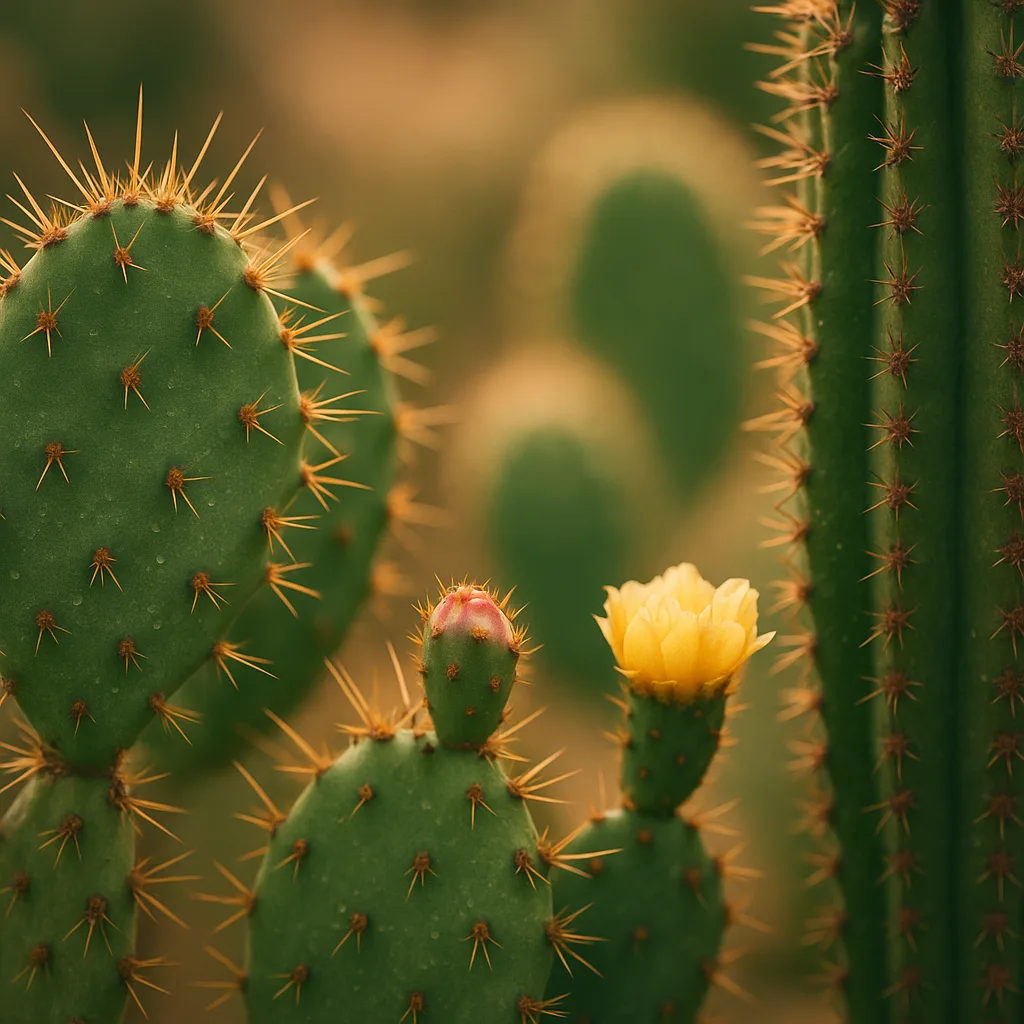
1. Quick answer: Can a cactus poison you?
Directly ingesting the majority of cactus species (Cactaceae family) does not typically cause systemic poisoning in humans. Instead, risk comes in three main forms: mechanical injury (spines and glochids), irritation from sap or latex (in lookalikes), and true toxic alkaloids in a few genera. Understanding these pathways helps you evaluate the real danger.
- Mechanical injury: spines (1–150 mm long) and glochids (barbed hairs 1–5 mm) can embed in skin and eyes.
- Sap irritation: many succulent lookalikes (e.g., Euphorbia, some agaves) secrete caustic latex.
- Alkaloid toxicity: some cacti (e.g., Lophophora williamsii, the peyote cactus) contain mescaline and are psychoactive and potentially dangerous if ingested.
Visual cues to check
- Does the plant have areoles (small cushion-like pads where spines or flowers arise)? If yes, it is a true cactus.
- Are there thin, removable barbed hairs (glochids) clustered around areoles? Opuntia (prickly pear) often has these.
- Does the plant exude a white milky sap when cut? That often indicates Euphorbia or other non-cactus succulents with irritant latex.
2. How cacti and lookalikes cause harm
It helps to separate harm into categories for diagnosis and treatment.
Mechanical injury: spines and glochids
- Spines: rigid, often needlelike, ranging from under 5 mm (some Mammillaria) to over 150 mm (Cereus/Carnegiea). Deep punctures risk infection and tendon damage.
- Glochids: tiny barbed hairs on Opuntia pads, typically 1–5 mm long; they detach easily and are painful and hard to remove, causing prolonged dermatitis.
- Eye injuries: cactus spines or glochids can penetrate cornea and require ophthalmic care.
Chemical and systemic toxins
- Psychoactive alkaloids: Lophophora williamsii (peyote) contains mescaline; ingestion causes hallucinations, nausea, tachycardia, and in large doses cardiovascular risks.
- Cardiac glycosides: some non-cactus succulents—for example, Adenium obesum (desert rose)—contain cardiac glycosides similar to oleandrin and can cause arrhythmia, vomiting, and death in pets and humans.
- Calcium oxalate and saponins: agave (Agave spp.) and some other succulents contain irritating crystals and saponins that cause oral burning, swelling, vomiting.
3. Poisonous plants often mistaken for cacti
Gardeners frequently confuse Euphorbia, Agave, Adenium, and other succulents with cacti. These lookalikes can be more hazardous chemically than most cacti.
For more on this topic, see our guide on Field Guide to Flower Names.
Euphorbia (spurges)
- Identification: cylindrical or segmented stems, no areoles, often with a milky latex when cut. Many species mimic cactus form—for example, Euphorbia trigona and Euphorbia ingens.
- Toxins: caustic latex that causes severe skin and eye irritation; ingestion leads to vomiting and diarrhea.
- Habitat: native to Africa and Madagascar, widely cultivated as houseplants.
Adenium (desert rose)
- Identification: swollen trunk (caudex), glossy leaves, large tubular pink to red flowers. Not a cactus; belongs to Apocynaceae.
- Toxins: cardiac glycosides concentrated in sap; toxic to humans, dogs, cats, and livestock. Even small amounts can cause vomiting, bradycardia, arrhythmia.
- Range: native to Sahel and Eastern Africa but common in cultivation across warm climates.
Agave (including Agave americana)
- Identification: stiff, fibrous leaves in a basal rosette with sharp terminal spines and serrated margins. Leaves usually broad (0.5–2.0 m long in mature A. americana).
- Toxins and effects: leaves contain sharp mechanical fibers and sap with calcium oxalate crystals and saponins that can cause contact dermatitis, severe oral irritation, and gastrointestinal upset if ingested. Agave americana also produces a tall flowering stalk (up to 6–7 m) when it blooms after many years (often 10–30 years).
- Habitat: native to Mexico and the southwestern USA; widely planted as ornamental.
4. Plants in related searches: species-by-species guide
This section addresses the specific queries people often search alongside "cactus is poisonous." For each plant we cover identification tips, toxins, distribution, seasonal behavior, and safety precautions.
Is agave plant poisonous / Is agave poisonous?
- Identification tips: Agave leaves grow in a symmetrical rosette, have fibrous margins, and end in a rigid, often hooked terminal spine (1–5 cm).
- Toxicity: Agave contains calcium oxalate crystals and saponins; sap can cause painful dermatitis and ocular damage. Ingestion produces burning sensation, swelling of lips and throat, nausea, and sometimes more severe GI symptoms.
- Where it grows: native to arid regions of Mexico and the Americas; commonly used in xeriscaping worldwide.
- Seasonality: monocarpic—flowering typically occurs once at maturity (10–30 years for A. americana), producing a tall inflorescence and then the rosette dies.
Is agave americana poisonous?
- Specifics: Agave americana (century plant) has broad leaves 0.6–2.0 m long, with marginal teeth and a 2–5 cm terminal spine. The sap can blister skin and irritate eyes.
- Precautions: always wear gloves and eye protection when cutting; treat sap contact immediately with water and medical attention if severe.
Is azalea poisonous?
- Identification: Rhododendron and azalea shrubs have elliptical leaves and tubular or funnel-shaped flowers in clusters; colors range white to deep pink and red.
- Toxicity: these plants contain grayanotoxins (andromedotoxin) which affect sodium channels—symptoms include nausea, drooling, weakness, bradycardia, and, in severe cases, hypotension and syncope. Even small amounts (a few leaves or nectar) can poison pets and livestock.
- Distribution: temperate regions worldwide, widely cultivated as ornamentals; native diversity centered in Asia and North America.
Is yucca poisonous / Is a yucca plant poisonous?
- Identification: Yuccas have stiff, swordlike leaves arranged in rosettes, often with fibrous leaf margins and tall panicles of bell-shaped white flowers. Leaves typically 30–100 cm long in common species (e.g., Yucca filamentosa).
- Toxicity: yucca contains steroidal saponins. Generally low-to-moderate toxicity—ingestion can cause vomiting and diarrhea in pets. The roots and flowers are used as food or soap in some cultures after processing, which reduces saponin activity.
- Range: Americas; many species in dry, rocky habitats and as cultivated ornamentals.
Is adenium poisonous?
- Identification: Adenium obesum has a swollen trunk, smooth bark, glossy leaves, and showy tubular flowers 3–6 cm across in pink/red shades.
- Toxicity: contains cardiac glycosides in sap—highly toxic if chewed or ingested. Even dermal exposure to sap can cause problems; small doses may be fatal to pets or children.
- Precautions: keep out of reach of pets and children; use gloves when pruning and wash immediately if skin contact occurs.
5. Comparison: How to tell similar plants apart
Clear visual cues separate cacti from lookalikes and help determine the type of risk (mechanical vs chemical).
You may also find our article on Identify Any Plant: Field Guide & Expert Tips helpful.
Cactus vs Euphorbia
- Look for areoles: cacti have areoles (small woolly pads) that give rise to spines and flowers; euphorbias do not.
- Cut test (careful): euphorbias exude milky latex; cacti typically have a clear mucilaginous sap or little sap at all—do this only with gloves and away from eyes.
- Flower type: euphorbia flowers (cyathia) are small and subtler; cactus flowers are often large and showy with many petals and numerous stamens.
Agave vs Yucca
- Leaf texture: agave leaves are thick, succulent, and often broad; yucca leaves are tough, fibrous, and more rigid.
- Flowering stalk: agave sends up one very tall stalk late in life (monocarpic); yucca often flowers annually from a stalk with many pendulous bells.
- Margins and spines: agave margins are often serrated with teeth; yucca margins are smoother but fibrous.
Opuntia (prickly pear) vs other pad-like succulents
- Glochids: opuntias have clusters of glochids that detach easily—tiny, barbed, and irritating. Check for small brown or yellow tufted clusters on pads.
- Pad shape: opuntia pads are flattened and often oval; true cactus columns (e.g., Cereus) are ribbed and cylindrical.
6. Safety, first aid, and prevention
Knowing how to respond reduces harm from both mechanical injuries and toxins.
First aid for spines and glochids
- Spines: remove large visible spines with tweezers after cleaning the area with soap and water. Watch for signs of infection (redness, warmth, pus).
- Glochids: apply sticky tape or a commercial adhesive pad, press, and lift repeatedly to remove small barbs; do not rub, which embeds them deeper. Washing with soap, water, and gentle exfoliation may help. See a clinician if many are embedded or in sensitive areas (eyes, mouth).
- Eye exposure: immediately irrigate with water for 15+ minutes and seek ophthalmic care if visual disturbance, pain, or retained foreign body is suspected.
First aid for sap or ingestion
- Skin contact with irritant sap: rinse thoroughly with water and remove contaminated clothing. Seek medical attention if blisters, severe pain, or eye exposure occurs.
- Ingestion: do not induce vomiting unless instructed by Poison Control. Call your local Poison Control center (US: 1-800-222-1222) and seek emergency care for severe symptoms (difficulty breathing, arrhythmia, seizures).
- Pets: contact your veterinarian or emergency vet immediately. For cardiac-glycoside exposure (e.g., Adenium), rapid veterinary care is critical.
Prevention tips
- Label plants clearly in homes and nurseries; keep known-toxic species out of reach of children and pets.
- Use protective gear (gloves, eye protection) when handling, trimming, or repotting.
- Map high-risk planting spots: place agaves and spined cacti away from walkways to avoid accidental contact.
7. Tools and resources: using Orvik and other IDs in the field
Accurate identification is the first step in risk assessment. For uncertain plants, use a combination of visual clues and trusted tools. Orvik's AI-powered visual identification can help you distinguish a true cactus from Euphorbia, agave, or adenium in seconds using a photo, which is especially useful when dealing with potentially toxic specimens.
You might also be interested in How to Identify Any Rock in the Field.
Related reading: Mastering Plant ID with AI: A Field Guide.
- Take multiple photos: whole plant, close-up of leaves/stems, areoles or latex, and flowers/fruit if present.
- Use Orvik to cross-reference your images with botanical databases and regional species records—this reduces false ID and informs specific toxicology profiles.
- Verify: when in doubt about toxicity—especially for pets—consult local extension services, a botanist, or a poison-control center.
Orvik is a practical tool for hikers, gardeners, and pet owners: it speeds identification, flags hazardous species, and can store location-tagged records to track problematic plants on a property.
8. Conclusion
Most true cacti are not chemically poisonous in the way that azaleas, adenium, or some euphorbias are; however, mechanical injury from spines and glochids is the most common hazard. Several succulent lookalikes and ornamental species—agave (including Agave americana), adenium, and some Euphorbia—pose chemical or caustic risks and should be handled with caution. For accurate identification and to reduce risk, photograph unknown plants and run them through Orvik or consult a botanical expert. If exposure or ingestion occurs, follow the first-aid steps above and contact medical or veterinary professionals as needed.
Frequently Asked Questions
- Is every cactus poisonous?
- No. Most true cacti are not chemically poisonous, but they can cause injury through spines or glochids. A few cacti (e.g., peyote) contain psychoactive alkaloids.
- Can cactus spines cause infection?
- Yes. Deep punctures can introduce bacteria and require cleaning and possible medical attention. Watch for redness, swelling, or pus.
- Is agave poisonous to touch or eat?
- Agave sap contains calcium oxalate crystals and saponins that can cause painful skin and eye irritation; ingestion causes oral burning and GI upset.
- Are adenium (desert rose) plants dangerous for pets?
- Yes. Adenium contains cardiac glycosides that are highly toxic to dogs, cats, and livestock. Even small amounts can be serious—seek veterinary care immediately if ingested.
- How can I quickly tell a cactus from a Euphorbia?
- Look for areoles (cacti have them) and check for milky latex (Euphorbia often exudes it). Cactus flowers are usually larger and arise from areoles.
- What should I do if glochids get in my skin?
- Use adhesive tape to lift tiny barbs, wash with soap and water, and avoid rubbing. See a doctor if many barbs are embedded or if signs of infection develop.
- Can yucca or agave be safely used around pets?
- Yucca and agave can cause digestive upset or skin irritation in pets. While yucca is generally lower risk, agave (especially sap exposure) is more hazardous—keep pets away from fresh cuts and sap.
- How can Orvik help me identify a potentially poisonous plant?
- Orvik uses AI visual identification to match photos to species and can flag toxic lookalikes like Euphorbia, adenium, or agave, helping you make safer decisions in the field.