
Quick answer: the Chinese evergreen scientific name and what it means
The term "Chinese evergreen" is a common name for plants in the genus Aglaonema (family Araceae). When someone asks "chinese evergreen scientific name" they most often want the genus-level name Aglaonema, and frequently one of the widely sold species such as Aglaonema commutatum or Aglaonema modestum. These are evergreen, shade-tolerant tropical plants native to southeastern Asia and valued worldwide as houseplants.
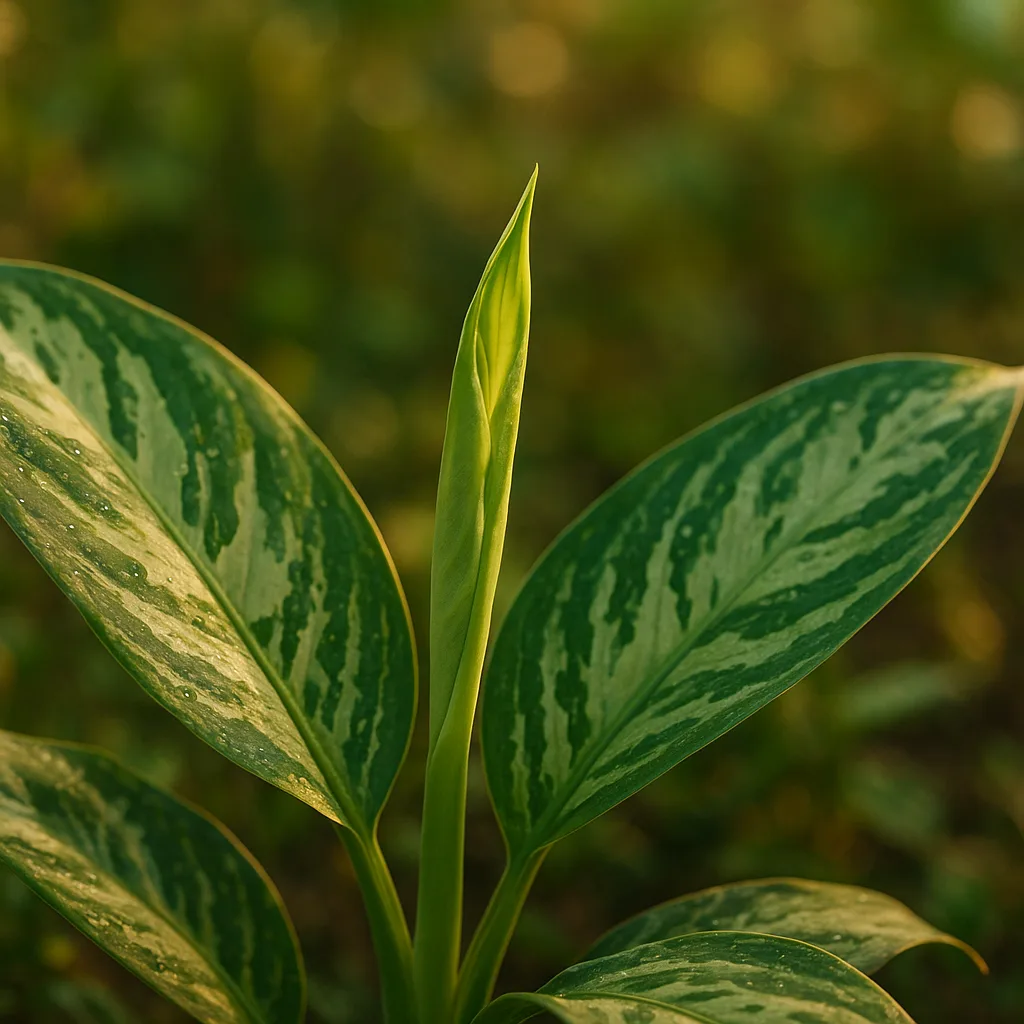
- Genus: Aglaonema
- Family: Araceae (arum family)
- Common species sold as Chinese evergreen: A. commutatum, A. modestum, A. nitidum, many cultivars and hybrids
Taxonomy: how scientists classify Chinese evergreen
Understanding the taxonomy helps answer why the phrase "chinese evergreen scientific name" is ambiguous: horticulture often uses the common name for many species and hybrids. Botanically, Aglaonema is the correct genus, and scientific names follow binomial nomenclature (genus + specific epithet).
- Aglaonema commutatum — often cited in older literature and nursery labels; native to Philippines and nearby islands.
- Aglaonema modestum — a robust, low-growing species common in cultivation.
- Aglaonema crispum, A. nitidum — less common but part of the broader group sold under the same common name.
- Numerous cultivars (e.g., 'Silver Queen', 'Maria', 'Siam Aurora') are hybrid selections with varied variegation and leaf shapes.
Why genus-level naming matters
For identification, research, toxicology, and legal trade, the scientific name at least to the genus Aglaonema is important. Species-level identification often requires close inspection of leaf morphology, inflorescences (spadix and spathe), and sometimes microscopic characters.
Identification: practical, visual cues to recognize Chinese evergreen
Field and indoor identification relies on several visual and tactile cues. Chinese evergreens are easily recognized when you know what to look for.
- Form and size: Most cultivated Aglaonema are clumping, evergreen perennials 30–90 cm tall (12–36 in). Leaves arise from basal stems or short rhizomes.
- Leaves: Simple, entire margins, typically lanceolate to elliptic; leaf lengths commonly 10–30 cm (4–12 in) though cultivar leaves can exceed this. Many cultivars show variegation: silver, cream, pink, or green patterns.
- Texture and sheen: Leaves are coriaceous (leathery) to moderately glossy; petioles are distinct and may be 2–8 cm long.
- Flowers: Typical aroid inflorescence: a short spadix partially enclosed by a spathe. Flowers are small and not showy; blooming indoors is sporadic.
- Roots and rhizomes: Shallow, fibrous roots with a short creeping rhizome in many species.
Leaf variation and variegation patterns
Aglaonema leaf markings are often diagnostic in horticulture:
For more on this topic, see our guide on Field Guide to Identifying Flowers with AI Tools.
- Uniform dark green leaves: typical of species like A. modestum.
- Silver splashes or mottling: common in cultivars such as 'Silver Queen' or 'Silver Bay'.
- Pink and red tones: cultivars like 'Siam Aurora' show red petiole bases or leaf undersides.
Habitat, geographic distribution, and seasonal behavior
Aglaonema species are native to tropical and subtropical Asia. Knowing their ecological preferences helps explain cultivation needs and seasonal patterns.
- Native range: Southeastern Asia — including Indonesia, Philippines, Malaysia, Thailand, and parts of southern China.
- Natural habitat: Shaded understory of lowland and montane rainforests, often on humus-rich soils near streams or on forest floors with consistent humidity.
- Elevation: Many species occur from sea level to around 1,200 m, depending on species.
- Seasonal behavior: Evergreen in native range; growth may slow in cooler or drier seasons. In temperate interiors as houseplants, they remain evergreen year-round but show reduced growth during cool, low-light winter months.
Care and cultivation: for growers and indoor gardeners
Whether you keep a Chinese evergreen as a living room specimen or are cultivating for sale, replicate its native understory conditions for best results.
- Light: Bright, indirect light or low light. Avoid direct midday sun which can scorch leaves. Indoors aim for 1,000–5,000 lux of indirect light.
- Temperature: Prefer 18–29°C (65–85°F). Avoid temperatures below 15°C (59°F).
- Humidity: 50–80% relative humidity is ideal. They tolerate typical household humidity but will benefit from higher moisture.
- Soil: Well-draining, humus-rich mix. A peat-based potting mix with perlite or coarse sand is suitable.
- Watering: Keep soil evenly moist but not waterlogged. Allow top 2–3 cm (0.8–1.2 in) of substrate to dry between waterings for potted plants.
- Fertilizer: Feed with a balanced liquid fertilizer (e.g., 10-10-10) at half-strength every 4–6 weeks during the growing season.
Propagation: step-by-step
- Take a healthy stem or division: stems 7–15 cm long with at least one node or divide the rhizome with several leaves.
- Rooting medium: place cuttings in water or a moist sterile potting mix. Rooting in water often takes 2–6 weeks; in soil 4–8 weeks.
- After roots reach 1–2 cm, pot into a well-draining mix and keep humidity high for 2–4 weeks to reduce transplant shock.
Safety and toxicity: what to watch out for
Chinese evergreen plants contain insoluble calcium oxalate crystals in their tissues. These are common in Araceae and cause mechanical irritation and chemical reactions when ingested.
You may also find our article on Identifying Acacia: Names, Species, and Field Tips helpful.
- Symptoms of ingestion: Immediate burning, swelling of lips and mouth, drooling, difficulty swallowing, vomiting.
- Pets: Cats and dogs are susceptible; even small chews can produce oral irritation and vomiting.
- First aid: Rinse mouth with water, do not induce vomiting unless instructed by a medical professional, and seek veterinary or medical care promptly.
- Handling: Wear gloves if cutting or propagating to avoid sap contact and skin irritation.
Chinese evergreen vs similar plants: how to tell them apart
People searching for "chinese evergreen scientific name" often want to separate this plant from lookalikes. Below are concise comparisons with visual cues.
- Chinese evergreen (Aglaonema) vs pothos (Epipremnum aureum):
- Leaves: Aglaonema has upright, broad, lanceolate leaves; pothos has heart-shaped, alternating leaves on trailing vines.
- Growth habit: Aglaonema is clumping and upright; pothos is a climbing/trailing vine.
- Aglaonema vs Dieffenbachia (dumb cane):
- Leaves: Dieffenbachia often has larger, broader leaves with distinct central variegation; Aglaonema leaves are usually narrower and more lanceolate.
- Stem: Dieffenbachia has a thicker, cane-like stem; Aglaonema forms clumps from rhizomes.
- Aglaonema vs peace lily (Spathiphyllum):
- Flowers: Peace lily produces larger, prominent white spathes; Aglaonema has smaller, less conspicuous aroid flowers.
- Leaves: Peace lily leaves are typically wider and glossier with more pronounced venation.
- Aglaonema vs Ginkgo biloba (for the ginkgo queries):
- Ginkgo biloba common name: Ginkgo or maidenhair tree. Scientific name: Ginkgo biloba.
- These are entirely different: ginkgo is a deciduous tree with fan-shaped, bilobed leaves (2–7 cm wide), not a tropical understory herbaceous clumper like Aglaonema.
Related plants and common-name queries answered
People searching about the Chinese evergreen often also look up other common botanical names. Below are concise clarifications for those related queries.
- Ginkgo biloba common name / scientific name:
- Common names: ginkgo, maidenhair tree.
- Scientific name: Ginkgo biloba. It belongs to its own division, Ginkgophyta, and is not related to Aglaonema.
- Bacopa monnieri common name:
- Common names include waterhyssop, brahmi (used in Ayurvedic medicine, though "brahmi" is also applied to other plants), and thyme-leafed gratiola. Scientific name: Bacopa monnieri.
- Epimedium Indian name:
- Epimedium species are commonly known as barrenwort, bishop's hat, or horny goat weed (the latter is a Chinese common name for some species). Epimedium is native mainly to China and temperate Asia; it does not have a widely recognized pan-Indian traditional name like some native Indian herbs. Local common names vary by region and language.
Why these clarifications matter
Searchers typing queries like "ginkgo biloba common name" or "bacopa monnieri common name" usually seek a quick match between common and scientific names. Accurate pairing avoids misidentification, improper medicinal use, and cultivation mistakes.
Looking beyond this category? Check out Field Guide to Visual ID with Orvik.
Using tools and apps for identification: how Orvik can help
Modern visual-identification tools supplement field knowledge. Orvik, for example, uses image recognition and regional metadata to suggest likely species based on leaf pattern, venation, and locality.
Related reading: Meet the Chinese Evergreen: Aglaonema ID Guide.
- Take clear, well-lit photographs of the whole plant, a close-up of a single leaf (top and underside if possible), and any inflorescences. Orvik excels when you provide multiple angles.
- Include habitat context (understory, edge of stream, potted on a patio). Geolocation helps narrow the candidate list.
- Cross-check Orvik suggestions with toxicity notes, growth habit, and whether the suggested species matches local native ranges.
Used together with morphological checks listed earlier, Orvik can dramatically reduce the time to an accurate identification—especially for cultivar-rich groups like Aglaonema.
Practical tips for field botanists and houseplant enthusiasts
When you want to answer "chinese evergreen scientific name" in the field or at home, follow a simple checklist:
- Note growth habit (clumping vs trailing vs tree).
- Measure leaf length and width; record colors and variegation patterns.
- Photograph the inflorescence if present — aroid flowers are diagnostic.
- Record location, elevation, and habitat type.
- Use an app like Orvik for an initial ID, then confirm with botanical keys or herbarium references.
Conclusion
The concise answer to "chinese evergreen scientific name" is the genus Aglaonema, with common cultivated species including A. commutatum and A. modestum. Identification rests on leaf size and shape, variegation, and aroid flower structure. These shade-loving, evergreen plants are widely grown indoors but are toxic if ingested. For on-the-spot identification, combine careful visual notes with tools like Orvik and cross-check with authoritative botanical references.
Frequently Asked Questions
- What is the scientific name of the Chinese evergreen?
- The Chinese evergreen belongs to the genus Aglaonema. Common cultivated species include Aglaonema commutatum and Aglaonema modestum.
- Is Chinese evergreen toxic to pets?
- Yes. Aglaonema contains calcium oxalate crystals that cause oral irritation, swelling, drooling, and vomiting in pets and humans if chewed or swallowed.
- How can I tell a Chinese evergreen from a pothos or dieffenbachia?
- Aglaonema is a clumping, upright plant with lanceolate leaves arising from basal stems. Pothos is a trailing vine with heart-shaped leaves; dieffenbachia has thicker cane-like stems and broader leaves.
- What is the common name of Ginkgo biloba?
- Ginkgo biloba is commonly called ginkgo or the maidenhair tree; its scientific name is Ginkgo biloba.
- What is Bacopa monnieri commonly called?
- Bacopa monnieri is commonly known as waterhyssop or brahmi and is used in traditional Ayurvedic medicine.
- Does Epimedium have an Indian name?
- Epimedium species are commonly called barrenwort, bishop's hat, or horny goat weed. They do not have a single, widely used pan-Indian traditional name; local vernacular names vary by region.
- Can an app like Orvik identify different Aglaonema cultivars?
- Yes. Orvik and similar visual-ID apps can suggest species and cultivars based on leaf pattern, venation, and photos, but you should confirm with morphology and regional data for precise identification.