
What is a daffodil? The Latin name explained
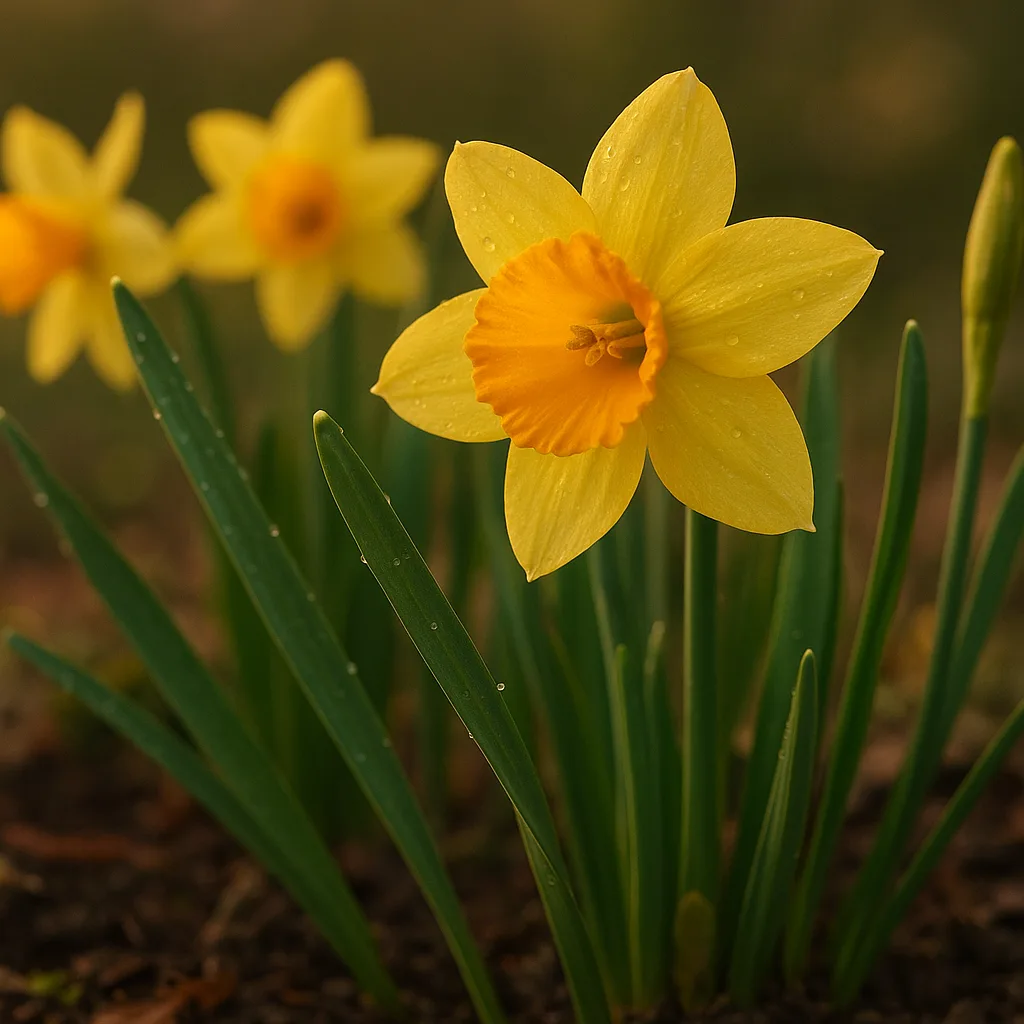
Daffodils are spring-flowering bulbs best known for their trumpet-shaped blooms and bright yellow to white colors. Botanically, the plants we call daffodils belong to the genus Narcissus (family Amaryllidaceae). When people search for the phrase "daffodil latin name" they are usually trying to confirm the scientific name and learn how that name relates to common varieties such as jonquils or paperwhites.
Taxonomy and nomenclature
Key taxonomic facts:
- Genus: Narcissus L.
- Family: Amaryllidaceae
- Number of wild species: approximately 50–70 recognized species, depending on the taxonomic treatment
- Hybrid cultivars: tens of thousands of named hybrids and cultivars bred for garden use
The common English name "daffodil" is often used interchangeably with "narcissus." In horticultural circles, some groups use "daffodil" for showy-cupped types and "jonquil" for species or cultivars with more fragrant, cluster-flowered habit, but both are Narcissus.
Botanical details: How Narcissus species look
To understand the daffodil latin name in practice, it helps to know the consistent botanical features of Narcissus flowers and plants.
- Flower structure: composed of six perianth segments (tepals) surrounding a central corona (cup or trumpet).
- Flower size: diameter commonly 5–13 cm (2–5 inches); corona length varies from just a few millimetres to several centimetres.
- Plant height: ranges from 10 cm (miniature varieties) to over 100 cm (tall species and cultivars), with many garden types 25–50 cm tall.
- Leaves: strap-like, linear to lanceolate, usually 1–3 cm wide and 10–40 cm long, arising from a bulb.
- Bulb: a tunicate bulb 2–6 cm across in most garden varieties; bulbs store nutrients and survive winter dormancy.
These structural traits distinguish Narcissus from many other flowering genera and are the primary characters used in field identification and keys.
For more on this topic, see our guide on Understanding Lily Identity: Names & Science.
Practical visual identification tips
When someone asks about the "daffodil latin name" they often want help identifying a plant they found. Use the following visual cues to confirm Narcissus in the field or garden.
Quick field checklist
- Does the flower have six tepals and a central cup or trumpet? If yes, likely Narcissus.
- Are leaves basal, strap-like, and arising from a bulb? Typical of Narcissus.
- What is the flowering time? Most Narcissus bloom late winter to mid-spring (February–May in temperate zones).
- Is the plant emerging from a single bulb or from tubers/rhizomes? Bulbs indicate Narcissus; tubers suggest Dahlia or other genera.
Detailed visual cues by feature
- Flower shape: Look for a distinct central corona (cup or trumpet). Many other garden flowers lack this cup.
- Color and patterns: Typical colors are bright yellow, pale yellow, white, cream, and combinations where the corona contrasts (e.g., white tepals with orange or pink corona). Striations or a colored rim on the corona are common.
- Surface texture: Tepals are usually smooth and somewhat waxy; coronas may be ruffled or smooth depending on cultivar.
- Size: Miniature Narcissus can be as small as 10 cm tall with 2–3 cm flowers; large cultivars reach 40–60 cm with flowers up to 13 cm across.
Habitat, distribution, and seasonal behavior
Narcissus is native primarily to western Europe and the Mediterranean region but has been widely introduced and naturalized in temperate regions worldwide.
- Native range: Iberian Peninsula, North Africa, Canary Islands, Mediterranean basin, parts of Western Europe.
- Introduced and naturalized: United Kingdom, North America (Pacific Northwest and eastern U.S.), New Zealand, Australia.
- USDA hardiness: Many garden Narcissus perform well in USDA zones 3–9, depending on species and cultivar.
- Bloom time: Typically late winter to mid-spring (varies with climate and cultivar). Paperwhites (Narcissus papyraceus) can bloom in winter indoors.
In the wild, Narcissus species often occupy open meadows, rocky slopes, and scrublands where bulbs avoid competition by going dormant in dry or hot seasons. In gardens they prefer well-draining soil and a period of cool dormancy.
Safety and toxicity
Daffodils are beautiful but not edible. All parts of Narcissus contain toxic alkaloids, notably lycorine. Bulbs are especially poisonous because they concentrate these compounds.
You may also find our article on Understanding Pine Trees: Latin Names Explained helpful.
- Symptoms of ingestion: nausea, vomiting, diarrhea, abdominal pain, salivation, and in severe cases cardiac irregularities or convulsions.
- Pets and livestock: Dogs, cats, and horses are susceptible. Ingestion of bulbs is a common source of pet poisoning.
- Skin contact: Handling many bulbs can cause mild irritation or dermatitis in sensitive people; wear gloves if you are cutting or handling large numbers of bulbs.
- First aid: If ingestion is suspected, contact a poison control center or veterinarian immediately; do not induce vomiting without professional advice.
Because bulbs resemble onions to some animals, plant daffodil bulbs where pets and grazing animals cannot dig them up.
Daffodils vs similar plants: How to tell them apart
Gardeners often confuse daffodils with other ornamental flowers. This section compares Narcissus with Dahlia, Tulip, Jonquil, and Camellia to clarify differences.
Daffodil (Narcissus) vs Dahlia
Key differences:
You might also be interested in How to ID a Bird from a Photo.
- Botanical names: Daffodil = Narcissus spp.; Dahlia = Dahlia spp. (e.g., Dahlia pinnata).
- Plant type: Narcissus grows from bulbs; Dahlia grows from tuberous roots.
- Bloom season: Narcissus blooms late winter to spring; Dahlia blooms mid-summer to frost (July–October).
- Flower structure: Narcissus has a central corona plus six tepals; Dahlia flowers are composite (Asteraceae-like) with many ray florets and a central disk in some forms or fully double petals in others.
- Leaves: Narcissus leaves are strap-like; Dahlia leaves are typically pinnate with multiple leaflets.
Additional context on the search queries you provided: the "dahlia meaning name" refers to the genus being named for Swedish botanist Anders Dahl. The "botanical name of dahlia" is Dahlia (with species such as Dahlia pinnata and Dahlia coccinea). The "dahlia common name" is simply "dahlia," though cultivars may have cultivar names such as 'Bishop of Llandaff' or 'Cafe au Lait'.
Related reading: Understanding Hibiscus: Names, ID & Key Species.
Daffodil vs Tulip
- Flower structure: Tulips (genus Tulipa) have six tepals but lack a central corona; daffodils usually have a prominent corona.
- Stem and leaves: Tulip leaves are broader and fewer; daffodil leaves are narrow, strap-like and often appear earlier in spring.
- Season: Both flower in spring, but tulips often peak slightly later than the earliest Narcissus.
Daffodil vs Jonquil
- "Jonquil" is a common name for some Narcissus species and varieties, especially Narcissus jonquilla and cultivars with multiple small fragrant flowers per stem.
- Jonquils are still Narcissus; the difference is horticultural and descriptive rather than a different genus.
Daffodil vs Camellia
- Botanical names: Camellia genus includes Camellia japonica, Camellia sasanqua, and Camellia sinensis (tea plant).
- Plant type: Camellias are evergreen shrubs or small trees; Narcissus are herbaceous, bulbous perennials.
- Leaves and growth: Camellias have glossy, leathery leaves and woody stems; daffodils die back to bulbs after flowering.
- Bloom time: Camellia bloom time varies (autumn to spring) but their flowers are rose-like, not trumpet-shaped.
Cultivation, propagation and garden uses
Narcissus are among the easiest bulbs to grow and suited to naturalizing, containers, borders, and mass plantings. Here are practical guidelines from an expert field perspective.
Planting and care
- Planting depth: Plant bulbs at a depth of about 2–3 times the bulb height. For a 3 cm bulb, plant 6–9 cm deep (rough guideline).
- Spacing: Space 8–15 cm apart for typical garden varieties; larger cultivars may need more room.
- Soil: Well-draining neutral to slightly acidic soil; bulbs rot in waterlogged soils.
- Sunlight: Full sun to part shade. More sun yields sturdier stems and more blooms.
- Fertilizer: Apply a balanced bulb fertilizer (e.g., 5-10-10) at planting and after flowering to build bulb reserves.
Propagation and maintenance
- Division: Dig and divide bulb clusters every 3–5 years to prevent overcrowding.
- Seed propagation: Possible but slow—seed-grown plants can take several years to reach flowering size.
- Deadheading: Remove spent flowers to prevent seed production but leave foliage until it yellows to allow photosynthesis for bulb storage.
Using apps and resources for accurate identification
Modern gardeners and naturalists increasingly use image-identification tools to confirm plant names in the field. Orvik is an AI-powered visual identification app that can recognize Narcissus and suggest likely species or cultivar groups from images. Combined with field observation, such tools speed accurate identification.
- Take clear photos showing the whole plant, close-ups of the flower from the side and front, leaves, and the bulb if possible.
- Upload images to Orvik or consult botanical keys and herbarium images for confirmation.
- Cross-check with authoritative resources such as the Royal Horticultural Society (RHS), USDA PLANTS database, or regional floras for distribution and official species lists.
Orvik is especially useful when you have partial information — for example, a single bloom photo — and need a quick narrowing of possibilities. Use AI outputs as guidance, then verify with morphological details like the corona shape and leaf form.
Frequently Asked Questions
- What is the scientific name for the daffodil?
- The genus name for daffodils is Narcissus. Individual species include Narcissus pseudonarcissus (wild daffodil) and Narcissus papyraceus (paperwhite).
- Are jonquils different from daffodils?
- Jonquil is a common name for certain Narcissus species or cultivars, especially Narcissus jonquilla. They are still part of the Narcissus genus.
- How can I tell a daffodil from a dahlia?
- Daffodils grow from bulbs and have a central corona (trumpet), flowering in spring. Dahlias grow from tubers, have many-petalled composite flowers, and bloom midsummer to fall.
- Are daffodils poisonous to pets?
- Yes. All parts, especially bulbs, contain toxic alkaloids like lycorine and can cause vomiting, diarrhea, and more severe symptoms in pets and humans if ingested.
- When do daffodils typically bloom?
- Most daffodils bloom in late winter to mid-spring (roughly February to May in temperate climates), though exact timing depends on species and local climate.
- What is the origin of the name 'dahlia'?
- The genus Dahlia is named after Swedish botanist Anders Dahl. 'Dahlia meaning name' refers to this eponymous origin.
- Can apps identify exact daffodil cultivars?
- Apps like Orvik can often identify the genus and suggest likely species or cultivar groups from clear photos, but cultivar-level identification may require expert comparison due to the large number of hybrids.