
What is Dieffenbachia?
Dieffenbachia is a small genus of tropical flowering plants in the family Araceae, best known as popular houseplants because of their bold, variegated leaves and upright cane-like stems. When people search for the "dieffenbachia common name" they are usually looking for the everyday name that non-botanists use — and for most species, that common name is "dumb cane."
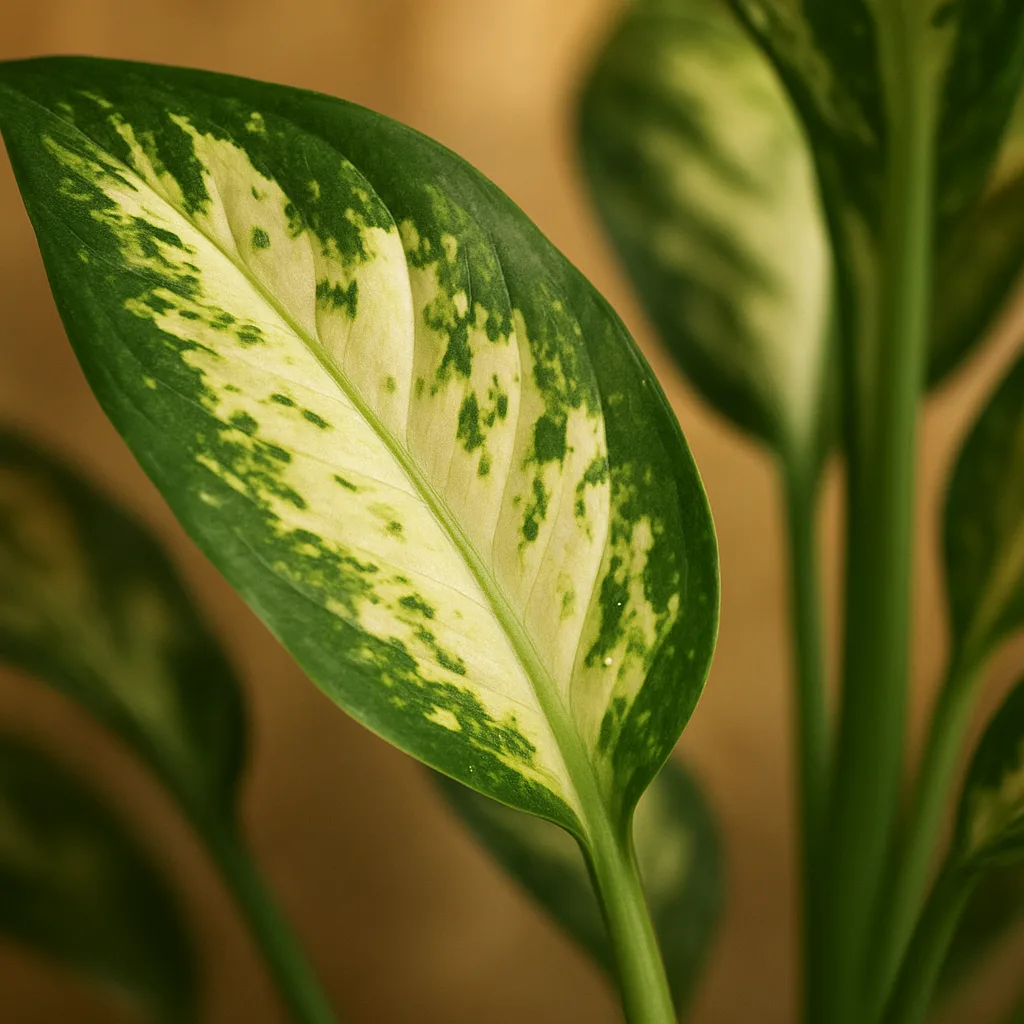
- Family: Araceae (aroids)
- Typical height: 0.5–2.5 m (1.5–8 ft) indoors depending on species and age
- Leaf length: commonly 15–45 cm (6–18 in)
- Origin: tropical Central and South America
Dieffenbachia common names and scientific identity
When addressing "dieffenbachia common name," the single most widespread vernacular name is "dumb cane." This name originates from the plant's toxic sap: contact or ingestion can cause temporary speechlessness due to swelling in the mouth and throat. Other common names include "leopard lily" or simply "dieffenbachia" used as a common name in horticulture.
Key species and scientific names
- Dieffenbachia seguine — often sold as the typical dumb cane.
- Dieffenbachia picta — historically used in horticulture name lists; many cultivars labeled "picta" are hybrids.
- Dieffenbachia amoena — another frequently encountered species in older catalogs and collections.
Scientific names matter because many plants in nurseries are hybrids or cultivars created from multiple species. If you need precise identification for research, medical reasons, or rare cultivar tracking, using scientific names (genus + species) is essential. Tools like Orvik are helpful for visual identification when common names and labels disagree.
Identification: Practical visual cues
People searching "dieffenbachia common name" often want to recognize the plant visually. Below are reliable visual cues with measurements and specific patterns to look for.
Leaves
- Shape: Broad, ovate to elliptic; leaf bases are typically rounded with an abrupt tip.
- Size: Most cultivated specimens have leaves 15–45 cm (6–18 in) long and 5–18 cm (2–7 in) wide.
- Color & pattern: Variegated—central lighter blotches (cream, pale yellow, or white) with darker green margins or the reverse. Patterns often have a marbled or flecked appearance rather than perfectly symmetrical stripes.
- Texture: Medium-thick, somewhat leathery but flexible; glossy surface when healthy.
Stems and growth form
- Stems: Erect, cane-like, composed of stacked internodes; older stems become woody and support multiple leaf scars.
- Height: Indoors, 0.5–2 m (1.5–8 ft) over several years; outdoors in native ranges it can reach larger sizes.
- Branching: Many cultivars produce a single stem with leaves alternately arranged, while others branch after pruning or injury.
Flowers and fruit
- Flowers: Typical aroid inflorescence—a spadix surrounded by a spathe—but indoor plants rarely flower.
- Fruit: In wild plants, small berry-like fruits form, sometimes eaten by local birds in native habitats.
Visual ID checklist
- Broad, variegated leaves with marbled central patches or margins.
- Leaves 15–45 cm long with a leathery texture and glossy sheen.
- Cane-like stems with visible leaf scars.
- Absence of rigid, upright sword-like leaves (distinguishes it from many Dracaena species).
Habitat, geographic distribution & seasonal behavior
Understanding where Dieffenbachia naturally occurs and how it behaves seasonally helps in both identification and care. Dieffenbachia species are native to the humid lowland forests of Central and northern South America, including countries such as Brazil, Colombia, and Panama.
For more on this topic, see our guide on Identifying Acacia: Names, Species, and Field Tips.
- Native habitat: Shaded understories of tropical rainforests with high humidity and dappled light.
- Geographic range: Central America to northern South America; some species extend into the Caribbean.
- Seasonal behavior: In the tropics they grow year-round. When cultivated in temperate homes, growth typically slows in winter due to lower light and temperature.
Indoor cultivation mimics understory conditions: bright, indirect light, temperatures between 18–24°C (65–75°F), and moderate to high humidity. Under low-light indoor situations, variegation may fade and growth will be slower; in too-bright, direct sun, leaf scorch or bleaching can occur.
Toxicity and safety precautions
One reason "dumb cane" is a memorable common name is the plant’s toxicity. Dieffenbachia contains insoluble calcium oxalate crystals (raphides) that cause mechanical irritation and chemical reactions when they contact mucous membranes.
Symptoms and risks
- Skin contact: Mild irritation, itching, or rash in sensitive individuals.
- Oral contact or ingestion: Immediate burning, swelling of lips and throat, drooling, difficulty speaking—this can make the plant appear to cause temporary 'dumbness' of the mouth.
- Severe reactions: Rarely, airway swelling can lead to breathing difficulties; seek emergency care if breathing is compromised.
- Pets: Cats and dogs commonly show drooling, vomiting, and oral irritation after chewing leaves.
First aid and precautions
- Skin: Wash exposed skin with soap and water; remove contaminated clothing.
- Eyes: Rinse immediately with clean water for at least 15 minutes and seek medical care.
- Ingestion: Do not induce vomiting. Rinse mouth, provide small sips of water if the person is conscious, and seek medical attention.
- Household safety: Keep out of reach of children and pets; wear gloves when pruning; label plants clearly if you keep multiple species.
Despite its toxicity, Dieffenbachia remains a common houseplant because proper handling and placement mitigate most risks.
You may also find our article on Understanding Hydrangea Names — From Common to Scientific helpful.
Common confusions: Dieffenbachia vs Dracaena and other lookalikes
A major reason people search both "dieffenbachia common name" and various Dracaena-related queries is that several ornamental genera share similar growth habits and variegation. Below are comparisons, including the related search queries you might see: dracaena fragrans common name, dracaena scientific name, dracaena trifasciata scientific name, dracaena angustifolia common name, dracaena common name, dracaena fragrans scientific name, and dracaena reflexa common name.
Dieffenbachia vs Dracaena (general)
- Leaves: Dieffenbachia has broader, softer, typically variegated leaves. Dracaena leaves are often narrower, sword-like or strap-shaped (though some Dracaena have broad leaves).
- Stem: Dieffenbachia stems are succulent and cane-like with distinct leaf scars; Dracaena stems are often more woody and sometimes ringed with leaf scars but can be thicker depending on species.
- Toxicity: Many Dracaena species are also mildly toxic to pets, but Dieffenbachia's oxalate crystals produce a distinctive oral irritation.
Specific Dracaena species often confused with Dieffenbachia
- Dracaena fragrans (scientific name: Dracaena fragrans) — common name: "corn plant" or "mass cane." Leaves are long, arching, and usually have a central yellow stripe in variegated cultivars. Less broad and more grass-like compared to Dieffenbachia.
- Dracaena trifasciata (scientific name: Dracaena trifasciata, formerly Sansevieria trifasciata) — common name: "snake plant" or "mother-in-law's tongue." Leaves are stiff, upright, and sword-shaped—very different from the softer, broader Dieffenbachia leaves.
- Dracaena angustifolia (scientific name: Dracaena angustifolia) — common name varies regionally; often referred to as "narrow-leaf dracaena." Leaves are narrow and linear, which helps distinguish it from Dieffenbachia.
- Dracaena reflexa (scientific name: Dracaena reflexa) — common name: "Song of India" or "pleomele." This species frequently has a distinctive tiered branching habit with narrow to moderately broad variegated leaves that can resemble Dieffenbachia at a glance, but Dracaena reflexa leaves are typically more numerous and arranged in whorls around branches.
Quick comparison checklist to tell them apart:
- If the leaves are broad, marbled, and soft—likely Dieffenbachia.
- If the leaves are stiff, upright, sword-like—likely Dracaena trifasciata (snake plant).
- If leaves are long, arching with a central stripe—likely Dracaena fragrans (corn plant).
- Use Orvik to photograph leaves and stems; the app can help separate visually similar genera quickly.
How to identify with Orvik and other tools
Orvik is an AI-powered visual identification app that helps confirm plant IDs from photos. When you encounter a variegated houseplant and wonder about its "dieffenbachia common name," using Orvik with targeted photos will improve accuracy.
You might also be interested in Identifying Elderberries in the Wild.
Steps for reliable identification
- Photograph the whole plant to capture growth habit and overall form.
- Take close-up shots of leaf surfaces (showing variegation pattern), leaf undersides, and the stem with visible leaf scars.
- Include a ruler or common object for scale if leaf size is a key distinguishing trait.
- Use Orvik to analyze the images, then compare the app’s suggestions with morphological cues in this article.
Other tools and resources
- Botanical keys and monographs for the Araceae family when in-depth identification is required.
- Local herbarium records and image databases for range and species confirmation.
- Experienced horticulturists and extension services for verification of rare cultivars.
Combining Orvik’s image recognition with the field cues above (leaf size, pattern, stem form) will let you answer the core question behind "dieffenbachia common name": not just what it is called, but precisely which taxon or cultivar you have and whether it poses any safety concerns.
Related reading: Names of Moringa: Local, Common & Botanical Terms.
Care notes that help with identification and health
Knowing how Dieffenbachia behaves under care can provide additional identification clues. For example, variegation intensity, leaf size, and cane thickness change with light and fertilization.
- Light: Bright, indirect light best preserves variegation. Low light reduces variegation—leaves become darker green.
- Water: Moderate moisture; allow top 2–3 cm (0.8–1.2 in) of soil to dry between waterings. Overwatering leads to root rot and yellowing lower leaves.
- Temperature: Optimal 18–24°C (65–75°F); avoid temperatures below 15°C (59°F).
- Feeding: Balanced liquid fertilizer at half-strength monthly during the growing season (spring and summer) supports robust leaf production.
Healthy cultural conditions will make identification easier (clearer variegation, full leaf forms) and reduce the plant stress that sometimes mimics disease or misidentification.
Conclusion
When someone searches "dieffenbachia common name" they are usually seeking an everyday identifier and practical help to recognize the plant. The widely used common name is "dumb cane," and the genus includes several species and hybrid cultivars notable for variegated, broad leaves and cane-like stems. Use the visual ID cues—leaf shape, size, pattern, and stem structure—plus habitat and care notes to confirm an ID. For a quick, reliable visual check, photograph full-plant and close-up details and use Orvik to compare AI suggestions against the field traits listed here. Always handle Dieffenbachia with caution because of its calcium oxalate toxicity to people and pets.
Frequently Asked Questions
- What is the common name of Dieffenbachia?
- The most common name is "dumb cane," referring to the plant's toxic sap that can cause temporary speechlessness if ingested.
- Is Dieffenbachia poisonous to pets?
- Yes. Dieffenbachia contains calcium oxalate crystals that cause oral irritation, drooling, vomiting and swelling if pets chew the leaves.
- How can I tell Dieffenbachia from Dracaena fragrans (corn plant)?
- Dieffenbachia has broader, often marbled leaves and softer texture. <em>Dracaena fragrans</em> (corn plant) has longer, narrower leaves with a central stripe in variegated forms.
- Does Dieffenbachia flower indoors?
- Rarely. Dieffenbachia can flower, producing an aroid spadix and spathe, but indoor conditions seldom induce bloom.
- What should I do if someone ingests Dieffenbachia?
- Rinse the mouth, do not induce vomiting, provide small sips of water if conscious, and seek medical attention. For severe swelling or breathing difficulty, call emergency services.
- Are there many species in the Dieffenbachia genus?
- There are a few recognized species and many hybrids and cultivars commonly sold; exact counts vary as taxonomy is refined, but several dozen taxa appear in horticultural lists.
- Can Orvik identify Dieffenbachia reliably from a photo?
- Yes. Orvik's AI visual ID works well when you provide clear photos of the whole plant, leaf close-ups, and the stem; it helps differentiate Dieffenbachia from similar genera like Dracaena.