
If you searched for "ficus benjamina common name," you're likely trying to confirm what this familiar houseplant or landscape tree is called, how to identify it, and how it differs from other ficus species. The botanical name Ficus benjamina belongs to a widely grown species in the mulberry family (Moraceae) known most commonly as the weeping fig or Benjamin fig. This article gives field-tested identification cues, measurements, habitat and distribution notes, seasonal behavior, toxicity warnings, and practical comparisons to related plants such as Ficus elastica and Ficus lyrata. If you use a visual ID tool like Orvik, the combination of leaf shape, size, and growth habit described here will help you confirm identifications faster.
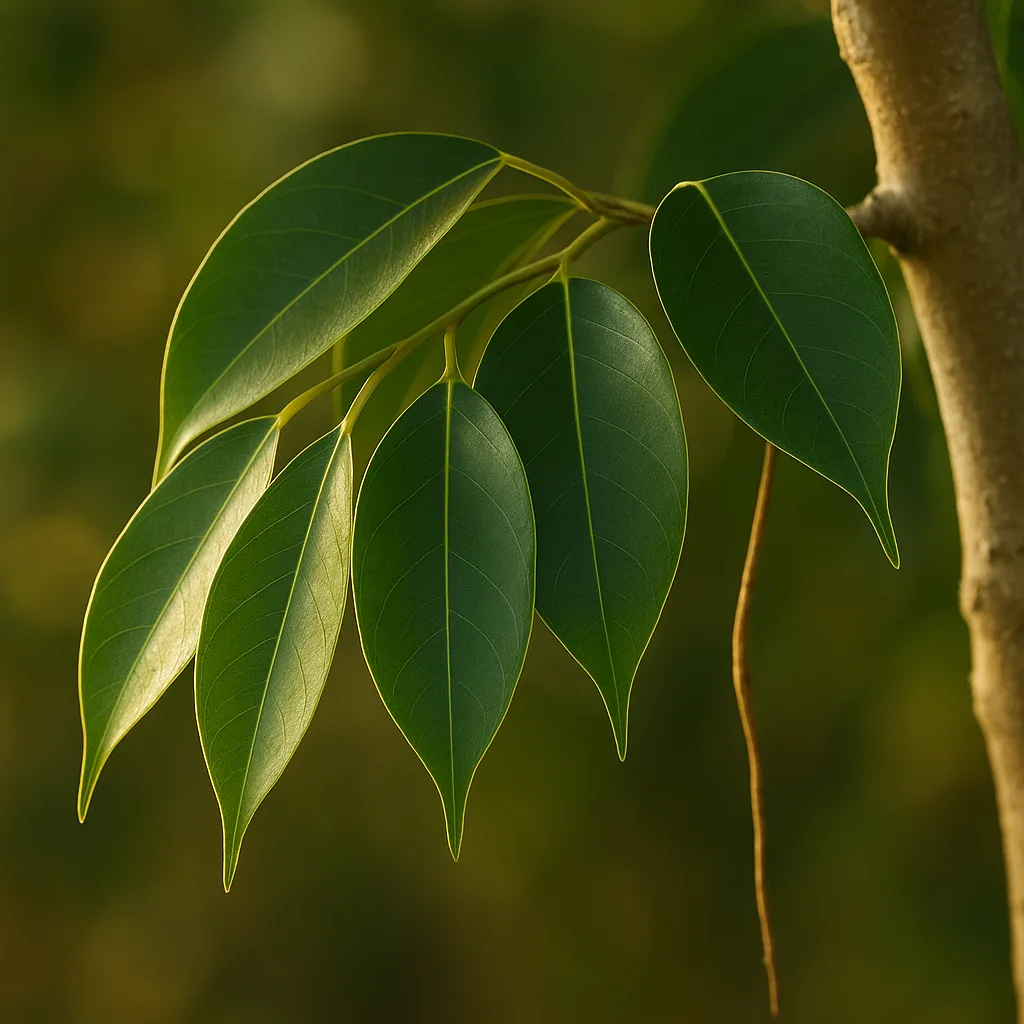
1. The common name and why it matters
Common name: weeping fig (also called Benjamin fig or Benjamin tree). The name refers to the tree's drooping branch habit in many cultivars.
- Primary common name: weeping fig
- Alternative/common variants: Benjamin fig, Benjamin tree
- Botanical (scientific) name: Ficus benjamina
People searching for "ficus benjamina common name" usually want quick confirmation of identity and practical information: is this plant a weeping fig, how does it behave as a houseplant, is it toxic to pets, and how to tell it apart from other ficuses. This article addresses all of those concerns and gives field-friendly visual cues you can use with Orvik or another visual ID app.
2. Taxonomy and botanical context
Ficus benjamina is one member of the genus Ficus, a group that includes about 850–1,000 species of trees, shrubs, and vines. The genus Ficus is worldwide in distribution in tropical and subtropical regions and belongs to the family Moraceae.
Key scientific names referenced
- Genus: Ficus (the fig genus)
- Species: Ficus benjamina — weeping fig
- Ficus elastica: the rubber tree (scientific name Ficus elastica)
- Ficus lyrata: the fiddle-leaf fig (scientific name Ficus lyrata)
- Edible fig botanical name: Ficus carica (common fig tree)
- A commonly used non-fig plant referenced: Aspidistra elatior (common name: cast-iron plant)
Note: the informal phrase "ficus scientific name" is often used by laypeople; the correct form is to use the genus plus species, e.g., Ficus benjamina. When people ask for the "botanical name of fig," they may mean the common edible fig (Ficus carica), but the genus covers many other plants used in horticulture.
3. Practical identification: what to look for
This section gives precise visual cues you can use in the field or when photographing a houseplant for Orvik. Numbers and measurements help separate Ficus benjamina from look-alikes.
For more on this topic, see our guide on Identifying Jasmine: Name, Meaning, and Botany.
Leaves
- Shape: elliptic to lanceolate with a tapering tip; some leaves are slightly asymmetrical at the base.
- Size: typically 6–13 cm (2.5–5 in) long and 3–6 cm (1.2–2.4 in) wide on common cultivars; houseplant sizes can be smaller.
- Texture and color: glossy, smooth surface; dark green on standard forms, with variegated cultivars showing cream, yellow, or silver margins/centers.
- Venation: a prominent central midrib with fine lateral veins; veins are not as strongly raised as on Ficus lyrata.
Growth habit and structure
- Habit: often a slender-trunked tree with a graceful, drooping (weeping) branch habit in many cultivars.
- Height: as a houseplant typically 1–3 m (3–10 ft); in the wild it can reach 30 m (98 ft) or more in tropical lowland forests.
- Trunk and bark: smooth, light gray bark; older trunks may become multiple-stemmed or form a braided appearance in cultivated specimens.
- Roots: rarely forms large aerial roots like banyans, though younger plants can have surface roots in pots.
Fruit and reproductive traits
- Inflorescences: tiny enclosed figs (syconia) about 5–8 mm in diameter—usually inconspicuous.
- Bloom/fruit season: small fruits may appear seasonally in warm climates but are seldom noticed on indoor plants.
Practical tip: if the leaves are small (under 6 cm) and finely pointed, think cultivar. If they are very large (>20 cm), you're likely looking at a different species such as Ficus elastica (rubber plant) or Ficus lyrata (fiddle-leaf fig).
4. Habitat, geographic distribution, and seasonal behavior
Ficus benjamina is native to tropical Asia and Australia, from India and Bangladesh across Southeast Asia to northern Australia. It is widely planted in subtropical and tropical urban landscapes and as an indoor ornamental in temperate regions.
- Native range: India, Bangladesh, Myanmar, Thailand, Malaysia, Indonesia, the Philippines, and northern Australia.
- Introduced/ornamental range: global in greenhouses, homes, offices, and urban landscapes in frost-free zones.
- Preferred habitats: lowland tropical forests, riverine edges, and disturbed sites where light is filtered.
Seasonal and environmental behavior
- Leaf drop sensitivity: highly responsive to changes in light, temperature, and humidity—commonly sheds leaves when moved or when drafts occur.
- Flowering/fruiting: in warm climates, small figs can develop year-round with peaks tied to local seasons; indoor plants rarely fruit.
- Growth rate: moderate to fast in good light and warm temperatures (can add 0.3–1 m/year under favorable outdoor conditions).
Because of its sensitivity to environmental change, a sudden loss of leaves is a diagnostic clue to Ficus benjamina when found indoors—few other houseplants display such pronounced, rapid leaf-drop in response to minor environmental shifts.
5. How to tell Ficus benjamina apart: comparisons with similar species
This section answers common comparison queries: "ficus elastica scientific name," "ficus lyrata common name," and similar searches. Use these side-by-side cues when you need an accurate ID.
You may also find our article on Field Guide to Identifying Flowers with AI Tools helpful.
Ficus benjamina vs Ficus elastica (rubber plant)
- Leaves: F. elastica leaves are much larger—commonly 20–35 cm (8–14 in) long and very broad, thick, and leathery. F. benjamina leaves are 6–13 cm long and thinner.
- Texture: rubber plant leaves are glossier, stiffer, and often have a distinctive reddish new-leaf sheath; F. benjamina leaves are more delicate and slightly pendulous.
- Habit: rubber plants have a more upright, tree-like habit with a single trunk when mature; weeping figs often display fine, drooping branchlets.
Ficus benjamina vs Ficus lyrata (fiddle-leaf fig)
- Leaves: F. lyrata (fiddle-leaf fig) has very large, lyre- or violin-shaped leaves often 30–45 cm (12–18 in) long with pronounced lobes and deep veins. F. benjamina has smaller, uniformly elliptic leaves with smooth margins.
- Veining: F. lyrata shows strong, raised lateral veins creating a quilted appearance; F. benjamina's venation is subtle.
Other look-alikes and clarifications
- Edible fig (botanical name Ficus carica): a deciduous temperate species with lobed leaves and edible fruits—very different appearance and leaf texture.
- Indian fig tree name: this phrase can refer to several plants. In some regions, "Indian fig" refers to the banyan (Ficus benghalensis) or sacred fig (Ficus religiosa); in others it refers to the cactus Opuntia ficus-indica (Indian fig cactus). Context and leaf/fruit form are decisive.
- Aspidistra common name: not a ficus—Aspidistra elatior is the cast-iron plant, an understory perennial with straplike leaves, often used indoors for low-light tolerance.
Use these distinct leaf size and shape cues to eliminate look-alikes. When in doubt, a close-up of the leaf margin, midrib, and overall habit uploaded to Orvik will usually return a rapid, confident ID.
6. Cultivation, uses and practical care tips
Ficus benjamina is popular in interior landscaping and as a patio or street tree in warm climates. Below are practical measurements and care actions to support healthy growth.
Light, water, and soil
- Light: bright, indirect light is ideal—6–8 hours of indirect sun for potted specimens. Avoid extended deep shade or direct hot afternoon sun on variegated forms.
- Water: keep soil evenly moist but not waterlogged. Indoor plants often need watering when the top 2–3 cm (0.8–1.2 in) of soil is dry.
- Soil: a well-draining potting mix with 30–40% aeration (perlite or coarse sand) helps prevent root rot.
Temperature, humidity, and fertilization
- Temperature: prefers 18–24 °C (65–75 °F) indoors; minimum about 12–15 °C (54–59 °F).
- Humidity: moderate to high humidity reduces leaf drop—aim for >40% relative humidity.
- Fertilizer: balanced houseplant fertilizer (e.g., 10-10-10 NPK) applied at half strength monthly during the growing season supports steady growth.
Pruning and propagation
- Pruning: light pruning in spring shapes canopy and removes leggy stems; heavier pruning should be done cautiously to avoid massive leaf drop.
- Propagation: stem cuttings root readily in water or moist rooting medium; semi-ripe cuttings of 10–15 cm with 2–3 nodes are commonly used.
Orvik can help you confirm cultivar names as well—variegated cultivars such as 'Starlight' or 'Variegata' are visually distinctive and often identified by variegation patterns and leaf margins.
Looking beyond this category? Check out Identifying Elderberries in the Wild.
7. Safety, toxicity, and handling precautions
Ficus benjamina produces a milky latex sap containing proteolytic enzymes (ficin) and other compounds that can cause irritation.
- Human skin: contact with the latex can cause dermatitis or irritation in sensitive individuals—wear gloves when pruning and wash skin if sap contacts it.
- Pets: toxic to cats and dogs if ingested; may cause oral irritation, drooling, vomiting, or gastrointestinal upset. Keep out of reach of pets and children.
- Allergy note: airborne allergens from leaf dust or dried sap residues have been reported to trigger respiratory symptoms in sensitive people.
For those managing indoor plants around pets, identify any plant with Orvik or another ID tool and consult your veterinarian if ingestion occurs.
Related reading: Madagascar Periwinkle: Identifying Catharanthus roseus.
8. Using Orvik and other tools to confirm identification
Visual ID apps like Orvik are especially useful when you have a photo of the leaf against a neutral background. For best results:
- Photograph a recent leaf (include the full leaf and a close-up showing venation).
- Capture the whole plant or a clear image of the branching habit.
- Note scale—place a coin or ruler near the leaf for size reference in at least one shot.
Orvik leverages visual features like color, leaf margin, size, and branching pattern to suggest a likely match; pair the app result with the measurement cues above (leaf length 6–13 cm, glossy elliptic shape, drooping habit) for confident identification. If the app suggests multiple ficus species, use the leaf size comparison checklist (section 5) to narrow to the correct species.
Conclusion
To answer the original search intent succinctly: the common name of Ficus benjamina is the weeping fig (also called the Benjamin fig or Benjamin tree). Beyond the name, notable identifying features are the small, glossy elliptic leaves (6–13 cm long), drooping branch habit, smooth light-gray bark, and sensitivity to environmental change. For quick field confirmation, photograph leaves and habit with a size reference and use Orvik for visual matching; then cross-check key measurements and leaf shape against the comparison cues provided here. With these practical markers—leaf size and shape, venation, trunk texture, and growth habit—you can reliably distinguish Ficus benjamina from rubber plants, fiddle-leaf figs, and other look-alikes.
Frequently Asked Questions
- What is the common name of Ficus benjamina?
- The common name is the weeping fig; it is also called the Benjamin fig or Benjamin tree.
- How can I tell Ficus benjamina from Ficus elastica?
- F. elastica (rubber plant) has much larger, thicker leaves (20–35 cm long) and a more upright habit; F. benjamina has smaller, 6–13 cm glossy elliptic leaves and a drooping branch habit.
- Is Ficus benjamina toxic to pets?
- Yes. It contains a milky latex that can cause oral irritation, vomiting, and drooling in cats and dogs. Keep it away from pets and children.
- What is the botanical name of the common edible fig?
- The edible fig's botanical name is Ficus carica.
- What is the common name of Aspidistra?
- Aspidistra elatior is commonly called the cast-iron plant due to its toughness in low-light conditions.
- Why does my weeping fig drop leaves suddenly?
- Ficus benjamina is sensitive to changes in light, temperature, humidity, and draft. Sudden environmental changes—moving the plant, shifts in light, or dry air—often trigger leaf drop.
- Can Orvik help me identify different ficus cultivars?
- Yes. Orvik's visual identification works well when you upload clear photos showing leaf shape, venation, variegation, and plant habit. Use a size reference in photos to improve accuracy.