
Overview: What is the frangipani scientific name?
The common name "frangipani" refers to trees and shrubs in the genus Plumeria, formally described by the 17th-century botanist Charles Plumier. In botanical terms the frangipani scientific name is expressed as Plumeria L., with individual species given binomials such as Plumeria rubra and Plumeria alba. Plumeria belongs to the dogbane family, Apocynaceae, a group known for milky latex and often fragrant flowers.
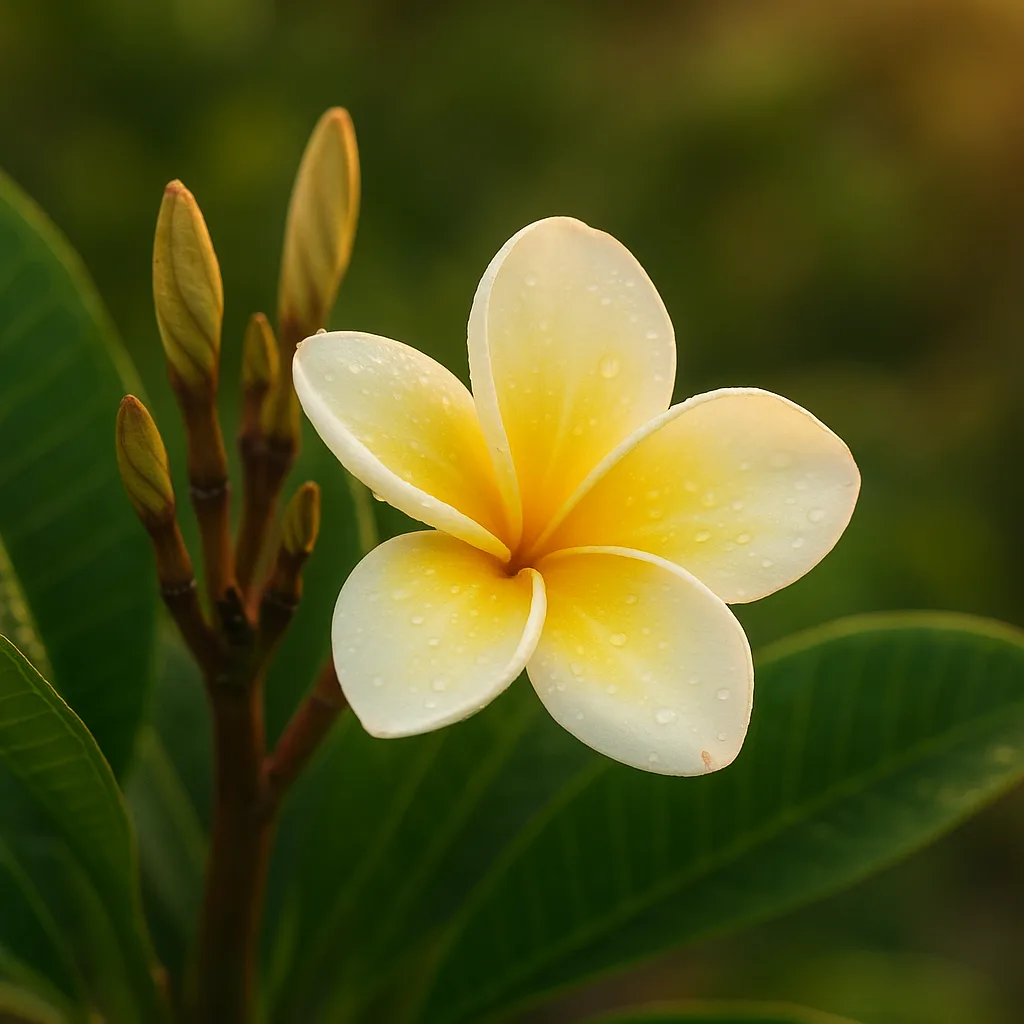
- Main genus: Plumeria L. (Apocynaceae)
- Common English name: frangipani, plumeria
- Typical height: 1.5–8 m (5–26 ft) depending on species and cultivation
- Flower diameter: 4–7 cm (1.6–2.8 in) for many cultivated types
Taxonomy and key species
When someone searches "frangipani scientific name" they usually want to know which botanical name corresponds to the ornamental tree they see in gardens. Here are the most important species and forms you'll encounter.
Principal Plumeria species
- Plumeria rubra—often the most widely planted; flowers range from red to pink to yellow-centered varieties.
- Plumeria alba—white flowers, often with a yellow center; commonly used in leis and temple plantings in tropical Asia.
- Plumeria obtusa—glossy, more rounded leaves and denser canopy; flowers usually white with a yellow center (common in coastal tropics).
- Plumeria stenopetala, P. pudica and others—less common but cultivated for specific flower shapes or foliage.
Botanical citations: the genus name is often written as Plumeria L., indicating Plumier as the author of the genus. Species names carry their own authorities (for example Plumeria rubra L.).
Practical identification: Visual cues and measurements
Identification is what most users want when they look up "frangipani scientific name"—they want to know if the tree in front of them is a Plumeria and which species it might be. Use these field-tested visual cues.
For more on this topic, see our guide on Understanding Lily Identity: Names & Science.
Key field characters
- Growth form: small tree or large shrub, often sparsely branched with a rounded crown; mature height typically 3–8 m in gardens.
- Bark and stems: smooth, greyish bark; branches succulent-like and swollen at the tips; cut stems exude a milky latex.
- Leaves: alternate, simple, entire; length usually 15–45 cm (6–18 in), blade lanceolate to obovate; petiole short. Some species (e.g., P. obtusa) have shorter, glossy leaves 8–15 cm long.
- Flowers: 5-petalled, tubular corolla that flares into a flat limb; diameter most often 4–7 cm; intense fragrance in many cultivars, especially at night or morning.
- Fragrance: sweet, complex, sometimes citrusy or gardenia-like—an important ID clue.
Visual checklist for quick ID
- Look for milky sap when bark or leaf petiole is cut—Apocynaceae trait.
- Measure a leaf: if it's longer than 15 cm and lance-shaped, it fits many Plumeria species.
- Examine flower shape: a short tube with five spreading petals is characteristic.
- Note flowering season and smell—strong fragrance points toward cultivated Plumeria hybrids.
Plumeria colors and names: understanding cultivars
Plumeria are prized for their range of colors and complex patterns. Gardeners and lei-makers often know plants by cultivar names rather than strict species names. Below are common color types and how they are named in horticulture.
- White: pure white petals with yellow throat—often P. alba or cultivars labeled "Alba" or "White".
- Yellow: solid yellow or yellow-centered; common in P. rubra varieties and hybrids.
- Pink to red: deep pink, fuchsia or red forms—many garden cultivars of P. rubra.
- Bicolors and gradients: petals that blend white to yellow, pink margins, or red streaks—typical of named hybrids like 'Rubra', 'Celadine', 'Siam', 'Dwarf Yellow'.
Horticultural names: You'll see cultivar names such as 'Graveolens', 'Silver Leaf', 'Celadine', 'Dwarf Singapore'—these are not scientific epithets but nursery names. Color and fragrance are the primary traits used in naming.
Habitat, distribution and seasonal behavior
Knowing where a plant naturally grows helps confirm identifications.
You may also find our article on Mint's Botanical Identity: Mentha, Species & ID helpful.
Native and introduced range
- Native to tropical and subtropical Americas—Mexico, Central America, the Caribbean.
- Long naturalized across the Pacific, Indian Ocean islands, South and Southeast Asia, and parts of Africa and Australia.
- Common in cultivated landscapes from USDA zones 9–11; in cooler climates often grown as container plants and brought indoors over winter.
Habitat preferences and seasonal behavior
- Prefers well-drained soil, full sun, and tolerates drought once established.
- Often found at low elevations in dry coastal gardens, road verges, temple grounds and courtyards.
- Deciduous or semi-deciduous in dry seasons—leaves may drop during drought or winter dormancy in subtropical climates.
- Flowering: peak months are spring through fall in subtropical areas; in tropical climates flowering can be nearly year-round, with flushes tied to rainfall and temperature.
Similar plants and how to tell them apart
Many fragrant, five-petalled flowers are confused with frangipani. This section helps you separate Plumeria from lookalikes and addresses several related search queries.
Plumeria vs Oleander (Nerium oleander)
- Leaves: Oleander leaves are opposite or in whorls and much narrower (10–20 cm long), while Plumeria leaves are alternate and broader.
- Milky sap: both may have sap but Plumeria has succulent branches; oleander is more shrub-like with many stems.
- Flowers: oleander flowers are in clusters and lack the pronounced tubular corolla of Plumeria.
Plumeria vs Gardenia and Jasmine
- Gardenia (Gardenia jasminoides) has glossy evergreen leaves and funnel-shaped flowers without a prominent tube; gardenia scent is strong but the flowers are different in form and size (usually 5–7 cm but petal arrangement distinct).
- Jasmine flowers are smaller, often borne in clusters, and leaves differ in size and arrangement; jasmine petals are narrow and not formed into the thick, waxy petals of a plumeria.
Related plants and common-name matches (quick reference)
- plumeria scientific name — Plumeria (Apocynaceae).
- pandanus common name — screw pine (genus Pandanus), not related to Plumeria; long strap-like leaves and prop roots.
- phyllanthus niruri common name — stonebreaker or chanca piedra (Phyllanthus niruri).
- pilea microphylla common name — commonly called the artillery plant (Pilea microphylla), a tiny-leaved houseplant.
- pineapple botanical name — Ananas comosus, a bromeliad with a rosette of stiff leaves and a composite fruit.
- pipal tree english name — sacred fig or Bodhi tree (Ficus religiosa).
These comparisons clarify that "frangipani" almost always refers to Plumeria, while the other queries point to unrelated plants with distinct morphologies.
Looking beyond this category? Check out Spotting Bed Bugs: A Clear Visual Guide.
Uses, cultural significance and safety
Frangipani has deep cultural resonance and practical uses, but there are safety considerations.
Related reading: Eucalyptus: The Scientific Identity.
- Cultural: widely used for leis in Polynesia and Hawaii; temple ornament and grave plant in South and Southeast Asia; symbolic of beauty and immortality in many cultures.
- Ornamental: primary use is landscape and container planting for fragrance and showy blooms.
- Traditional medicine: used in folk remedies across its range, often for skin ailments, fever, or cough—but efficacy and safety are not reliably proven.
Toxicity and safety warnings
- Branches and leaves exude a white, milky latex that can cause skin irritation or contact dermatitis in sensitive people. Wear gloves when cutting or propagating.
- Ingestion may cause nausea, vomiting or diarrhea in children and pets—keep cuttings and seeds away from animals.
- Not classified as highly poisonous like oleander, but caution is warranted because of cardiac-active alkaloids reported in some Apocynaceae relatives.
How to identify frangipani in the field — tips for photographers and gardeners
Whether you are a botanist, gardener or curious walker, good photos and careful notes help nail the identification. An app like Orvik speeds this up by analyzing images and matching visible traits.
Photo checklist for Orvik or other ID tools
- Capture a clear full-plant shot to show growth form and branching habit.
- Take close-ups of leaves with a scale (ruler or coin) to show length and width.
- Photograph flowers from the front and side to show the tubular corolla and petal overlap; include a detail of the throat (center) where many species have yellow pigments.
- If safe, photograph the sap when a small twig is broken and show bark texture.
Orvik performs best when multiple angles are provided—trunk, leaves, flowers and a habitat shot. Mentioning the location (country, coastal vs inland, altitude) in Orvik's notes helps refine matches, because species distributions are geographically structured.
Frequently Asked Questions
- What is the frangipani scientific name?
- The genus is Plumeria (family Apocynaceae); common species include Plumeria rubra and Plumeria alba.
- Are plumeria and frangipani the same?
- Yes. "Plumeria" is the botanical name and "frangipani" is the common name used in many regions.
- What are common plumeria flower colors and names?
- Plumeria flowers occur in white, yellow, pink, red and bicolor forms. Cultivar names such as 'Celadine', 'Rubra' or 'Dwarf Yellow' are used in horticulture.
- Is frangipani poisonous to pets or people?
- Plumeria sap can cause skin irritation and ingestion may cause vomiting or diarrhea; keep cuttings away from children and animals and wear gloves when handling.
- What is the pandanus common name?
- Pandanus species are commonly known as screw pines or hala; they are not closely related to Plumeria.
- What is the pineapple botanical name?
- Pineapple is Ananas comosus, a bromeliad unrelated to Plumeria.
- What is the pipal tree English name?
- The pipal tree is the sacred fig, commonly called the Bodhi tree, with the botanical name Ficus religiosa.