
Why House Plant Recognition Matters
When someone searches for "house plant recognition" they usually want three things: a quick identification of an unknown plant, clear care instructions tailored to that species, and safety information (especially around pets and children). Accurate identification affects watering schedules, light placement, fertilization, and whether a plant is safe to keep around a toddler or a cat. With hundreds of commonly kept species — from Monstera deliciosa to Sansevieria (Dracaena trifasciata) — precise naming matters.
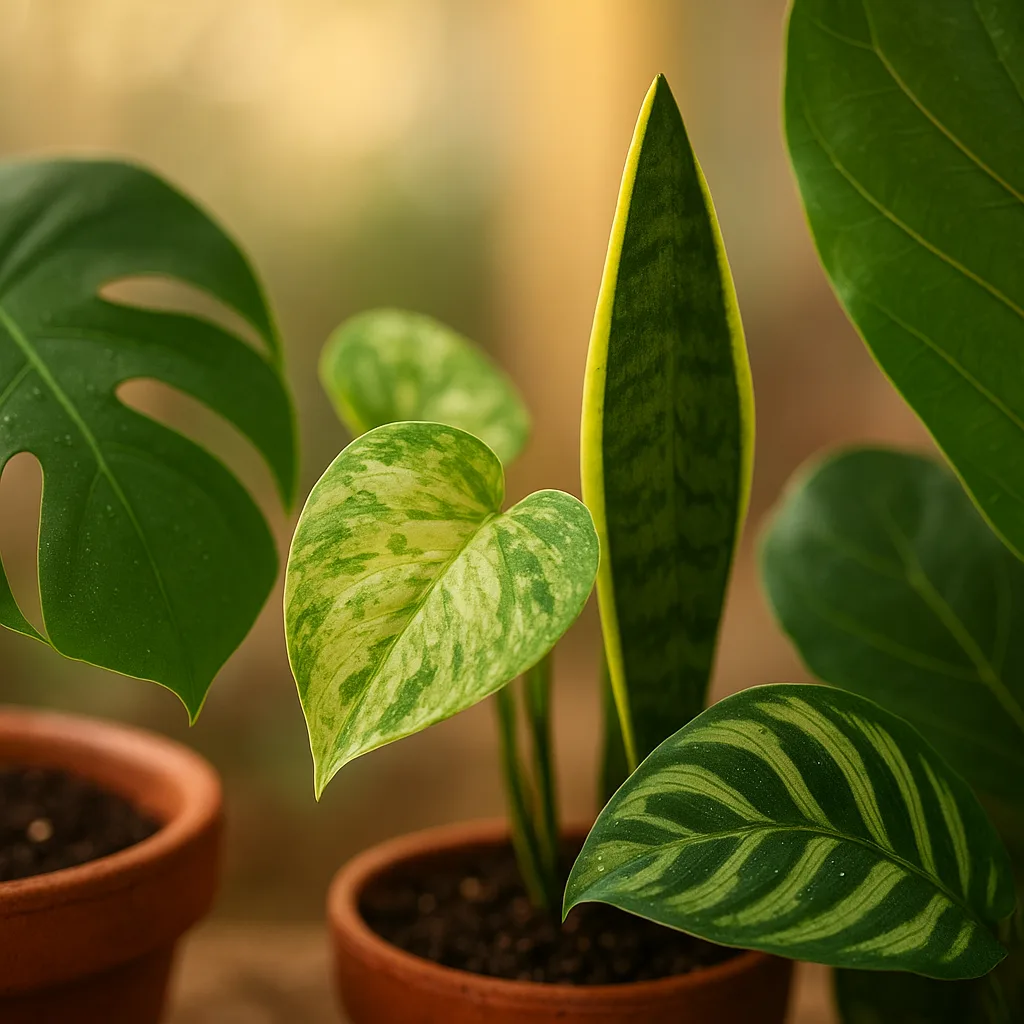
What this guide will do
- Explain how modern plant ID (including AI) works
- Give practical visual cues you can use at home
- Profile common houseplants with species names and measures
- Compare similar species so you can tell them apart
- Cover safety and seasonal behavior
How Modern House Plant Recognition Works
House plant recognition today relies on three pillars: visual features, contextual data, and expert-validated training sets. Apps like Orvik combine convolutional neural networks (CNNs) trained on millions of images with metadata (location, time of year, user notes) to return species-level suggestions and confidence scores.
Core technical elements
- Image preprocessing: normalization and cropping to remove background noise
- Feature extraction: leaves, venation, stem nodes, flowers, and growth habit
- Classification: probability-based matches with top-3 suggestions and confidence percentages
Limitations to understand
- Juvenile plants often look different from mature specimens (e.g., Monstera juvenile leaves lack fenestrations).
- Low-quality photos, extreme backlighting, or cluttered backgrounds reduce accuracy.
- Hybrid cultivars and non-native cultivars may be misidentified or return a genus-level match only.
Take Better Photos for Faster ID
Improving your photos directly raises the chance of a correct ID. When you use an indoor plant identifier app, the photo is the single most important input.
Practical photo tips
- Take three types of shots: whole-plant (1–3 m away), medium (30–60 cm showing growth habit), and close-up (10–30 cm of leaf surface or petiole).
- Include a scale object like a coin (2.4 cm) or a ruler so size estimates are accurate.
- Capture both upper and lower leaf surfaces and a shot of the stem base. Undersides often show venation and hair (pubescence).
- Use diffuse natural light or a soft LED; avoid harsh sunlight and strong shadows.
- Avoid filters. Use the phone’s native camera at highest resolution; 8–12 MP is sufficient.
What to photograph for specific cues
- Leaf margin: entire, serrated, lobed — photograph edge close-up.
- Venation pattern: pinnate, palmate, parallel — a 10–20 cm crop across the midrib works well.
- Attachment and petiole: whether the leaf is peltate (petiole attaches to center) or not.
- Flowers and inflorescences: many IDs hinge on blooms — photograph the spathe, spike, or panicle when present.
Common Houseplants and How to Recognize Them
This section profiles frequently kept indoor species. For each: scientific name, typical leaf size, key visual cues, origin, and basic care notes.
For more on this topic, see our guide on Identify Plants Fast: In-Depth PlantSnap Review.
Monstera deliciosa
- Scientific name: Monstera deliciosa
- Leaf size: typically 30–90 cm long on mature plants
- Key cues: deep fenestrations (holes and splits) in mature leaves; glossy, heart-shaped juvenile leaves lack holes
- Origin: tropical rainforests of southern Mexico to Panama
- Notes: fenestrations develop with age and bright, indirect light
Golden Pothos / Devil’s Ivy
- Scientific name: Epipremnum aureum
- Leaf size: 5–20 cm long (varies by cultivar)
- Key cues: trailing vine habit, waxy glossy leaves often variegated yellow or white; cordate (heart-shaped) leaves
- Origin: Polynesia (cultivated widely in SE Asia)
- Notes: tolerant of low light; toxic to pets (calcium oxalate crystals)
Fiddle Leaf Fig
- Scientific name: Ficus lyrata
- Leaf size: commonly 20–45 cm long, 12–30 cm wide
- Key cues: large, fiddle-shaped leaves with prominent midrib; leathery texture and glossy surface
- Origin: tropical west Africa
- Notes: prefers bright, consistent light; sensitive to overwatering
Snake Plant (Mother-in-law’s Tongue)
- Scientific name: Dracaena trifasciata (formerly Sansevieria trifasciata)
- Leaf size: 30–120 cm tall depending on cultivar
- Key cues: erect, sword-shaped leaves with parallel venation and mottled horizontal bands
- Origin: West Africa
- Notes: very drought-tolerant; mildly toxic to pets
Peace Lily
- Scientific name: Spathiphyllum spp. (e.g., S. wallisii)
- Leaf size: 15–40 cm long
- Key cues: glossy lanceolate leaves; white spathes (modified leaves) surrounding a spadix when flowering
- Origin: tropical Americas and SE Asia
- Notes: prefers medium to low light; toxic (calcium oxalate)
Visual Identification Tips: Color, Shape, Texture, Patterns
Learning to read a plant visually is like learning a language. Here are reliable, measurable cues you can apply across species.
Color and variegation
- Type: chimeral variegation (sharp borders) vs. sectoral/patchy (irregular).
- Color metrics: deep green (high chlorophyll) vs pale/variegated (reduced chlorophyll) — variegated areas often at the leaf margins or centers.
- Tip: variegation will revert in low light; lean plants toward brighter, indirect light to maintain patterns.
Leaf shape and size
- Measure leaf length and width: e.g., Ficus lyrata leaves 20–45 cm long, 12–30 cm wide.
- Look for lobes (e.g., philodendrons), fenestrations (Monstera), or peltate attachments (e.g., Peperomia polybotrya).
Texture and surface features
- Glossy vs matte: glossy often indicates a waxy cuticle; matte may mean velvet (e.g., Alocasia) or pubescence (tiny hairs).
- Thickness: succulent leaves are thick (several millimeters) and resilient to pinching; non-succulents are thin and flexible.
X vs Y: How to Tell Similar Houseplants Apart
Many misidentifications occur between visually similar genera. Below are side-by-side comparisons with the most diagnostic differences.
Pothos (Epipremnum) vs Heartleaf Philodendron (Philodendron hederaceum)
- Leaf texture: pothos leaves are typically thicker and glossier; philodendron leaves are softer and more matte.
- Petiole and node: philodendron petiole often clasping; pothos petiole attaches at a more distinct node with aerial roots.
- Variegation pattern: pothos 'Marble Queen' has larger blotches; philodendron variegation tends to be more uniform.
Monstera deliciosa vs Swiss Cheese Plant vs Split-Leaf Philodendron
- Fenestration type: Monstera deliciosa shows systematic splits and holes that often reach the midrib as leaves enlarge to >30 cm.
- Lobing: Split-leaf philodendrons have more irregular lobes and deeper cuts without the consistent perforations seen in Monstera.
- Venation: Monstera has a single dominant midrib with secondary veins; some philodendrons show a palmate venation.
Snake Plant vs Dracaena marginata (when juvenile)
- Growth habit: snake plants grow from rhizomes with distinct rosettes; Dracaena marginata forms woody cane stems with tufted leaves.
- Leaf cross-section: snake plant leaves are thick and succulent-like; dracaena leaves are thin and flexible.
Habitat, Distribution, and Seasonal Behavior
Understanding a plant’s native habitat helps predict its needs indoors. Many popular houseplants are tropical understory species adapted to filtered light, high humidity, and consistent temperatures.
You may also find our article on Identify Plants Fast: Expert Guide to Free Apps helpful.
Key habitat cues
- Tropical understory plants (Monstera, Philodendron): bright, indirect light; humidity 50–80%; temperatures 18–27°C.
- Succulents and cacti (Echeveria, Haworthia): native to arid zones; need bright light and low humidity; water deeply but infrequently.
- Temperate species (some ferns): tolerate cooler nights but generally dislike dry indoor air.
Seasonality indoors
- Active growth season: spring–summer — increase water and fertilization frequency (e.g., liquid fertilizer at 100–150 ppm N every 4–6 weeks).
- Dormant season: fall–winter — reduce watering by 30–50%, stop or decrease fertilizing.
- Flowering cues: many indoor spathes (Peace Lily) respond to light and temperature shifts — brighter light and stable temps promote blooms.
Safety and Toxicity: What to Watch For
Many houseplants contain compounds that are irritating or toxic if ingested. Identification matters for household safety and for pet owners.
Plants commonly toxic to pets and children
- Dieffenbachia (dumb cane) — contains insoluble calcium oxalate crystals; causes immediate oral pain and swelling.
- Philodendron and Pothos — calcium oxalate; causes drooling, vomiting in pets.
- Peace Lily (Spathiphyllum) — irritating sap with calcium oxalate; not usually fatal but causes severe oral irritation.
- Aloe vera — medicinal for humans but can cause vomiting and lethargy in cats and dogs.
Always consult the ASPCA database or a veterinarian if ingestion is suspected.
Looking beyond this category? Check out How to Identify Gemstones Like a Pro.
Safe handling tips
- Wear gloves when pruning plants with sap or sharp spines (e.g., Aloe, Dieffenbachia).
- Place toxic plants out of reach or use hanging baskets where appropriate.
- Label pots with species names and a short toxicity note if you share living spaces.
Using Orvik and Other Indoor Plant Identifiers Effectively
Apps like Orvik are powerful tools to accelerate house plant recognition. They pair rapid image analysis with curated botanical resources to help both novices and experienced plant keepers.
Related reading: Identify Plants Fast: Expert Guide to Flora Apps.
How to get the best results with Orvik
- Upload multiple photos (whole-plant, leaf close-up, underside) — Orvik uses them collaboratively to improve accuracy.
- Include metadata: room type, whether the plant is hanging or climbing, approximate pot size — Orvik leverages context to refine suggestions.
- Review the app’s confidence score and the top-3 matches — when confidence is low, compare suggested species using the visual cues in this guide.
When AI tools struggle
- Hybrids and cultivars with atypical variegation are often flagged as lower-confidence matches.
- Plants in early juvenile form (e.g., juvenile philodendrons or monsteras) may only be resolved to genus level.
- Use Orvik’s community or expert verification features when available to confirm challenging IDs.
Quick Reference: 12 Visual Cues to Note When Identifying a Houseplant
Keep this checklist on your phone the next time you need a house plant id. The more items you capture, the better the match.
- Overall growth habit (climbing, trailing, rosette, upright)
- Leaf length and width in cm
- Leaf shape (cordate, lanceolate, ovate, pinnate, palmate)
- Leaf margin (entire, serrated, lobed)
- Venation type (pinnate, palmate, parallel)
- Surface texture (glossy, matte, hairy, succulent)
- Coloration and variegation pattern
- Presence of aerial roots, tendrils, or petiole sheaths
- Stem type (woody, herbaceous, cane, rhizome)
- Flowers or inflorescences (if present, note shape and color)
- Geographic origin or where you bought it (nursery cultivar vs wild-collected)
- Any smell from sap or leaves when crushed
Conclusion
House plant recognition blends careful observation with modern technology. By learning to photograph plants correctly, noting measurable visual cues, and using AI tools like Orvik for rapid suggestions, most indoor plants can be identified with confidence. Knowing the correct species not only satisfies curiosity — it directly improves plant care and home safety. Use the checklists and comparisons in this guide next time you encounter an unknown houseplant, and consider Orvik as a fast first step toward a confident ID.
Frequently Asked Questions
- What is the most accurate way to identify a houseplant?
- Combine good-quality photos (whole plant, leaf close-up, underside, and stem base) with contextual data (location, pot size). Use an AI identifier like Orvik for rapid suggestions and confirm with botanical references or expert verification.
- Can AI always identify hybrid or variegated cultivars?
- No. Hybrids and unusual variegated cultivars can lower identification confidence. AI often returns genus-level matches; providing multiple photos and metadata helps, and expert review may be needed.
- How do I tell a pothos from a philodendron?
- Look at leaf texture and petiole attachment: pothos (Epipremnum) has thicker, glossier leaves and distinct nodes with aerial roots, while heartleaf philodendron (Philodendron hederaceum) typically has softer, matte leaves and different petiole morphology.
- Are common houseplants toxic to pets?
- Many are. Pothos, philodendron, peace lily, dieffenbachia, and some aloes contain irritants like calcium oxalate crystals or other toxins. Check the ASPCA list and keep suspicious plants out of reach.
- What photos should I take for the best ID with an app?
- Take three shots: a whole-plant photo from 1–3 m, a medium shot from 30–60 cm showing growth habit, and close-ups (10–30 cm) of leaf surfaces, petiole attachment, and underside. Include a scale object like a coin or ruler.
- Why doesn’t my plant have the same leaf shape as images online?
- Juvenile plants often have different leaf forms than mature specimens. Environmental factors (light, nutrients, humidity) and cultivar differences also change appearance. Provide size and multiple photos for accurate ID.
- How reliable are apps like Orvik for house plant recognition?
- They are very useful and often accurate at the genus level; species-level accuracy depends on image quality, plant maturity, and representation in the app’s training set. Orvik pairs AI with curated data and confidence scores to help users make informed decisions.